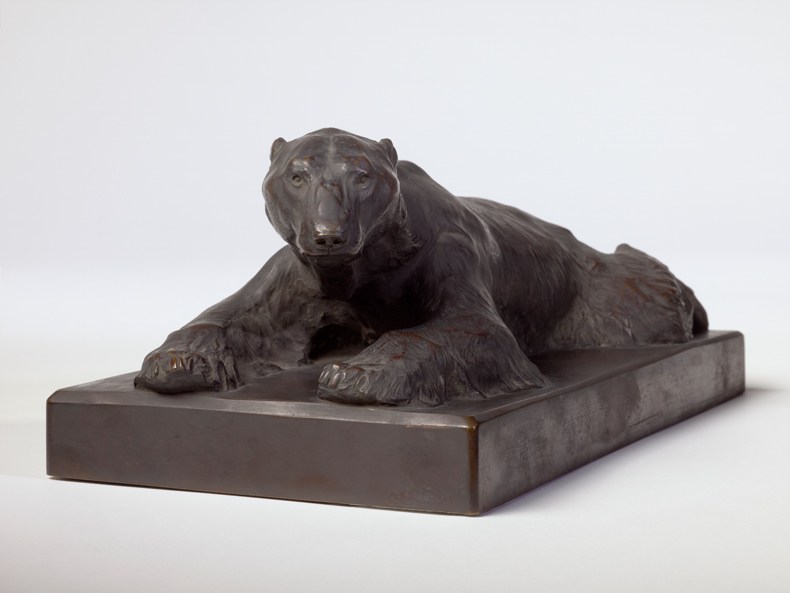
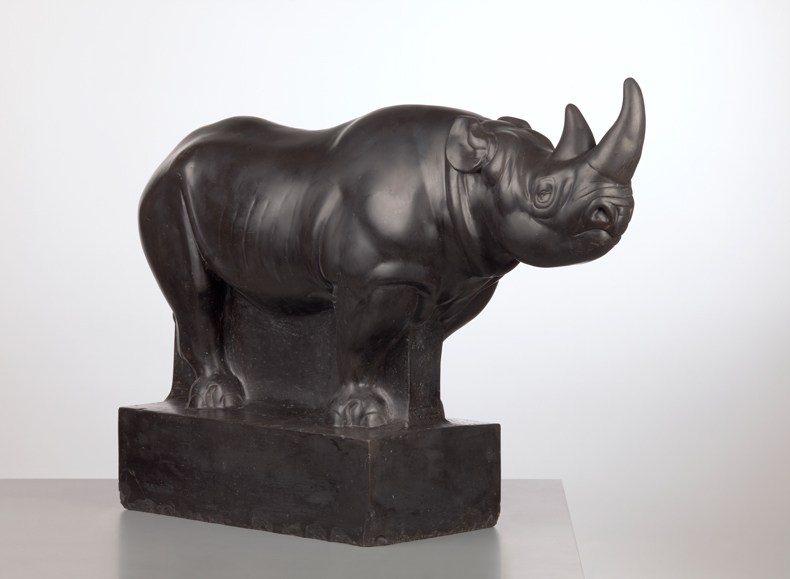
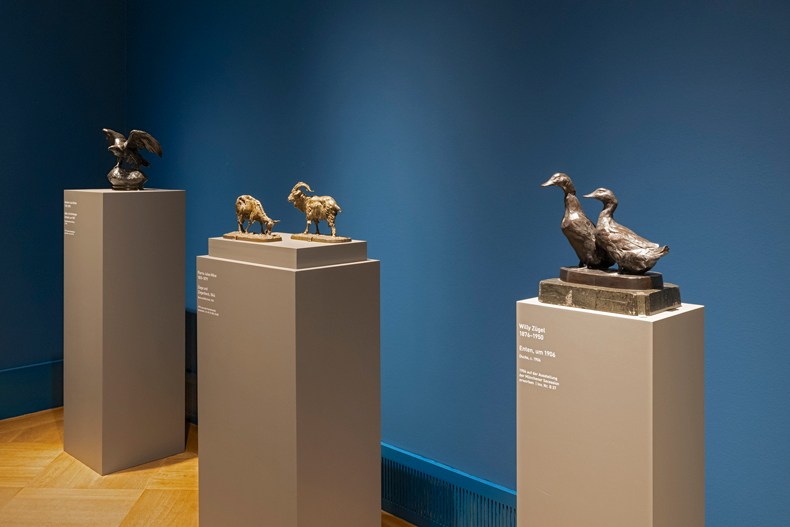
With imperial expansion broadening Europeans’ knowledge of the animal kingdom, and zoology becoming an increasingly specialised discipline, animal sculptors generally opted for one of two approaches: imbuing their subjects with grandeur and human attributes or depicting them as objectively as possible. The ten bronzes presented here cover both modes, sometimes in unexpected ways (until 4 October). Based on meticulous sketches, August Gaul’s Strutting Ostrich (1903) is a bold experiment in form, its dimensions – large body, gangly legs, tiny head – conveying a sense of almost Surrealistic strangeness despite being entirely faithful to nature. Antoine-Louis Barye’s Tiger Devouring a Gavial (1836), meanwhile, is all exotic drama and conquest, nature bronze in tooth and claw. Also among the menagerie are Goat and Billy Goat (1844), two of the many small animal sculptures with which Pierre-Jules Mêne flooded the market; Jules Desbois’s Leda (1891), a tangle of limbs, wings and beak; and Willy Zügel’s alert, inquisitive Ducks (c. 1906).
Find out more from the Pinakotheken’s website.
Preview below | View Apollo’s Art Diary