From the December 2026 issue of Apollo.
The work of the artist Prunella Clough (1919–99) resists categorisation. She told Picture Post in 1949 that in her small pictures of fishermen and dock workers she aimed at ‘saying a small thing edgily’. That sympathy for the edge persisted throughout her career as she skirted neo-Romanticism, Art Informel, post-cubism, School of London, social realism and abstraction. Since she belonged to no school, and possessed a versatility that makes definition difficult, her achievement and influence have at times been hard to track. Fans recognise the same sensibility in the carefully mapped early paintings of factories, lorries and unconsidered corners of the industrial urban world as in later highly abstracted and intense picture-making inspired by detritus, overhead cables, gates or oil stains. Then there is her distinctive palette, centred on earthy, muted tones reflecting English landscapes and weather, but often surprising with strange greens, blues, oranges or pinks. And while painting was at the core of her practice, she also made prints, collages and sculptural assemblages. Her determination to keep her prices low, her modesty and her strong dislike of talking about her work have also hindered Clough’s visibility, both in the market and in the public eye. A powerful undertow of new interest, however, is ruffling the market. She has been included in several group shows alongside contemporary artists, as well as having a number of solo exhibitions. And auction prices have been rising. In October, Christie’s London sold Bonfire (1967) for £28,160 against a £6,000–£8,000 estimate. A week later, Lyon & Turnbull sold the late work Sack 1 (1997), with its scruffy painted grid in the corner overlaying the edge of an oddly shaped sack, for £23,040, more than triple the high estimate.
Clough’s taste for the bleak and murky marks a strong contrast with her Belgravia upbringing. She was descended from Anglo-Irish aristocracy on her mother’s side, while her mother’s sister, the celebrated Irish architect and designer Eileen Gray, was an important mentor. Having enrolled in 1937 at the Chelsea School of Art, during the Second World War she drew charts, maps and graphs for the American Office of War Information in Grosvenor Square. She formed deep friendships with many artists, especially Keith Vaughan, David Carr, Ghisha Koenig and John Berger. Immediately after the war, while studying part-time with Victor Pasmore at Camberwell School of Art, she sought out the quarries, coastal landscapes and fishing ports of Lowestoft and Yarmouth, not far from a family home in Southwold. But, increasingly, urban wastelands, printers’ workshops, smelting yards, northern industrial towns and London suburbs captured her imagination. From the 1960s the figure almost disappears from Clough’s work, in favour of an abstraction that is nevertheless rooted in the immediate environment. ‘Anything that the eye or the mind’s eye sees with intensity and excitement will do for a start,’ she once said. Even though she was given major institutional shows at the Whitechapel (1960) and the Serpentine (1976) and, belatedly, honoured with the prestigious Jerwood Painting Prize three months before her death in 1999, it was only in 2007 that the Tate gave her a retrospective.
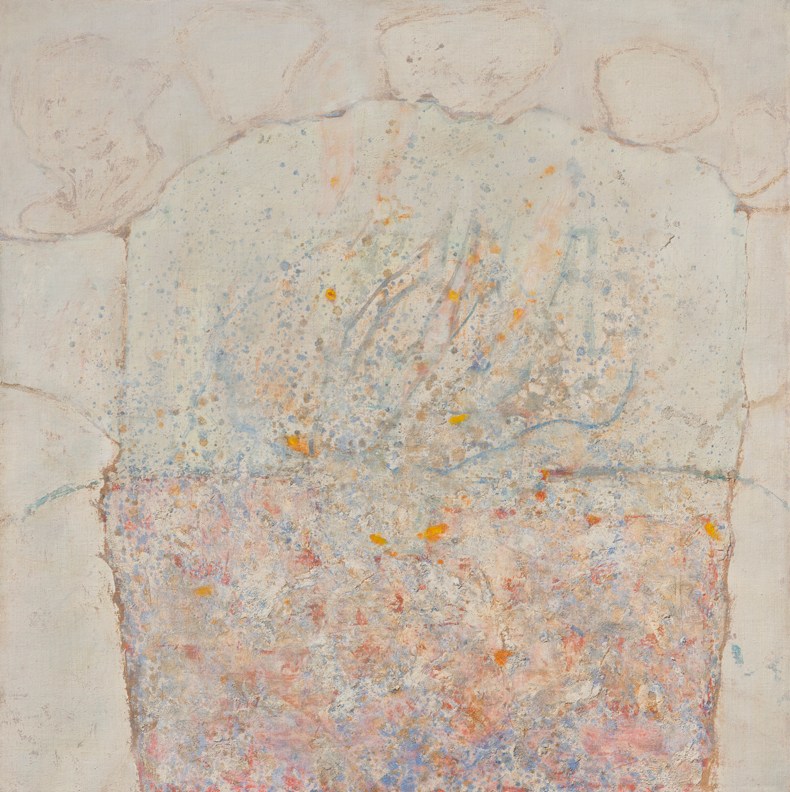
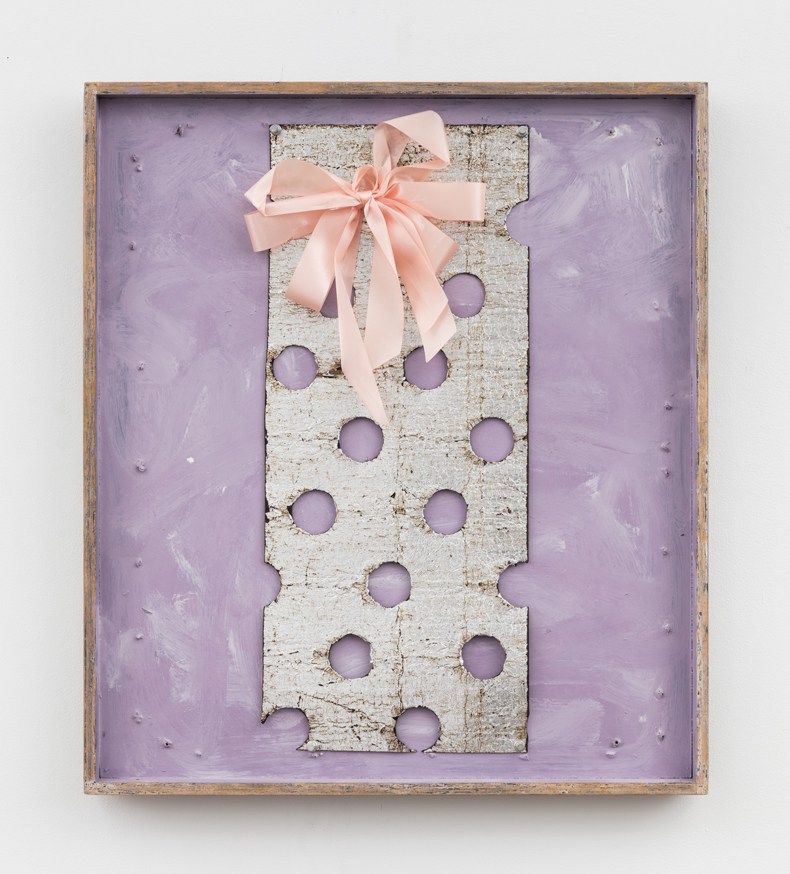
According to her long-term dealer, David Juda of Annely Juda in London, ‘She has always sold well; partly because of the quality of the work but also because while she was alive she was very keen to keep the prices down.’ He adds, ‘Collectors have a broad interest across the whole oeuvre. Ninety-five per cent of her work is timeless.’ Juda currently has (Pink Ribbon), a foil-and-ribbon work from 1999, for sale for £18,000. Her paintings of Lowestoft, however, ‘have always been the most sought after and the most expensive’. Juda’s analysis is confirmed by auction records: the sterling record is £126,000, achieved for Fishermen with Sprat Nets II (1949) at Christie’s London in March 2022, while the dollar record had been set at the same house in June 2008 when another early painting, Cranes and Men (1950), reached £97,250 (then $190,499) against a £40,000–£60,000 estimate.
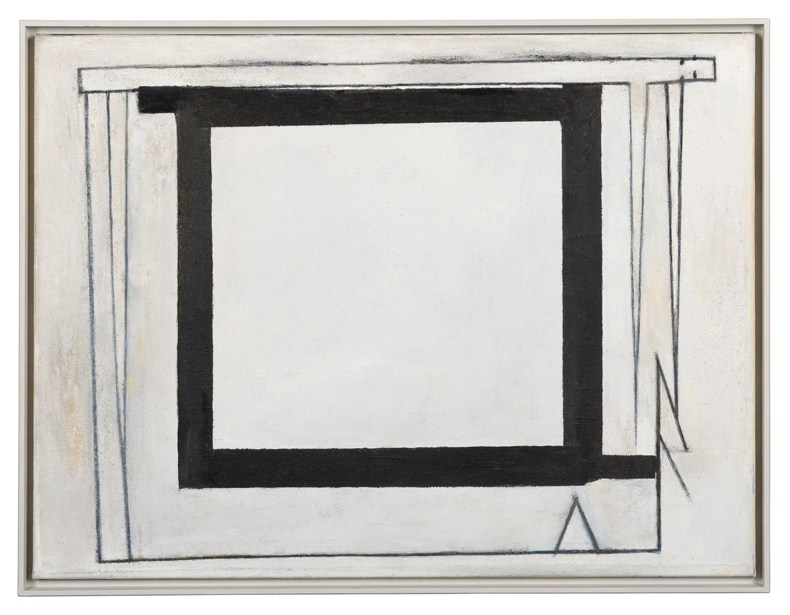
Tamsin Golding Yee, specialist in modern British art at Sotheby’s, notes that apart from these works, ‘There has not been an easy way to fit her into the established narrative. The fact her works vary has made it hard to build a following.’ It is notable, though, that among the top auction prices is the distilled yet tactile Small Gate Painting No. 5 (1980), which sold at Sotheby’s London in July 2007 for £55,200 (estimate £6,000–£8,000). And Yee concedes that, over the last five years, later works estimated in the low thousands have made several times that price. Simon Hucker, senior specialist in modern and contemporary art at Lyon & Turnbull, remarks that more abstract pieces are performing well. He notes the lineage from Fishing Sheds (1946), with its prominent window, last sold at Sotheby’s London in 2012 for £36,000, to the graphic Small Gate Painting 2 (1980), which Lyon & Turnbull sold for £9,450 in October 2025. ‘These pared-down works, restrained, delicate, with this interest in the edges, do seem something people are looking for at the moment,’ Hucker says.
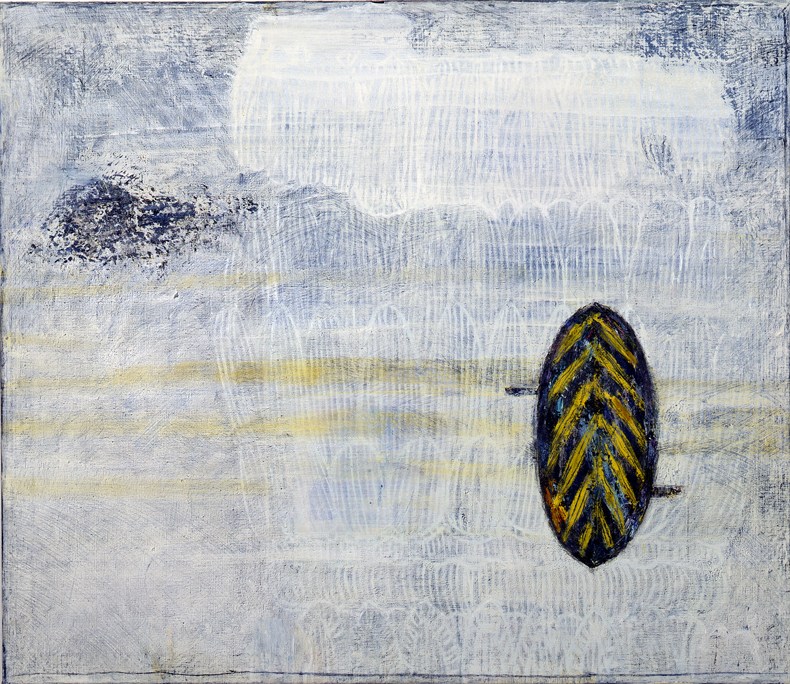
Contemporary artists are also showing interest in her work. In 2019 the American painter Amy Sillman (b. 1955), a long-term champion of Clough’s work, donated Stone (1985) to MoMA. She acquired the work from the show ‘Prunella Clough: Blast’ at the New York gallery P.P.O.W and included it in her artist-curated room at MoMA later that year. In 2021 the Berlin gallery June showed her work alongside that of Sillman and Merlin James, while in 2025 Jenni Lomax curated the group show ‘Push Me, Pull You’, for Thomas Dane in Naples, in which a number of paintings by Clough were shown in dialogue with other painters, past and present, including Sillman and one of Clough’s students at Wimbledon School of Art, Hurvin Anderson. Lomax had organised a solo exhibition of Clough’s work at Camden Art Centre in 1996 and this recontextualising of Clough’s work in the present persuaded Dane to mount ‘Out and About: Prunella Clough paintings from the 1980s and 1990s’ in London this summer. ‘It was really popular,’ he says. ‘There were queues to get in.’ Little was for sale, however, and Dane notes that ‘we don’t yet know who collects her work’.
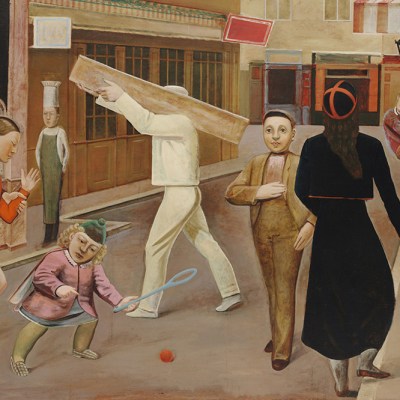
The painter Peter Doig included her work in a show at Gagosian in New York, ‘The Street’, in November 2024, while Cassius & Co, London-based specialists in art and rare books of the 19th, 20th and 21st centuries, organised ‘Prunella Clough: Samples 1960–99’ earlier this year, in collaboration with French gallerist Adrien Delestre. Fraser Brough, director of Cassius & Co, says, ‘We didn’t want to do a group show. The diversity of her practice means that you need to have seen works from all sorts of different periods to understand it. If you look too quickly, you don’t get it.’ Both agree that the show drew audiences across three generations. Delestre adds: ‘Her work is at home in today’s visual world. So many little marks that you might not see, so many little nuances.’ He says that her work is quite unknown in France, despite her affinity with post-war French artists.
Hannah Collins, the niece of Clough’s close friend Ann Robin Banks and the executor of Clough’s estate, who wrote an essay for the Thomas Dane exhibition, suggests that her work has always been misunderstood and placed in relation to the male artists around her. Now is the moment, she suggests, ‘to undo a lot of things and show it really well’. Like many, she is looking forward to the major solo show next year at MUMOK in Vienna.
All this activity has had an impact. John Austin of the London gallery Austin/Desmond, specialists in modern British art, says: ‘We have had a lot of interest recently from institutions and US dealers and there are some new collectors.’ He notes that the early work has become ‘much more expensive’ while the later work is drawing new interest. Matthew Flowers, of Flowers Gallery, which represented her prints in the 1990s, says: ‘There has been a consistent market for her prints, but prices are now going up across the board – prints, paintings, works on paper.’ He suggests that good paintings will ‘sell at retail for £100,000 – and now they are becoming scarce!’ As he puts it, ‘Word has got out.’
From the December 2026 issue of Apollo.