
The first permanent photograph ever taken is a grainy blur of geometric shapes: two rectangular buildings frame a triangle of roof illuminated by the sun. The inventor Joseph Nicéphore Niépce’s image View from the Window at Le Gras, created in 1826 or 1827 using his pioneering method of heliography, secured France’s position as the cradle of photography. Now, a flurry of photography exhibitions in Paris are marking the bicentenary of the creation of the art form.
As proof that we are well and truly in the era of the mega-exhibition, the Pinault Collection aims to trace ‘the entire history’ of the medium with a colossal show of some 700 works by more than 70 artists – although that represents only a fraction of French billionaire François Pinault’s photography collection. It’s the largest ever show at the gallery and dwarfs other major Paris shows in recent years in terms of artworks, such as last year’s David Hockney retrospective at the Fondation Louis Vuitton (more than 400 works) or the Cézanne exhibition currently at the Grand Palais (nearly 180 works).
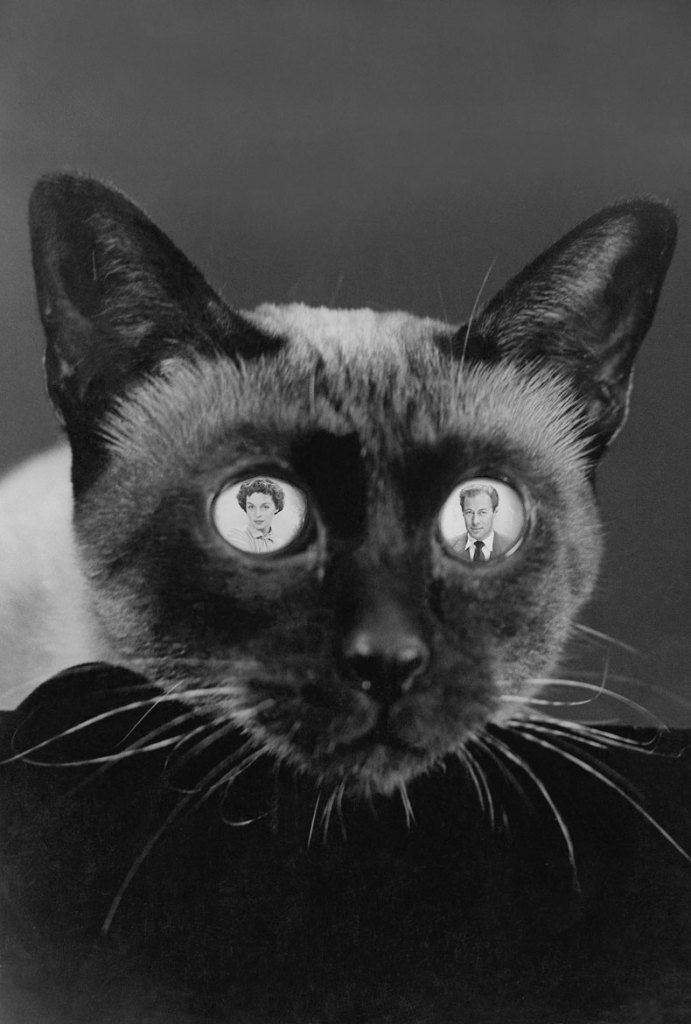
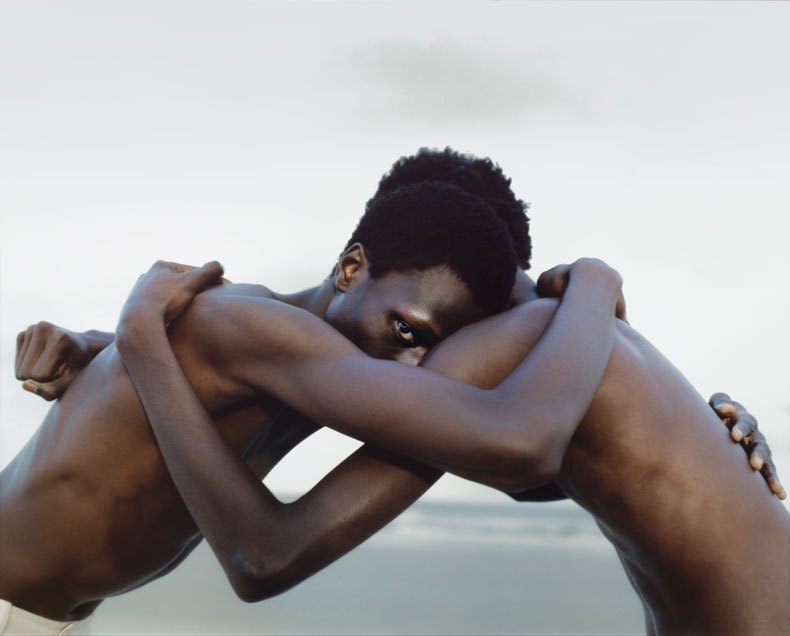
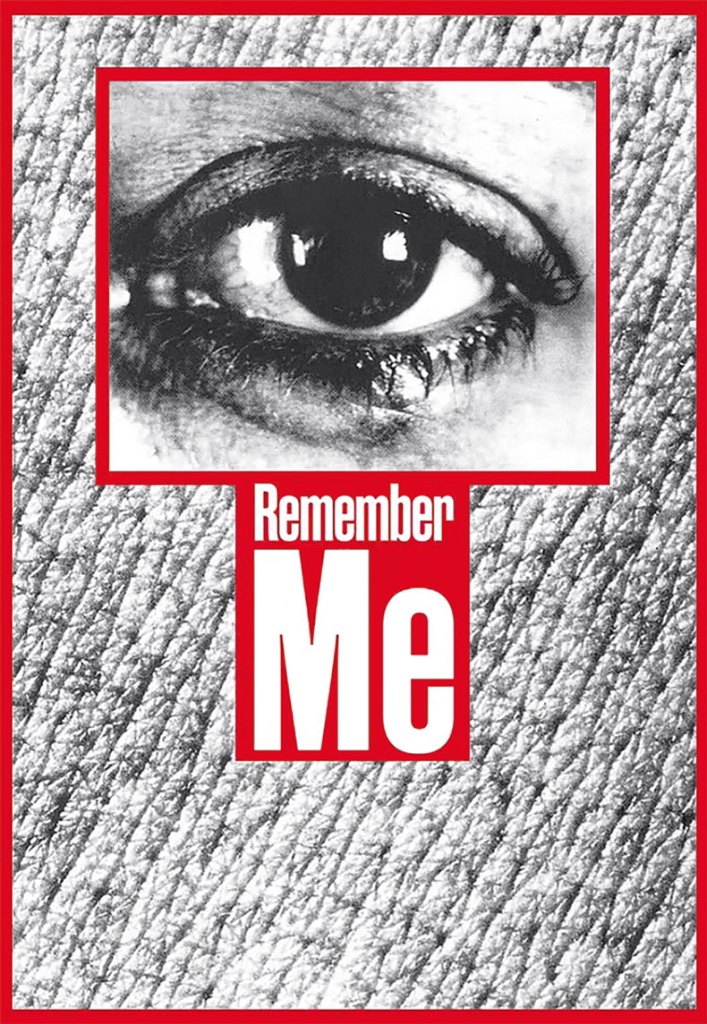
One of the first images in the exhibition is Annie Leibovitz’s hulking portrait of a view camera owned by Richard Avedon. The message here is unsubtle: we use cameras to observe and record, and cameras in turn observe us. Gazes ricochet around the room, peering out from a reflection in the pupil of an eye, as captured by Constantin Joffé, or in the faces (of the married actors Lilli Palmer and Rex Harrison) superimposed on to a cat’s eyes by Erwin Blumenfeld (1950). An image of an eye glistening with tears by Barbara Kruger gives its name to the title of the show, ‘Remember Me’, but her installation in the central rotunda with its shouty texts in all-caps quoting George Orwell and Roland Barthes is brash and disconnected from the rest of the artworks. Tyler Mitchell’s An Embrace (2024) has the unsettling feel of a fairground hall of mirrors: a young Black man stares at the viewer, who can simultaneously see themselves in the mirrored glass – who is looking at whom? A camera lens replaces our own vision, or simply extends it. A quotation by Dorothea Lange on the wall drives the point home: ‘The camera is an instrument that teaches people how to see without a camera.’ Curator Matthieu Humery says that this first room should be read as an ‘instruction manual’ for the rest of the exhibition, inviting us to reflect on photography as a way of interpreting the world.
From then on, however, it’s a breathless, helter-skelter run through a catalogue of famous images, extolling the depths of Pinault’s purse and his good taste, but with little commentary or analysis. One vast curving gallery dedicated to Irving Penn alone contains a staggering 450 or so unlabelled works, scattered across the walls like a long, undulating sea. Humery wanted to show the ‘entirety and the immensity of his work’, adding that he didn’t ‘want the visitor to be able to see the end’. But to what purpose? The visitor’s eye travels along the wall searching for something to fix on. Everything is there: Penn’s still lifes, his nudes, ethnographic portraits, fashion photography, portraits of celebrities, his skull series. It’s impressive in the way that things at scale often are, but indigestible without context or explanation.
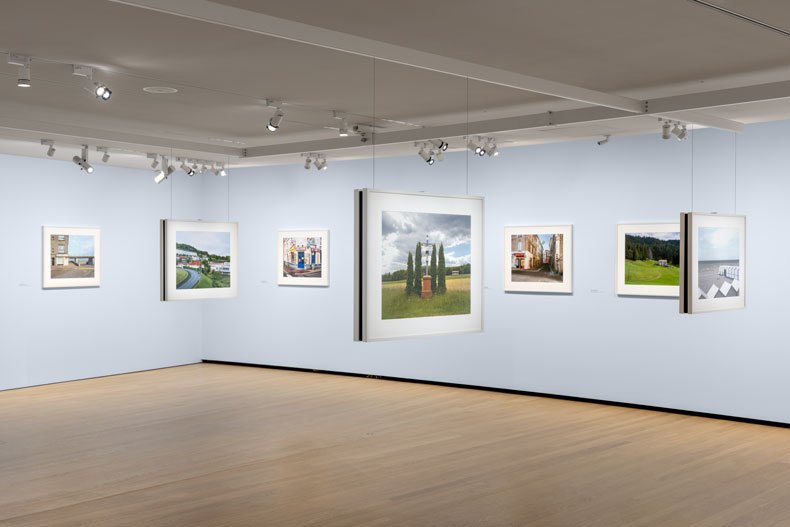
Another gallery dedicated to a series of photos of rural France by the photographer Raymond Depardon is more edible, with charming, somewhat melancholic and occasionally twee images of bistros and tabacs in out-of-the-way towns. It is a parenthesis before plunging once more into the muscle-flex of the rest of the collection. Masterpieces from the history of photography are casually grouped together, often with only the broadest theme to unify them: hands, or the body, or the art of composition. In its attempt to be exhaustive, it is exhausting, flitting from Robert Capa’s much debated The Falling Soldier (1936) to The Steerage (1907), a modernist masterpiece by Alfred Stieglitz, and Man Ray’s Black and White (1926).
There are so many brilliant works here that what stands out will be different for each visitor. On its own, Peter Hujar’s arresting chiaroscuro portrait of his friend and artistic collaborator David Wojnarowicz from 1981 packs the same punch as Caravaggio’s mournful David with the Head of Goliath, but its context and effect is lost in its random grouping with Zanele Muholi’s highly detailed, close-cropped Mfana (2019) or Leibovitz’s buzzy, irreverent portrait of Whoopi Goldberg slipping backwards in a bath of milk (1984).
The intertwining of photojournalism and the history of the 20th century is brushed over, apart from rare exceptions such as Lee Miller’s images of newly liberated France or Avedon’s unforgiving photos of napalm victims in Saigon. This is a curiously sanitised vision of photography – where are the blood, sweat and guts? Photography can spear you, can stop you in your tracks. It has moved the needle of history. But here, the show’s ambition has done the artworks a disservice, causing them to drown one another out.
‘Remember Me’ is at the Bourse de Commerce, Paris, until 18 January 2027.