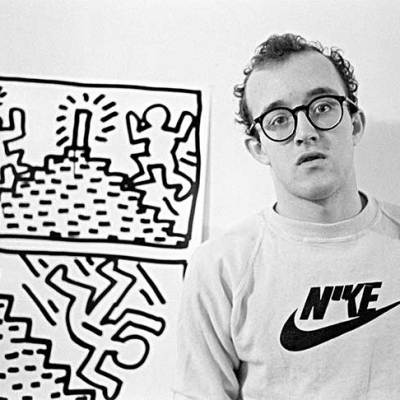

The relationship between street art and fine art has always been tense. Until relatively recently artists and collectors were happy to dismiss graffiti as beneath their concern. The line was blurred by Keith Haring and Jean-Michel Basquiat and became positively indistinct with the popularity of JR and the success of Banksy. Around the early 2000s there was one of several periodic attempts to make street art a collecting category with all the paraphernalia and appreciation that galleries bring to more conventionally respected artists – wall texts, catalogues, higher prices.
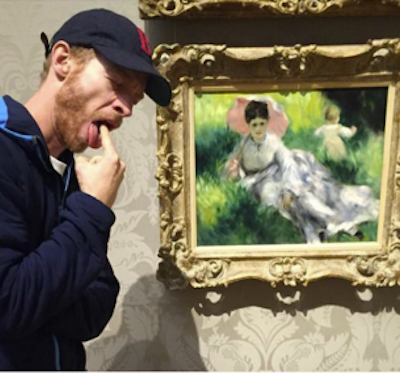
But now that access is the watchword for both auction houses (which want to bring in more buyers) and museums (which want to bring in more visitors), is something about to change? Rakewell wondered this while wandering through Soho only to be confronted by a five-metre-high version of Renoir’s The Umbrellas (c. 1881–86) – the result of a collaboration between Carnaby Street, Global Street Art and the National Gallery, ahead of the Renoir show that opens at the museum next month. It feels a bit on the nose to have a scene of bustling umbrellas just as the weather turns but perhaps this is what it means to make something relevant now.
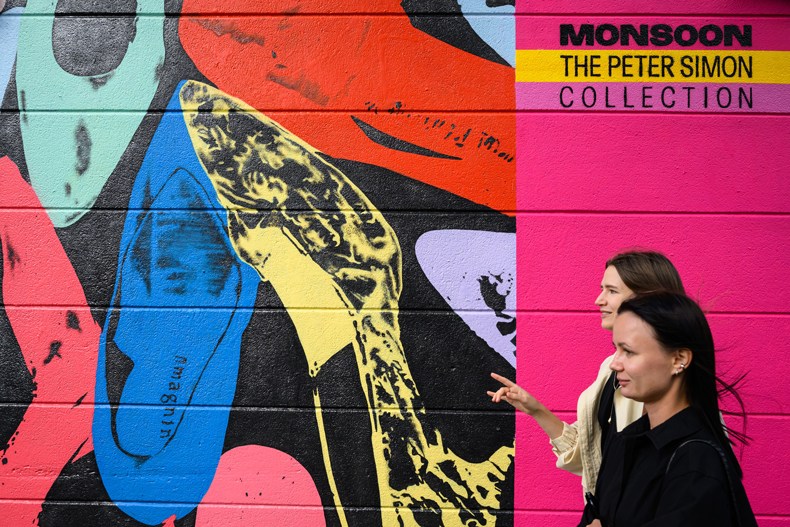
A little further west, Rakewell was delighted to discover a good old-fashioned mural in Notting Hill. This time it is in celebration of the art collection of Peter Simon, founder of the fashion label Monsoon, which is up for auction at Christie’s next month. One of the star lots has found its way on to the corner of Portobello Road and Westbourne Park Road – presumably chosen not only for its relevance to Simon, who started Monsoon as a fashion stall in Portobello Road Market in the early ’70s, but also because Christie’s is always happy to put the words ‘art’ and ‘market’ next to one another. This mural is of a work from Andy Warhol’s Diamond Dust Shoes (1980), a series that plays on Warhol’s career as a commercial illustrator for shoe companies while being characteristically Warholian in form and colour. In many ways it is the ideal work of art for a collector who built his career on a love of boho-chic colour and clothes. But it just goes to show that, as ever, when it came to posing questions about art, commerce and the public, Warhol got there first.