From the March 2026 issue of Apollo.
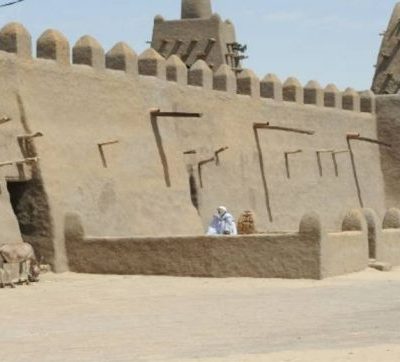
Over the past decade, there have been significant advances in the protection of cultural heritage during armed conflict, even as the global picture grows more concerning. In 2016, for instance, the International Criminal Court delivered a landmark verdict in the trial of the militia leader Ahmad al-Faqi al-Mahdi, convicting him of war crimes, specifically on the grounds that he had attacked religious and historical buildings in the Malian city Timbuktu. He was the first individual ever to be prosecuted by the International Criminal Court solely on the grounds of cultural crimes. Closer to home, another promising development is the UK’s Cultural Property (Armed Conflicts) Act, which came into force in 2017. This enabled Britain to ratify at last the 1954 Hague Convention, the world’s first international treaty dedicated entirely to the protection of heritage, which states that damage anywhere ‘is a damage to the cultural heritage of all humanity, because every people contributes to the world’s culture’. To comply with the Convention, the British military set up a dedicated Cultural Property Protection Unit, comprised of 15 specialist reserve officers from across the army, navy and air force.
Steps towards more effective protection of cultural heritage in wartime are welcome, but they have been long in the making. The idea of a ‘Red Cross for cultural property’ – an organisation that could act as an intermediary between powers to ensure humanitarian principles regarding heritage are upheld – was first mooted during the drafting of the Hague Convention in the early 1950s. Sadly, no such organisation was established at the time, and had to wait until the mid 1990s to be created as the Blue Shield. Taking its name from the legal emblem of the 1954 Convention, the Blue Shield was created by four international heritage NGOs (for archives, libraries, monuments and sites, and museums), initially as a way of better coordinating their activities. It had no funding and no separate legal status.
The 2003 Iraq War and its aftermath helped create awareness of the importance of protecting cultural heritage – not only for its own sake, important as that is, but because of its role in promoting stability. The failure to protect archaeological sites, libraries and museums during the early years of the US-led invasion had resulted in catastrophic damage to Iraq’s heritage and significant bad publicity for the occupying coalition. Even so, heritage remained unprotected. While it is simplistic to attribute one event as the sole cause of Iraq’s descent into sectarian conflict, the destruction of the Al-Askari Mosque in Samarra in 2006 is seen by many as a tipping point. The bombing of the Shia shrine by Sunni extremists helped plunge Iraq – whose population was already upset at the continuing presence of coalition troops on its streets – into a full-scale civil war. Coalition troops remained in the country for five more years, longer than their leaders had envisaged, enduring more casualties and fatalities, losing the propaganda war contributing to the rise of al-Qaeda in Iraq, followed by Islamic State. (That, as we know, led to yet more destruction of irreplaceable artefacts in 2014 and beyond.)
Since then there has been a more sustained effort to coordinate the protection of cultural heritage. In 2016 I took up the newly established position of UNESCO Chair in Cultural Property Protection and Peace at Newcastle University. UNESCO Chairs support the UN body and its work, providing academic backing and acting as independent think tanks. One of the initial objectives of my role was to help establish an effective Blue Shield. Today, the Blue Shield is established as an international NGO under Dutch law, has 34 national committees around the world, with eight under development, and a central team known as Blue Shield International. The central team is led by the staff of the UNESCO Chair, which has acted as think tank, secretariat and incubator for the fledgling INGO. I was elected president of the Blue Shield in 2020. The organisation’s project-related income has grown from €50,000 in 2024 to €500,000 last year, a positive reflection on the growing stature and credibility of the Blue Shield and its work, but a sad reflection on the state of the world.
We see our work as part of a wider collaboration between the heritage sector, humanitarian workers and the various uniformed professions. (The latter meaning not just the military, but also border forces, customs, the police and other emergency organisations.) As we had realised by the mid 2010s, the heritage sector cannot deliver heritage protection alone. Telling the armed forces that they must protect this World Heritage Site or that national cultural institution during a conflict was met with incomprehension. These were not significant military objectives and were thus not regarded as high priority. Instead, we now talk about cultural heritage as potential ‘force multipliers’ – military language for something that has the potential to make military work much easier if it is handled well.
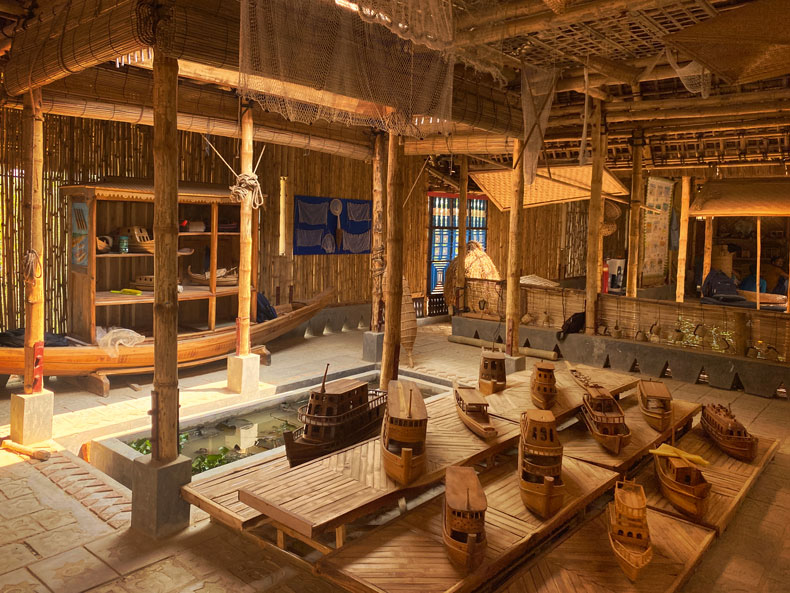
At the same time many in the humanitarian sector are also acknowledging the potential impact of heritage on their work. In 2018 the International Organisation for Migration (IOM) organised a survey on mental health among Rohingya people who were forced out of Myanmar. The Rohingya have been crammed into refugee camps in neighbouring Bangladesh, suddenly stateless and completely uncertain about their future. Some 73 per cent of respondents identified the loss of cultural identity as one of the main factors causing mental distress.
As a result, the IOM prioritised the establishment of a Rohingya Cultural Memory Centre in the camps. One of the main objectives was to provide refugees with a creative and safe space to share their knowledge and preserve their heritage. Separately, after several years of developing cooperation, the Blue Shield and International Committee of the Red Cross (ICRC) formalised their relationship with a memorandum of understanding. Protecting cultural heritage, said Yves Daccord, director-general of the ICRC at the time, ‘remains a humanitarian imperative, today perhaps more than ever’.
With growing interest from the humanitarian and uniformed sectors, there is a corresponding realisation from many in the heritage sector that they cannot deliver good protection on their own. While the sectors start from very different places, they all share similar ends – in Blue Shield language, healthy, stable and secure communities, which are the bedrock of peaceful societies.
But how realistic a goal is this? Much depends on what those involved in armed conflict do. Will politicians attempt to abide by international humanitarian law, or will they weaponise and target heritage? What national or international law is even recognised by the belligerents? How will communities treat cultural spaces, particularly those associated with other groups, once conflict has begun? And how will media organisations react to and report on these developments?
There’s a need for the heritage sector to raise awareness of the value of protection. Blue Shield International, for instance, works with NATO to incorporate cultural heritage into the alliance’s exercises and to help compile more accurate data on protection for use by the military. We run a multinational course every year for peacekeepers at the UN training school in Ireland and contribute to a similar NATO-affiliated course in Greece. We support the protection of heritage and heritage workers in Afghanistan and have run projects in Iraq, Syria and Ukraine, as well as supporting training and workshops elsewhere.
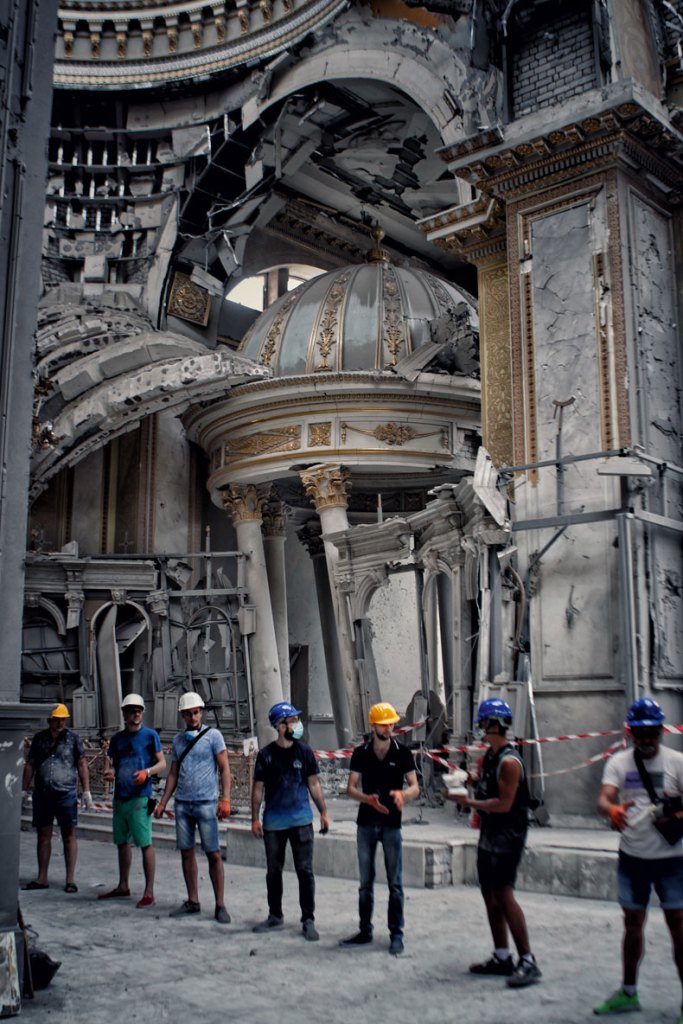
Effective protection can only really be developed in peacetime, as it takes many years to build relationships and trust across the different sectors. This underlines the urgency for groups and institutions to share ideas and discuss how to achieve common goals. While the recent activity has been heartening, we cannot be complacent. Collectively, we have failed to react sufficiently to armed conflicts as they have emerged.
We inhabit a world where adherence to international law is increasingly uncertain. It appears that more belligerents now see cultural spaces as legitimate targets in conflict, or even as the reason for conflict in the first place. Genocidal intent can be expressed through the destruction of heritage as well as violence against people. Moves towards rearmament in Europe and US insistence that European governments contribute more to NATO not only raise the prospect of future conflict but also squeeze funding that might have been dedicated to peacetime development of protection strategies. For various reasons, the UK’s Cultural Property Protection Unit, formerly made up of 15 officers from across the armed forces, has been reduced to six, all from the army.
Organisations such as Blue Shield International are sometimes called naïve, because we talk of international humanitarian law and culture when the UN system is already under so much pressure. But if we do not try to act now to protect humanity’s heritage, how will future generations judge us?
From the March 2026 issue of Apollo.