The back-to-school September auctions are a true medley, a time to bring out some colourful single-owner collections as an amuse-bouche before the more predictable main course: the autumn sales season.
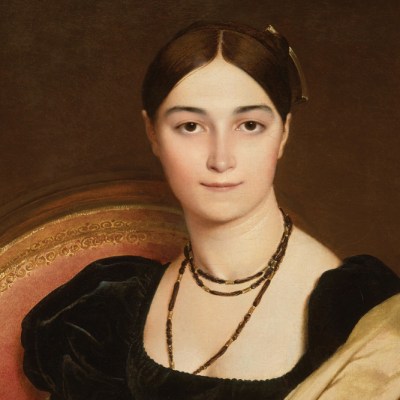
In Paris on Wednesday, Christie’s sold 60 lots from the vaunted collection of the Bolivian heiress Graziella Patiño de Ortiz Linares (1900–80). The daughter of ‘The Andean Rockefeller’ Simón Iturri Patiño, a Bolivian industrialist and tin-mining magnate, Graziella showed what one can do with almost limitless wealth. After her father bought the palatial Hôtel Blumenthal in Paris for Graziella and her husband, Jorge Ortiz Linares, in 1926, she set about buying all manner of 18th-century French treasures to decorate it. A minimalist she was not: the Christie’s selection, generally dating from the Régence and Louis XV periods and being sold by Graziella’s grandchildren, featured Watteau, Fragonard and Ingres, alongside ormolu-laden furniture and decorative arts, mainly bought in the later 1920s.
The sale, estimated to sell for between €22.7m and €32.5m, made €38.7m (all prices and total include fees – increasingly hefty ones – while estimates do not). French artists were top of the pile, led by Fragonard’s frothy Desired Moment, which tripled its high estimate and sold for €10.6m, an auction record for the artist in his homeland. With a marshmallowy buttock front and centre, it had the hazy quality of peeking through a huffed-up lens, if you’re into that sort of thing.

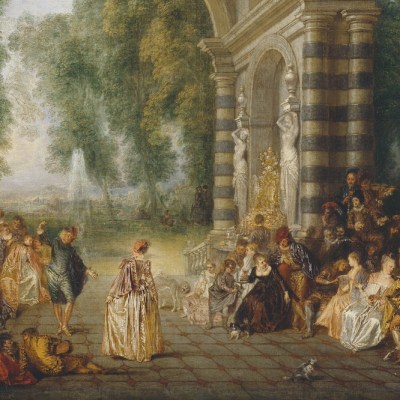
Another French auction record was set by the more sober Enchanted Isle by Watteau, estimated to sell for around €8m, which went for €10.4m. Arguably the more lovely was Hubert Robert’s The Nave of Greenery, a view of a receding avenue of trees that appears like the nave of a leafy cathedral. It sold for €1.3m, well above the estimate of €300,000–€400,000.
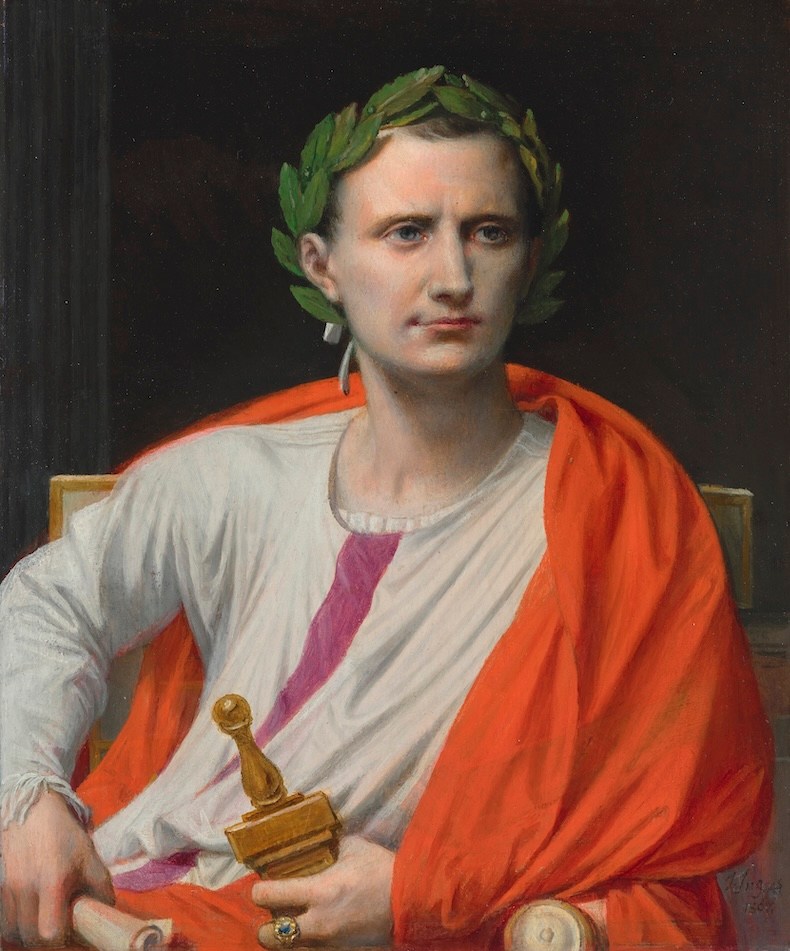
But it was a painting by Ingres that set a new world record – a portrait of Julius Caesar that was an Imperial commission from Napoleon III and sold for €2.4m, three times the low estimate. The previous record for an Ingres was set by Portrait de la comtesse de La Rue, which sold for $2.7m at Christie’s in 2009 – allowing for inflation, that is arguably still the bigger price. Ingres paintings rarely come to auction and the third highest nominal price, $2.4m, was paid back in 1989, when the extraordinary Jupiter and Thetis was sold in Monaco.
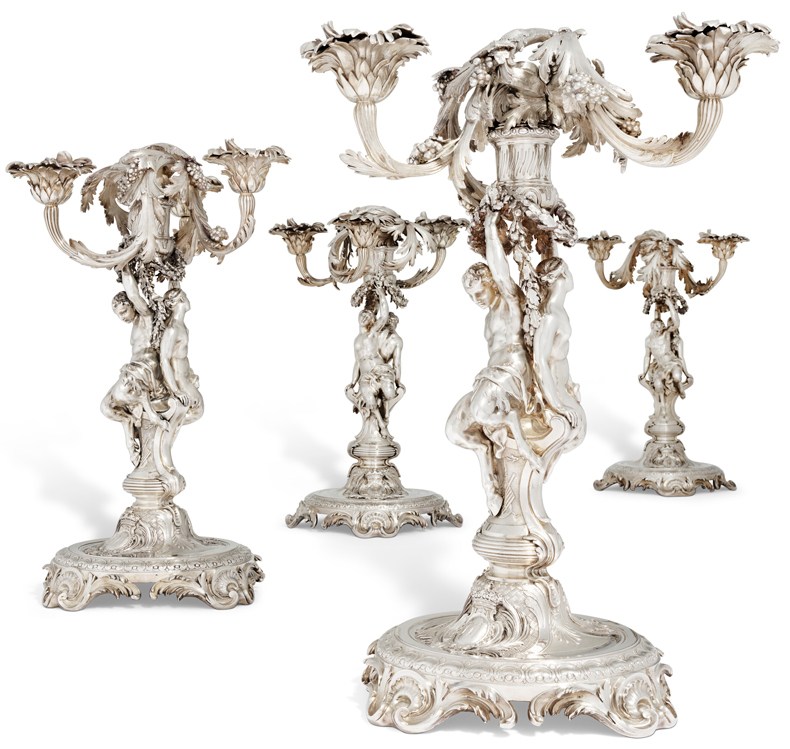
Another lot that drew attention was the ‘Sattiros’: four elaborate three-light candelabra with satyrs making up the stems, from the service of the Kings of Portugal. Made by Thomas Germain and his son François-Thomas Germain, silversmiths to the kings of France, the candelabra went for €3.4m.
The market for grand 18th-century French furniture is an interesting one. Over the past decade, a high-profile fakes scandal has been uncovered in France. Last year, the furniture expert Georges ‘Bill’ Pallot and furniture restorer Bruno Desnoues were found guilty of selling hundreds of counterfeit pieces of ‘royal’ furniture for millions of euros.
In the early noughties, wealthy Russians also pursued lavish French furniture for their homes, but Russian buying has since dropped off. However, Paul Gallois, Christie’s head of furniture for Europe, tells me, ‘while the withdrawal of Russian buyers may have affected certain segments of the market, particularly Empire furniture, the gap has largely been filled by a new generation of collectors, notably from the Middle East and Asia.’
Graziella’s ‘Le Grand Goût’ furniture collection included a bureau plat, with its cartonnier, attributed to André-Charles Boulle, cabinetmaker to Louis XIV, which sold for €486,400, and a pair of Louis XV ormolu-mounted black lacquer encoignures with parquetry-lined interiors, stamped by Bernard II van Risenburgh (B.V.R.B.), sold for €1.2m, three times the upper estimate.
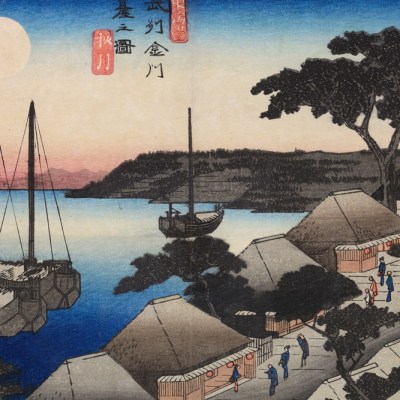
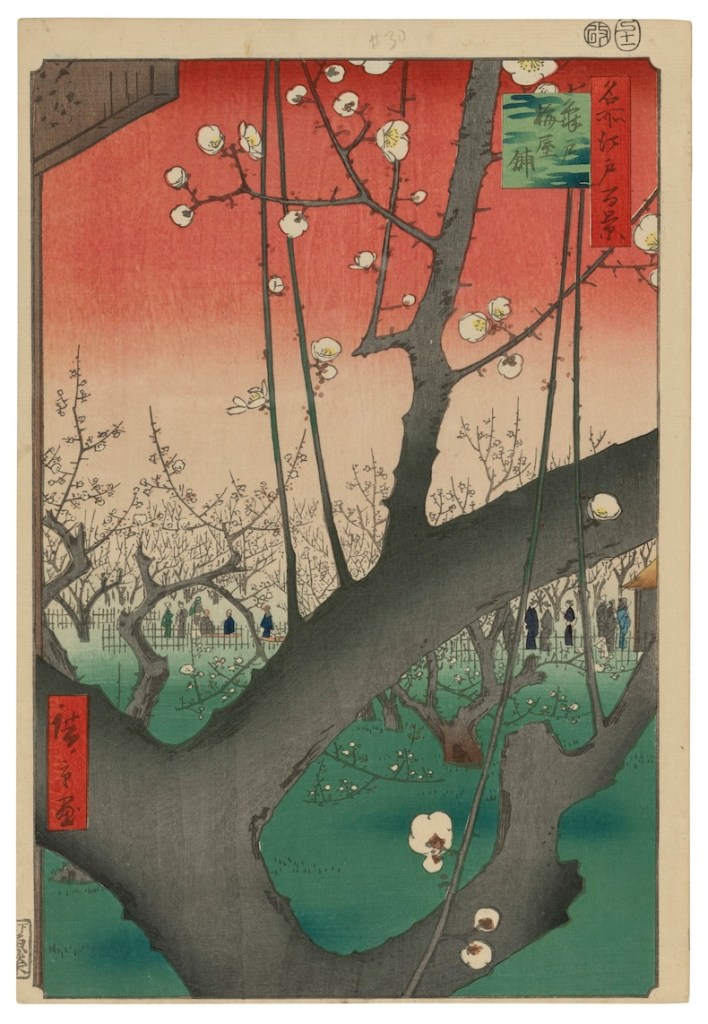
Earlier this month, Christie’s sold another, quite different collection in New York: 181 prints by the Japanese master Utagawa Hiroshige (1797–1858) from the collection of the American businessman Alan Medaugh. All sold, totalling just under $7m – almost five times the low estimate. The top lot was Kameido ume yashiki (‘Plum estate, Kameido’), a woodblock print of 1857 from the series One Hundred Famous Views of Edo, which sold for a record $358,400, well over its $60,000–$100,000 estimate.
Christie’s will hold two further sales of Medaugh’s collection, which was lovingly formed over half a century. The decision to sell was hastened by a fall that Medaugh had in Kyoto last November, after which he discovered that he had an autoimmune disease. ‘I just turned 83 and have had to think about winding things up,’ he told me of his decision to sell. ‘I am impressed in a negative way by people who have wonderful collections that are dispersed after their deaths in ways that are less than ideal. I didn’t want to do that or leave someone else with the responsibility of doing the job right. I thought, I can do it better. I started doing this to actually help Hiroshige’s legacy, and I think this sale will do just that.’
Finally, while much of the art market is having a bearish time, collectables – an amorphous term taking in any sort of memorabilia, vintage fashion, cars, luxury, comics, toys and so on – are booming. The American auction house Heritage, which has doggedly pursued the collectables market to great success, held the highest-grossing sports auction ever, in Dallas at the end of August, totalling $62.9m. I confess, being no expert in baseball cards, the press release is double Dutch to me. But the auction was led by what is apparently the Holy Grail of cards: a T206 Piedmont Honus Wagner SGC Authentic, from 1909–11, which is one of just three known with the prized Piedmont advertising back, as opposed to the much more common Sweet Caporal advertising.
And that is what is so wonderful about the collectables world. For 99 per cent of the world’s population, such a distinction means absolutely nothing at all. But for one dedicated core, it means absolutely everything – enough to be persuaded to pay $5.9m for a few inches of cardboard.