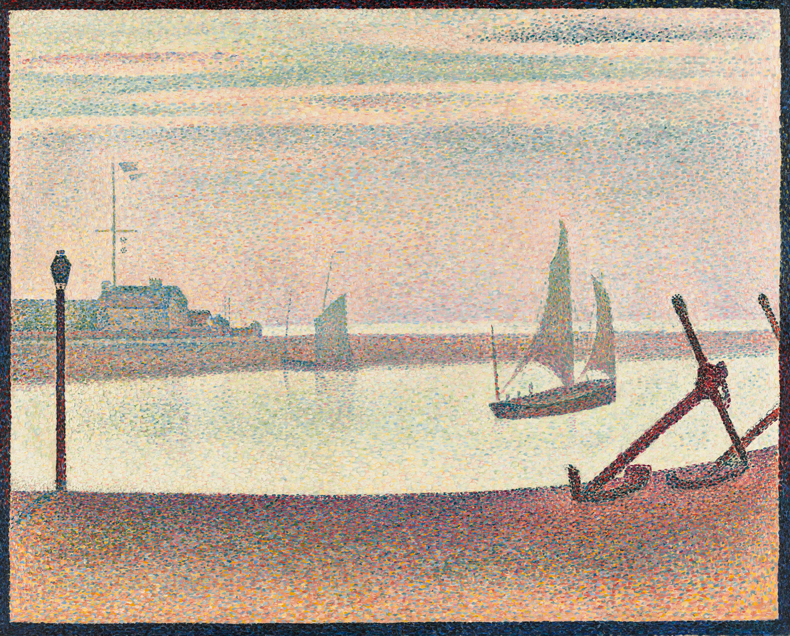
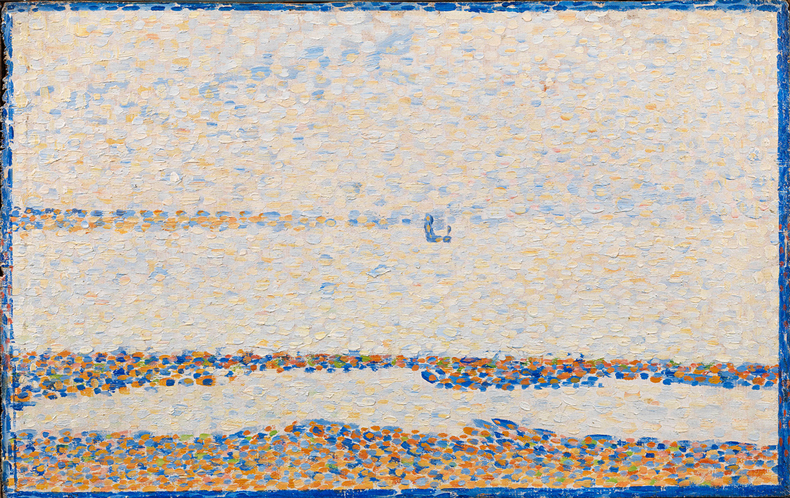
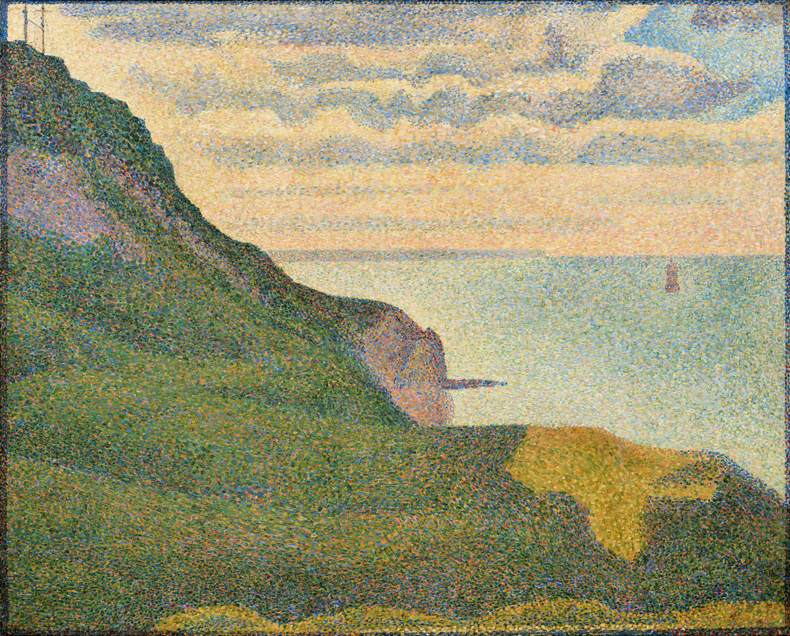
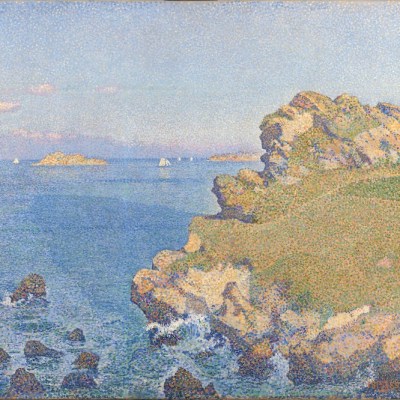
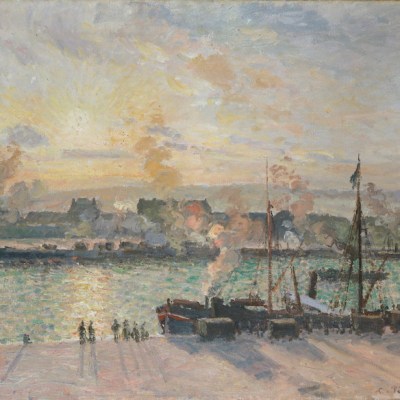
Georges Seurat was working at the cutting edge of science as well as art. In the 1830s the chemist Michel Eugène Chevreul had shown that certain pairings of contrasting colours, such as blue and orange or red and green, acquired ‘the most remarkable brilliance, strength and purity’. In the second half of the century Seurat applied this discovery to painting, reducing his colours to discrete dabs and dots and thereby achieving an unprecedented luminosity. This exhibition at the Courtauld, which holds the UK’s largest collection of paintings by Seurat, focuses on his seascapes – a chance to appreciate his knack for capturing the shimmering of light (13 February–17 May). The 26 paintings, sketches and drawings on display include depictions of the English Channel painted in French port towns along the northern coast and show a different side of the Neo-Impressionist to the Parisian scenes for which he is best known.
Find out more from the Courtauld’s website.
Preview below | View Apollo’s Art Diary