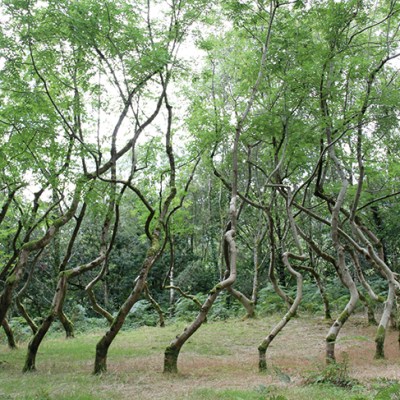
For those who really know, the South Wales Valleys are less of a physical place and more of a mindset. To be from the Valleys is to be part of an identity that has been relentlessly tenacious for centuries. The Valleys occupy a landscape of extraction: beneath them lies the South Wales coalfield. Its population boom came in the second half of the 19th century, driven almost entirely by the rapid expansion of the coal industry. Places like the Rhondda Valley transformed from sparsely populated rural areas into densely packed industrial communities. The Rhondda’s population grew from around 1,000 in 1851 to more than 150,000 by 1911. The proceeds of this toil flowed south to Cardiff and filled the coffers of those beyond the border. By the late 1980s, they were gone.
The Valleys didn’t just lose an industry: they lost their reason for existing. Coal pulled people in from across Britain and beyond, built communities, and then vanished in a matter of decades. What was left was the population without the economy: some of the worst health outcomes in the UK, the prescribing of antidepressants at a rate that runs to one in six in some areas, an attainment gap in schools that tracks poverty with depressing precision and a GDP per head far below the EU average. The EU committed £1.4 billion to West Wales and the Valleys alone between 2000 and 2006. It couldn’t solve the fundamental problem, which was that nobody had worked out what the Valleys were actually for once the coal was gone. And then the Valleys bit the hand that was feeding it and voted overwhelmingly for leaving the EU.
This region nurtured the Tonypandy Riots, Dic Penderyn, the Chartists and the Miners’ Strike – a history that flips between subservience and defiance. The photographer Jon Pountney sees that tradition clearly. ‘I think that feeling was created by a sense of joint endeavour and a sense of justice,’ he says. ‘Sadly, in the last 30 years nothing has been created to replace the void left by the disastrous repercussions of deindustrialisation. People now feel abandoned like in many other post-industrial areas of Britain. It’s all part of a long and ongoing story.’ That ongoing story has an urgent new chapter. Now, ahead of the Senedd elections this year, the Valleys are a political battleground once again. Despite Reform’s best efforts, the recent Caerphilly by-election was won by the Welsh nationalist party, Plaid Cymru. Labour, humiliated, lost a seat it had held since 1918. This story will play out many times over in May.
Pountney has been photographing the Valleys for 15 years, moving there from Cardiff in 2015 and embedding himself in Treforest, in the heart of Rhondda Cynon Taf. He describes the project as autobiographical rather than topographical: an intimate record of where he lives rather than a survey conducted from outside. ‘Making work from your guts,’ he says, ‘is the only way to produce photography in a post-truth era.’ When a major exhibition about the Valleys at Amgueddfa Cymru (the National Museum of Wales) failed to include Pountney’s work, he took it as a spur rather than a verdict. The crowdfunded book that followed raised more than £11,000 – more than double its target. A show currently at Clwb Ffoto, a burgeoning independent space in Newport, presents much of that work on the wall for the first time.
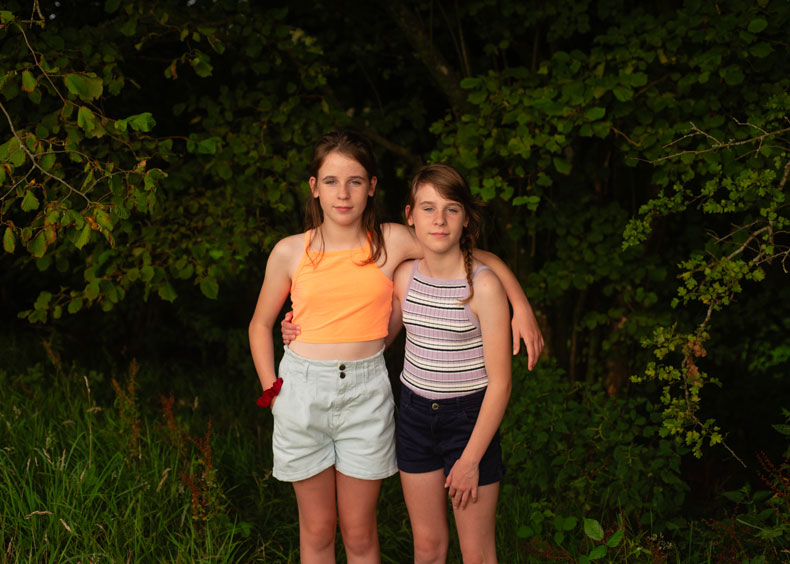
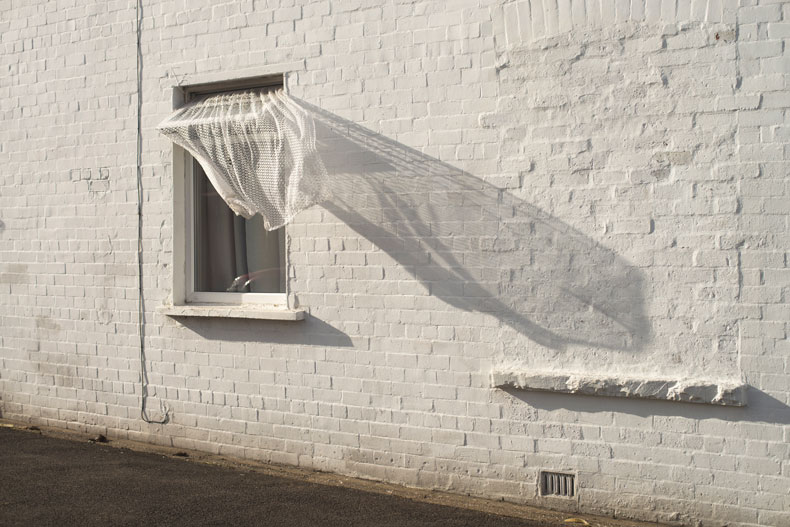
Pountney’s perspective flips between the pragmatic and the evocative. This isn’t the Wales of mysticism, Hwyl and Hiraeth. It’s not an elegiac document of longing, nor does it monumentalise the post-industrial landscape. We travel from Pontyclun to Penrhys, Tylorstown to Treorchy and beyond. He shows us the houses clinging to the valley edges, the weather-battered buildings and fabric of the towns, the anachronistic cafes and barbers jarring with the bright signs of takeaways and garage forecourts. At a glance, some photos might appear retro – but contemporary life in the Valleys is about adapting to its reality, where history and modernity have collapsed in on themselves. The pit heads and the famous Guardian of the Valleys statue are conspicuously absent. Pountney has covered the industrialisation of Wales elsewhere; here he wants to hint at that past without being weighed down by it. ‘There are enough photographs of burnt-out cars, glue-sniffers and deprivation in the Valleys already,’ he says. ‘Plus that’s not a truthful representation of my experiences.’
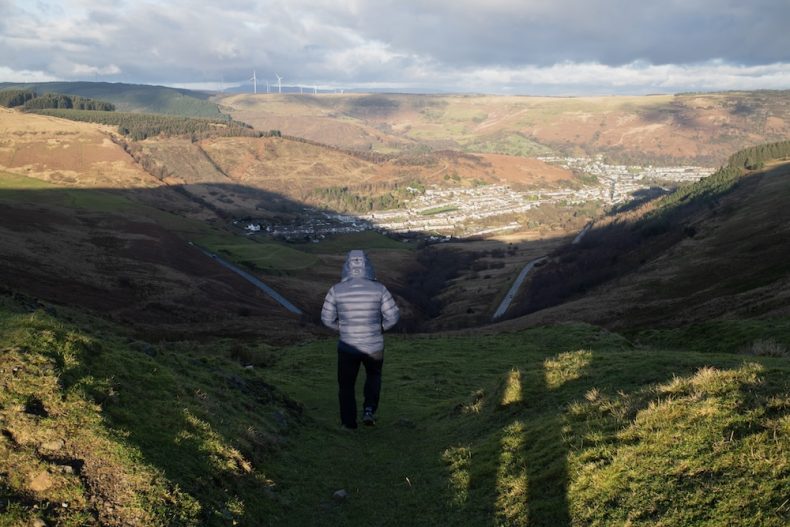
Where Pountney’s images really sing, he finds a golden light that highlights the scale and absurdity of the Valley towns, where human endeavour meets the vastness of the hills that once contained riches to be plundered. Pountney says the visual language owes more to Samuel Palmer and the Neo-Romantics (John Piper, Graham Sutherland) than to documentary tradition. It is a defiant, painterly vision. ‘There is a real sense of anti-establishment, dry humour in the area that cuts people down to size,’ he says. ‘But there is also a tremendous friendliness, a helpfulness. A camaraderie.’ Pountney refuses to depict working-class places as broken. What he finds instead is something vital and specific.
This is ultimately a landscape of defiance – against nature, against conformity, against common sense. With the Senedd elections approaching and the political map of the Valleys shifting in ways that would have been unimaginable just a decade ago, Pountney’s perspective arrives at a precise moment. These photographs are not a depiction of a vanished world, but evidence that, in spite of everyone and everything, the place is still very much alive.
‘Valleys’ by Jon Pountney is at Clwb Ffoto, Newport, until 4 April.