From the November 2026 issue of Apollo.
In the December 1935 issue of Apollo, Robert Lockhart Hobson, keeper of Oriental Antiquities and Ethnography at the British Museum, reviewed the ‘International Exhibition of Chinese Art’ at the Royal Academy (RA) in London. ‘The opening of the Exhibition at Burlington House from whatever angle we view it is an event of unique interest,’ he wrote. ‘It unveils the grandest display of Chinese art that the world has ever seen.’ With more than 3,000 artworks, including substantial loans from the imperial collections in Beijing, supplemented by objects from institutional and private collections in Europe and the United States, the show allowed 400,000 visitors to judge the historical depth, beauty and sophistication of Chinese art. Collectors, institutions, fashion houses and product designers became briefly obsessed with all things Chinese. Most works were pottery or porcelain, with paintings, jades and bronzes also numerous. But only two silver and gold objects from the Tang dynasty (618-907) were illustrated in the accompanying catalogue (it is possible that a third object was exhibited). Although such objects represented the peak of workmanship in precious metals at a high point of Chinese civilisation, in the 1930s they were considered of little interest.
This autumn, as part of Asian Art in London, Daniel Eskenazi, director of the long-established London-based Eskenazi dealership, is launching a multi-volume reissue of the catalogue of that momentous exhibition, with original photographs and newly commissioned scholarly essays. An accompanying exhibition, ‘Chinese Ceramics, Furniture and Scholar’s Objects’ (29 October–13 November), includes one silver and gold artefact similar to those shown in the 1935 exhibition. Swedes were pioneers in the field: the examples at the RA came from the collections of two prodigious Swedish collectors, Johan Carl Kempe and Anders Hellström. Eskenazi is showing a parcel-gilt silver bowl and cover (late eighth–early ninth century), with flaring five-lobed rim, chased with fruit and flower compositions, once owned by the well-known Swedish collector Martin Månsson, which is very like the Kempe bowl and cover at the RA. It is one of 15 or 16 closely related bowls and covers, many believed to have been discovered at Balin, eastern Mongolia, in 1930. Most were acquired through the Karlbeck Syndicate, a group of Western aficionados, dealers and museums who commissioned Orvar Karlbeck, a Swedish railway engineer, to collect objects. The Kempe example was part of the landmark sale ‘Masterpieces of Chinese Precious Metalwork: Early Gold and Silver’, all from his collection, at Sotheby’s London in May 2008. Strong bidding from Sheikh Saud bin Mohammed Al-Thani sent prices soaring to many times their estimates – Kempe’s RA bowl sold for £1.6m against an estimate of £300,000–£400,000 and is now in the Louvre Abu Dhabi. Another exceptional large bowl (without cover) sold at that sale for £1.1m, almost triple the high estimate, and then at Christie’s New York in 2019 for $3.5m, against an estimate of $2–$3m.
The bowls display the exceptional skills of Tang-era goldsmiths. The opening of trade routes between China, the Near East and Central Asia brought new technologies and decorative motifs into China. Persian glass-making and metallurgy had particular impact. Meanwhile, gold mining was developing, especially in the central and southern provinces. As Eskenazi explains, ‘Between roughly 620 and 750, China acquired, almost simultaneously, wealth, raw materials, foreign craftsmen, imported prototypes and aristocratic demand. These influences created an entirely new luxury-metal tradition, working more on sheet metal with hammering, repoussé, punched grounds and gilding, making a break from past techniques that relied mainly on casting and inlays.’
The Tang imperial court, based in Chang’an (now Xi’an), then the world’s most populous city, was the primary sponsor of fine goldsmithing, with pieces made for gifting and tribute as well as for personal use. Chinese silversmiths in towns such as Yangzhou created precious objects both for a flourishing domestic luxury market and for export, in collaboration with foreign artisans, especially Persian and Arab craftsmen. Some artefacts previously assumed to be the products of Tang silversmiths are thought by some scholars to be the imported work of Sogdian or other craftspeople.
A murderous rebel campaign against foreign communities in the southern city of Guangzhou in 878 led to the collapse of the Tang dynasty. Surviving objects are generally those that were buried in tombs or secured in the treasuries of the imperial palaces or Buddhist temples. According to the Belgian dealer Gisèle Croës, ‘The aristocracy of China has always collected. It is a sign of cultivation. So you would find Tang gold and silver objects in palaces until the [1911] revolution.’ Such objects became more widely known only after the collapse of the Qing dynasty in 1912, with the looting of the imperial palaces and as Swedish engineers and geologists were entrusted with developing China’s modern industrial infrastructure.
Rarity has hindered appreciation. A substantial group of what were identified as Tang silver vessels, found in a tomb near Xi’an, was exhibited in London in 1925 and a large portion was bought by the British Museum, but even though pieces continued to be discovered in the 1930s, they remained very rare. The field was boosted by the publication in 1953 of Bo Gyllensvärd’s book Chinese Gold and Silver in the Carl Kempe Collection. Ratification of the Unesco Convention on the Means of Prohibiting and Preventing the Illicit Import, Export and Transfer of Ownership of Cultural Property (1970) has had an impact in all signature territories, making a pre-1970 provenance outside China highly desirable. Eskenazi says, ‘Although it would be hard to find pieces with the imperial mark, one can sometimes find religious objects made for temples or for offerings such as bowls, bowls and covers and reliquaries. These are perhaps the most prized.’
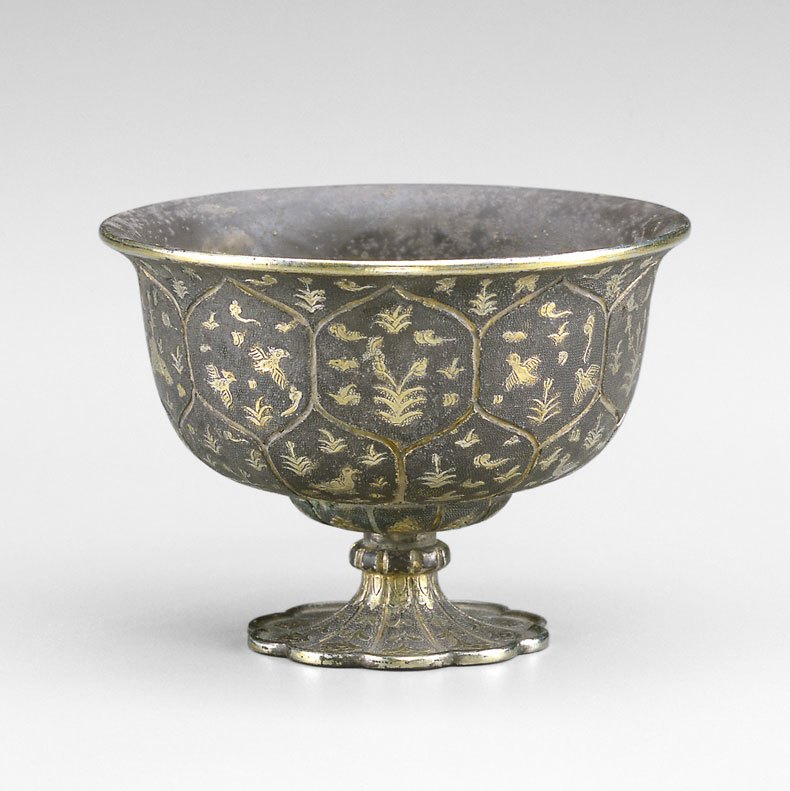
The Japanese were keen collectors in the field until the end of the 1980s and the market was strong up to 2010 – the Kempe sale in 2008 marked its peak. A slight dip followed, but Eskenazi notes that ‘Tang objects as a whole have had a recent resurgence’, while Croës says that there is new interest from younger Chinese collectors who are curious about their own culture. Among her pieces is an elegant parcel-gilt silver stem cup with a pattern of birds and flowers. For exceptional objects auction results are strong. In 2019 a spherical silver censer sold at Christie’s New York for $112,500, almost double the lower estimate, while in September 2021, also in New York, a very rare ‘rhinoceros’ decorated silver dish sold for $1.1m (estimate $1m– $1.5m), while an ‘animals’ bowl achieved the same price on a lower estimate of $900,000–$1.2m; all were from Kempe’s collection. In Hong Kong a month later, Sotheby’s sold a finely engraved silver stem cup, originally from the collection of French–American banker David David-Weill, for $HK 1.4m (roughly £135,000). Two years later, in October 2023, a fine, rare parcel-gilt, octofoil cup, shaped after a Sassanian prototype, with elaborate chased decoration of hunting scenes amid lush foliage, sold at Sotheby’s in London for £57,150 against an upper estimate of £18,000.
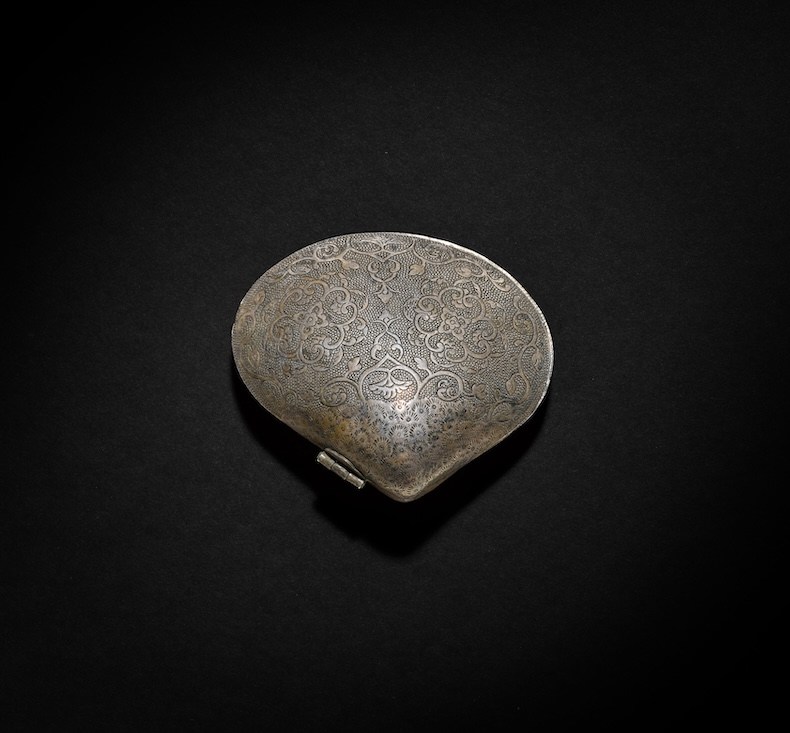
Julian King, head of Indian and Himalayan art and Chinese works of art at Sotheby’s London, says: ‘For Tang silver it is a connoisseur’s market. We would expect wide bidding from clients in China, Taiwan and Japan, Chinese–Americans and Europeans.’ For a really good piece with pre-1970 provenance, he adds, ‘There might be institutional interest.’ In London on 4 November he will offer a silver shell-form box and cover, chased in a pattern of stylised flowers, at an estimate of £8,000–£12,000. Silver boxes in the form of clam shells were an innovation of the Tang dynasty and were used to hold cosmetic powder.’ A similar, parcel-gilt example, decorated with birds in flight, sold in London in May 2015 for £21,250, three times its high estimate.
From the November 2026 issue of Apollo.