From the March 2026 issue of Apollo.
Maastricht is the place to be this month, as the European Fine Art Fair (TEFAF) welcomes dealers presenting modern and contemporary art, jewellery and, of course, the Old Masters that make the event essential to anyone interested in the field.
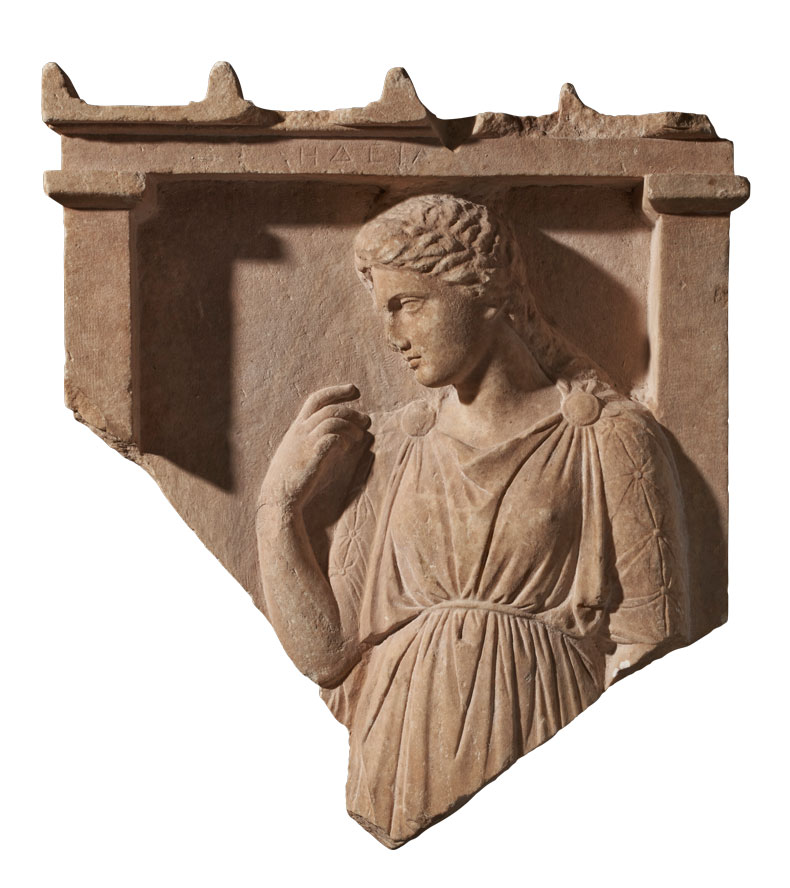
This stele depicts a parthenos, a term used to describe a girl in the transitional period between childhood and marriage – a vanishingly brief moment in ancient Athens. The inscription reveals the stele to have been made for the grave of a young girl called Medeia. Parthenos steles are rare, accounting for only four per cent of the funerary reliefs recorded in the Swiss archaeologist Christoph W. Clairmont’s eight-volume work on Attic tombs. Crucially, this stele has a desirably long provenance, first recorded in the collection of the Athens art dealer Theodoros A. Zoumpoulakis, then bought by the gallerist Joseph Brummer in 1923, passing on his death to his brother Ernest, who then left it to his wife, Ella Laszlo Baché Brummer. It was sold in the Ernest Brummer Collection auction in Zurich in 1979 and last appeared at auction at Sotheby’s London in 2018.
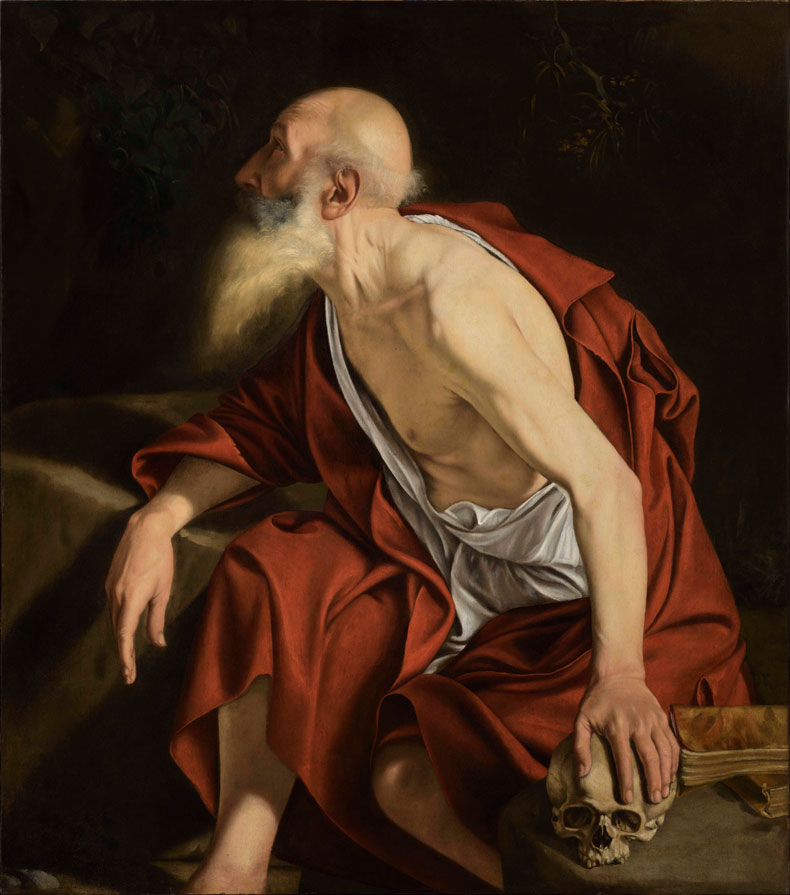
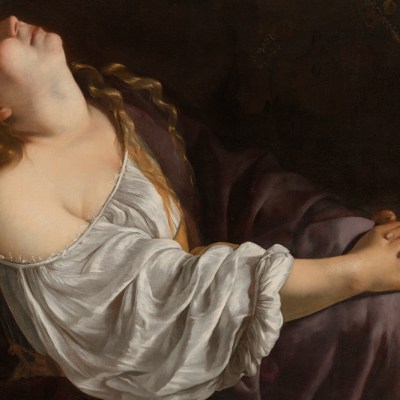
The sitter in this painting, a 72-year-old pilgrim named Giovanni Pietro Molli, was called as a witness in the rape trial involving the artist’s daughter, Artemisia, in 1612. Molli was at the Gentileschi studio in Rome when the rape took place and recalls sitting for this painting in his testimony: ‘[Orazio] had me undress from the waist up to paint a Saint Jerome similar to me, and for this purpose he kept me at his house during the whole of that Lent.’ At the time, Gentileschi was heavily influenced by his younger contemporary Caravaggio, painting from life to achieve a greater naturalism, as in the case of this work. The painting has been in various private Italian collections, most recently in Milan, but now has an export licence to be sold outside Italy.
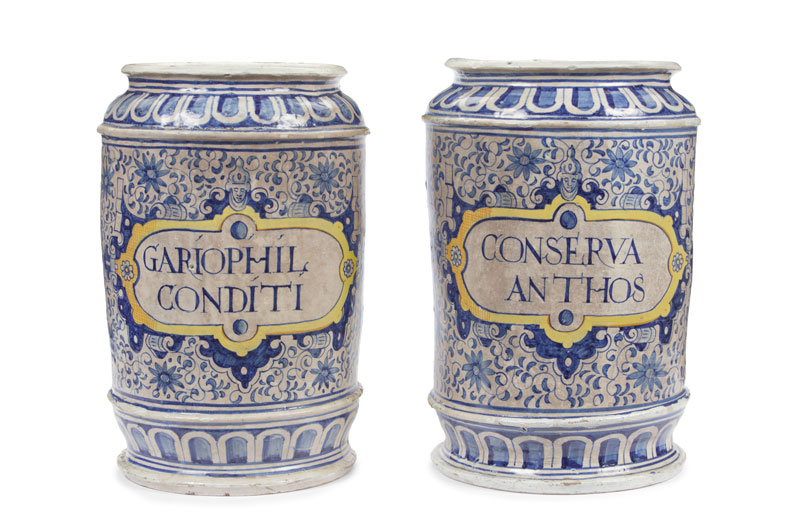
Over more than 50 years, the pharmacist Joseph van Gelder (1937–2004) and his wife collected more than 350 antique apothecary jars, albarelli, bottles and other ceramics. Van Gelder concentrated on early majolica from Antwerp and the northern Netherlands and Delft faience, but the group also includes a handful of German examples. While the decoration varies subtly from region to region, there is a theme of shared patterns and motifs. Aronson Antiquairs will present a substantial part of the collection at TEFAF Maastricht within a purposebuilt 18th-century-style apothecary interior. The collection is being offered for sale as a whole, says Robert Aronson, who first encountered it in the early 1990s, when ‘it left a lasting impression’.
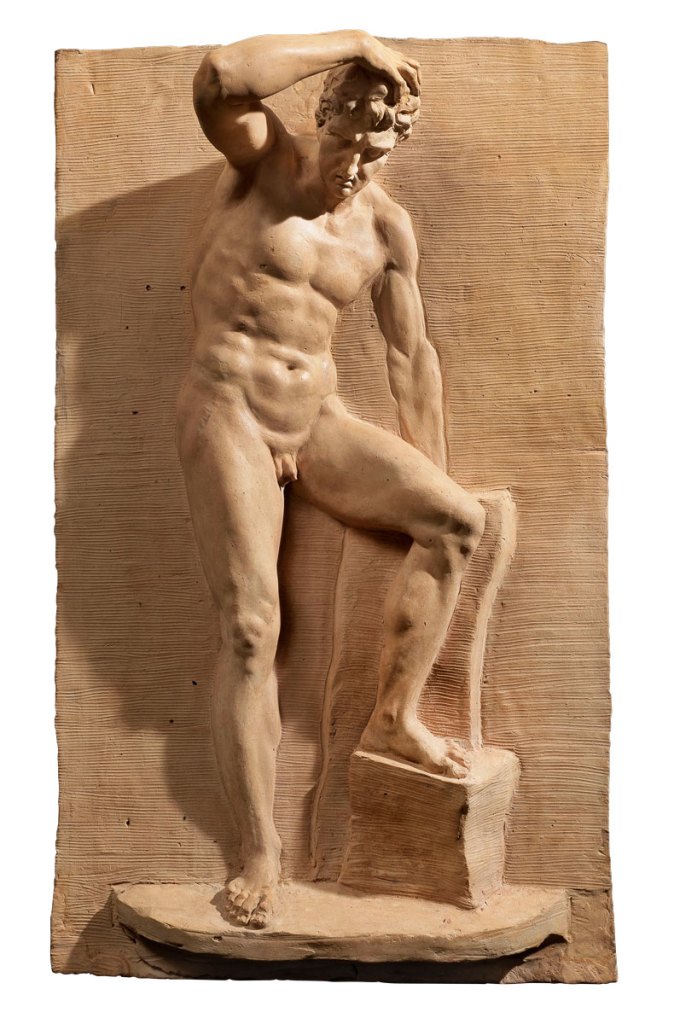
The sculptor Tommaso Righi is known for his contributions to some of Rome’s most important buildings, such as the Villa Borghese and the Church of Santi Luca e Martina in the Roman Forum, where he made the architect Carlo Pio Balestra’s funeral monument. In Warsaw he worked for the king of Poland, Stanisław August Poniatowski. This terracotta relief ‘stands among the finest expressions of his mature style’, Stuart Lochhead says, adding that it is ‘closely related to a series of four reliefs formerly in the collection of the art historian Federico Zeri, now in the Accademia Carrara di Bergamo.’ As terracotta is so fragile, objects surviving in such good condition are rare.
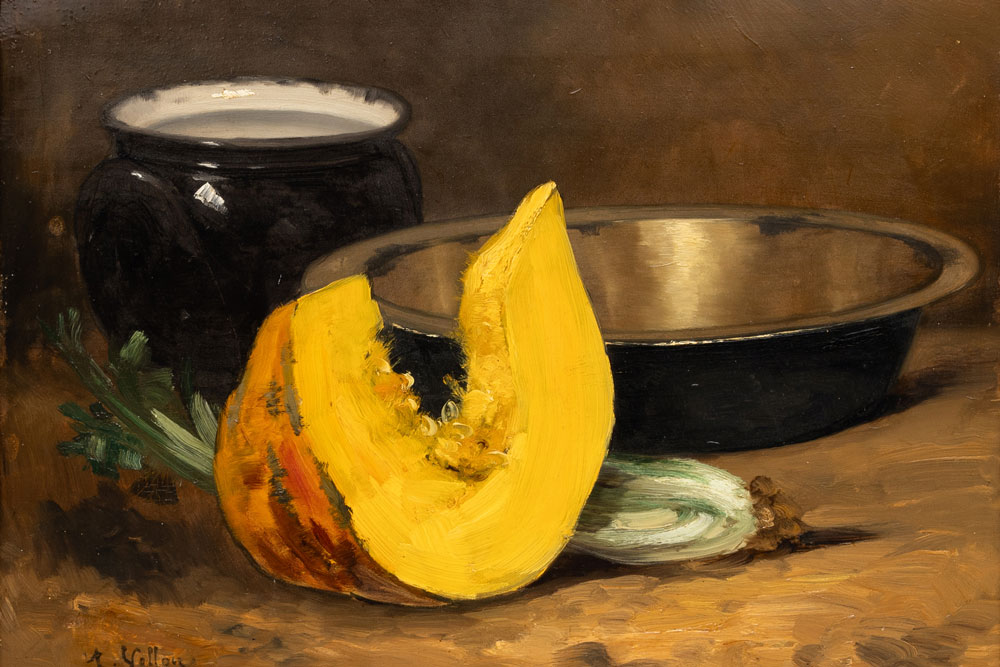
This painting of a slice of pumpkin is part of a solo presentation of oils and works on paper by the French realist Antoine Vollon that the New York gallery Demisch Danant will present in TEFAF Focus. Vollon may not be a household name today, but in his day he was lauded as a successor to Chardin. Émile Zola went as far as to say Vollon should be classed alongside Gustave Courbet. Vollon is known for his still lifes and landscapes, perhaps most notably the monumental Mound of Butter, now in the National Gallery of Art in Washington, D.C. Vollon’s realism and the loose confidence with which he handles paint are reminiscent of his contemporary Édouard Manet, though Manet apparently once scathingly described Vollon’s Femme du Pollet as a ‘basket that walks’.
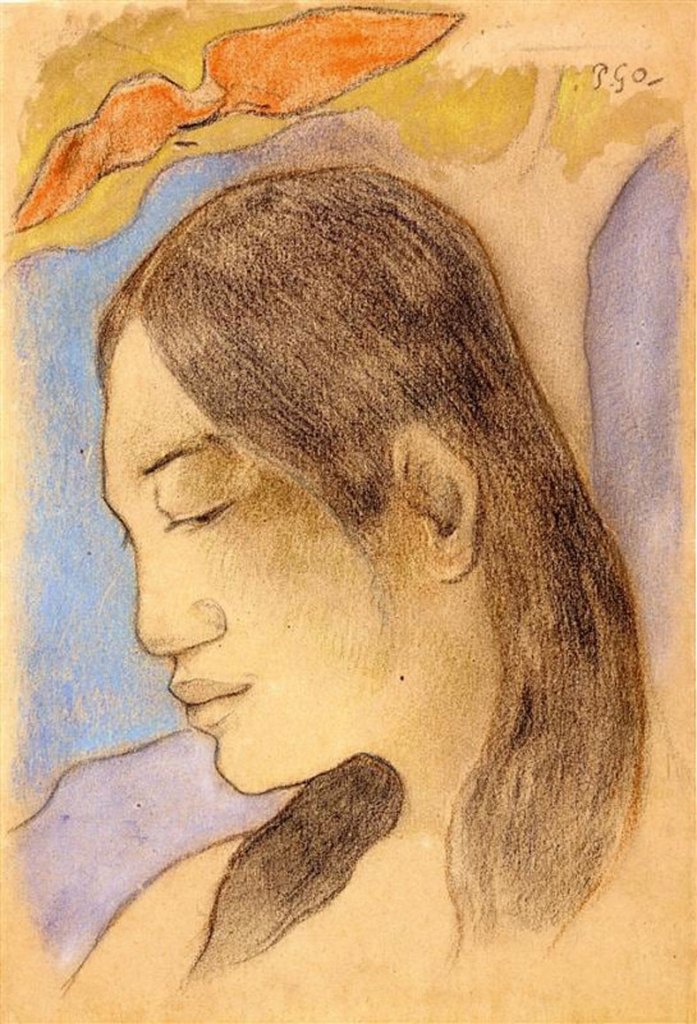
This study was made soon after Gauguin first alighted in Tahiti in 1891, when he set about making studies before embarking on the oils for which he is so well known. While many of these studies were in charcoal, Gauguin shows off his command of pastel in this subtle, restrained work. The mysterious bird-like shape above the woman’s head is similar to that hovering above the figure in the artist’s watercolour Te Nave Nave Fenua, painted in 1892–93 and now in the Musée de Grenoble. It introduces some mystical tension to what the gallery calls ‘a key work within Gauguin’s Tahitian production and among the most important portrait head studies of his career’. The drawing, which last appeared at auction in Paris in 2003, has come from a private collection in the UK and was included in Tate Modern’s Gauguin survey in 2010 and the Royal Academy of Art’s ‘Impressionists on Paper: Degas to Toulouse-Lautrec’ exhibition in 2023–24.
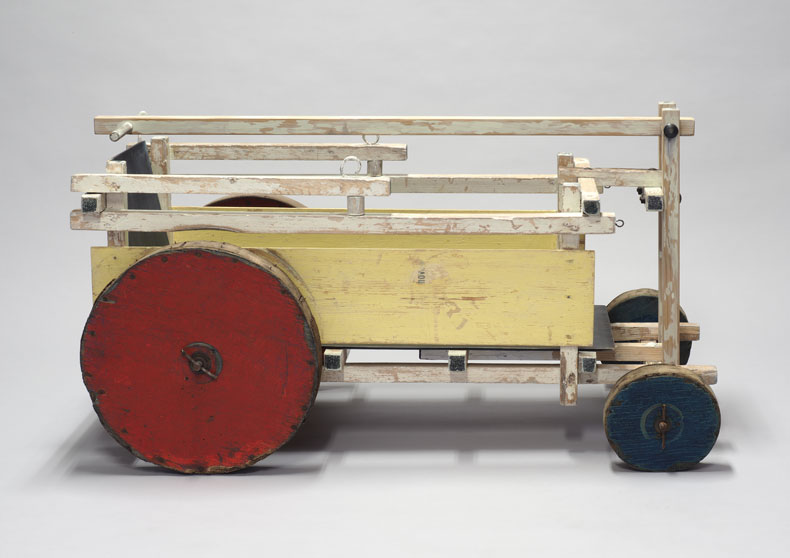
The restorer Jurjen Creman, a specialist in the creations of the Dutch designer Gerrit Rietveld, has proclaimed this beach buggy one of the bestdocumented Rietveld objects he has ever encountered. Designed in 1922–23, it was constructed in Utrecht in the later 1920s by Rietveld’s cabinetmaker Gerard van de Groenekan. Now the buggy, which embodies De Stijl ideals with its bright primary colours and utilitarian form, will be part of Galerie Van den Bruinhorst’s presentation for TEFAF Focus, titled ‘Rietveld’s Visions’. Having been passed down the generations of a single family, the buggy is documented in many family photos dating back to the early 1930s, doing exactly what it was intended for – ferrying children to and from the beach.
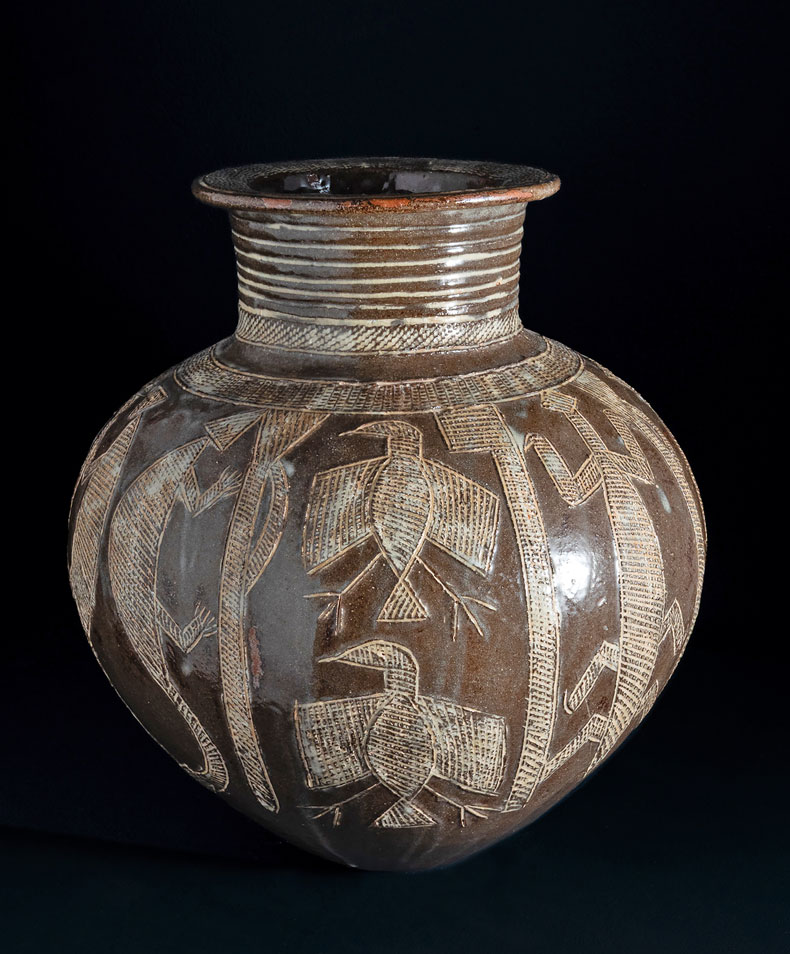
Born in a village in what is now part of Nigeria’s Federal Capital Territory, Ladi Dosei Kwali was taught pottery by her aunt at a young age. Her skill soon became known further afield, and the Emir of Abuja, Alhaji Suleiman Barau, bought several of her pots for his palace, where they were seen in 1950 by the British studio potter Michael Cardew. So impressed was Cardew that he invited Kwali to become the first woman to train at the newly founded Abuja Pottery Training Centre in 1954. Kwali is best known for her water pots, such as this one, built using the Gbari coiling method then etched with her distinctive animal motifs and cross-hatching, whereby she would pierce through the white porcelain slip to reveal the contrasting colours underneath.
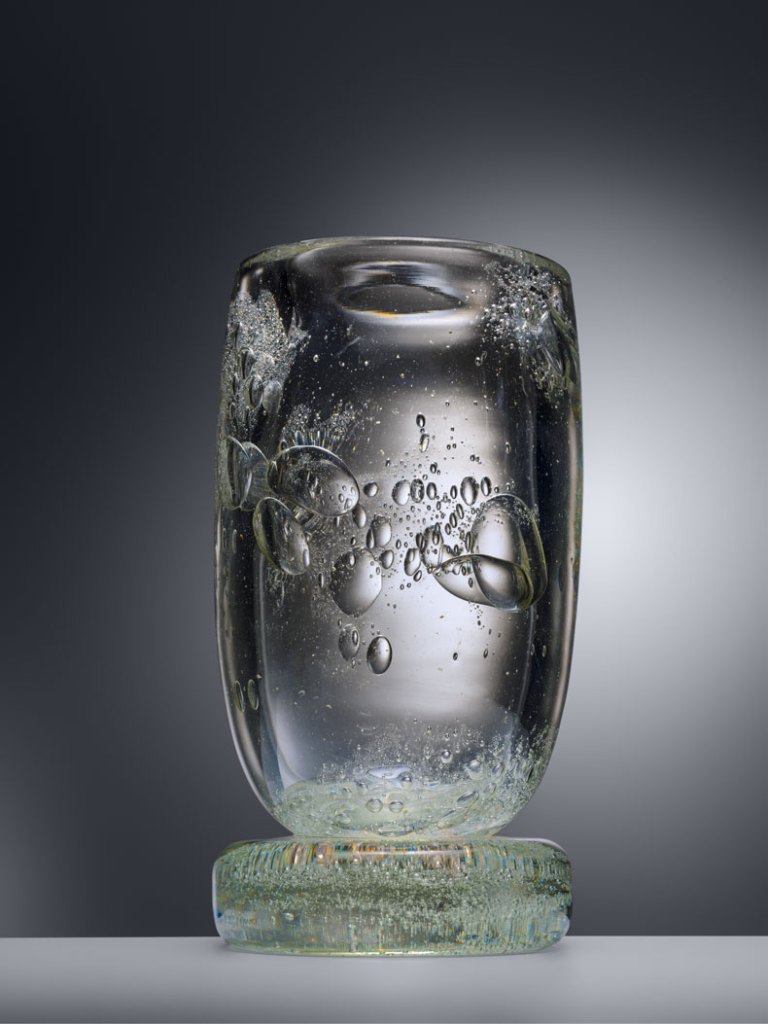
Robert-Henri Schneider produced his brutalist glass designs for just a fleeting period between the rebuilding of the Schneider family factory in Épinay-sur-Seine, near Paris, after the Second World War and the gas explosion that destroyed it again in 1957. But in that short time he was truly innovative, drawing on his father Charles Schneider’s explorations of thick, layered glass to create unrefined, monumental forms which call to mind the parallel Art Brut and brutalist movements in the visual arts and architecture. At TEFAF Maastricht, Booij Arts is devoting its stand to a group of glass designs by Robert-Henri, which, as in the case of this vessel, employ controlled air bubbles, colour inclusions and thick transparent layers of overlapping glass.
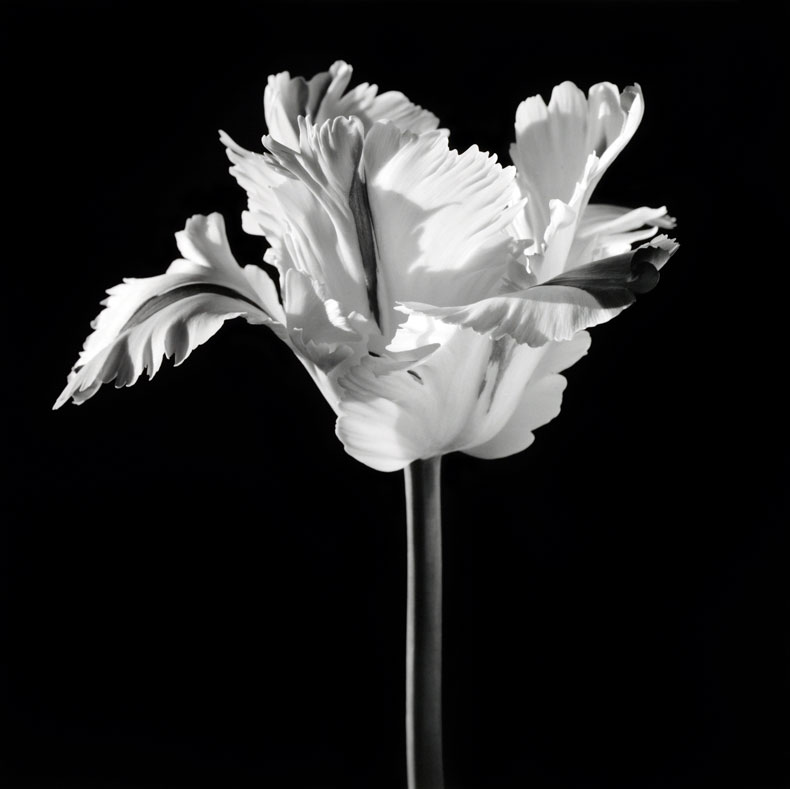
The American photographer Robert Mapplethorpe once said in an interview, ‘I don’t love flowers and I don’t like having them,’ so responsible did he feel for their inevitable death. And yet Mapplethorpe photographed flowers throughout his career, carefully lighting them against dark backgrounds, recording their ephemeral beauty while flexing his technical skill. Mapplethorpe favoured the fleshy forms of lilies, orchids and tulips and, though less controversial than some of his more explicitly sexual images, the crystalline photos of flowers hold a delicate erotic charge. This is one of a group of flower photographs by Mapplethorpe that will be shown at TEFAF by Galerie Thomas Schulte.
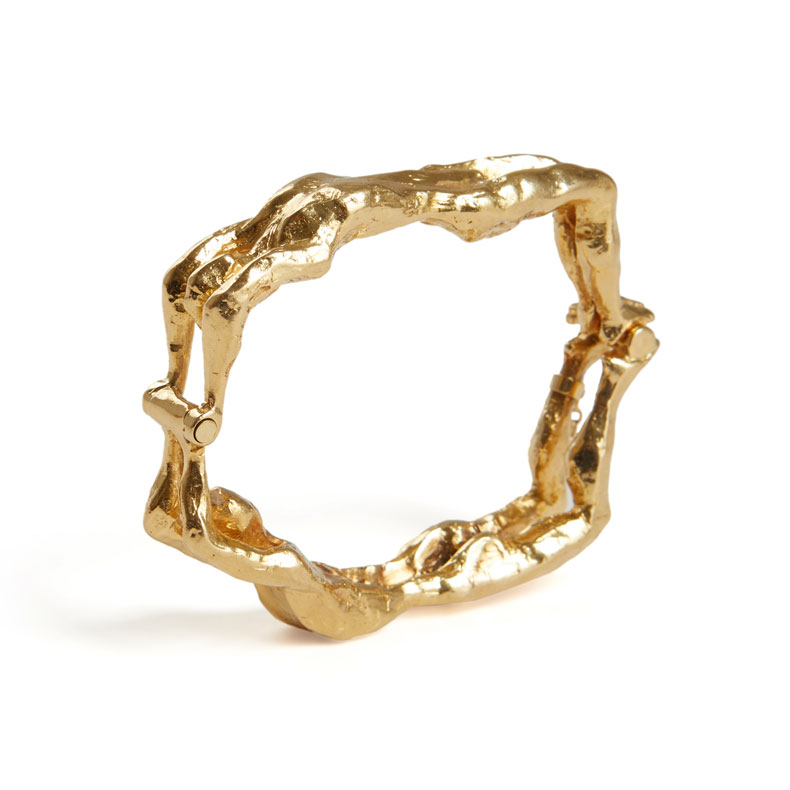
Cruelly afflicted with severe arthritis throughout his life, the British artist Michael Ayrton was fascinated by the limber bodies of acrobats, producing numerous drawings and sculptures of them. Such works were, Ayrton said, to some extent ironic, ‘Since I myself am an arthritic and can neither bend my permanently rigid back nor, for most of the time, move easily.’ This gold bangle in the form of two male acrobats holding hands, their feet touching, was cast by the London goldsmith John Donald and will be included in Didier’s TEFAF display, which is titled ‘Gold in the Hands of the Artists’, alongside pieces by César Baldaccini, Man Ray and Max Ernst.
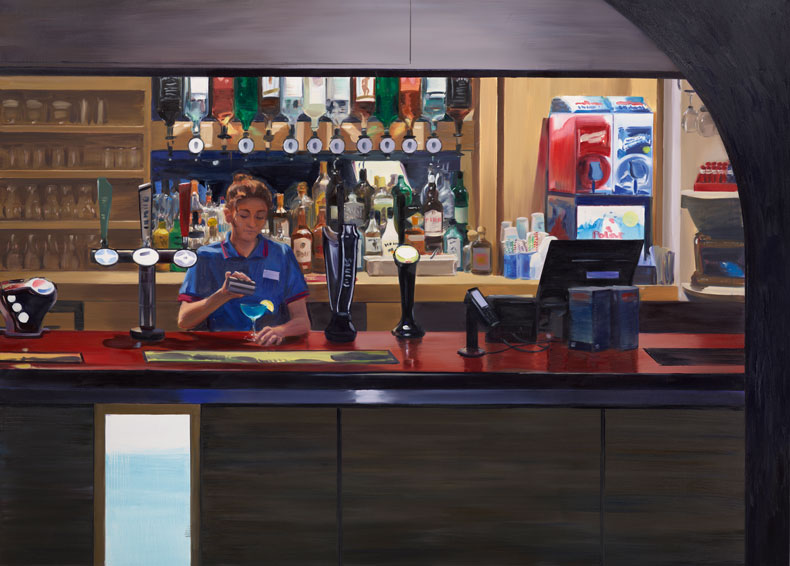
This painting by the Scottish artist Caroline Walker has been made especially for TEFAF Maastricht, after a show of her Holiday Park series at Grimm Gallery in New York last year. The series was inspired by holidays at family-friendly resorts in 2023 and 2024, during which she photographed women at work – one of her abiding themes. ‘Showbar is the second painting I’ve made of this young woman preparing a lurid cocktail behind the bar at a family-friendly holiday resort in the south of England,’ Walker says. She was in part inspired by one of her favourite paintings, Manet’s A Bar at the Folies-Bergère. ‘Rather than meeting our eye as Manet’s barmaid does, the woman in Showbar is absorbed in her task or her inner thoughts.’
From the March 2026 issue of Apollo.