
From the October 2026 issue of Apollo.
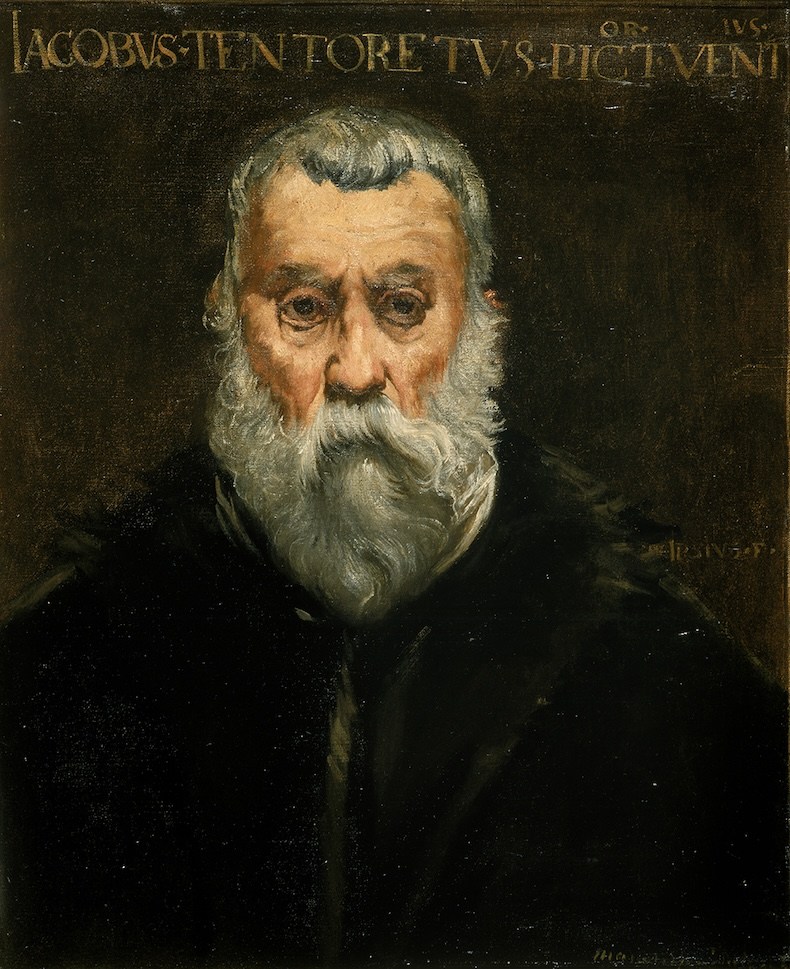
The last thing you see as you exit the Tintoretto exhibition at the Musée Jacquemart-André in Paris are two almost identical paintings hung side by side. On the left, Tintoretto’s self-portrait, made around 1588, and to the right, Édouard Manet’s copy from 1854. It’s not so much a game of spot-the-difference as a forking of paths. The Tintoretto leads us back into a lost world of painterly authority, in which the swoops and dabs of a brush can magic a human personality to life. Manet, meanwhile, thrusts a flashbulb into the old Venetian’s face. His is a Tintoretto of the disembodied modern age, an image as flat as a postcard. Or so it seems.
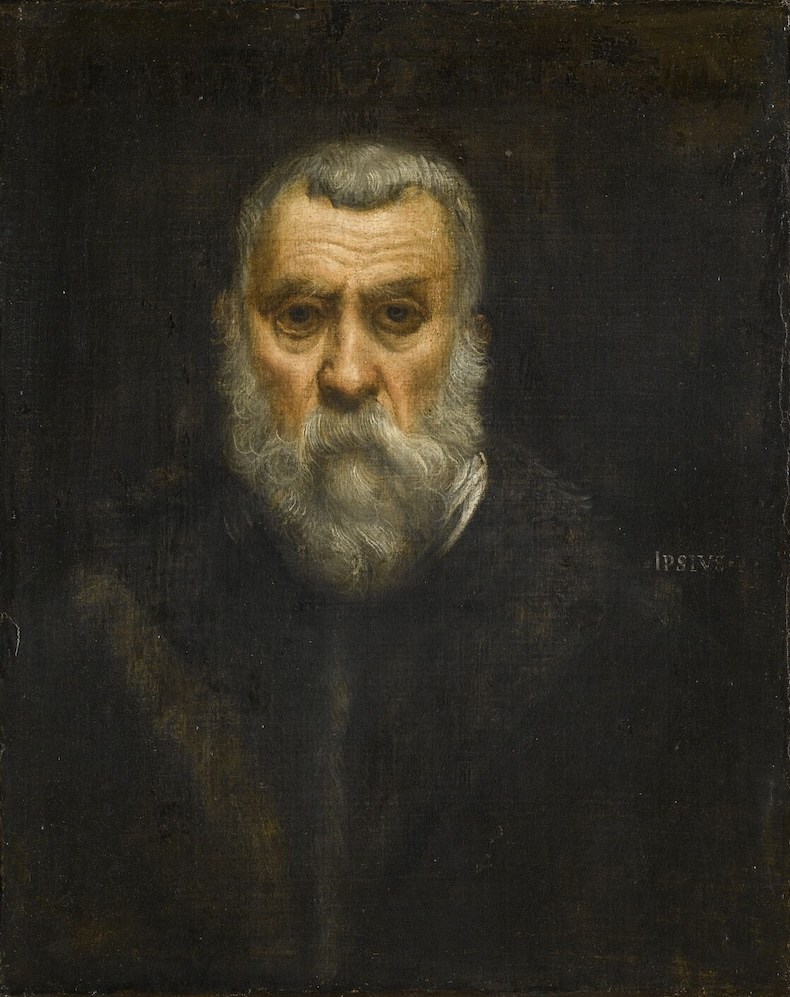
In fact, the pairing, and the exhibition that precedes it, illuminates something unexpected: a shared interest in thinking through the mechanics of the medium. The paintings that share the room, fanciful 19th-century re-enactments of scenes from the artist’s life by Ingres and Léon Cogniet, show by contrast how little understood Tintoretto’s work was then and remains now. Manet is the exception that proves the rule. Jacomo, as the curators call him – using the Venetian spelling rather than the usual Tuscan Jacopo – emerges not so much as a figure ahead of his time as out of it entirely.
It is necessary in any review of a museum survey of Tintoretto to point out the impossibility of the venture. Check the sign on any church in Venice listing the names of artists whose works hang inside and there will more than likely be a Tintoretto. So prolific was his workshop and so vast in scale the canvases produced that any attempt to corral them into a comprehensive show is quixotic. The permanent Tintoretto retrospective on view in the churches, guildhalls and galleries of Venice is, like Michelangelo’s in Rome, a given. What this exhibition does, despite this apparent handicap, is instil intimacy and rigour into a body of work whose scale, in every sense, can sometimes suggest the opposite. It posits Tintoretto as a more intellectually adventurous figure than a larger exhibition might have been able to argue for. In the comparatively small canvases gathered in the Jacquemart-André’s suite of domestic spaces, his concerns, like Manet’s, seem never to have gone out of style.
Get close to a Tintoretto – the frantic Creation of the Animals (1550–53), for instance – and the intelligence of his process, not just its much-vaunted energy, becomes clear. Here and elsewhere, mark-making is much more than a delivery system for legible content. It is charged with meaning. The artist’s brush swings up and down the trunk of a tree, leaving a weave of marks that doubles up as striated bark and a metaphor for creation itself. Wavy lines squirm around the protagonists’ bodies in Orpheus imploring Pluto (c. 1541–42), like improvisations on the characters’ curly hair. These anticipate related devices in paintings by Edvard Munch and Vincent van Gogh; they energise the entire surface in ways that Joan Mitchell or Jackson Pollock would certainly recognise.
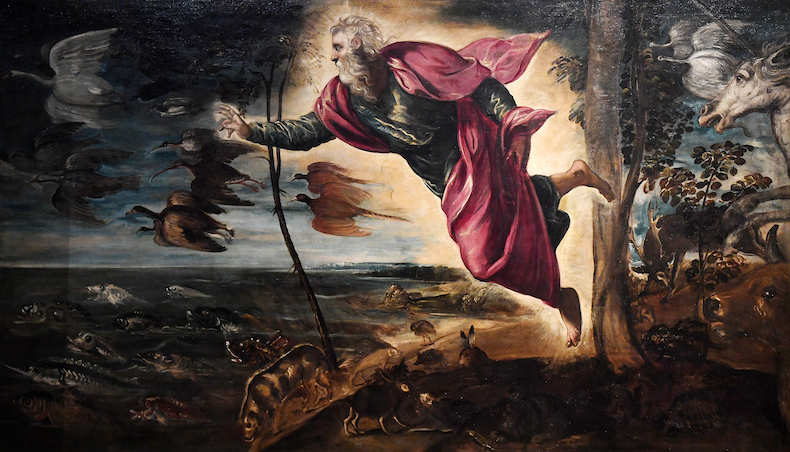
Cultura – Gallerie dell’Accademia di Venezia – Foto Matteo
Yet it is not enough to celebrate art for its prediction of what came next. The exhibition’s curators are at pains to position Tintoretto’s practice as serious play, rooted in its time. Rooms dedicated to generic categories – depositions, portraits, narrative groupings – reveal the artist’s expansion of the possibilities of painting, his tinkering under the hood of any given subject.
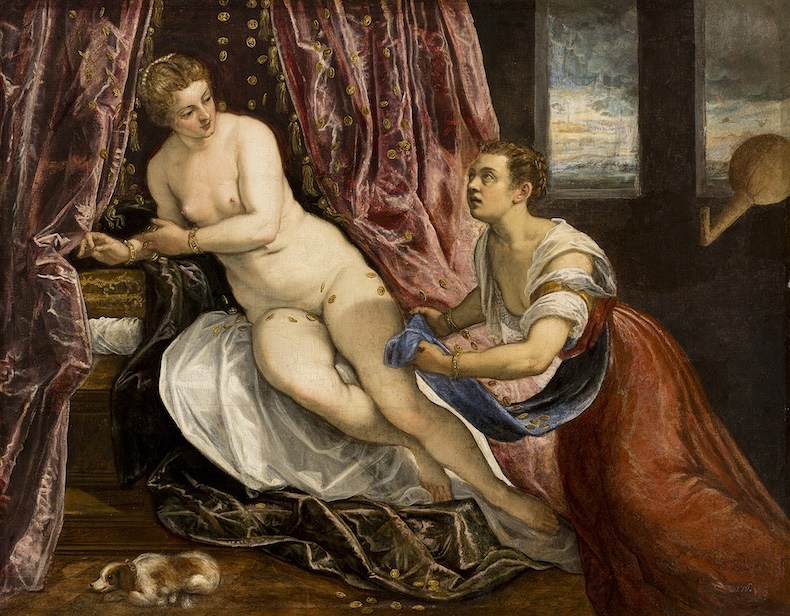
No room in the exhibition better illustrates this than the grouping of three much-painted female nudes: Leda, Danaë and Susanna. In each case, the grandiosity that attends the handling of the same subject by his near-contemporaries Michelangelo and Titian is systematically undercut by a kind of impatience with telling the story straight. In Leda and the Swan (c. 1578), the imminent coupling of woman and bird is made farcical by the parallel interaction of cat and duck at the lower corner. It’s very Venetian, this piling on of bathos.
The astonishing Susanna and the Elders (c. 1555–56) disrupts the conventional telling – old men ogling a nude woman, a convenient opportunity for viewers to follow suit – by bisecting the fictive space with a rose trellis, thus denying the buffoonish voyeurs, one comically contorted in the attempt, the sight they seek. Susanna is played by a contemporary Venetian courtesan, as her assemblage of ivory comb, silk shawl and string of pearls makes clear. As such, she is an ancestor of Victorine Meurent’s knowing performance in Manet’s Le Déjeuner sur l’herbe (1863), across town at the Musée d’Orsay. What animates the comparison is both artists’ disregard of narrative clarity in favour of an address to vision itself. Both are paintings whose central concern is the viewer’s role in making art happen.
Tintoretto’s playful intellectualism is always yoked to the physical act of making. It’s hard to imagine these paintings being made in the kind of monastic silence implied by the works of his Venetian predecessors Giovanni Bellini or Giorgione. Not only is the darting hand of the painter (or his assistants) ever present, like a signature, but the figures that populate Tintoretto’s work are always lifting, straining, hoisting, like assistants assembling the great canvases for the Doge’s Palace. The Holy Trinity (c. 1565), a fragment of a much larger work, shows God the Father and Christ with rhymed outstretched arms.
It’s a device that is at once theologically correct and reminiscent of studio pedagogy – like an older artist instructing a young assistant in the correct measuring-out of canvas and the preparation of stretchers. For Tintoretto, the practice of painting provides all the metaphors he needs. And his work provides us, his gobsmacked onlookers, with a lesson in what painting could be and might become, long into the future.
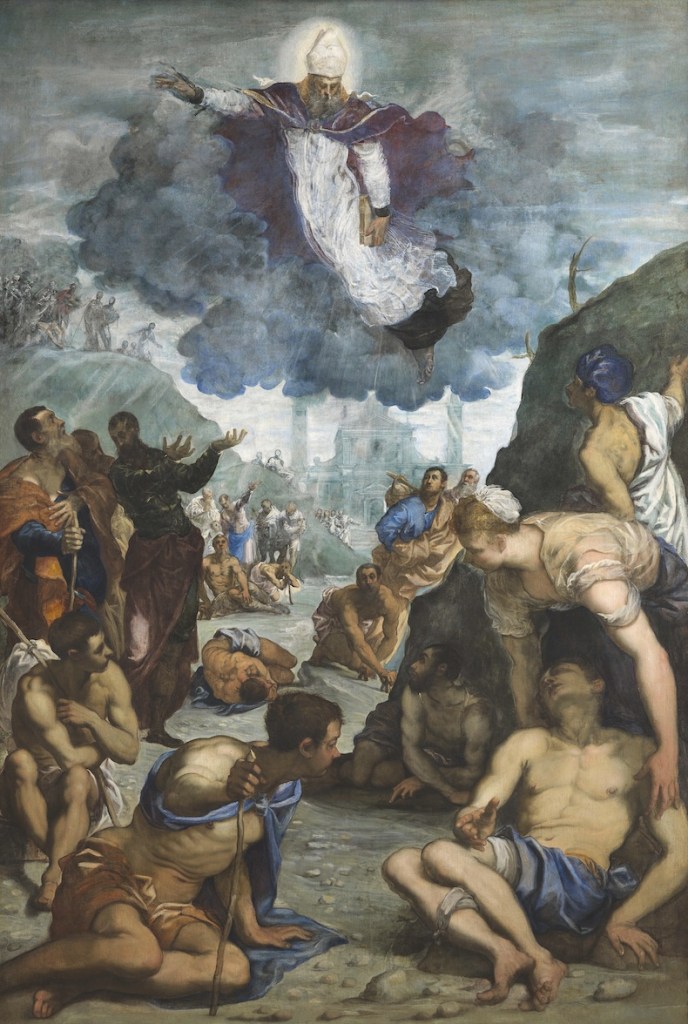
Timeless Tintoretto is at the Musée Jacquemart-André until 28 September.
From the October 2026 issue of Apollo.