A sunflower made of welded steel, a baroque architecture of beeswax, scaffolds and skeletons, pattern-making and processes of production. As much as the four nominees might be called ‘conceptual’ artists (and who, these days, isn’t?), this year’s Turner Prize gives us a very physical show. These artworks are in no danger of dematerialisation. If anything, they sometimes appear to be still under construction, making and remaking themselves piece by piece before our very eyes. The way things are put together, the methods and means of their creation, are often brought to our attention as forcefully as what is made or depicted.
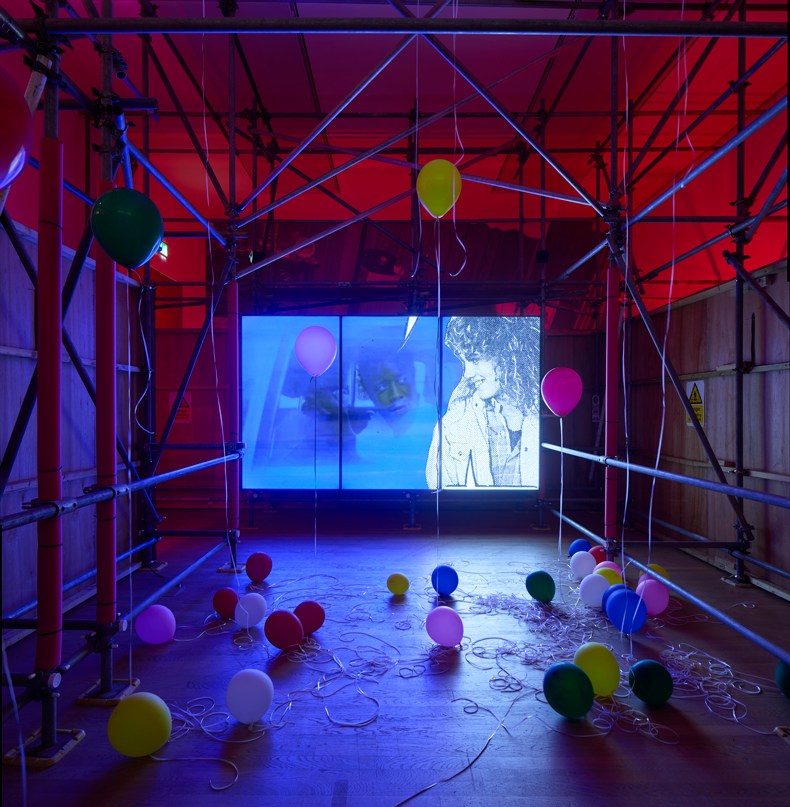
In Simeon Barclay’s installation, the text of his spoken-word performance (a re-recording of an address first delivered at the Institute of Contemporary Arts in London in 2025) appears as subtitles on screen, often in bold or underlined, seemingly at random. Words are misspelt and crossed out, punctuation is multiplied beyond any grammatical necessity, as if to emphasise the act of writing and the gap that separates it from speech. The slippage highlights the constructed nature of language, even as the text itself speaks of the ‘craft’ of tailoring – ‘cutting, stitching, drawing’ – as well as the wallpaper and carpets that constitute the domestic built environment in a forlorn ode to a working-class man seemingly beaten down by life.
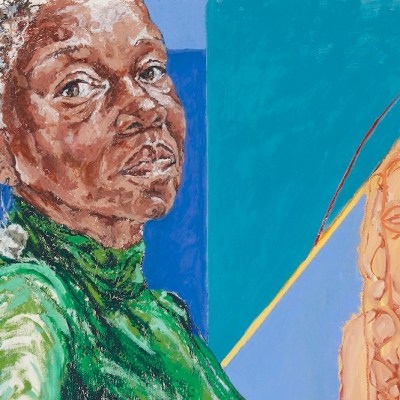
Tanoa Sasraku’s room, too, speaks of dressmaking and couture. By the entrance, the huge floor-to-ceiling work Mascot (2025) presents a larger-than-life pattern for a pinstripe suit outlined in tailor’s chalk on a five-metre canvas made of newsprint (a material that itself speaks to the moulding of minds). Her works are weathered and coloured by ultraviolet light: not from the sun itself, but from tanning beds. Several of them – the four called Subdued Morale Patch (2025) that line the walls, each subtitled with the name of a different conflict (Desert Storm, War on Terror and so on) – are held together by a fringe of multicoloured binder clips, patterned to resemble the military ribbons given to veterans of the corresponding war. The metal tongues of the clips are left visible, like a paper trail pointing back to the bureaucracy underpinning acts of mass violence.
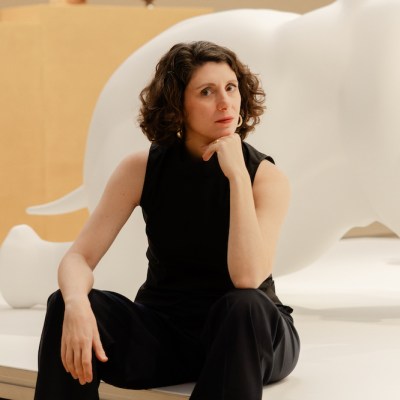
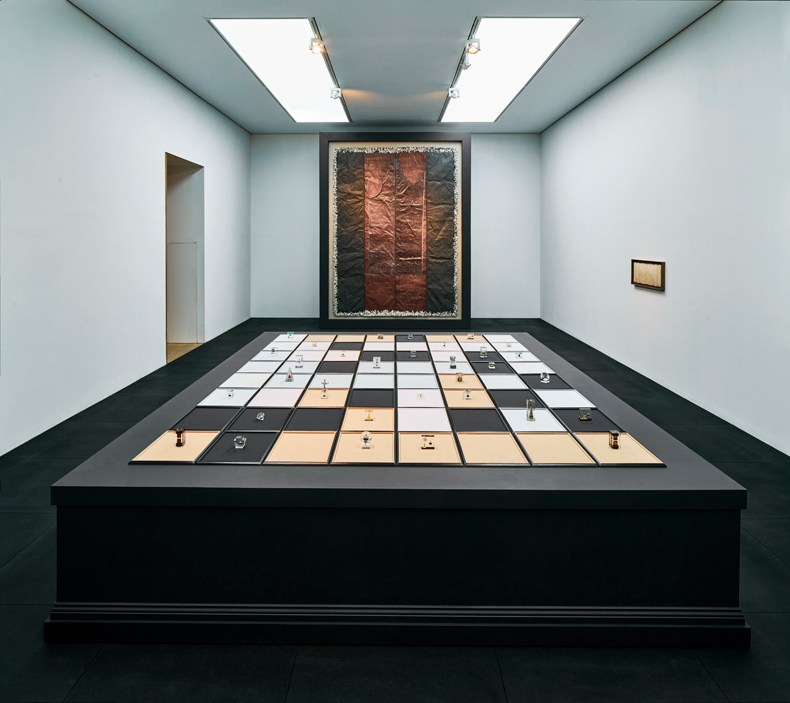
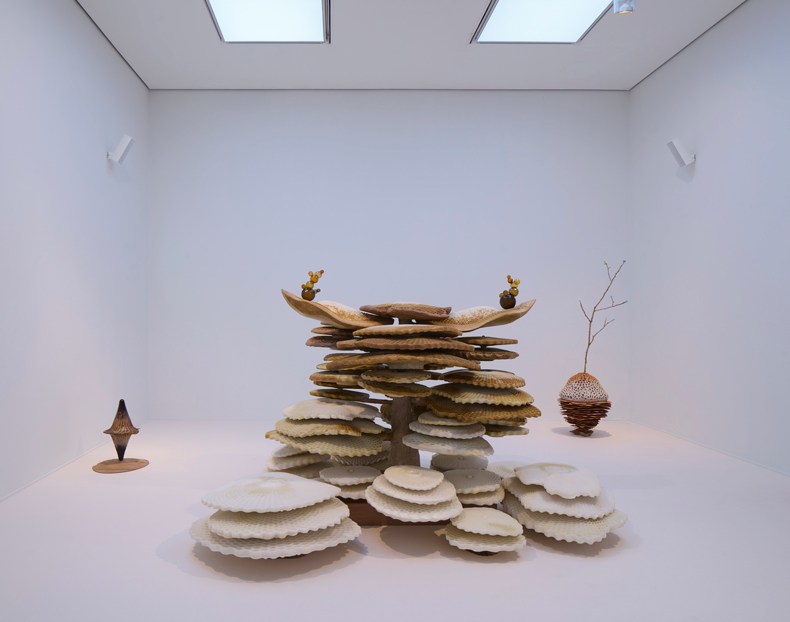
At the centre of Sasraku’s installation sits a giant chessboard pieced by paperweight mementoes from different oil rigs: Perspex domes each containing a drop of real crude from Kuwait, the North Sea or Saudi Arabia (the proximity of many of these sites to the conflicts named on the walls is probably not coincidental). Next door, the work of Marguerite Humeau also bears certain precious substances encased or englobed in her sculptures: a glass ampoule holding wasp venom here or bees’ honey there. Several of the sculptures conceal small loudspeakers, from which you can make out the clicking and popping of the experimental saxophone player Bendik Giske mimicking the social calls of insects. Humeau’s materials list almost speaks for itself: beeswax, walnut, brewer’s yeast, raw honey, each one a process in progress, a work of making too complex for human hands. Humeau shares her acts of creation with myriad creatures, building quasi-replicas of termite mounds out of terracotta and mimicking an elephant’s trumpet with orchestral brass. The whole room is a hive of seen and unseen activity.
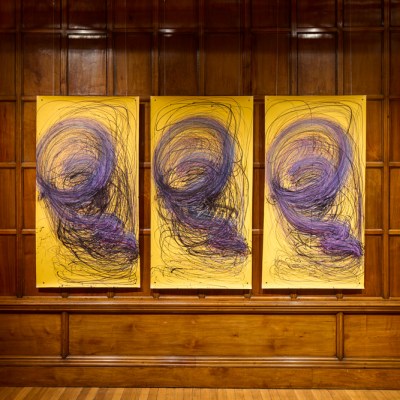
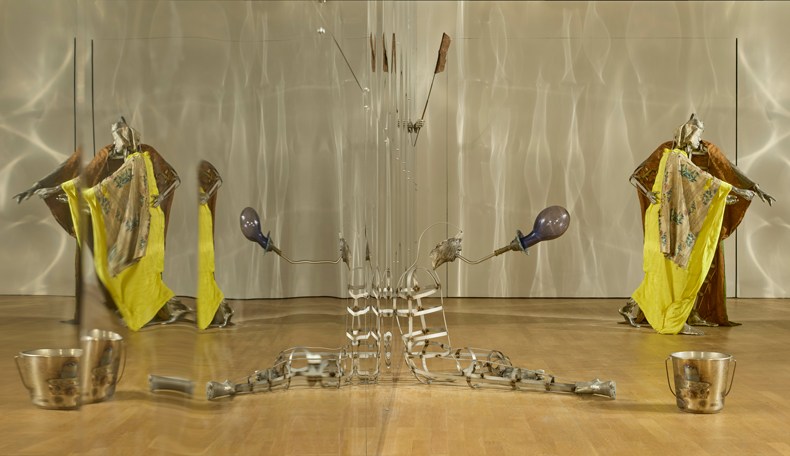
Kira Freije’s materials are of a comparable specificity, tip-toeing the border between the natural and the synthetic: sheepskin, reconstituted fur, horsehair stuffing; not just ‘silk’, but ‘16th-century silk’. The latter, which appears on a number of the 33 sculptures that populate the display, is a found material. Its patterns and fringing suggest at once exotic origins and domestic use – the wear and tear of everyday life. These ingredients participate in a sort of scenography without narrative in which human and animal figures – welded from steel by the artist herself, their soldered joints left exposed – enact fragmented postures suggesting acts of caring or contemplation: gazing up at the sky or down to the ground with a childlike grin. One figure helps another up from the floor, another puts its hands on its fellow’s shoulders in a gesture of gentle concern.
The aluminium faces of Freije’s figures were cast from the features of the artist’s friends and acquaintances, who she conducted and coordinated like a stage director. There is a theatrical element to Barclay’s installation, too: the scaffolding surrounding the video screen, bathed in red light, with helium balloons bobbing about on the ceiling, their ribbons variously strewn about the floor, suggest the aftermath of a party, like a scene by Pinter. Or perhaps we are eavesdropping on the remnants of a wake, with Barclay the last remaining guest delivering a eulogy to no one but himself.
A certain air of mourning hangs over all four of this year’s presentations. Sasraku’s petrochemical souvenirs, sourced by the artist on eBay, are apparently often given to executives as retirement gifts, earning them the nickname ‘tombstones’ in the industry. Humeau’s installation is dominated by the monumental sculpture ECHO: A Matriarch Engineered to Die (2016): a dying elephant in bright white polyurethane foam, releasing a plaintive cry (orchestrated by the duo MARUSKES – Lida Brouskari and Tania Zountsa). Meanwhile, Freije’s Terminator-esque humanoids might ask what systems of social care look like when there are no longer any humans to do the caring. Yet for all the melancholy of the themes, the Turner Prize in 2026 feels more alive than it has in years, animated by the pleasures of stuff, buoyed by a sense of wonder at the world and what it can do – either with us or without us.
The 2026 Turner Prize exhibition is at the Middlesbrough Institute of Modern Art until 29 March 2027.