From the April 2026 issue of Apollo.
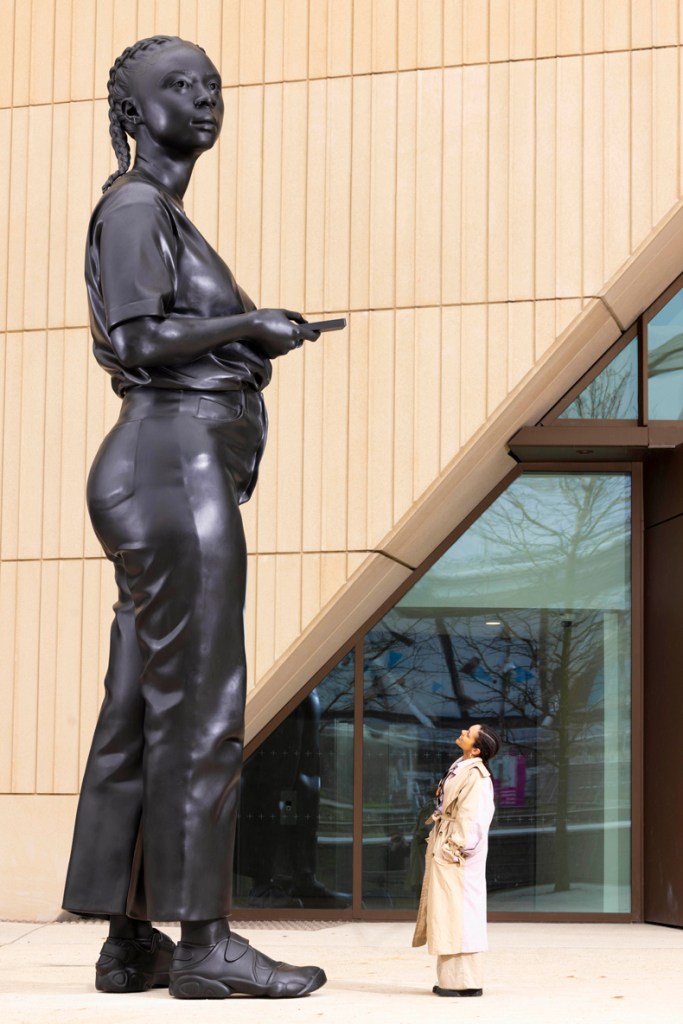
The first thing you see on arrival at V&A East Museum is a five-metre-high Gen-Zedder – a young Black woman, mobile phone in her hand, cast in bronze by Thomas J. Price, the British artist who specialises in turning anonymous people into gleaming colossi. The title of the work is A Place Beyond. ‘She’s the sort of person you would sit next to on the Tube and might not notice,’ says Gus Casely-Hayford, the museum’s director. ‘She’s holding a mobile phone, she’s looking out towards the horizon. She’s probably going to be our future. And we think she’s the personification of everything we’re trying to deliver here.’
The museum, which opens on 18 April, is the latest addition to the V&A empire, the world’s biggest institution dedicated to decorative arts and design. It joins V&A East Storehouse in London’s Queen Elizabeth Olympic Park, the main site of the 2012 Games. Both are part of the Mayor of London’s £1.1bn East Bank cultural and education quarter, which includes the London College of Fashion, Sadler’s Wells East, BBC Music Studios and UCL East, a campus of University College London. This, says the mayor’s office, is a major legacy of the Games, intended to ‘shape the cultural life of the city for the 21st century and beyond’.
V&A East Storehouse has already drawn half a million visitors since opening last May, despite being 19km east of the V&A mothership in South Kensington, with a model that allows people to wander behind the scenes and handle objects by appointment, all at no cost. On a recent weekday lunchtime its kaleidoscopic displays of assorted fine furniture, couture dresses, pop ephemera and the like were packed with young adults. V&A East Museum is another new concept: an exhibition space with specific focus on 16-25 year olds – a cohort too old for the hands-on children’s galleries of Young V&A in Bethnal Green, but perhaps turned off by the grand V&A halls in Albertopolis, where galleries are often stuffed with exhibits and it is impossible to see inside from the street.
The new museum will draw on the V&A’s mighty resources, its permanent collection and curatorial staff, to target a highly specific age group and local audience, though staff stress that everyone is likely to find something to interest them. Casely-Hayford says that his mission is for those visitors to ‘find joy, something of yourself and a sense of belonging the moment you walk through the door’. Whether the V&A’s other offerings will change is unclear. ‘Each of the V&A’s family of sites has a distinct offer shaped around its target audiences,’ is all the institution will say. But the new venue is likely to increase South Kensington’s focus on temporary exhibitions with mainstream commercial appeal and the potential to travel internationally.
Young people are not easy to entice into museums and galleries. Some are simply not interested – more than 40 per cent in 2019/20, according to DCMS data. Just under half of 16–24 year olds made at least one visit to a museum or gallery that year. Older teenagers say they value museums as places to explore interests, find inspiration for coursework and decompress from exams and other worries, according to a report published last year, commissioned by the Arts Council. But travel and admission costs and the time it takes to visit put them off, especially when weighed against the lure of the digital world. As one teenager put it: ‘I’ve got two days on the weekend […] if I’m looking for information, I wouldn’t pop to a museum, especially considering anything you can get at a museum you can also get online.’
Museums must secure their future relevance and pass culture and history from one generation to the next. London institutions are making a concerted effort to encourage a generation of people who have never known life without Google to develop a museum-going habit – especially those who either feel themselves to be excluded, or have excluded themselves. Recent exhibitions in the capital have focused on youth culture of the recent past (‘The Face Magazine: Culture Shift’ at the National Portrait Gallery and ‘Leigh Bowery!’ at Tate Modern were hits in 2025). Most museums offer some combination of discounted membership, special events and the chance to get involved with programming and curating via youth councils. Tate’s free Collective programme for 16–25 year olds includes £5 tickets to all its exhibitions and its Collective Producers scheme offers experience in planning exhibitions; the British Museum’s Young People’s Programme is similar.
Outside the UK, another major new arts venue is trying to solve the young visitors problem. ‘It preoccupied us for a very long time,’ says Kasia Redzisz, artistic director of Kanal – Centre Pompidou in Brussels, which will be one of Europe’s biggest modern art centres when it opens in late 2026, more of a 40,000 sqm cultural campus than a museum. Like V&A East Museum, there is an imperative to attract youth. Kanal is under construction in a sprawling former Citroën plant and showroom near the city’s Molenbeek-Saint-Jean district, dense with housing estates and with a young, multicultural population. Its organising team ran a lengthy engagement programme with young people, including interviewing thousands of local school pupils to find out what they wanted and needed most from the museum.
‘All institutions struggle to be relevant to young people,’ Redzisz says. ‘But the most important thing is not to make assumptions and to figure out what interests them, from their eyes. We discovered a way forward would be to do things together, rather than just “programme for”. There’s a subtle difference, but it’s this idea of co-creating.’ The aim, she says, is a ‘dream of Kanal being appropriated by everyone. It looks spontaneous but it’s complicated. We will have an open user system where individuals can use our spaces for, say, chess games or hip-hop competitions, and we will provide support like tech facilities and staffing.’ As well as ticketed galleries and the usual cafes, bars and shops, its public spaces will be free for young people to escape the pressures of city life – a library, reading room and garden terraces. Kanal has even involved teenagers in writing labels for exhibitions. ‘We ask them: is this label clear? Have we missed something? Should we do it better?’ Redzisz says.

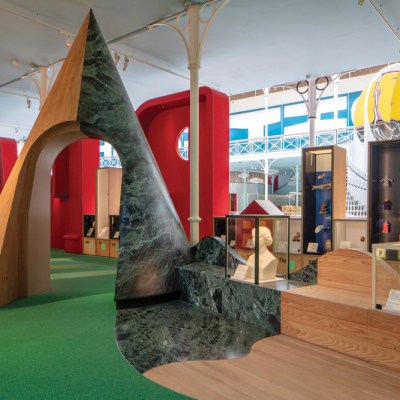
V&A East Museum goes further still. On a recent tour, as builders were clearing the site and curators were unboxing exhibits, Casely-Hayford explained how every detail, from architecture to signage, was planned first and foremost for a young and multicultural local audience. Even the building, by Irish architects O’Donnell & Tuomey, announces its intention to do things differently – a five-storey brick trapezoid based on the ingenious ‘skeleton’ gown by Balenciaga, part of the V&A’s collection. The facade at street level is transparent in a way that the V&A’s other sites are not, with the exception of V&A East Storehouse. Unlike in South Kensington, here big windows make it easy to see what’s happening inside, especially for people who are not ready to venture through its doors.
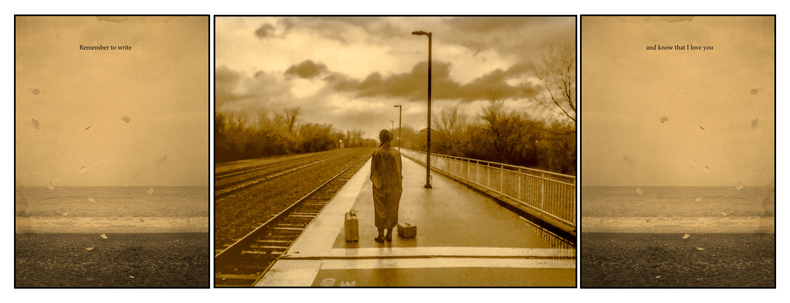
Those who do will be greeted not by guards or an officious reception desk, but by roaming ‘floor managers’ and ‘floor assistants’, whose in-house jobs cover both security and information. Exhibits have been selected for the same audience. Casely-Hayford points out work by big names in art and design of the modern era, with an emphasis on artists and designers of the global majority and diaspora. Besides Price’s statue, there is new work by Rene Matić and Carrie Mae Weems, among others. Two permanent galleries are called Why We Make, with all-important free admission and hundreds of objects spanning art, design, photography, fashion and performance, drawn from the V&A’s collection and organised around youth-friendly themes such as representation, identity and social justice. Radical queer heroes such as Bowery are well represented.
Nothing will be chronological, which means that nothing will be predictable: modern pieces are displayed alongside exhibits rooted in the past – an 18th-century silk dress spun in Spitalfields is among those reflecting east London’s old traditions of design and manufacturing. The stand-out piece in the free galleries is ‘Daria’, an enormous, frothy, neon-pink dress by London fashion designer Molly Goddard, worn by Beyoncé in the video to her 2019 song ‘Water’ – ‘incredibly familiar to the generation that we are speaking to’, says Jen McLachlan, V&A East’s project director.
Casely-Hayford’s parents were immigrants to the UK from Ghana and Sierra Leone. He was born in 1964. What would a museum like this have meant to him when he was a young Londoner? ‘I would go to the British Museum and see wonderful things, but they would usually be in isolation,’ he says. ‘They were not necessarily contextualised in ways that felt deeply relevant to me.’ V&A East Museum ‘is a space that is dedicated to you, and that is a powerful statement. You’re not going to have to ferret around to find the things that speak to you.’
The opening exhibition, ‘The Music is Black: A British Story’, tracks 125 years of black British music, with an entry fee heavily discounted to £10 for 12–25 year olds (and free for those under 12). It covers genres from Brit funk and 2 Tone to grime and features more than 200 exhibits – everything from Winifred Atwell’s piano to fashion worn by the rapper Little Simz. The V&A chose the subject not only for its youth appeal but also for its resonance with older visitors. ‘Everybody has a personal relationship with music, and that personal relationship doesn’t often speak to a larger sociological picture,’ says curator Jacqueline Springer. ‘It depends on race, depends on sexuality, it depends on so many subjective prejudices. I’m interested in how that steers the music that is made, and how music can create a sense of relief from those pressures.’
The 20th century is ancient history to young people. How will Springer and her team hold their attention? ‘You have to retain interest, but you have to do so with immediacy,’ she says. Several years ago, the V&A set up the East Youth Collective – a six-month paid programme for 18–25 year olds, to advise on everything from programming to gallery design in its two Olympic Park venues. ‘Young people want equity and they want a place in which their dreams might be realised. But they want this to be a place that is democratised and open and engaging,’ says Casely-Hayford.
London’s youth clearly want and need V&A East, with its emphasis on inclusivity and multiculturalism. But the UK’s wider political landscape is uncertain, as the discourse has moved sharply rightwards. In the United States, the Trump administration last year used an executive order to remove ‘divisive, race-centred ideology’ from Smithsonian museums and other cultural and educational institutions. Does Casely-Hayford, a former director of the Smithsonian National Museum of African Art in Washington, D.C., worry that the newest V&A, shaped by London’s young adults, may come under pressure at some point? ‘This is a space which is dedicated to hope, aspiration, possibility,’ he says. ‘Those are timeless things. Of course it will iterate and change. All of these spaces will. But it’s a response to human need for aspiration and hope.’

V&A East opens on 18 April.
From the April 2026 issue of Apollo.