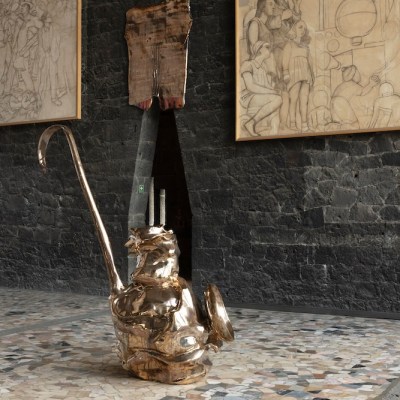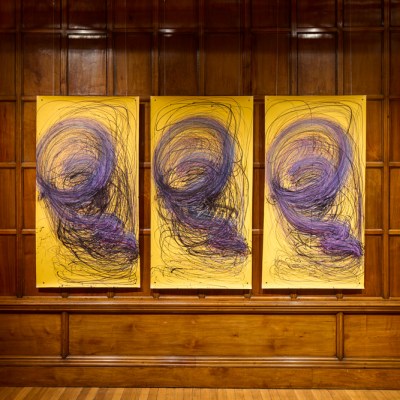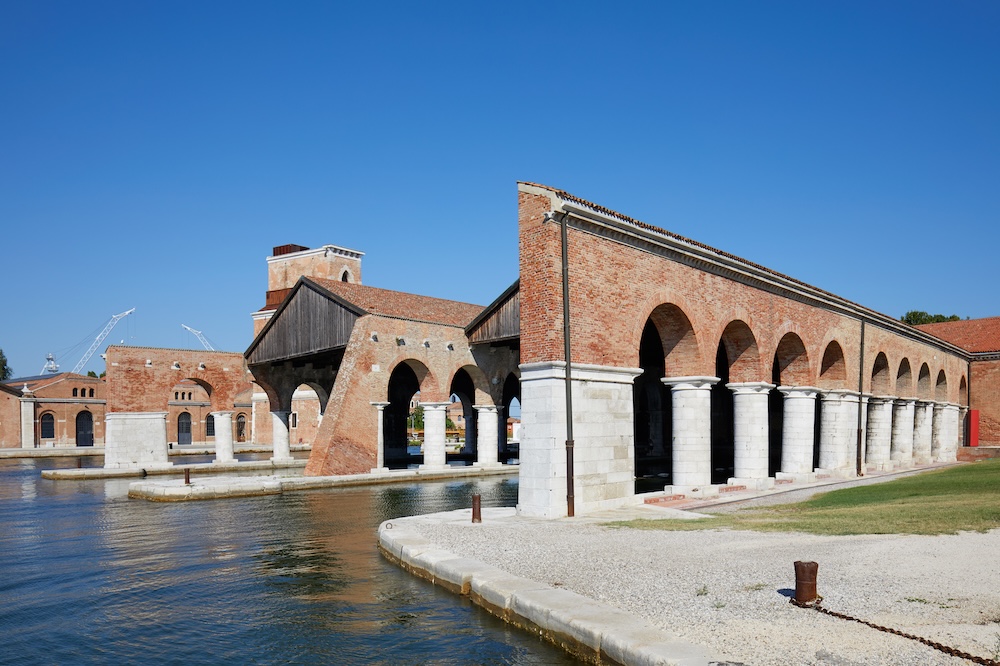
The Venice Biennale prize jury will ignore artists from countries whose leaders have been indicted for war crimes. In practice, this excludes Russia and Israel from consideration. In a statement issued on 23 April, the jury, which doesn’t speak for the organisers of the Biennale, referred to its commitment to the ‘defence of human rights’. Meanwhile, reports Politico, the vice-president of the European Commission, Kaja Kallas, confirmed that the commission intends to withdraw its €2m grant for the event because of Russia’s participation. To put the figure in context, in 2024 the official budget for the central exhibition alone was €19m.
On Tuesday, a Canadian woman was killed and another 13 people injured in a mass shooting at the Pyramid of the Moon at Teotihuacan – the second most-visited archaeological site in Mexico. The gunman, a 27-year-old Mexican national, fatally shot himself at the scene after a standoff with police. There are reports that he was carrying material related to mass shootings in the United States. The president of Mexico, Claudia Sheinbaum, has promised to step up security by installing checkpoints and metal detectors at archaeological and tourist sites nationwide..
A Dutch committee has proposed handing over the country’s collection of ‘orphaned’ Nazi-looted art to the Dutch Jewish community, reports the New York Times. More than 3,600 objects repatriated from Germany to the Netherlands after the Second World War are still in the custody of the Dutch Cultural Heritage Agency, their rightful owners yet to be established. The Committee on Heirless Jewish Looted Art’s recommendation to the government is to transfer the collection to a Dutch Jewish foundation and move the works to, preferably, the Jewish Museum in Amsterdam. After criticism from some quarters, including the Dutch Immigrants Association representing Dutch Jews living in Israel, committee chair Lodewijk Asscher said restitution would still be possible when heirs are found.
Lynda Roscoe Hartigan will be the next director of the Smithsonian American Art Museum in Washington, D.C. Hartigan, who is currently director and CEO of the Peabody Essex Museum, returns to the institution where she began her career in the 1970s, rising to chief curator. She will take up her post on 8 September. The acting director, Jane Carpenter-Rock, will become deputy director for museum content and outreach. Lonnie G. Bunch III, Secretary of the Smithsonian Institution, described Hartigan as ‘a visionary leader whose career reflects a deep commitment to American art, thoughtful scholarship and public engagement’. Three of the Smithsonian group of museums are currently still looking for a director: the National Portrait Gallery, the National Museum of African American History and Culture, and the Women’s History Museum.
Tate Britain has announced the shortlist for this year’s Turner Prize. The four nominees are the multimedia artists Simeon Barclay and Tanoa Sasraku and the sculptors Kira Freije and Marguerite Humeau. Alex Farquharson, director of Tate Britain, said that the selection ‘presents a rich and diverse range of work, spanning installation and performance, and with a strong emphasis on sculptural practice’. An exhibition of the shortlisted artists’ work will open at the Middlesbrough Institute of Modern Art (MIMA) on 26 September and the winner will be announced on 10 December.