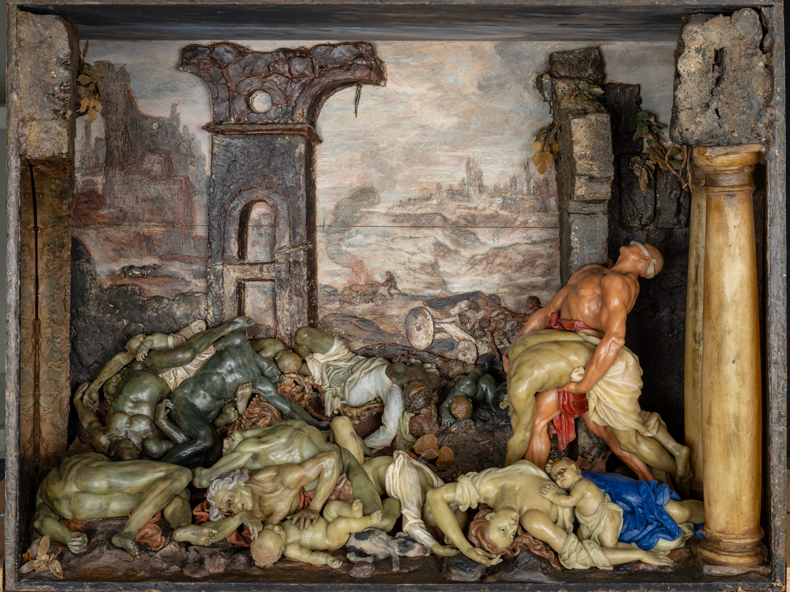
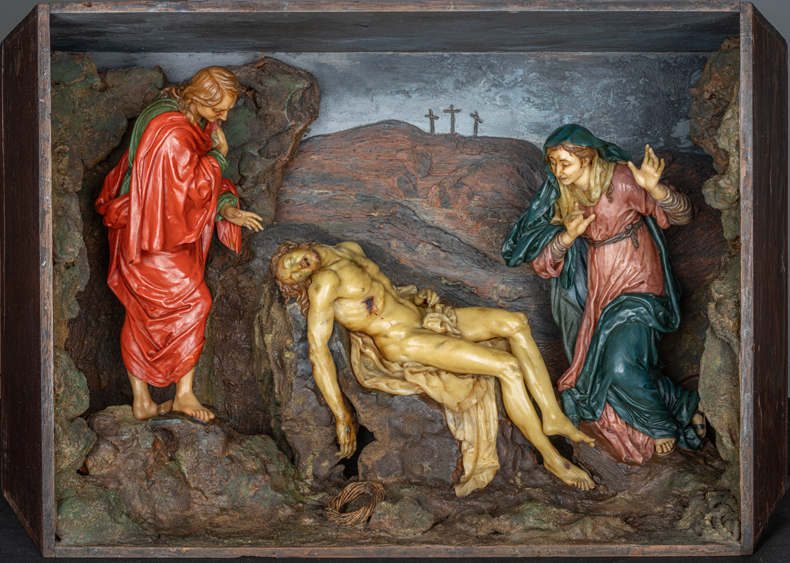
The Uffizi is leaning into the grotesque this season by putting some 90 wax sculptures from the 16th and 17th centuries on display. Although many of them are touching depictions of religious figures or straightforward genre scenes, there’s no shortage of grisly, disturbing works such as Giulio de’ Grazia’s Damned Soul of c. 1600–20. (18 December–12 April 2026). Waxworks have an ancient pedigree – Pliny the Elder was writing about them in the 1st century – and came to prominence in Italy in the 14th century in the form of votive artefacts and even death masks. Under the Medici, Renaissance and baroque artists seized on the way in which wax could simulate human flesh but, thanks to wax’s inherent instability, few of these dramatic works survive today – making this exhibition, which includes many major international loans, especially worth seeing.
Find out more from the Uffizi’s website.
Preview below | View Apollo’s Art Diary