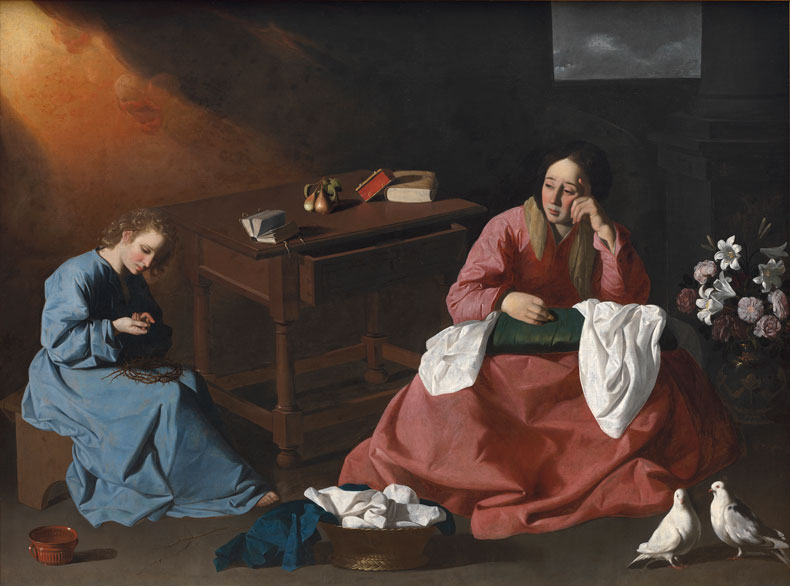
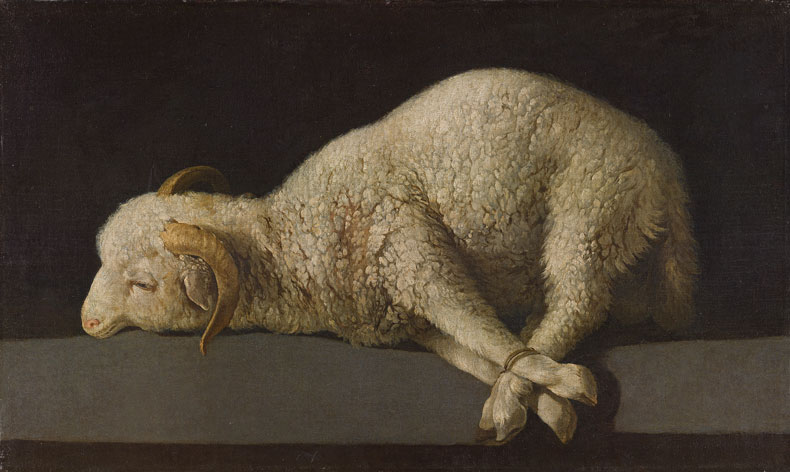
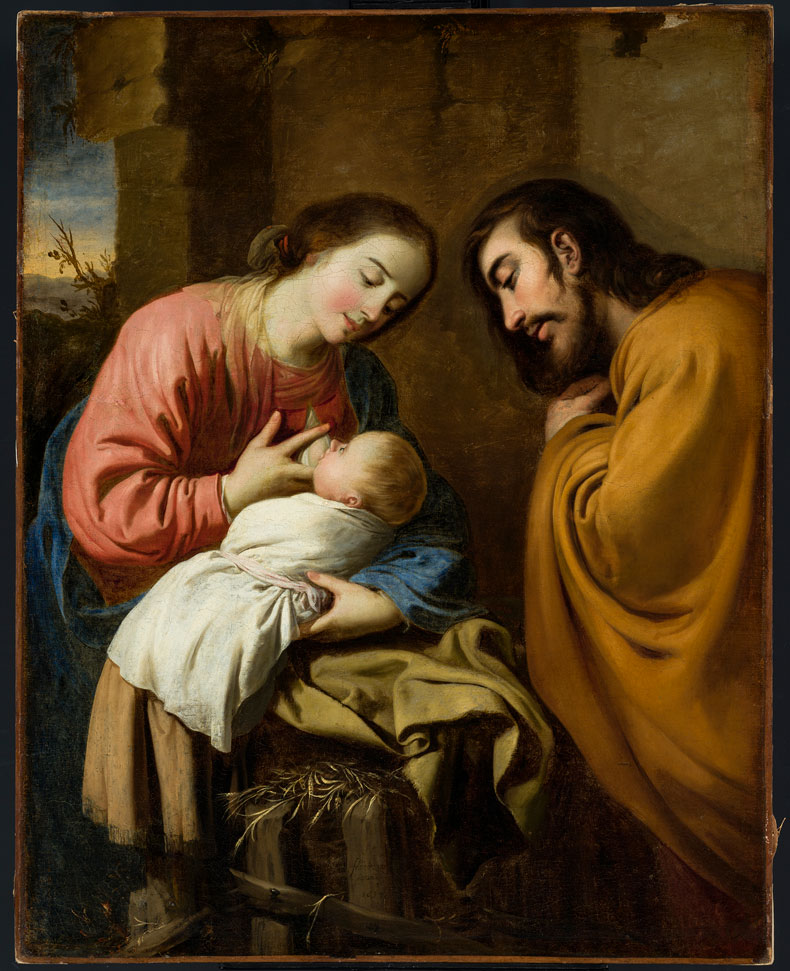
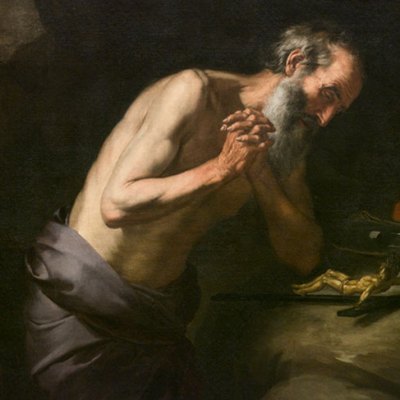
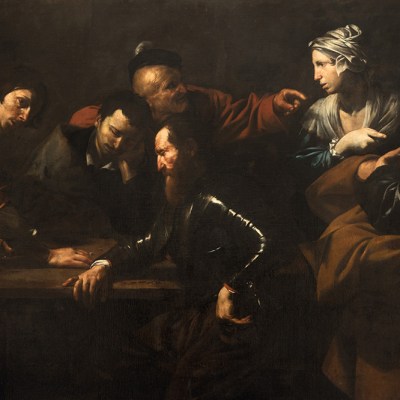
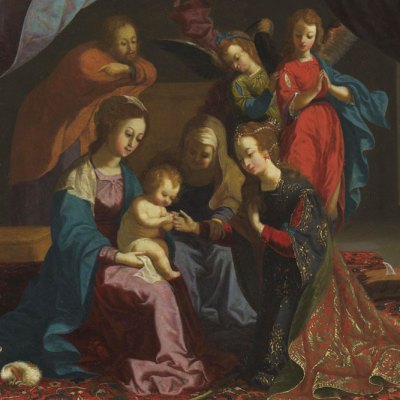
Though less well known today than his contemporaries Velázquez and Murillo, the baroque painter Francisco de Zurbarán (1598–1664) was, in his day, one of Spain’s pre-eminent artists. Heavily influenced by Caravaggio’s command of shadow and sense of drama, he was also an innovator: Crucified Christ with a Painter (c. 1650), for example, is thought to be the first time an artist ever painted himself – or a proxy of himself – into a Crucifixion scene. Zurbarán received major commissions from various religious orders in Seville, as well as for the magnificent Hall of Realms in the royal palace in Madrid. But he was also a formidable painter of still lifes. This exhibition, opening at the National Gallery in London before travelling to the Louvre and then the Art Institute of Chicago, makes clear the breadth and force of Zurbarán’s talents (2 May–23 August).
Find out more from the National Gallery’s website.
Preview below | View Apollo’s Art Diary