
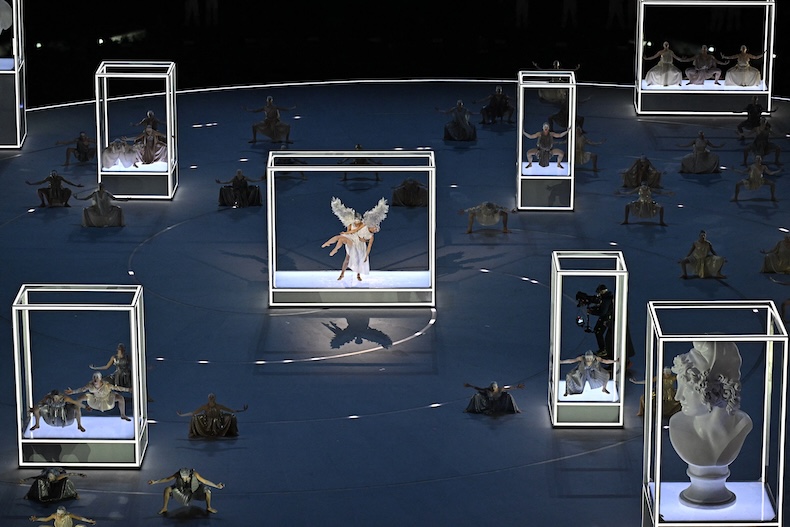
The Milano Cortina Winter Olympics still have another week to run and many medals are to be decided, but it has already won gold in the competition that really matters: the opening ceremony. The pageant organised by the theatre director Thomas Jolly for the 2024 Summer Games in Paris is unlikely to be surpassed for the ferocity of its assault on the senses any time soon. So it was sensible of Marco Balich – organiser of the Milano Cortina ceremony and of an astonishing 16 Olympic ceremonies in total – to opt for a more restrained, but still spectacular – stage show. Like the fever dream of Paris 2024, the current event focused on the cultural achievements of the host country: something of an open goal for Italy, one might say.
Still, there’s nothing Rakewell enjoys more than cultural nationalism conveyed through the medium of interpretative dance. Sometimes an opening ceremony really does say more than a thousand art-historical words.

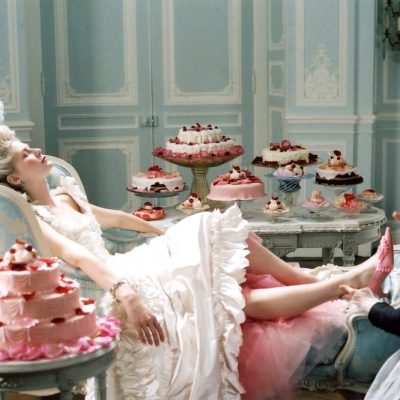
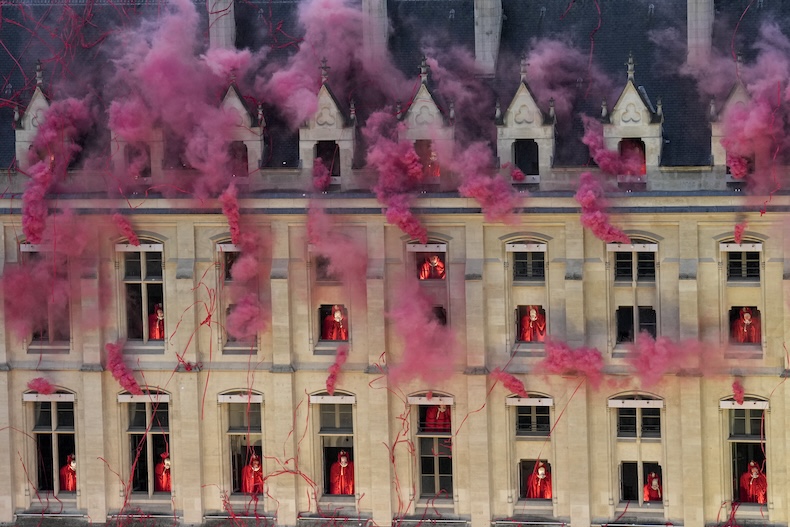
Rakewell is still sorry not to have been able to eavesdrop on the pitch meeting where someone suggested that a troupe of Marie-Antoinettes should pose, guillotined head under arm, in the windows of the building where the doomed queen was imprisoned before her execution. The billows of pink smoke and thrash metal soundtrack were a distinct plus.
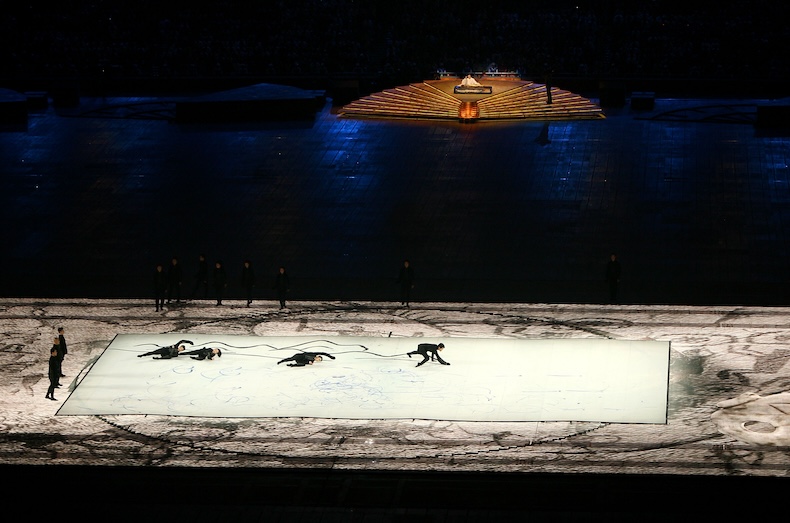
Although the historical variety show directed by Danny Boyle for the 2012 London Olympics has many admirers, it fell short for your roving correspondent for purely art-historical reasons. And while Beijing in 2008 might be best remembered for the scale of the fireworks display – created by the artist Cai Guo-Qiang – it also contained a genuinely remarkable piece of art: Shen Wei’s Scroll Painting, a performance that recreated an ink-and-wash painting before our eyes – with a handful of dancers and horde of LED lights.