At TEFAF Maastricht there are always works of art that generate a buzz, a crowd, even a polite queue, not so much by pre-publicity as by the word on the fair floor. These include the kinds of masterpieces and rarities that curators or collectors regret not having seen first, resigning themselves, if possible, to a place on the list of reserve buyers. There are also the crowd-pleasers, unexpected masterpieces with universal appeal or resonance. Easier to overlook are those less noisy, exceptional works that dealers and, occasionally, museum professionals buy for their own collections. Together, these are the objects that make Maastricht, at its best, a great fair.
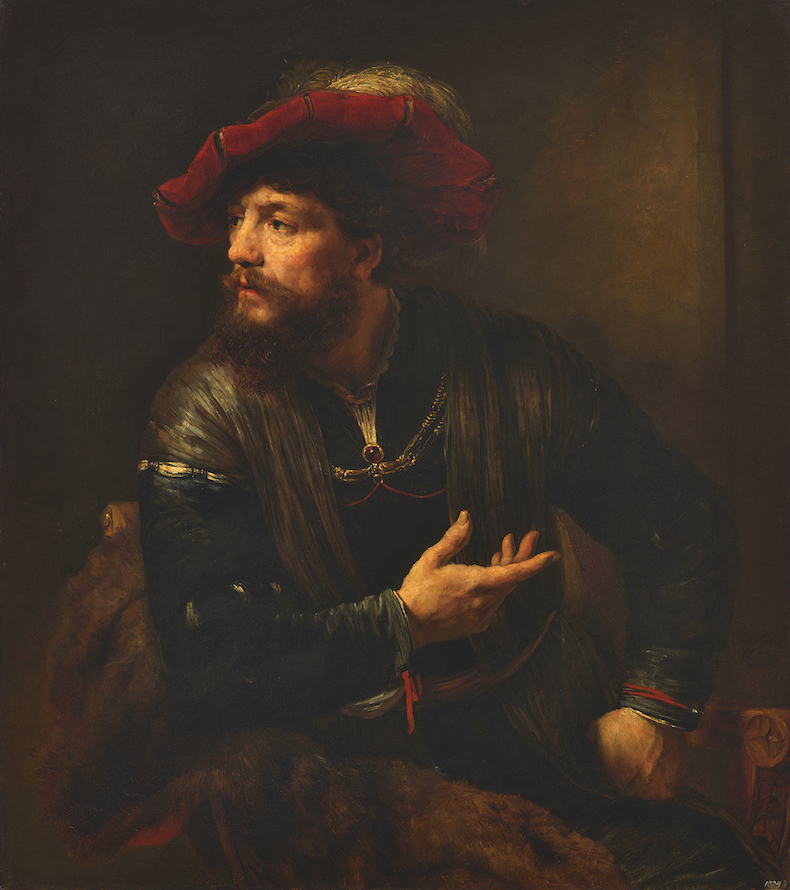
For a great museum or collector, the picture of the year was indisputably Willem Drost’s Man with a Plumed Red Beret at Agnews. Signed and dated 1654, it is an arresting image, thrilling in its facture and reflecting not only the influence of Drost’s former teacher, Rembrandt, but also that of Caravaggio in Italy, where Drost died of pneumonia in 1659 at the age of just 25. The painting had belonged to four generations of Rothschilds – with a brief hiatus after its confiscation for the planned Fürhrermuseum in Linz – and came to the fair already reserved. It sold on its second day to a collector who had long had it in his sights, and is off to the Leiden Collection, a ‘lending library’ of 17th-century Dutch masters.
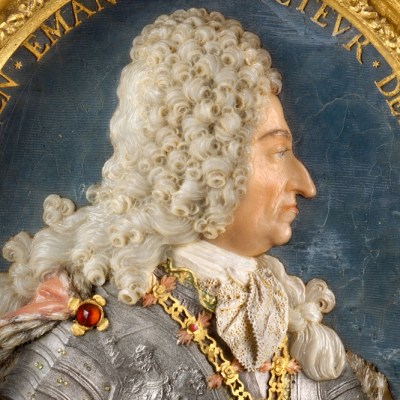
An eternal and not entirely orderly queue formed and reformed at Kugel to marvel at a wax panorama of Madrid, one of four commissioned in 1738 to mark the marriage of the King of Naples and Sicily, later Charles III of Spain. The technical virtuosity and detail of its carving – not entirely perceptible to the human eye (magnifying glasses supplied) – astounded viewers. The director of one national museum left the stand shaking his head in wonder. The icing on the collecting cake, apart from its royal and, again, Rothschild provenance, is that it is the only one remaining in private hands.
Topography took unusual prominence at the fair given another great highlight – a 14th-century map of Europe, the earliest still in private hands (Peter Harrington). This portolan chart, drawn on vellum – with Venice as caput mundi – is witness to the growing interest in the world emerging beyond Europe’s shores and, with its full-length portrait of the geographer Ptolemy, to ancient authorities. A practical tool explaining trade routes and ports, it was made to be consulted by seafarers and hung onboard on a peg. Ann and Gordon Getty hung it in their private jet. An exploration of how cities have been pictured and understood across three centuries also proved a draw at Daniel Crouch and Michael Hoppen’s stand, with Sohei Nishino’s most recent large-scale photographic diorama of Venice, among other places, selling briskly.
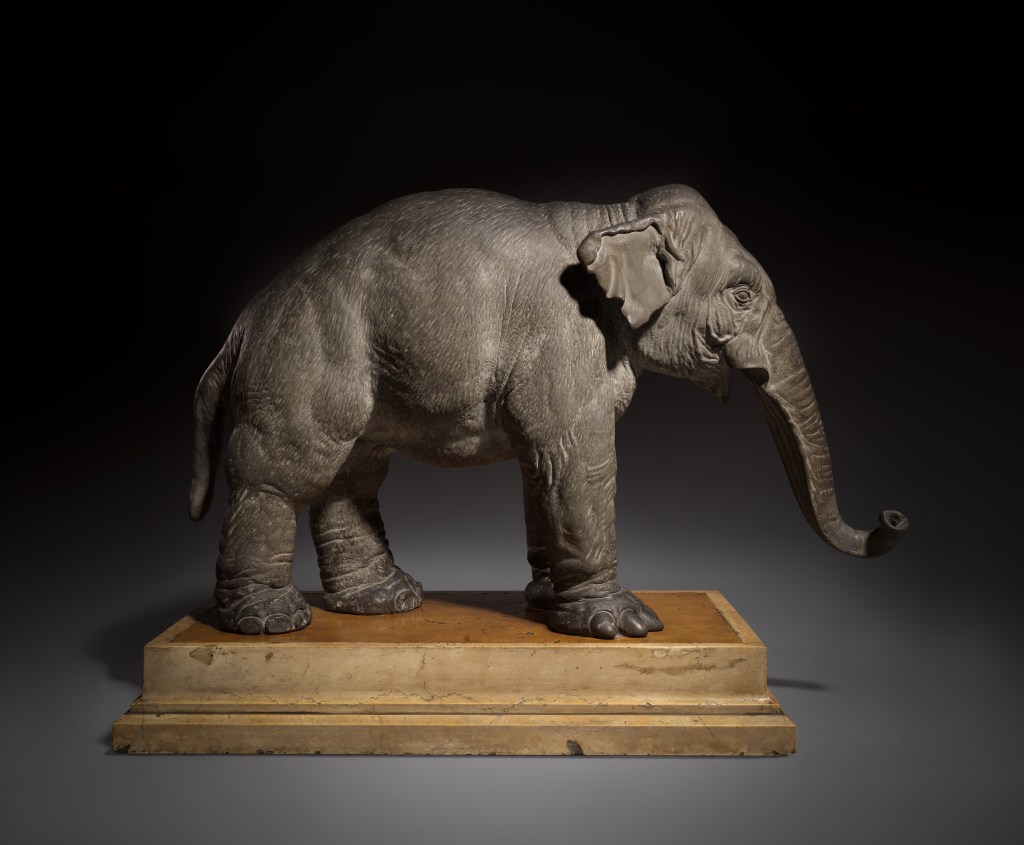
Given the importance of purchases by museums to TEFAF exhibitors, understanding curatorial interests is key. ‘We all wanted the elephant,’ one American curator wryly informed me. The pachyderm in question was a grey marble ‘portrait’ at Lullo Pampoulides. (Kent Antiques had another, a rare Mughal automaton.) This hapless, well-documented young male had arrived in Paris in 1770 and was exhibited across Europe as a fairground curiosity, reaching Milan in 1774, where he was studied and modelled with great sensitivity by the little-known Enlightenment sculptor Gaetano Monti. His is a tale of migration and exploitation. The gallery could have sold it several times over; the buyer is said to be the Metropolitan Museum of Art.
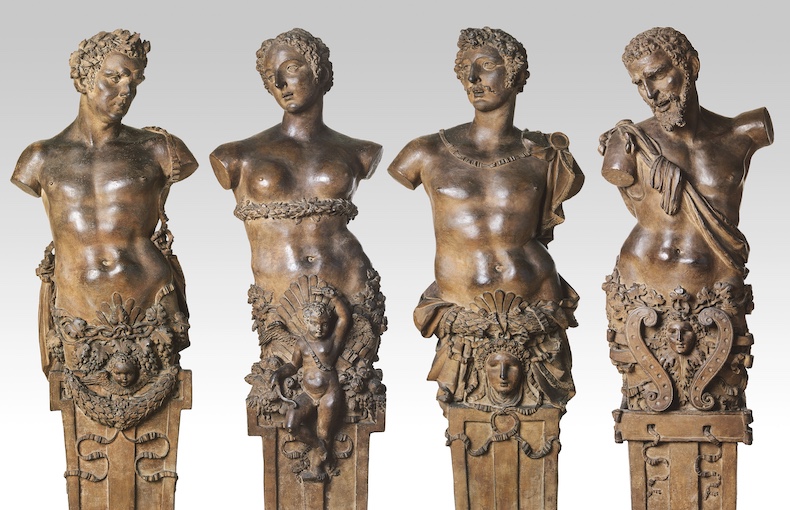
Widely admired, too, were the four life-size terracotta terms at Stuart Lochhead. Originally set in niches on the facade of the Château d’Oiron, these French Renaissance deities were last on the market in 1944 when they were sold by the family of John Pierpoint Morgan to the art dealers Wildenstein. The sculptural discovery of the fair, however, was provided by Walter Padovani, who unveiled a bas-relief Funeral of the Virgin – in effect drawing in clay – and two half-length relief figures by the celebrated Renaissance master Donatello. The relief is the missing half of a fragment, which was discovered in Ferrara in 1916. Probably conceived around 1450 for an unrealised project, the sculptures, currently on reserve, are a compelling expression of Donatello’s sculptural thinking.
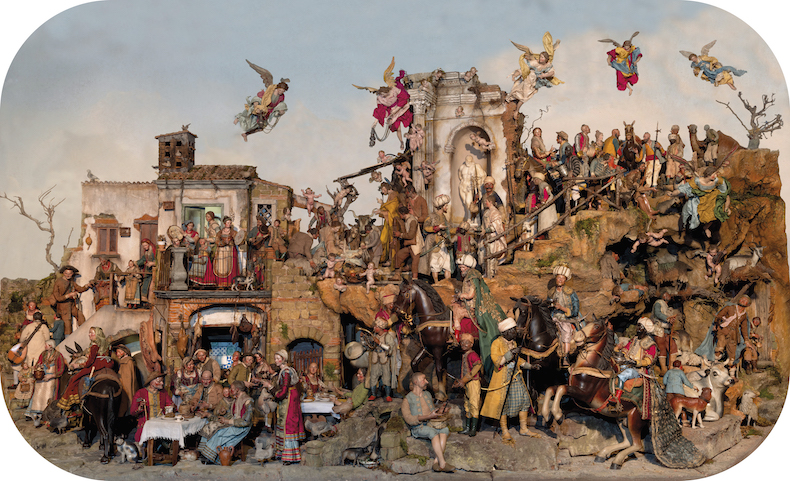
Two winning blockbusters involved historical pieces in a contemporary mis en scène. Porcini filled its stand with a vast Neapolitan nativity scene, its cast of characters and vignettes of everyday life – 304 pieces in all, dating from the 18th and 19th centuries – so teeming with energy and vitality to render the key event almost incidental. A. Aardewerk presented a scaled version of the Rembrandt House, the rooms behind the 2.65m-high edifice filled with 100 silver miniatures of the 17th and 18th centuries, several by the silversmith Arnoldus van Geffen.
An altogether different kind of miniature was spotted at Charles Ede and claimed by a former director of the Rijksmuseum, Wim Pijbes. This rare Roman bronze head of a soldier from the 2nd or 3rd century AD is no bigger than the bowl of a teaspoon – just 2.6cm high – but its anonymous creator has given this North African, possibly an infantryman given his smooth, cap-like helmet, palpable character and presence.
No less exciting was the inscribed brass collar worn by Lord Byron’s favourite dog, a fearless Newfoundland of exceptional size and spirit, named Boatswain, on display with Desmet Fine Art. Its extensive damage is testimony to the dog’s frequent scraps with the bear the poet kept for his amusement, as is explained in an accompanying letter, neatly written by the gamekeeper’s wife. After Boatswain was bitten by a rabid dog, Byron erected a monument to his memory at Newstead Abbey, the epitaph extolling his possession of ‘all the virtues of Man without his Vices.’ One never knows what one might find at Maastricht.