From the March 2026 issue of Apollo.
Kingston Vale is not where one normally expects to find a modern masterpiece. But just beyond Putney Vale crematorium, off the A3, is the Dorich House Museum. Built in 1936, the house sits in a plot of just under an acre, the back of it marked by a wall built during the reign of Charles I that runs along the edge of Richmond Park. Fruit trees dot the land around the house. It could not be a more English – or indeed charming – location.
Yet the house that looms over this garden scene is not so much art deco as German Expressionist. This, at least, is how The Buildings of England traces its aesthetic heritage, since the story of what shaped this building reaches beyond these borders.
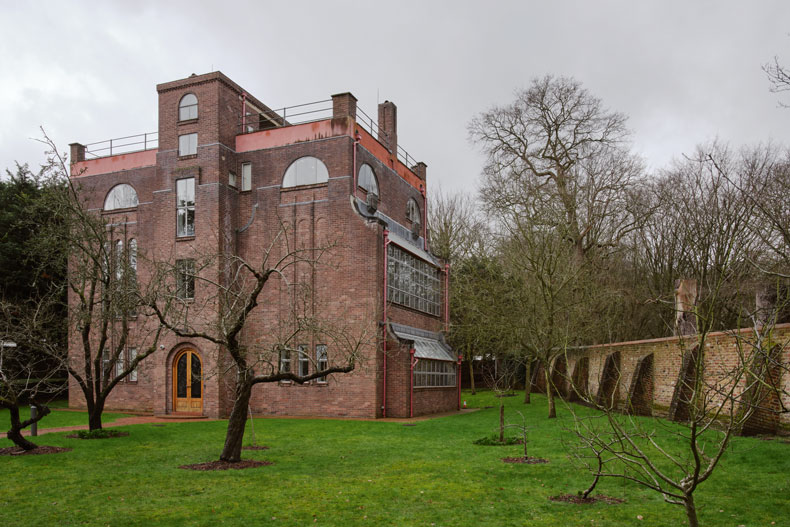
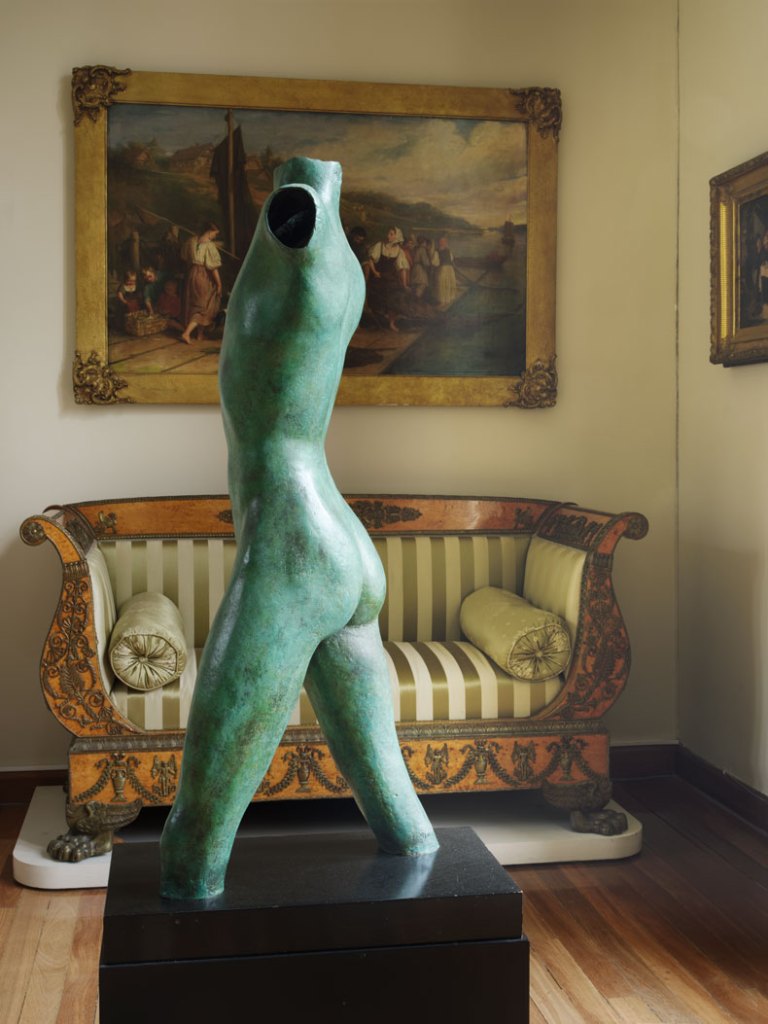
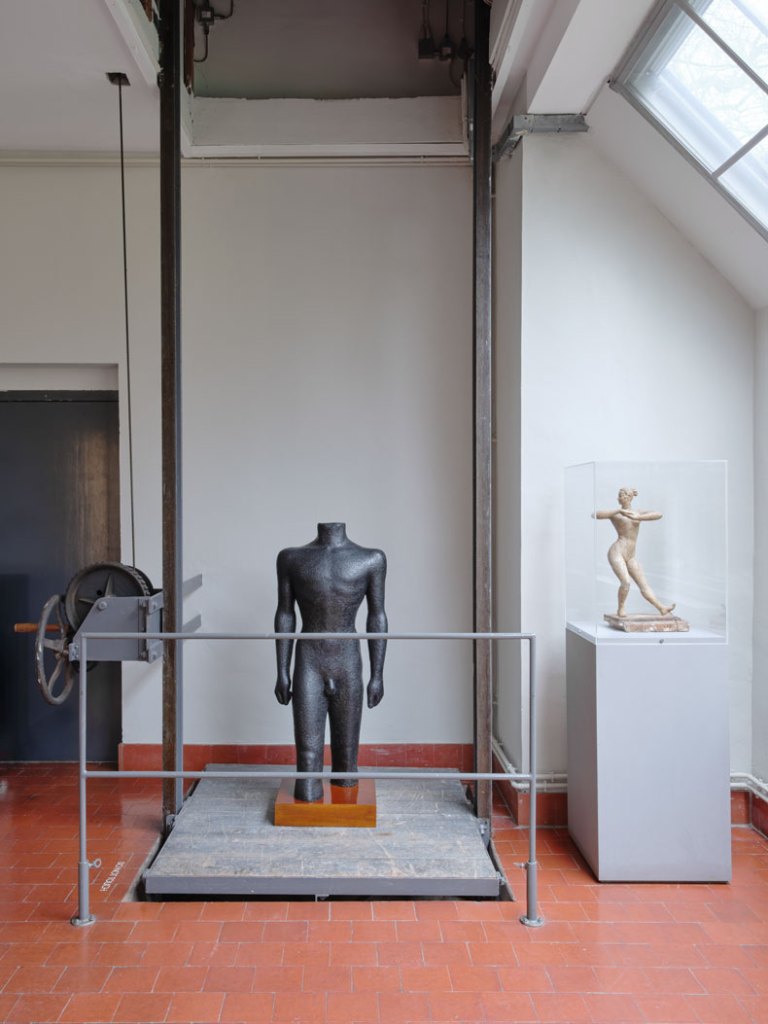
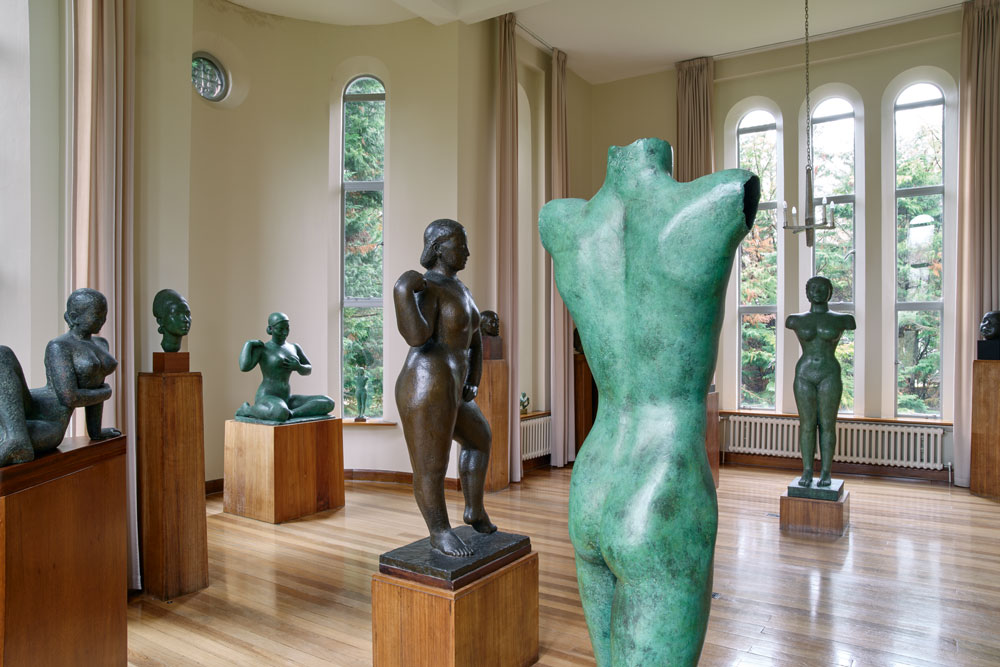
The house, which is now managed by Kingston University and celebrates its 90th anniversary this year, is the product of a love affair between the artist Dora Gordine (1895–1991) and the diplomat Richard Hare. The latter paid for the construction of the house, but its design was very much directed by Gordine. The north facade is largely made up of panes of glass. This side of the building was chosen by Gordine to house her plaster studio on the ground floor and modelling studio on the second floor to give her the best light while she worked. Hare was permitted a study on the ground floor. Above his study is a gallery with windows on three sides to allow the light to move round the room as the day progresses. At the top of the house was an apartment for the couple to live in, as well as a roof terrace, which even now, set at the height of the neighbouring trees, feels surprisingly private and secluded.
Gordine was born in Latvia, to Russian Jewish parents who made their money from trade and construction. The family lived in one of their largest projects, a retail and residential development on the Grosse Strasse in the city of Libau (Liepāja). Around 1914, the family moved to what is now Tallinn in Estonia. On the top floor of the building where they lived was an art school run by the artist Ants Laikmaa (1866–1942). Both Dora and her sister Anna studied here before going to the National School of Applied Arts and Crafts. Dora also studied in pre-Communist Russia under sculptor M. F. Blokh. Gordine became part of the cultural fabric of Tallinn; she made a work for the Siuru literary group, a leading Estonian movement, to assist their fundraising. Café Linden, where the group regularly met, operated from the family building.
In the 1920s, Gordine started travelling around Europe, visiting Berlin before settling in Paris in around 1924. Again, she became part of the cultural fabric of the city. She painted murals for the interior of the British Pavilion at the Exposition Internationale des Arts Décoratifs et Industriels Modernes and contributed to a string of exhibitions for young artists. She even commissioned the architect Auguste Perret to design her a studio-house.
Before the building was completed, she set out on what would be a hugely influential trip to Singapore, encouraged by a lawyer and art collector who also helped her secure a commission for a group of works for the former City Hall, known as the Municipal Building. While in Singapore, she married a British doctor, the improbably named George Herbert Garlick, who was deputy principal medical officer for the state of Johor (now part of Malaysia). The couple had initially met in Paris. During the early ’30s she toured South East Asia before returning to Paris to cast the works for her Singapore commission. When she went back to Singapore for the installation, she continued to tour Asia, visiting Bali, Shanghai, Nanjing and Peking. It is likely that Hare – a long term admirer and supporter – travelled with her at this time. He offered to build her a studio in London. With her marriage to Garlick on the rocks, she accepted.
Dorich House represents that moment in late 1930s London cultural life when the city appeared to be a centre for the European avant-garde – a city that could play host to Piet Mondrian, Naum Gabo, Walter Gropius and Ben Nicholson. What might look like an anomalous moment of British art history instead relates to a more international story.
Gordine was not shy of publicity. She was one of the first artists to appear on the BBC, on the television programme Picture Page, and she often spoke on the radio. She became particularly well known for her portrait busts; her sitters included Dame Edith Evans, Laurens van der Post and Kenneth Clark (who insisted that Gordine visit him for the work rather than have him sit in her studio).
Gordine may also have indulged in a little self-fashioning. Curiously, in an interview with Apollo in 1949, she is described as ‘Born in Russia of a Scottish father and a Russian mother’. She also describes herself as self-taught: ‘She attended no school, but studied on her own in museums and exhibitions, where, as she explained, “I learned how one must work and how one must not.”’ The idea of irrepressible creativity is never a bad marketing line.
The house was not exclusively about Gordine. Hare pursued a successful diplomatic career, working under the journalist (and Soviet spy) Peter Smollett in the Ministry of Information during the Second World War. His interest in Russian culture grew during this period and he began to collect Russian art, which culminated in the publication of The Art and Artists of Russia (1965). His collection was exhibited in the house alongside Gordine’s works, their interests both given space. Despite his apparently adventurous career, Hare was no stranger to domesticity – he died while hoovering the apartment.
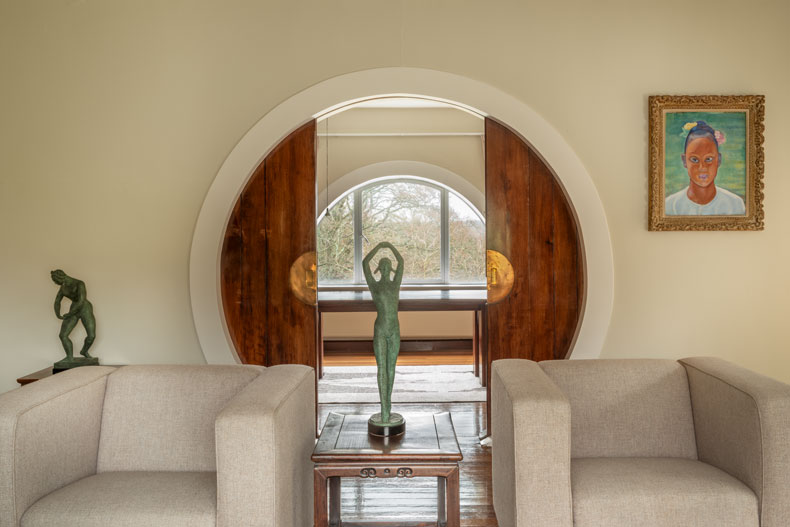
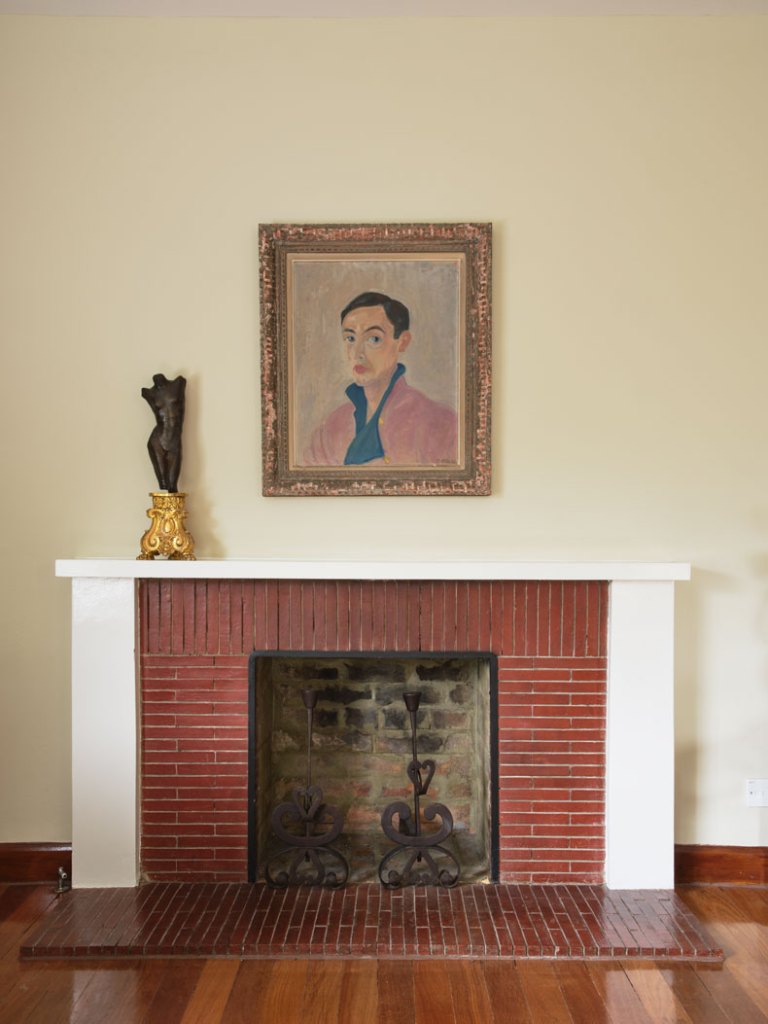
The house, with its fireplaces copied from Gordine’s Paris studio, and its vast range of windows, adds another aspect to modernism in Britain. It offers a touch of art deco glamour and reveals part of the story of an often-ignored artist, all preserved on the edge of a Royal Park on the London-Surrey borders.

For more information visit the Dorich House Museum’s website.
From the March 2026 issue of Apollo.