From the April 2026 issue of Apollo.
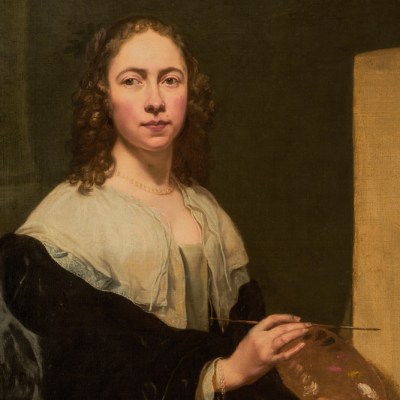
At TEFAF this year, I was talking to the director of a European museum. As is appropriate for a fair where plenty of rediscovered Old Masters come to light, we were discussing new finds. The subject of Michaelina Wautier came up. It’s no surprise that she should: not only has Wautier been the subject of a very successful exhibition at the Kunsthistorisches Museum in Vienna, which has just opened at the Royal Academy in London, but she has also been something of a regular at TEFAF over the past few years.
In 2022, Wautier was at the centre of Bijl-Van Urk’s stand at the fair. His presentation of two works by Wautier, Head of a Boy (c. 1660) and Portrait Historié of a Man as Jacob, Husband of Rachel (1655–60), coincided with another exhibition of her works at the Museum of Fine Arts, Boston. They were both characteristic of the artist’s work: her sensual rendition of the physical world; her sometimes choppy, sometimes fluid, brushstrokes; the colour.
One thing the art market is helpful at doing is confirming how paintings are valued – art historical prestige often (though not always) translates into an increased price. Works by Wautier that previously sold for tens of thousands developed into hundreds of thousands as research began to identify this artist who had fallen out of the history books, compiling a coherent body of her work.
This is often presented as a similar process to the one that resurrected Artemisia Gentileschi (1593–1654) – though I would hazard that Wautier is a better painter than Artemisia. A story of rediscovery and recovery is always exciting. But it can be useful to understand why an artist disappears in the first place.
It is not as though Wautier lacked high-profile collectors, for example Archduke Leopold Wilhelm of Austria, the younger brother of Ferdinand III. Normally when specialists discuss artists who have fallen from favour for no good reason there is a bias that over-corrects. Perhaps as an effort to make up for the hundreds of years of neglect, it becomes taboo to mention failures of technique or style. In our efforts to open up the canon, the idea that the canon itself might be weakened is not permitted. So, it was refreshing at TEFAF to have a conversation about Wautier that acknowledged that her technique was part of the reason she had slipped from attention.
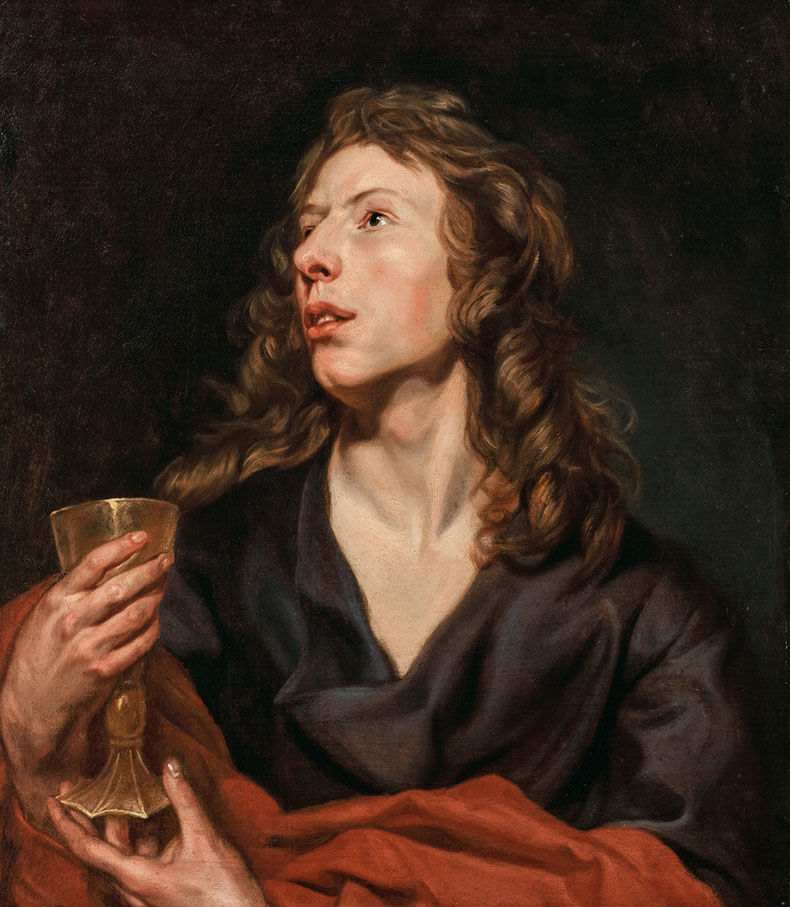
The museum director went on to suggest that as her rendition of cloth was not up to the standard of, say, Van Dyck, this had blinded observers to greater qualities such as her psychological depth. It was a fair observation: in both her portraits and genre paintings, such as her exceptional depiction of Saint John the Evangelist (c. 1656–59), it is the faces where the works come to life. And the more one looks at her faces, the more elusive they become. Here is an artist who might not have been the best painter of her generation, but who knew better than anyone how to capture the elusiveness of human character in two dimensions. It has taken 400 years for viewers to catch up.
This is not just a story of appreciating something that had been forgotten; it might also be a story of how confounding genre can be. The Old Masters are naturally seen as representational artists. If one superficial aspect of representation isn’t up to snuff, plenty of people will dismiss the entire work rather than considering the constructions in place by the artists to create an impression of representation. Reality is never as reliable or easy as we have been led to think.
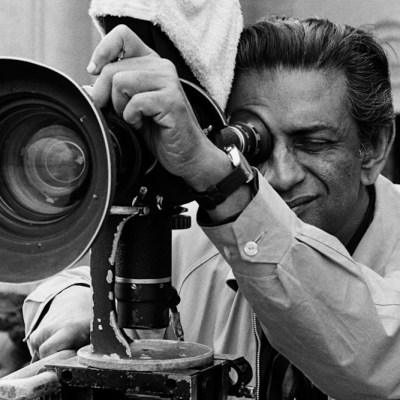
Painting isn’t the only art form that demand to be looked at closely. Photographs that seem straightforward can often be an altogether more complicated affair; part of the interest in looking at photography is to consider how our perceptions of it have changed over time. This month’s edition of Apollo has taken the cue of The Photography Show presented by AIPAD (New York, 23–26 April) as an opportunity to explore photography in its many guises: through the formation of a legendary archive, the creation of a new museum in Rome, and the reception of images that did so much to shape the United States. Just as with Old Masters, you can’t always trust what you see.
From the April 2026 issue of Apollo.