From the June 2026 issue of Apollo.
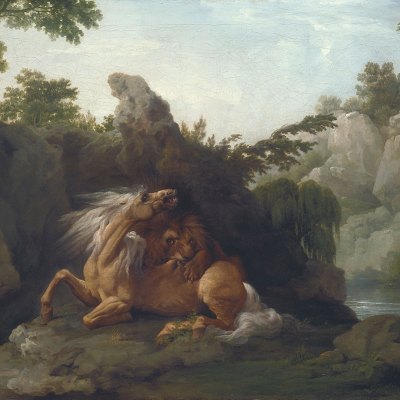
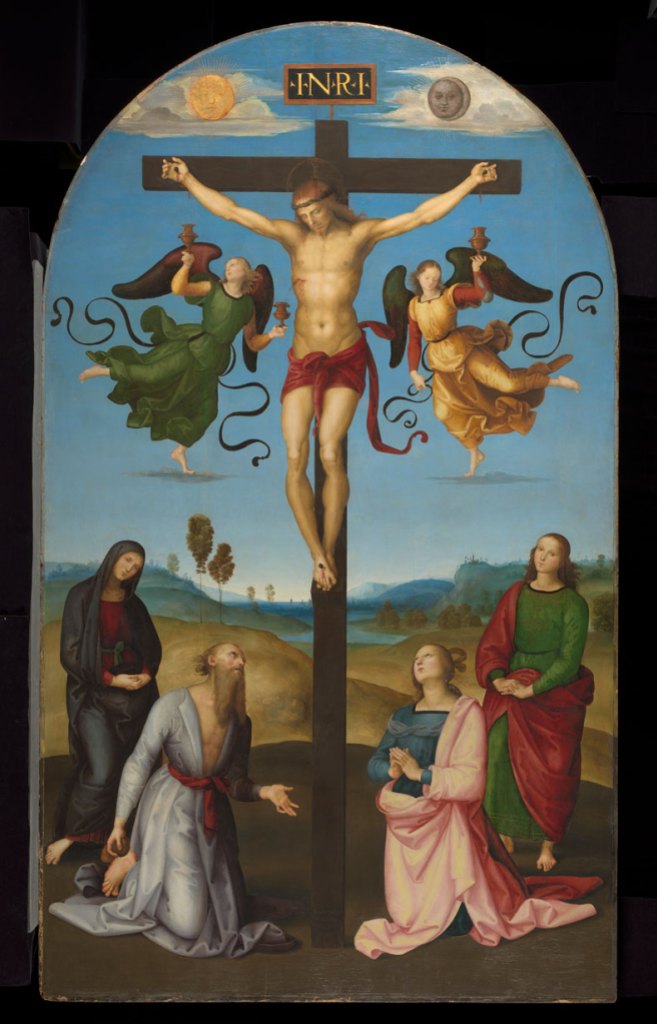
In 2024–25, London’s National Gallery celebrated its 200th anniversary with a refreshed Sainsbury Wing and a redisplay of its entire collection. In a building otherwise divided into a series of compartmentalised spaces, the museum’s central axis provides an immense vista, stretching almost 200 metres. Facing each other at either end of this great enfilade are two works: George Stubbs’s Whistlejacket (c. 1762) and Raphael’s Crucified Christ with the Virgin Mary, Saints and Angels (c. 1502–03), also known as ‘The Mond Crucifixion’. Whistlejacket, the larger of the two paintings by a few inches, entered the collection relatively recently. It was acquired in 1997 from the Fitzwilliam family, descendants of the Marquess of Rockingham, who commissioned Stubbs to paint his beloved racehorse.
The journey of Raphael’s Crucifixion was more complex. Painted for the banker Domenico Gavari, Raphael’s earliest-known signed work was destined for the church of San Domenico in Città di Castello, Umbria. It left the church in 1818, passed through private collections in Paris and Rome and reached England in 1847, when it was purchased by the 1st Earl of Dudley. He sold it in 1892 to the German-born industrialist Ludwig Mond, by that date a naturalised British citizen. In 1924 Mond donated the Crucifixion and 41 other paintings to the National Gallery. Intended to be shown together, this group, which included masterpieces by Titian, Crivelli and Mantegna, was originally displayed in the room that still bears Mond’s name.
The forces that motivated and shaped Mond’s collecting and, by extension, his largesse, are central to John Hilary’s Magnates & Masterpieces. Mond was by no means an isolated case. In the late 19th and early 20th centuries a large number of German-born Jews emigrated to Britain, many of whom formed extraordinary collections of paintings and decorative arts, the most famous and well-studied being those of the Rothschild family. Unlike Mond’s donation to the National Gallery, few of these other collections found their way into Britain’s national museums. The vast majority were broken up after their owner’s deaths. Hilary’s aim, as he explains in the introduction, is one of ‘restoration’, to recover the scope of these collections, evaluate the lives of their owners and place them in the wider context of fin-de-siècle Britain.
In 12 case studies, Hilary explores the prominent role that German-Jewish emigrants played in British social, cultural and political life. In doing so, he examines the lives of women as much as men, demonstrating that the art collections formed at this time were more often than not a joint effort. For instance, Mond’s wife, Frida, was active alongside her husband in shaping their collection, as well as indulging in her own literary pursuits. Another key figure is the couple’s lifelong friend, Henriette Hertz – the extraordinary woman who created the Hertziana Library in Rome. That so few of these remarkable individuals are remembered in Britain today is partly because of the anti-German sentiment fostered by the First World War.
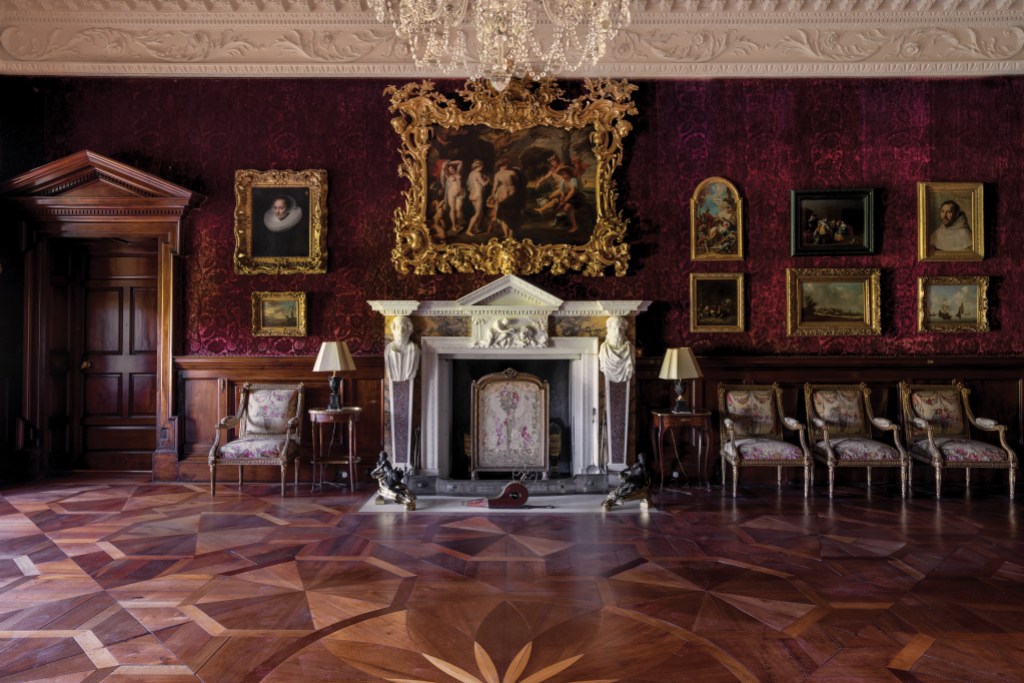
Hilary is sensitive to the ways in which being German, or Jewish, mattered to the individuals he studies. In an age of secularism, few remained observant Jews until the end of their lives; only a handful are buried in Jewish cemeteries. Being born into a Jewish family in Germany in the 19th century largely meant persecution, exclusion from certain professions and society and obstacles to financial success. While Britain was far from being free of prejudice, such barriers were less solid and more permeable. Several of Hilary’s subjects made vast fortunes and became establishment figures; one was knighted and another went on to hold public office. With their wealth they bought palatial country houses as well as properties in the most desirable areas of London, such as Kensington Palace Gardens.
To decorate these mansions, the families amassed spectacular works of art, but also commissioned portraits by leading artists, not least John Singer Sargent. His depiction of Adèle Meyer and her children, her pink-white dress the colour of crisp spring blossom, is among his most beautiful compositions. And yet, while these newcomers were tolerated, with the most illustrious even winning the favour of the famously decadent Edward VII, they were not beyond suspicion. The Edwardians by Vita Sackville-West, published just six years after the Mond bequest, captures the antisemitism prevalent in elite British society in its caricatured and racist depictions of Jews.
Hilary’s aim of ‘restoration’ works in two directions: while rightly recuperated from a racist past, his collectors are far from heroes. Hilary is keen to expose the complex histories behind the formation of the wealth that supported art collecting in Edwardian Britain, German Jews included. Here the realms of banking and industry intersect with colonial mining projects, particularly those of diamond and gold extraction in South Africa. Five of the individuals surveyed by Hilary were Randlords, colonial oligarchs whose fortunes were tied directly to the exploitation of African natural resources and people. Max Michaelis, for instance, was a diamond magnate and close friends with fellow German Jews and Randlords Alfred and Otto Beit; they in turn – along with Julius Wernher, who was German-born but not Jewish – collaborated with Cecil Rhodes in the forming of De Beers Consolidated Mines.
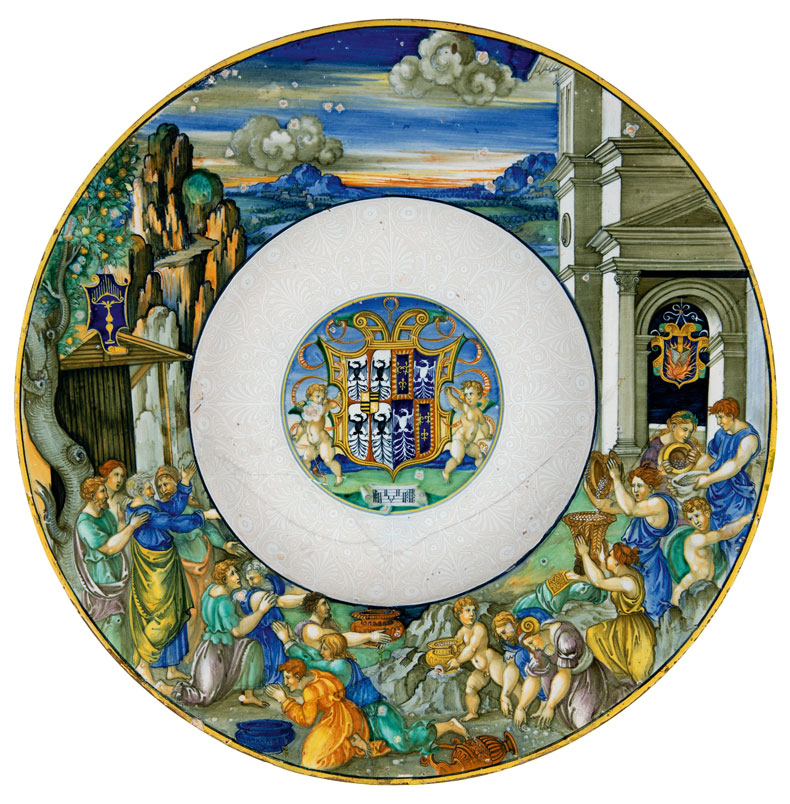
Artworks purchased through the proceeds of colonial extraction can be found in collections around the world. Paintings once owned by Michaelis and his wife, Lilian, can still be seen at the Old Town House in Cape Town, as well as at the South African National Gallery. Alfred Beit’s collection of maiolica was donated to the Museum für Kunst und Gewerbe in Hamburg, while several of his paintings, and those of his brother Otto, are now at the National Gallery in Dublin. Michaelis and the Beit brothers harboured little of Rhodes’ supremacist imperial zeal, but having almost been entirely forgotten, Hilary’s study brings their lives into sharp relief.
From the June 2026 issue of Apollo.