From the July/August 2026 issue of Apollo.
The Musée du Quai Branly – Jacques Chirac (MQB) turned 20 this June. Despite its tender years, this institution already has the honour of being at the heart of not one but two presidential grands projets: the ambitious cultural legacy projects which, at least since François Mitterrand commissioned the Pyramide du Louvre in 1983, have become the most powerful symbol of the ways in which the French state and its museum sector are now all but indissociable. A new museum for the vast French national collections of art and artefacts from Africa, Oceania, the Americas and Asia opened to both fanfare and controversy towards the end of the presidency of Jacques Chirac in June 2006. Just over a decade later, in November 2017, the recently elected Emmanuel Macron delivered a landmark speech in Burkina Faso, pledging: ‘In the next five years, I want the conditions to be met for the temporary or permanent restitution of African heritage to Africa.’ This timeline may have proved a little ambitious, notwithstanding Macron’s commissioning of a report about restitution by Senegalese academic Felwine Sarr and French art historian Bénédicte Savoy in 2018, and the high-profile return to the Republic of Benin in 2021 of 26 works looted from the former kingdom of Dahomey, which were previously housed by the MQB. However, as Le Monde reported in May this year, ‘the promise has been kept’: a bill initiated in 2023 has finally passed into law, enabling French institutions to bypass the principle of the ‘inalienability’ of national collections in instances where items were acquired by colonial looting, theft or through forced sales.
In effect, the MQB has been forced to grow up very fast, in order that it might retain a voice in the global reckoning that Macron’s commitment to restitution precipitated. ‘We are a young museum with a very old collection and a very long history,’ says Olivia Bourrat, who was appointed director of collections this April. Taking the longest view, that history stretches back to royal collections, in particular those of Louis XV and the gifts he was proffered by delegations of Native American communities who visited the king at Versailles in 1725. But the collection of more than 300,000 objects the museum holds today – stretching to more than a million if photographs are included – predominantly took shape in the decades around the turn of the 20th century, at the height of the French colonial era. Accordingly, as the global debate surrounding the repatriation of colonial plunder became more urgent in the years following Macron’s speech in Ouagadougou, the museum found itself under an uncomfortably bright spotlight – never more so than in 2020, when the Congolese activist Emery Mwazulu Diyabanza seized a 19th-century funerary pole from Chad in a live-streamed protest.
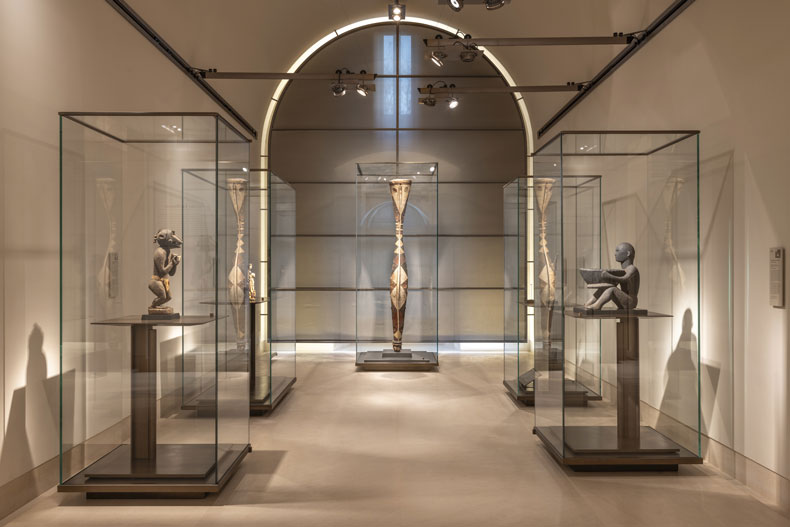
at the Musée du Louvre, Paris, featuring masterpieces
from the collection of the Musée du Quai Branly – Jacques Chirac. Photo: Audrey Viger; © 2025 Musée du Louvre
Visitors to the museum in its 20th anniversary year will find, along Jean Nouvel’s glass facade that confronts the Quai Jacques Chirac and beyond it the Seine, a timeline charting the museum’s history since it opened its doors, rattling off accomplishments and milestones including major exhibitions and successful acts of restitution; the most recent entry is the return this year to Côte d’Ivoire of the talking drum known as Djidji Ayôkwè, ‘confiscated in 1916 in Adjamé by the French colonial authorities’. But in order to fully understand not just what the museum is now, but where it might be headed, it is necessary to examine its inheritance.
Chiefly, this was drawn from two now-defunct institutions. The older is the Musée d’Ethnographie du Trocadéro, built for the Paris Exposition of 1878, into which the material trappings of colonial ethnographic expeditions were funnelled; it is perhaps most often remembered today as the site of the first encounters with non-Western arts by Picasso and his contemporaries. In 1935, the Trocadéro Palace was demolished, its collections forming the basis of the Musée de l’Homme, which opened in a new palace on the same site at the 1937 International Exposition. Meanwhile, the Colonial Exposition of 1931 had given birth to another museum of indigenous arts: initially named the Museum of the Colonies, it was rechristened in 1935 as the Museum of France Overseas, though it remained under the jurisdiction of the Ministry of Colonies until 1960. In that year, André Malraux, the first-ever minister of cultural affairs, responded to the coming of the independence era by renaming it the Museum of African and Oceanian Art.
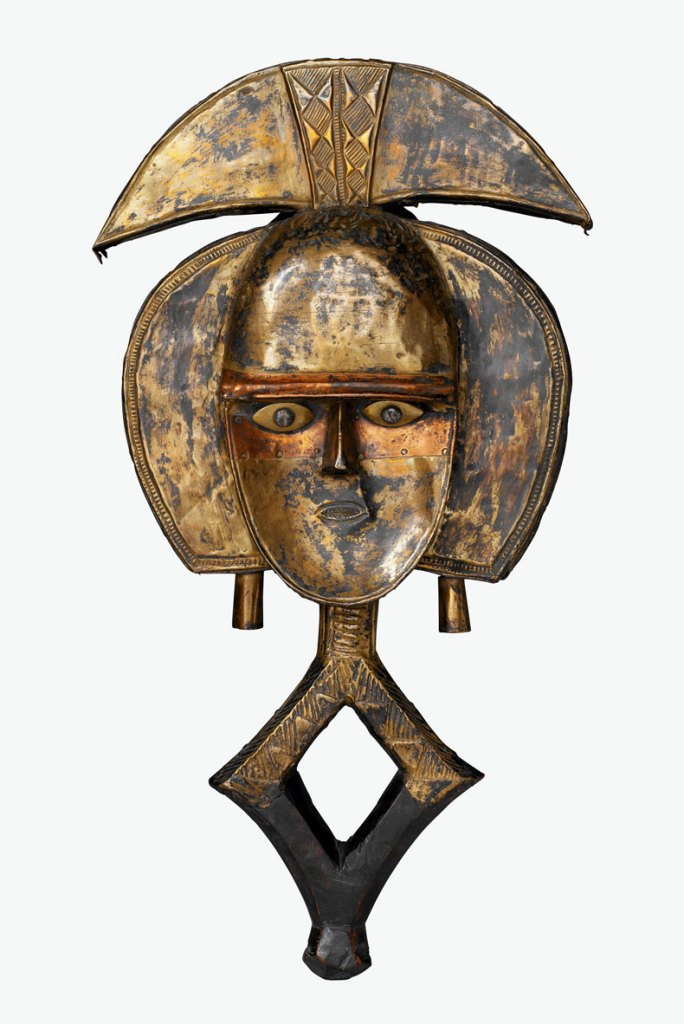
When Jacques Chirac was elected president in 1995 and announced a new museum merging these two collections, the 250,000 objects housed by the Musée de l’Homme outnumbered the holdings of the Museum of African and Oceanian Art by ten to one. In terms of ideological approach, however, the latter would prove to punch significantly above its weight. In 1990, the dealer Jacques Kerchache had published a full-page open letter in Libération, bearing 148 signatures of international luminaries from the museum, literary and political worlds ranging from Hélène Cixous to Léopold Sédar Senghor and calling for ‘an eighth section of the Grand Louvre […] so that the masterpieces of the entire world may be born free and equal’. In the same year, Kerchache met Chirac, then mayor of Paris; the two became close friends, forming a partnership that would lead eventually to the formation of the MQB – but first, to the opening of the Pavillon des Sessions at the Louvre in 2000: a presentation of 117 non-Western sculptures, drawn from existing museum collections or newly purchased from dealers – in several cases, highly controversially – by the French state.
This was the realisation of an ambition that had been repeated many times since it was first articulated by Guillaume Apollinaire in 1909: that the ‘Louvre should take in certain exotic masterpieces whose effect is no less moving than that of beautiful specimens of Western statuary’. It was also symbolic of the fact that the approach to non-Western arts at the MQB would be predominantly connoisseurial – just as it had been at the Museum of African and Oceanian Art. In 1999, a strike was conducted by staff at the Musée de l’Homme, who feared that their own emphasis on ethnographic study would fall by the wayside in the new museum.
In an influential review of the new museum for the journal October in April 2007, the intellectual historian James Clifford wrote that ‘a decade of polemics and committees has produced an unstable truce, with the aesthetic agenda in overall control’. However, as the anthropologist Sally Price observed in her rollicking Paris Primitive (2007) – best described as the unauthorised biography of the MQB – ‘advocates of both of the opposing camps were arguing that the quarrel between aesthetics and anthropology was an outdated, irrelevant issue’. In the expressed ambitions of the inaugural president of the museum, Stéphane Martin, Clifford also identified the germ of ‘a new kind of institution, something much more than a familiar art or ethnographic museum […] a multiplex cultural center, serving diverse audiences who bring to the conversation different needs and backgrounds’.
Today, this sort of language has become familiar in museology – not least through the new definition of a museum adopted by ICOM in 2022, with its focus on ‘diversity’ and ‘the participation of communities’. That it was such a novelty for Clifford back in 2006 raises the intriguing prospect that, having been forged in controversy over France’s intellectual relationship with its former colonies, the MQB was in fact singularly well placed to undertake the kind of soul-searching that museums across Europe and the United States were scrambling to conduct after the late 2010s. There is a certain symmetry in the fact that, while the MQB was being conceived, the headline-grabbing figure proffered in evidence of French cultural discrimination was that four-fifths of the world’s cultures were excluded from the Louvre – whereas the Sarr-Savoy report on restitution stressed that 90 per cent of Africa’s material heritage resides outside the continent.
Does Olivia Bourrat believe that the conversation surrounding restitution has spurred the museum to greater self-awareness? ‘Definitely,’ she says – though she points out that the museum’s first act of restitution was of several Māori toi moko, or preserved heads, in 2012. ‘Curators at the Musée du Quai Branly now have a very different role from those at a beaux-arts museum. Today, everything is collaborative – the way we work with the communities of origin of these objects, the way we allow voices from different places to express themselves in this museum’. This, for Bourrat, has been a crucial aspect of moving beyond the traditional binary between aesthetics and ethnography: ‘We don’t tell people how to think, or how things are; it’s more about asking questions, adding different perceptions, because everything is always changing.’
What this means in practice is renewed attention to provenance research, conducted alongside ‘communities of origin’; in this regard the museum’s president Emmanuel Kasérherou, who became the first Kanak person to head a major museum in France when he replaced Martin in 2020, has led by example with his work on the museum’s Oceanian collections. Yet the fruits of this labour are not confined to academic journals. The 20th-anniversary celebrations comprise symposia, film screenings and outreach programmes. As far as the permanent collection is concerned, Jean Nouvel’s mise en scène remains entirely intact for now: the walkways redolent of mudbrick buildings; the earth-toned cladding, the glass facades granting passers-by a view of dense foliage, and the long spiralling ramp up to the exhibition plateau bespeaking, in Nouvel’s own wide-eyed estimation, ‘a place marked by symbols of forest and river, and the obsessions of death and oblivion’. However, recent shifts of emphasis are clear to visitors through subtle yet transformative changes.
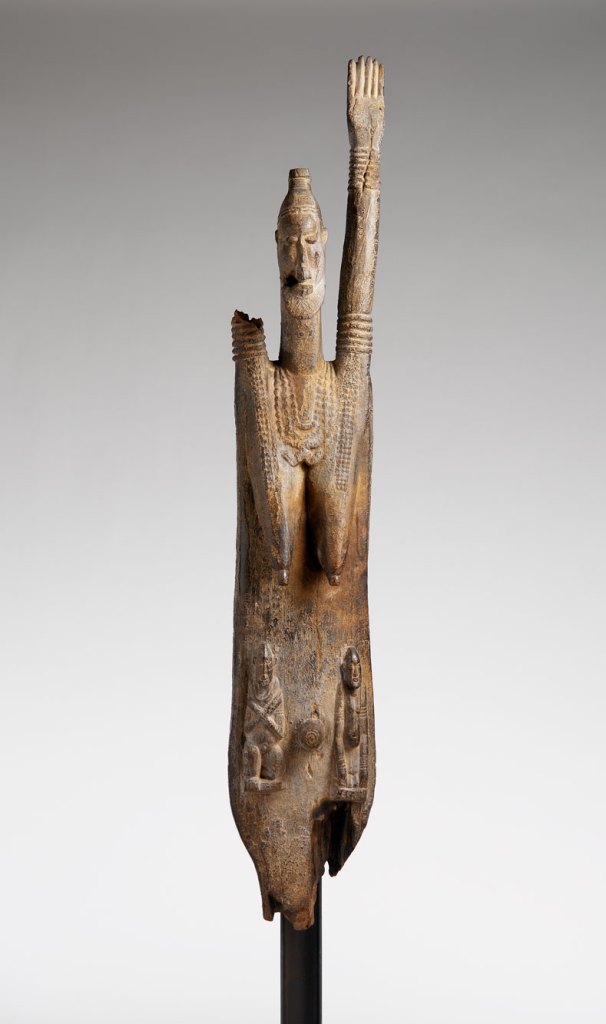
It was one of Clifford’s key charges that, where ‘ethnography is present but marginalised in the permanent exhibition space, history has almost entirely vanished’. Now, around 50 dedicated labels narrating how parts of the collection arrived in France appear among the 3,500 works on permanent view. One of the particular strengths of the MQB’s holdings is its collection of pieces by the Dogon inhabitants of the Bandiagara Plateau in Mali. Among the most breath-taking set-pieces at the museum has long been a room in which only two works are displayed; just as Veronese’s Wedding Feast at Cana confronts the Mona Lisa, an enormous Dogon mask known as imina na faces down a much smaller and older masterpiece: a hermaphroditic statue, made by the pre-Dogon cultures that inhabited the same region in around the 10th century. In 2020, the Malian government issued a request to the French government for the restitution of a number of objects, including those relating to the Dakar-Djibouti mission of 1931–33, funded by the Musée de l’Homme and led by Marcel Griaule, during which many of the museum’s Dogon works were acquired. In light of all this – and especially the recent law, with its emphasis on illicit colonial acquisitions – it feels refreshing for one of the new ‘history of the collection’ labels to point the visitor to the diaries of expedition member Michel Leiris, in which are detailed ‘the circumstances of research and collecting, whether consented to or not’. No restitutions to Mali have yet been announced, though in 2022 Daouda Keïta, director of the National Museum of Mali, conducted a research residency at the MQB, which led to an exhibition on the Dakar-Djibouti mission in 2025.
To the History of the Collection trail can be added the Sound Trail completed in 2024. The Parcours sonore is a series of 120 specially commissioned soundscapes, which can be heard at listening stations throughout the permanent exhibition. Ranging from original musical compositions that respond to themes raised by the collection, to more culturally specific songs and recitations, or noises from urban or natural environments, these are a well-thought-through answer to the charge often levelled at museums of this kind: that they render inert and silent objects that were often treated dynamically, used in dance or ritual. Bourrat explains: ‘The idea was to bring multisensorial experience, and to evoke intangible cultural heritage.’ As such, they also provide another means of supplementing the collections at a time when material acquisitions remain inevitably fraught.
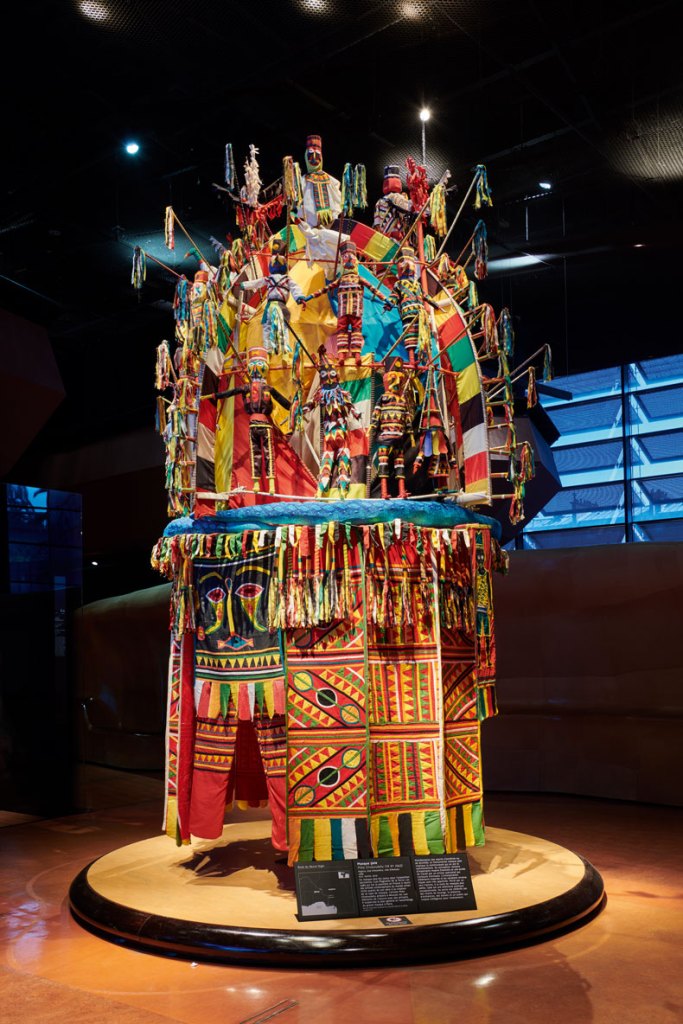
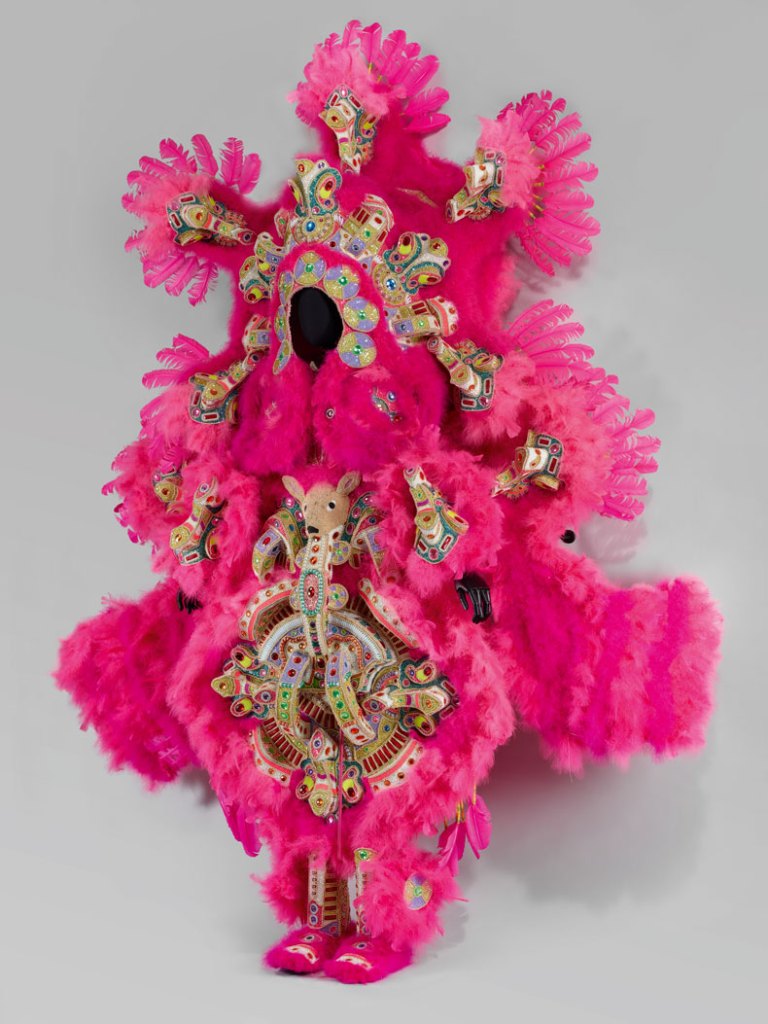
For the 20th-anniversary programme, 20 works by modern and contemporary artists are interpolated throughout the permanent display. Again, they are judiciously chosen, each with a unique commentary to provide: Nigerian artist Mike Chukwukelu’s enormous ijele mask, constructed out of 140 separate elements in wood and cloth (in keeping with the reputation for lavishness that has long accompanied the ijele masquerades of the Igbo), was a commission for the seminal exhibition ‘Magiciens de la Terre’ at the Centre Pompidou in 1989. There, it stood as a vivid riposte to the Western preconceptions both that African masks are overwhelmingly brown and patinated and that they denote extinct traditions; here, it performs much the same function. To a display of costumes made for carnivals across the Americas has been added a wonderfully pink and feathery number constructed by Darryl Montana, a master Mardi Gras suitmaker in New Orleans. To me, this addition speaks to a truth acknowledged in anthropology for decades but which ethnographic museums have been slow to take up – namely that human cultures we understand as Western are just as readily the subject of anthropological study as those that used to be described as Other. ‘In the stories we tell,’ Bourrat says, ‘we want to show people that there are different ways to think about what humans are – that there are plenty of ways to live, to engage with the world, with the universe, with nature.’
Perhaps the best example of this non-hierarchical impulse is to be found among the current temporary exhibitions. As well as an exuberant display of works by the evangelical Kumasi sign-painter Kwame Akoto (until 6 September), and a sensitive reckoning with collecting practices in Paris between 1913 and 1923 (until 20 September), there is ‘Plumes from Paradise’ (until 8 November). Curated by Magali Mélandri and Stéphanie Xatart, this is a hugely successful social and cultural history of human’s engagement with birds of paradise. The 19th-century Western obsession with wearing exotic feathers as fashion symbols, in the process of which these birds were hunted almost to extinction, comes to feel far less ‘rational’ than their veneration as ancestral spirits in Papua New Guinea.
Among recent additions to the museum, the one truly jarring note is a small permanent display in one of the mezzanine galleries of objects donated in 2018 from the collection of the billionaire financier Marc Ladreit de Lacharrière (see July/August 2016 issue of Apollo). Opened in 2021, the gallery’s chief distinguishing feature is the blown-glass display cases designed by Jean Nouvel to echo the contours of each object; they make me think of Han Solo encased in carbonite, constituting a bizarre throwback to the museum’s greener years. In 2007, Sally Price criticised the museum for paying lip-service to its self-professed role as a space of ‘dialogue between cultures’ – and one cannot visit the Marc Ladreit de Lacharrière Gallery without feeling that any words spoken by these objects, long-regarded in the West as ‘beautiful’, are said under duress. Elsewhere, however, there is so much here now to suggest that the museum has finally begun to talk – and to listen – in earnest.
From the July/August 2026 issue of Apollo.