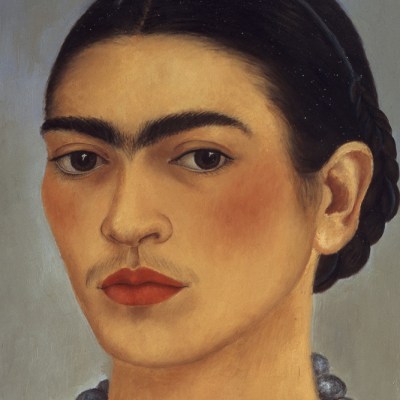
The Mexican authorities are facing a lawsuit to stop works from a private collection containing masterpieces by Frida Kahlo and Diego Rivera from leaving the country at the end of July. Works from the 300-strong Gelman Collection are due to be displayed in Spain this autumn in a new museum sponsored by Banco Santander. An agreement between the bank, the government and the Zambrano family who have owned the Gelman Collection since 2023 states that the works could remain abroad until 2030, or later if the agreement is renewed. Under Mexican law, artworks by ‘national monument’ painters cannot leave Mexico for more than two years without government permission. Fourteen Mexican cultural professionals calling themselves ‘Defence of the Gelman Collection’ have filed a lawsuit in a federal court in Mexico City against INBAL – the National Institute of Fine Arts and Literature – calling for an end to the agreement and for an injunction to stop the works leaving the country. A spokesperson for the Santander Foundation told the Financial Times that the leaked agreement ‘remains fully subject to the Mexican legal and cultural heritage framework’. But Jésus Soledad, a lawyer for the activists, told Apollo, ‘You cannot export national treasures from the country indefinitely, and you must seek and grant licences for specific works and not for a collection as a whole.’ The judge’s ruling is pending.
The Manhattan District Attorney office has seized dozens more ancient artefacts from the Metropolitan Museum of Art, reports the New York Times. The latest removals, which took place in June, are part of the office’s long-running crackdown on the trafficking of antiquities. Among the latest seizures are a Greek marble head and a gold diadem from ancient Egypt. Matthew Bogdanos – head of the Antiques Trafficking Unit – expressed frustration over the Met’s delay in looking into the provenance of objects in their collection. ‘The question has to be asked, “Why are we the ones doing this?”’, he said. Lucian Simmons, head of the provenance research at the Met, says that research is ‘not always straightforward’, and that each object needs time to be ‘studied and assessed’.
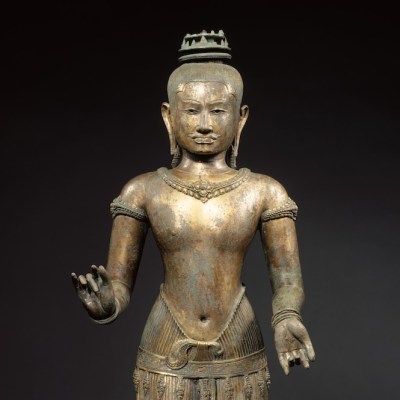
Also in New York, a gallery has surrendered 20 Khmer artefacts linked to the disgraced dealer Douglas Latchford to the authorities, reports the New York Times. The gallery acquired the objects, which date from the second century BC to the 13th century, from Latchford between 1995 and 2005. The gallery, which the Cambodian government has identified as Antiquarium Fine Ancient Arts Gallery, handed over the objects after the Department of Homeland Security provided evidence that the objects had been looted from Cambodia, and that Latchford had given the gallery fake provenance documents.
Three museums in Switzerland – the Ethnographic Museum at the University of Zurich, the Museum Rietberg and the Musée d’Ethnographie de Genève – have returned 18 Benin bronzes to Nigeria. The returns were announced by the Swiss department of home affairs on 29 June, after a repatriation ceremony held at the National Museum in Lagos. Among the returned items – all of which were looted from the Kingdom of Benin by British forces in 1897 – is an Eroro bell, used to signify rank among Benin warriors, and a container for herbs and medicine. This restitution is part of the Benin Initiative Switzerland, which was launched in 2021 and aims to investigate the provenance of all objects from the Kingdom of Benin in eight of Switzerland’s museums.
Pierre-Olivier Costa, the president of the Museum of European and Mediterranean Civilisations (MUCEM) in Marseille, has been suspended after being accused of ‘sexual and moral harassment’, the Art Newspaper reports. Véronique Haché, general manager of the museum, has also been suspended. The news comes two months after the French culture minister, Catherine Pégard, received a report from the General Inspectorate of Cultural Affairs (IGAC) that outlined tensions at the museum, and three months after a staff member accused Costa of harassment – a charge Costa denies. Both suspensions will last four months; however, a union representative said that there was ‘no way the staff would accept [Costa and Haché’s] return’.
Nederlands Fotomuseum in Rotterdam has to pay €400,000 to its former director Birgit Donker for unfair dismissal, a judge has ruled. Dutch News reports that Donker – who became director of the museum in 2018 – was suspended in June last year and later fired over accusations published in De Volkskrant that she had created an ‘unsafe’ work environment. The Dutch Council for Journalism later found these reports to be ‘unverifiable and tendentious’, reports the Art Newspaper. The judge ordered the board to pay Donker the equivalent of two years’ salary and to publish a statement of correction on the museum’s website.
New York City’s department of cultural affairs (DCLA) will receive a record-breaking $324m as part of the city’s budget for the fiscal year 2027, reports Hyperallergic. Announced by Mayor Zohran Mamdani on 2 July, the figure represents a seven per cent increase from last year’s allocation of $300m. The funding will be used to support institutions including the Metropolitan Museum of Art, the Lincoln Center for the Performing Arts and the American Museum of Natural History. The budget also includes $10m for a ‘Cultural Stability Fund’ for cultural institutions in need of emergency funding.
Unionised workers at the Solomon R. Guggenheim Museum in New York have voted in favour of going on strike if negotiations over changes to their pay and working conditions are further delayed. The Art Newspaper reports that discussions between the museum and the workers’ union have been going on since December. The museum laid off 20 employees – seven per cent of its workforce – in February 2025. Workers are currently seeking reduced healthcare costs for low-income workers and general increases in salaries. A date for the strike has yet to be announced.