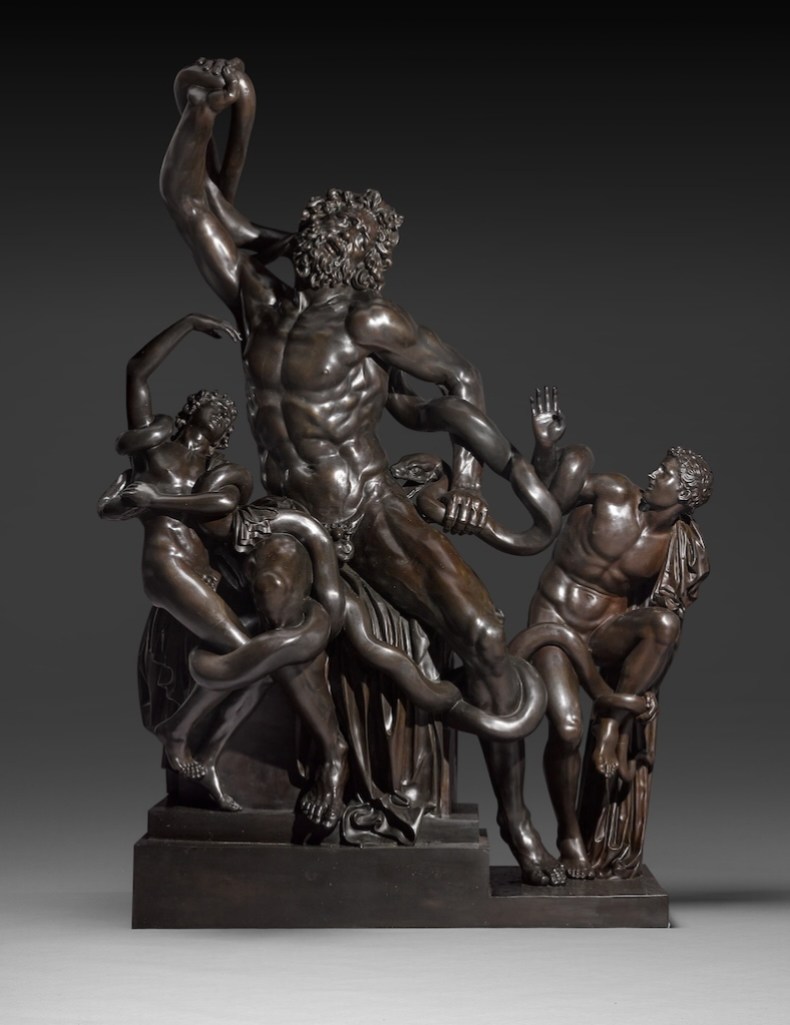
Based on price alone, sculpture has always been the poor relation to flat art. But not last week, when the huge Hamilton Laocoön sold for an extraordinary £13.6m, some four times its estimate of £2m–£3m, at Sotheby’s in London.
The bronze is a life-size cast of the famous classical marble group that depicts serpents attempting to suffocate the Trojan priest Laocoön and his sons, excavated in Rome in 1506. This version was cast in Paris by the founder Auguste-Jean-Marie Carbonneaux, finished in 1817. The date is notable: Napoleon had brought the original Laocoön to Paris in 1798 to stock the Louvre (which he had renamed the Musée Napoleon), but the sculpture was returned to Italy after he abdicated in 1815.
Carbonneaux’s bronze, commissioned by George Watson Taylor at a cost of £2,000 (some £152,000 today), was bought at auction in London in 1821 by the famous politician and collector William Beckford, but was sold in the 1823 sale of Fonthill Abbey – aka ‘Beckford’s Folly’, which had bankrupted him. The bronze was then bought by the 1st Duke of Buckingham and Chandos, who installed it at Stowe, before being sold again to the Duke of Hamilton and placed in the vast Hamilton Palace in Scotland. It was sold again in 1882 and was later bought by the industrialist Thomas Merthyr Guest and installed at Inwood House in Dorset, where it has remained until now. According to an article published by the World Monuments Fund in 2019, the Hamilton Laocoön was spotted by the historic paint specialist Patrick Baty while on a tour at Inwood; he then alerted his colleagues at Stowe House, who commissioned a copy of it for the Buckinghamshire school.
‘I thought the Laocoön was quite special – given that it was a cast from a mould taken directly from the original it made it very unusual,’ says the sculpture specialist Stuart Lochhead. ‘The provenance also must have made a huge difference for collectors, so the uniqueness of the cast and the provenance pushed it to the level it achieved. Which was way beyond anyone imagined.’
Milo Dickinson, the managing director of Dickinson, agrees. ‘There are many 19th century bronze casts of sculptures after the antique on the market and they never make more than, say, £200,000,’ he says. However, Dickinson continues, the scale and quality of this one stand out, as does its Beckford-Stowe-Hamilton provenance, ‘three of the most illustrious 19th-century collections.’
Four bidders – including a private collector from Asia and a contemporary art collector new to Old Masters – competed for 15 minutes for the work, resulting in the second-highest price for any pre-modern sculpture and a record for a neoclassical sculpture at auction.
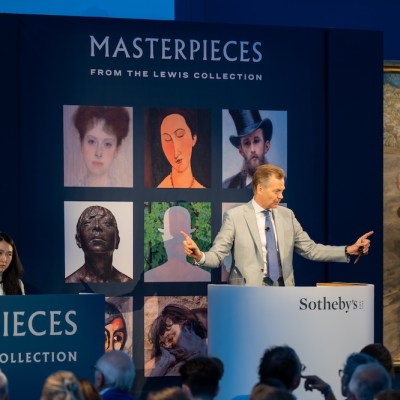
Sotheby’s main Old Master and 19th-century paintings and sculpture evening sale followed and was much healthier than the equivalent £14.5m sale last year, totalling £37.8m with 78 per cent of the 45 lots sold (high for Old Masters). Ten artist records were set, including for Carbonneaux, but also for Hans Memling, Bernard van Orley, Palma il Vecchio and Edwin Landseer among others.
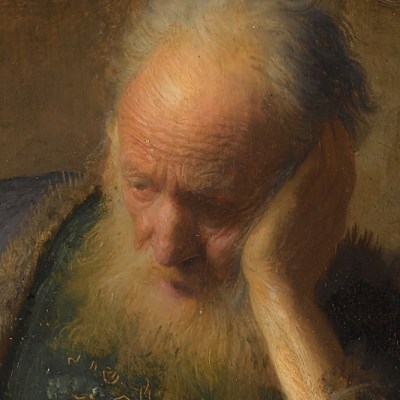
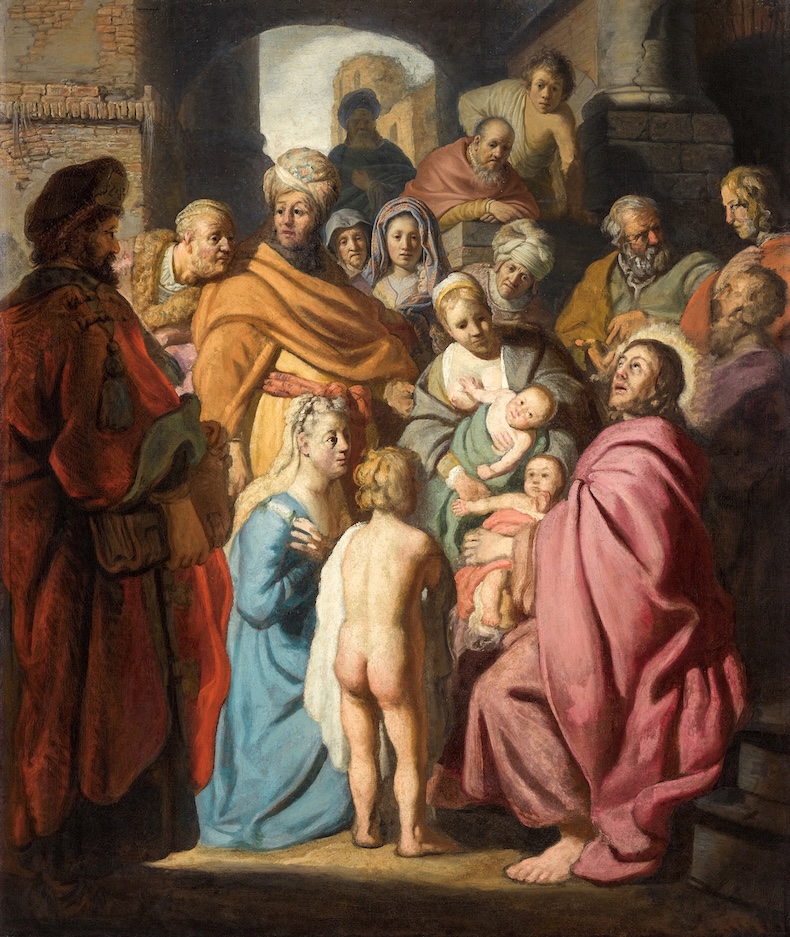
The top lot was Let the Little Children Come unto Me (c. 1627–c. 1631–32), recently attributed to Rembrandt having been sold as an unattributed Netherlandish work to the previous owner at Lempertz in Cologne in 2014 for €1.5m. Some overpainting had since been removed, revealing a self-portrait of a young Rembrandt. Last week at Sotheby’s it sold to the third-party guarantor on a single bid of £8m – the low estimate. ‘The bottom half of the painting is not in great state, but the top is wonderful – the face of Rembrandt and his mother, and the mother and child are fantastic – so there are some very good passages,’ says the London-based Old Master dealer Johnny Van Haeften, an advisor to the Leiden Collection of Rembrandts. ‘This is a young man, beginning to learn how to paint; you can sense his enthusiasm. If it was in perfect state, it would have gone through the roof.’
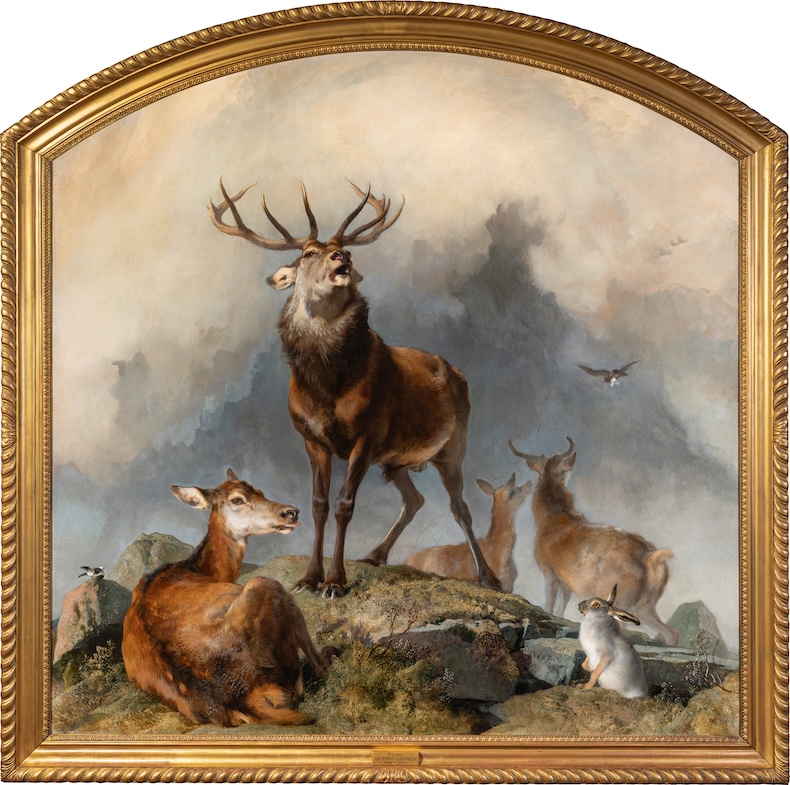
Second in terms of value at Sotheby’s was Landseer’s enormous eyeful of a painting, Scene in Braemar – Highland Deer, the sister painting to The Monarch of the Glen (both 1857), which set a new auction record for the artist at £5.9m, above its £3m–£4m estimate. Ideal for a hedge funder’s baronial pile, perhaps.
Both Andrew Fletcher, global head of Old Masters at Christie’s, and Elisabeth Lobkowicz, the head of Old Master paintings at Sotheby’s London, observe a shift in buyers within this field, with many crossing over from contemporary art and finding Old Masters comparatively good value. At Sotheby’s 23 per cent of lots sold in the evening sale went to collectors new to the category.
‘We’re finding mostly that new collectors are responding to paintings that tell stories and are visually arresting, and that can be anywhere from a beautiful Italian capriccio to a still life to a religious scene,’ Lobkowicz says. She points to an example from Sotheby’s evening sale, a set of huge 17th-century Flemish-school oils on copper, titled The Seven Days of Creation, which sold for £768,000, well above the £120,000–£180,000 estimate. ‘We saw people bidding on those that we’ve never even heard of before. Collectors are expanding outside of just one category.’
Van Haeften was an underbidder on that lot. ‘My plan was to exhibit them at Frieze Masters – I thought they would look sensational hung in a row,’ he tells me. ‘I thought a contemporary collector might think they were sensational and wouldn’t mind who they were by, they’re just beautiful objects.’
New bidders were also in force at Christie’s evening sale the night before, which totalled £38.9m from 39 lots, with 90 per cent sold – Christie’s highest ever sell-through rate by lot for the category. The total could not match last year’s £46.2m, but it’s unfair to compare – in 2025, £31.9m came from one painting, a record-breaking Canaletto.
This year value was spread more evenly across the sale, Fletcher says, and the highest selling work was a portrait of 1820 of the Duke of Wellington by Thomas Lawrence which sold for £9.7m. Although the buyer was the only bidder, the painting quadrupled the previous auction record for Lawrence which was set by this painting in 2006 when it sold at Christie’s for a little more than £2m to Robert Ogden, the Yorkshire entrepreneur and racehorse owner who died in 2022 and whose estate consigned the painting. ‘Of the eight portraits Lawrence painted of him, the Duke said this was the best, so that’s quite a good reason to buy it, if you’re buying top historical portraits,’ Fletcher says.
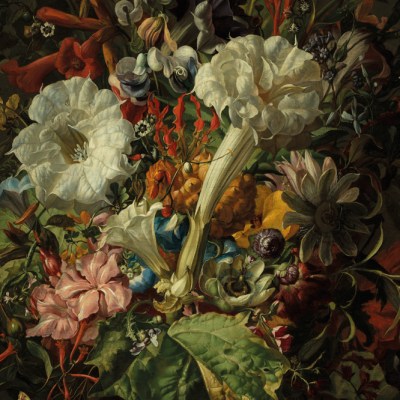
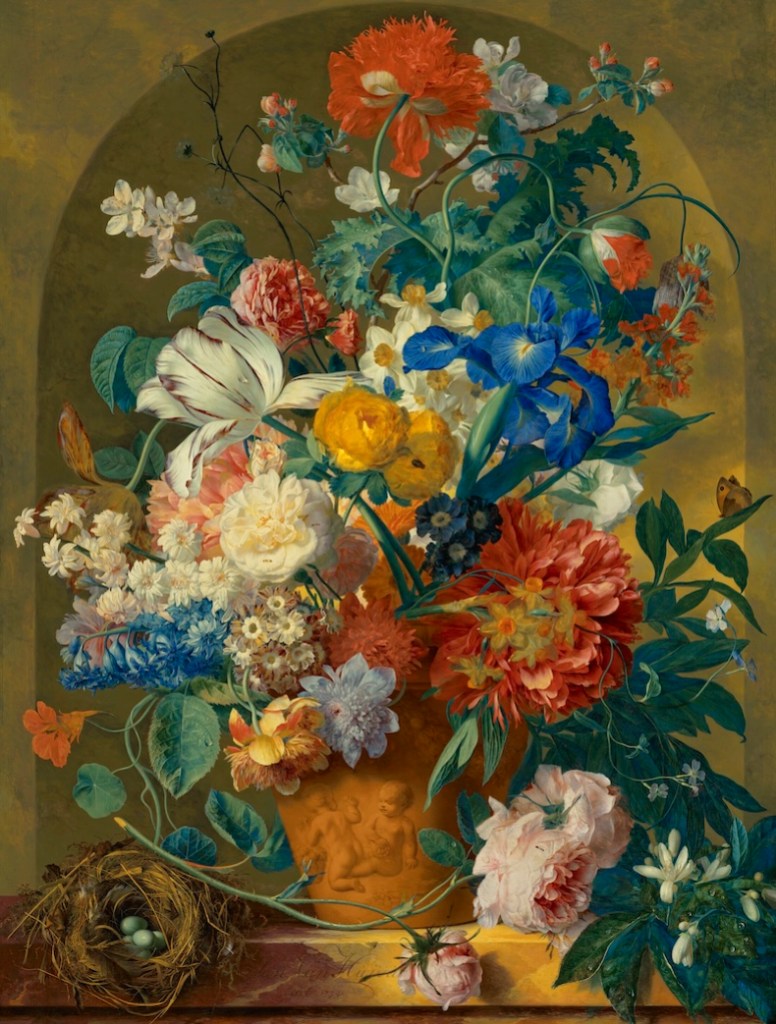
Two early 18th-century still lifes, overflowing with fruits and flowers, by the Dutch ‘Phoenix of Flower Painters’ Jan van Huysum broke the artist’s auction record twice over, with a depiction of fruit and flowers in a wicker basket (1720s) selling for £6.5m (estimate £3m–£4m) followed by one of flowers in a terracotta vase (1734) for £5.5m (estimate £2.5m–£3.5m). Though offered as two separate lots and not originally conceived as pendants, the paintings have hung together since Baron Lionel Nathan de Rothschild brought them together in the second half of the 19th century, commissioning the matching gilt wood frames that still contain them. The Bradford-born entrepreneur John Enrico Fattorini bought the paintings in the mid 20th century and also hung them as a pair.
Quirky works, sometimes verging on the deliciously grotesque, remain popular in Old Master sales, often attracting newer buyers, and a case in point at Christie’s was Louis-Léopold Boilly’s gurning Thirty-five expressive heads of c. 1825. The painting was estimated at £400,000–£600,000 but sold for £914,400.
On Thursday, Christie’s held a day sale of 99 works on paper from the stock of Stephen Ongpin to mark the 20th anniversary of his London gallery and, Ongpin tells me, to make some space in the rack (although the sale represents less than 20 per cent of the gallery’s stock). Works ranged from Tiepolo and Gericault to Auerbach and Frankenthaler, and 91 of the 99 lots sold for a total of £2.5m. Ongpin watched online from the gallery ‘as I felt it would be weird if I were sitting in the room, but lots of people reported a nice energy in the room,’ he tells me. It was a bittersweet experience, Ongpin says: ‘I got quite emotional watching it all […] It really showed the strength of the drawings market in London.’ Picasso’s Le Peintre et son modèle (1970) was the top lot at £508,000, bettering its £120,000–£180,000 estimate.
Such a sale is part of a broader phenomenon of dealer auctions since the pandemic, but – in the evening sales at least – there was a notable lack of the trade buying that once sustained this sector. ‘I underbid a lot of things but it was the first time in my memory that I didn’t buy a single picture at Christie’s, Sotheby’s or Bonhams,’ Van Haeften tells me. ‘Now, if you buy something at the top of the market at auction, it’s very hard to make a profit because most of the people who would have been interested would have bid on it anyway, and stopped at what they thought was a high enough price.’ If a dealer buys a work at a public auction, Van Haeften says, they may have to hold it for a couple of years and even then ‘you’d be jolly lucky to get a 10 or 15 per cent profit.’
All that said, this sale series once again highlights the price divide between Old Masters and the post-war and contemporary market. As Van Haeften points out, you could have bought both Christie’s and Sotheby’s evening sales in their entirety for the price of the one record-setting Rothko that sold in May for $98.3m. No wonder contemporary buyers think this stuff is cheap.