
Rakewell is no stranger to either the art market or television, so your roving correspondent had high hopes for the BBC’s new series The Big Deal with Steph McGovern, which supposedly reveals the workings of the art market. Ever since Channel 4 produced Operatunity in 2003, in which amateur singers competed for the role of Gilda in an ENO production of Verdi’s Rigoletto, television producers have felt increasingly comfortable presenting arts subjects as game shows. This is not disastrous in itself, but it helps if the producers have an understanding of the underlying subject matter.
At the start of The Big Deal McGovern says that ‘buying and collecting art is something we can all have a go at’. In one sense this is true, providing you have the money. But art collecting is almost defined by its exclusivity. Market value might not define artistic quality but good art is often so expensive that very few can afford it. So what are we all being encouraged to have a go at?
McGovern, who describes herself as a financial journalist, was the main producer of financial news on the Today programme on Radio 4 and produced business news for BBC One before moving on to present popular programmes on the BBC and Channel 4 such as Watchdog and Steph’s Packed Lunch. We are told that she is qualified for this show because her father is a sculptor.
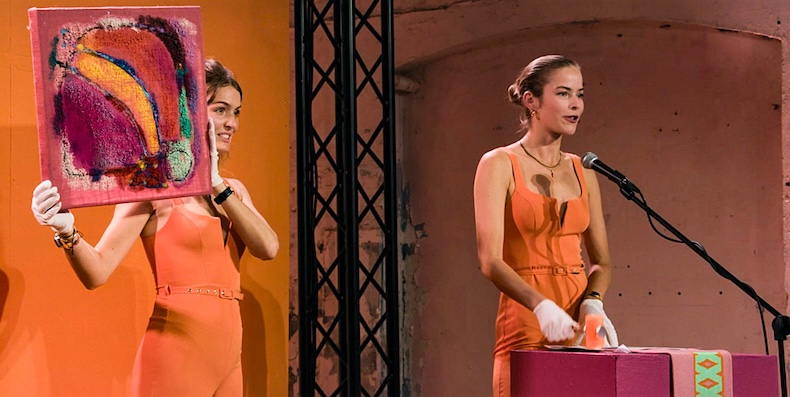
In the first episode, contestants have to persuade an artist to let them represent their work at an auction. Luckily the producers have secured the services of the Filthy Fox Auction Club, an ‘artist-run auction platform’, so no chance of conflicts of interest there. The first ‘challenge’ for the contestants is to select the work and agree the lowest reserve price possible. Then they have to present the works at the auction preview, talking up the work to the bidders. They are judged on the profit they make. The artists receive the total hammer price; the contestants get 30 per cent on top of that. If this is how auction houses structure their deals it’s no wonder they’ve been having a bad time recently. (Normally the Filthy Fox Auction Club takes the commission, a buyer’s premium higher than that set by both Christie’s and Sotheby’s.)
This is quite apart from the fact that the vast majority of art auctions are part of the secondary, not the primary, market (pace Damien Hirst). ‘Series mentor’ Cordelia de Freitas, director of the Aqua Art Miami fair, tells the contestants that they need to understand their market, but in real life the market is not made up of people invited to a television auction, and some of the things that don’t sell could easily find a market in another environment. Contemporary Toby jugs have quite the following.
The value of the work the contestants are selling is not high, so in some sense the stakes are low. But the oft-repeated idea that ‘if you’re lucky you can strike gold’ is at best over-generous and at worst a delusion. Although there are collectors such as the one quoted in the programme who bought Damien Hirst’s Bodies (1989) for £600 and sold it at auction for £1.4m in 2020, most artworks do not increase in value.
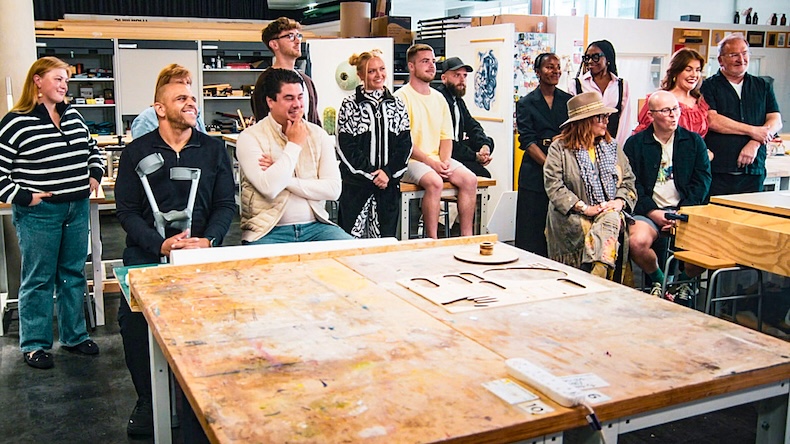
At the risk of spoiling the show, most of the art sells. But the sale looks more like a hen night than an auction. The auctioneers are dressed in orange jumpsuits and have slightly intimidating German accents. Is this meant to represent the unapproachability of the art world?
Far from opening up the art market to the art-curious, this programme feels more like a bigger-budget Bargain Hunt. Rifling through the art colleges to find something to sell, the producers seem to have forgotten that before people want to collect, they want to know about the art.
The Big Deal with Steph McGovern is on BBC Two and BBC iPlayer from 13 August.