From the September 2026 issue of Apollo.
To get to Sunil Gupta’s south London studio you walk through the car park of a petrol station off Camberwell Road, through a gate and up three storeys in a creaky goods lift. You enter into a large open plan space, much of which is taken up with shelves of archival material in cardboard holders, while all around there are zany pieces of decor: a large rocking horse painted white; framed photographs taken by Gupta and his husband, Charan Singh; a pair of folksy papier mâché figures Gupta bought at a market in Mexico years ago that look to me like bulbous characters from a Diego Rivera painting, pulled out of the canvas and given solid form. Singh is working at a computer in the corner as Gupta and I sit down at the kitchen table. ‘Do you feel it’s hard to separate life and work, having a live-work studio like this?’ I ask, half knowing the answer already. ‘No,’ Gupta replies instantly. ‘They merged some time ago.’
Anyone who has a passing familiarity with Gupta’s work would testify to that. Life is his subject matter, he tells me, a fact reflected in the satisfyingly simple title of his upcoming retrospective at Kettle’s Yard, ‘Life with a Camera’. His career, which spans more than five decades, has been guided above all by his own identity – ‘I’ve actively made myself a Black gay photographer who’s HIV positive’ – and the ways in which it can be conveyed and constructed, erased and subverted. But if that is often his starting point, his photographs tend to look outwards, fostering a sense of communality with his subjects: photography and activism, for Gupta, have always gone hand in hand. The pictures often pay tribute to his own artistic influences, which range from the Bollywood movies he watched as a child to the films of Rainer Werner Fassbinder, encountered as a teenager, and from Pre-Raphaelite paintings to the photos of Diane Arbus and more.
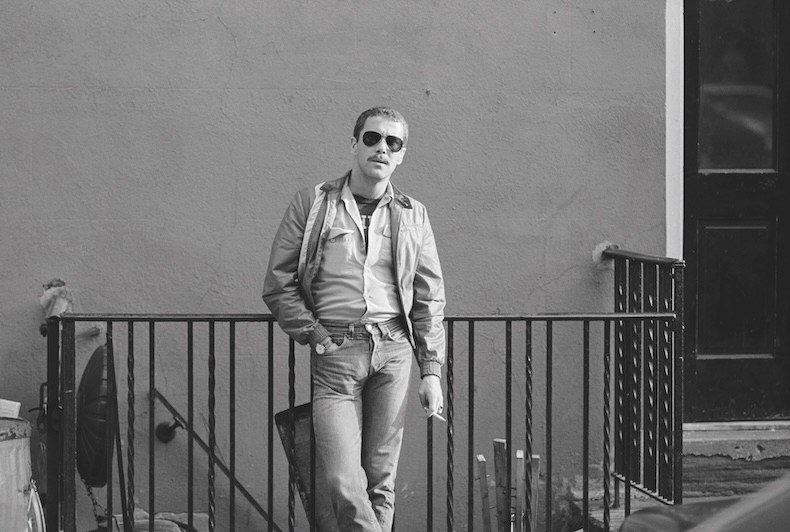
In 1976, Gupta was one of the first photographers to document Christopher Street in New York, a then-nascent queer public space in which the Stonewall riots had flared up just a few years before. In the 1980s he photographed gay men in India at a time when homosexuality was still illegal; made a series chronicling the lives of immigrants to the UK that led in 1988 to the formation of the Association of Black Photographers, now Autograph ABP; and produced a series of triptychs that skewered the Thatcher government’s draconian attitudes towards homosexuality. (The latter comprised portraits of queer couples next to text by his partner at the time, the poet Stephen Dodd, and photos of the protests against Section 28.) Since then, Gupta has photographed men living with HIV, gay and lesbian couples in Delhi and shopfronts in south London during the pandemic. He has also created a series based on an imagined film set in Sun City, a gay sauna in Paris, a loose riff on Chris Marker’s photo-film La Jetée (1962).
If much of Gupta’s work rests on a solid definition of his own identity, then his early life was characterised by the opposite. Born in New Delhi in 1953, he lived there until he was 15, when his family abruptly left for Montreal. The move came just as Gupta was in the middle of a ‘very active gay sex life’, one that ‘wasn’t spoken about, to outsiders or even within’, but was just ‘quietly happening’. Gupta arrived in Canada in 1969 – a few weeks after Stonewall, though he didn’t know it at the time – and enrolled at junior college a year later, by which point the first ripples of the gay liberation movement had reached Montreal. ‘I realised that the thing I was interested in sexually was called something, and there had been this riot and there was this gay politics emerging,’ he says. ‘I basically discovered that being gay was really cool.’ For Gupta, that was intellectually as well as socially liberating. The ‘bible’ of that new politics was David Cooper’s book The Death of the Family (1971), which argues that the nuclear family upholds capitalism, and the rapid absorption into the curriculum of gay, anti-capitalist politics meant that, as Gupta was studying anthropology, ‘I could write essays [and] refer to actual published articles about why gay men go cottaging.’
While in Canada Gupta was already doing bits and pieces of photography, but a formal photographic education came after he completed a degree in commerce at Concordia University in Montreal and moved to New York, following a man he’d met at university. He started an MBA, funded by his parents, whose dreams for him involved engineering, medicine or finance, but spent his time instead going to galleries around the city to see photography shows, before enrolling in photography classes at the New School, studying under Lisette Model, Philippe Halsman and George Tice. He credits Model in particular with giving him the spur to go out and photograph Christopher Street – which, Gupta remarks with a half smile, was the first gay public space he ever saw in daylight.
Throughout our interview and elsewhere, Gupta refers to the mode of documentary photography he performed in this series as ‘cruising with a camera’. He spells it out to me in case the double meaning is unclear: ‘Having them on film was as good as sex. I got a similar rush out of it.’ Christopher Street was a series born in that sweet spot ‘after gay lib and before AIDS’ and even today those photos of men, moustachioed and sporting leather jackets, often looking directly at the camera, hum with an atmosphere of possibility. The series has that sense of spontaneity that often characterises street photography, but his photos are not simply works of documentary. He would often approach people and ask them to pose, even in the photos that look candid, which raises a question that runs throughout much of his work: when does documentary photography end and art photography begin? Does the distinction really matter? Gupta seems to hold those two sides of his practice in unresolved tension. He came to it through the posed art photography of the 1970s – Model’s work above all – but his response to life, he says, has always been instinctively photographic. ‘I would start by reacting with the camera.’
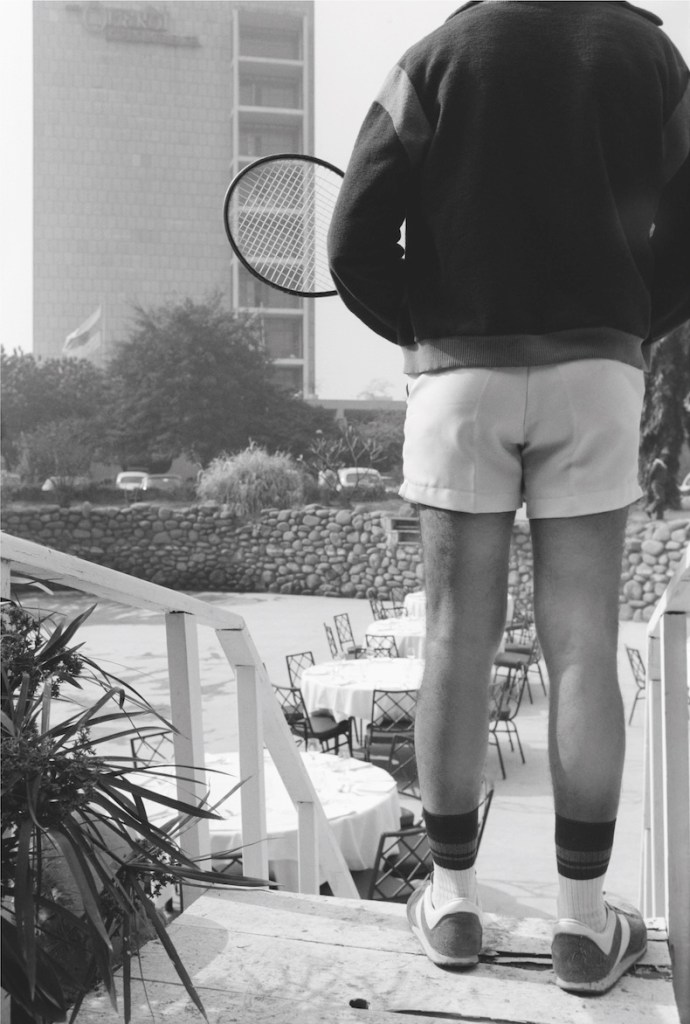
In the early 1980s, after moving to the UK and studying at Farnham and then the Royal College of Art, Gupta returned to India. The contrast he felt with the excitement of Christopher Street was ‘deeply depressing’, he says. He took some freelance odd jobs, sold pictures to newspapers and shot a series of spots around Delhi that he frequented as a child, but his main goal was ‘to take a picture of an Indian guy in India who was gay’. Unfortunately, ‘nobody wanted to be in a picture’. Gupta tried several strategies, including hiding in bushes near known cruising spots and snapping people from afar, but he quickly realised that this wasn’t helping anyone, not least because his subjects’ faces were visible in the photos. He eventually found some willing models and the resulting series, Towards an Indian Gay Image (1983), is an affecting set of black-and-white photos of men, mostly seen from behind or with their heads obscured or cut off.
‘There was no [Indian gay image],’ Gupta says when I ask him about the searching quality of that word ‘towards’. ‘In my five years at art school no one ever showed me one, and I never found one.’ It was tricky, he says, emerging into an art world obsessed by postmodernism, because there was ‘no first or earlier version’ for him to riff on or subvert. And if the power of Christopher Street rests in the flamboyance of its subjects, the sense that they are ‘out to be seen’, then the presiding mood of Towards an Indian Gay Image is muted defiance, with queerness suggested through subtle signifiers. A hand hold, some tight shorts, a flick of the cigarette in a photo taken in front of the Tomb of Humayun – a known gay cruising spot and one that Gupta frequented as a teenager. (The cigarette-smoker is ‘standing in this very queer way’, Gupta says, doing a twisty gesture with his arms.) It’s a body of work that rests on being able to recognise and probe how gay people are coded and reveal themselves, a lifelong preoccupation.
Gupta had experimented with combining photography and text while at school in Canada, but that interest saw its fullest expression in Exiles, a series he made in India in 1986–87. Here his subjects, many of whom have their faces visible, are standing in front of landmarks, as they are with his earlier series, but this time the images are paired with snippets of text from vox pops that Gupta conducted with other gay Indians. ‘It must be marvellous for you in the West with your bars, clubs, gay liberation and all that,’ one line reads, under a photo of a man staring into space at the Hauz Khas complex in southern Delhi; another photo, of a vested young man lying beneath a standing man dressed in white, his face cut off, in Lodhi Gardens, is accompanied by the line: ‘The difficulty with organising a gay group is the question of whether one should include the riffraff.’
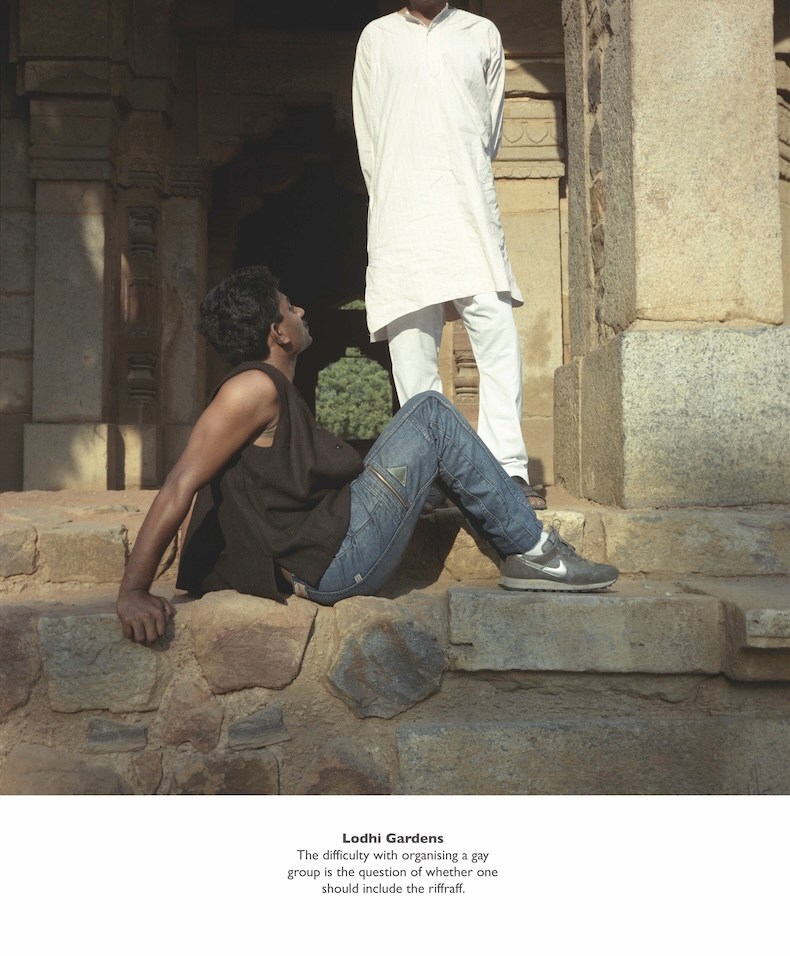
Exiles is the series Gupta says he is most proud of, since it achieved his aim to ‘put Indian gay men into art history’. MoMA’s acquisition of the series in 2022 made Gupta feel like ‘my job’s done: I can retire’. It is also the series that best exemplifies two subjects that go underappreciated in Gupta’s work: his preoccupation with place and his wit, which is evident from talking to him for five minutes. He links both of these, at least in part, to his sexuality; the former due to the sense that queer people often have to actively carve out spaces for themselves. As for the latter, Gupta says that he, like many queer people, has had to develop a sense of humour ‘as a mechanism for survival’, especially because of AIDS. ‘We used to compare funerals,’ he says.
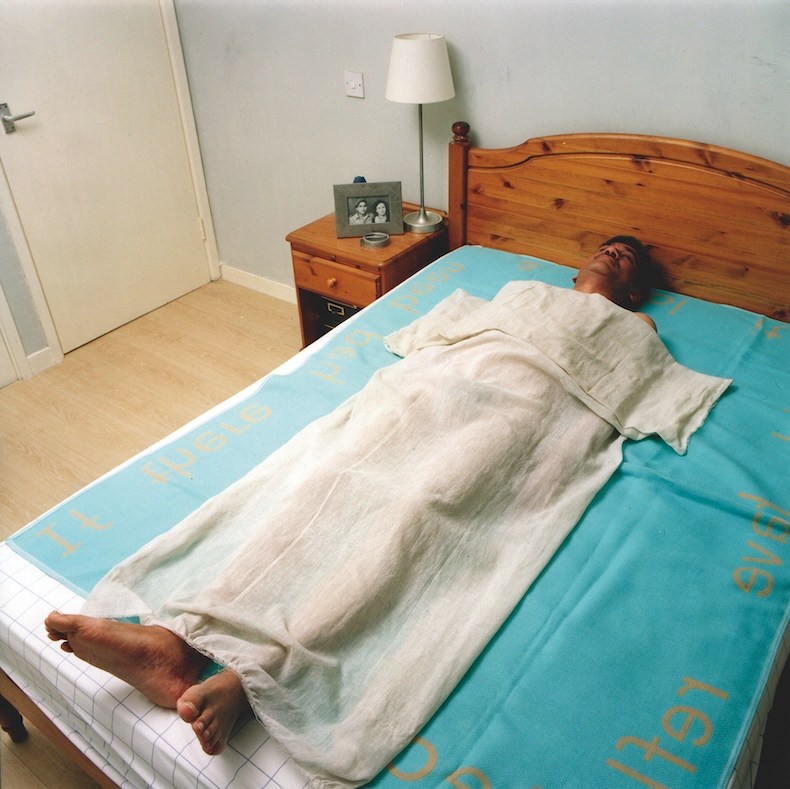
Gupta talks about his diagnosis, which came in 1995, with the same frankness that he talks about everything else. Gupta had already been active in the campaign for HIV education, collaborating in 1990 with the British photographer Tessa Boffin on an exhibition and book called Ecstatic Antibodies, but when he was diagnosed he felt a kind of betrayal. ‘The whole spirit of HIV education was that information was supposed to save you. It didn’t save me, so I felt like a bad person.’ Gupta had photographed his own body in his work before this point, but the images he made for the series From Here to Eternity (1999) are some of his most self-reflective. These photos of himself, nude, or in the middle of a blood test, or in a hospital bed, were made into diptychs alongside images of notable gay spots around London, such as The Hoist in Vauxhall and Attitude in Peckham, both long shuttered (these photos double up as a eulogy to the decline of London’s gay nightlife).
In a neat instance of art mirroring life, Gupta chose to go back to a dark-room method of printing in this series; perhaps a way of communing with the dark rooms of the clubs he would frequent before his diagnosis. He talks about these pictures as a form of ‘photo-therapy’ and says that when he first saw them on the wall at Standpoint Gallery, ‘I took a step back and realised that I could think of the illness as something outside of me.’ The series is tender and at times difficult to witness – ‘what I don’t like is very clever art that’s not moving,’ Gupta says – but it also has a formal ingenuity that demonstrates his skill at making images play off against one another. His resting body slants in the same manner as a sign for the Pleasuredrome sauna; the flash of red at the tip of a bus stop sign outside the Fort bar reminds us of the blood being siphoned from his arm.
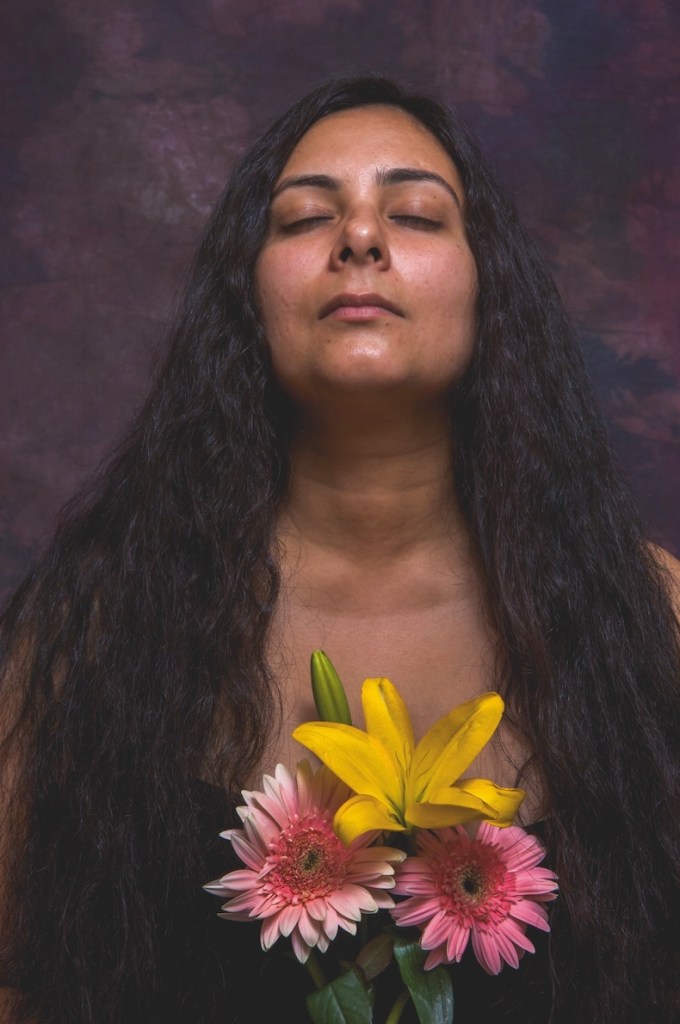
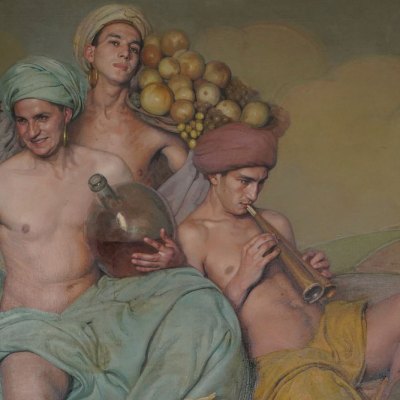
It says something about how far things have come that in recent years, far from having to hide in bushes to photograph his subjects, Gupta has been inundated with requests. This is especially the case with his series The New Pre-Raphaelites (2008), where models would come to his studio in Delhi and loosely recreate famous paintings by Millais, Rossetti and co. One of the photos from that series, of a South Asian man staring into the distance and wearing a sparkly pink, blue and yellow carnival mask, is emblazoned across the cover of Queer, a monograph of Gupta’s work published in 2011. He tells me that Andrew Nairne, director of Kettle’s Yard and the curator of Gupta’s upcoming retrospective, wants to ‘ditch’ identity politics and just show the work ‘on its own merit’. When I ask him to elaborate, he pulls out the book and taps the cover: ‘This is what Andrew is getting away from.’ Is Gupta happy with that? Absolutely. What does that mean in practice? For a start, it means including a wider range of projects than were shown at, for example, the artist’s most recent (and first) UK retrospective, at the Photographers’ Gallery in 2020.
I am mildly sceptical at first: how can you jettison identity politics in the work of an artist whose primary subject matter is himself? And is it the case that we can safely depoliticise his photos only now that the battles Gupta has fought all his life have been at least partially won? Does that come with a danger of viewing what were once radical demands for societal change as quaint nostalgia-trips? Or perhaps it’s a useful way of emphasising the formal qualities of his work.
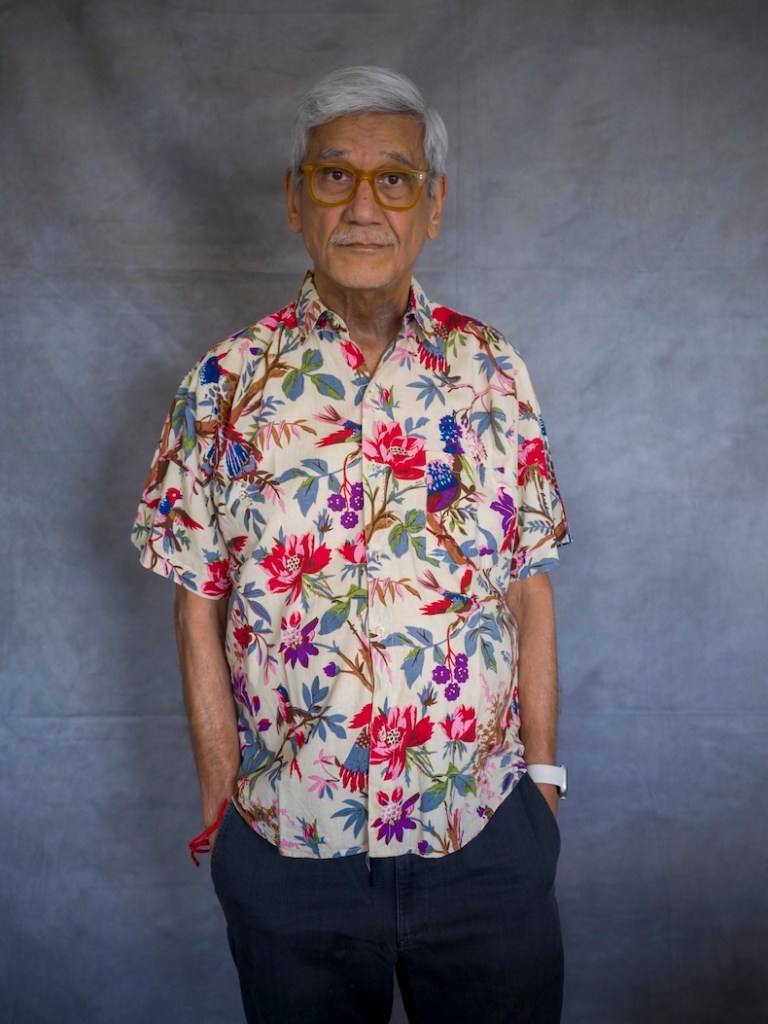
I think I am worrying too much. I ask him whether artists today also have a duty to be activists, but he is diplomatic: ‘It’s up to artists to ask the right questions.’ Gupta, who has been at the vanguard of gay rights both here and in India for some time, has spent a lifetime asking the right questions. He replies to mine with assured nonchalance – the mark of an artist looking back on decades of work and concluding, quite rightly, that he has nothing more to prove.
‘Sunil Gupta: Life with a Camera, 1970–Now’ is at Kettle’s Yard, Cambridge, from 19 September–31 January 2027.
From the September 2026 issue of Apollo.