This year’s edition of the New York fair sets out to transform how we think about the last 100 years of art history
‘Homogeneous’ is rarely a term that is used as a compliment. It seems to be the case that, despite endless professions of individuality, markets force a similarity upon everything. In the case of the art world – an industry that should, almost by definition, savour difference – this means that things are often presented in the same way. As a result, the act of looking at previously unknown art is flattened into an endlessly repetitive experience, walking down narrow corridors of flimsy booths hung with, for the most part, uncontroversial work.
Of course not all fairs are like this, but success does seem to breed copycats, so what is fresh one year quickly becomes ubiquitous the next. When Independent launched in 2010 it set out to do something different. Not for Independent the convention centre nor the big empty space. It launched at the Dia Center for the Arts (now Dia Chelsea) and showed that art fairs can be as considered as they can be original. This is the same spirit that was brought to bear on its sister fair, Independent 20th Century, the fifth edition of which is at the Breuer building on Madison Avenue from 24–27 September.
Independent 20th Century spotted a gap in the market for 20th-century masters as the market for contemporary works became overheated. It also saw an opportunity to put on an art fair rooted in the diverse interests and overlooked stories of the 20th century that have been bubbling up to the surface for the past decade or so.
From its inception, the fair showed an interest in Outsider and self-taught artists such as the Brazilian Indigenous painter Chico da Silva (1910–85), and presented overlooked feminist artists such as Kate Millett (1934–2017). It is rare for an art fair – by nature, an event dedicated to sales – to be so interested in expanding people’s historical frame of reference.
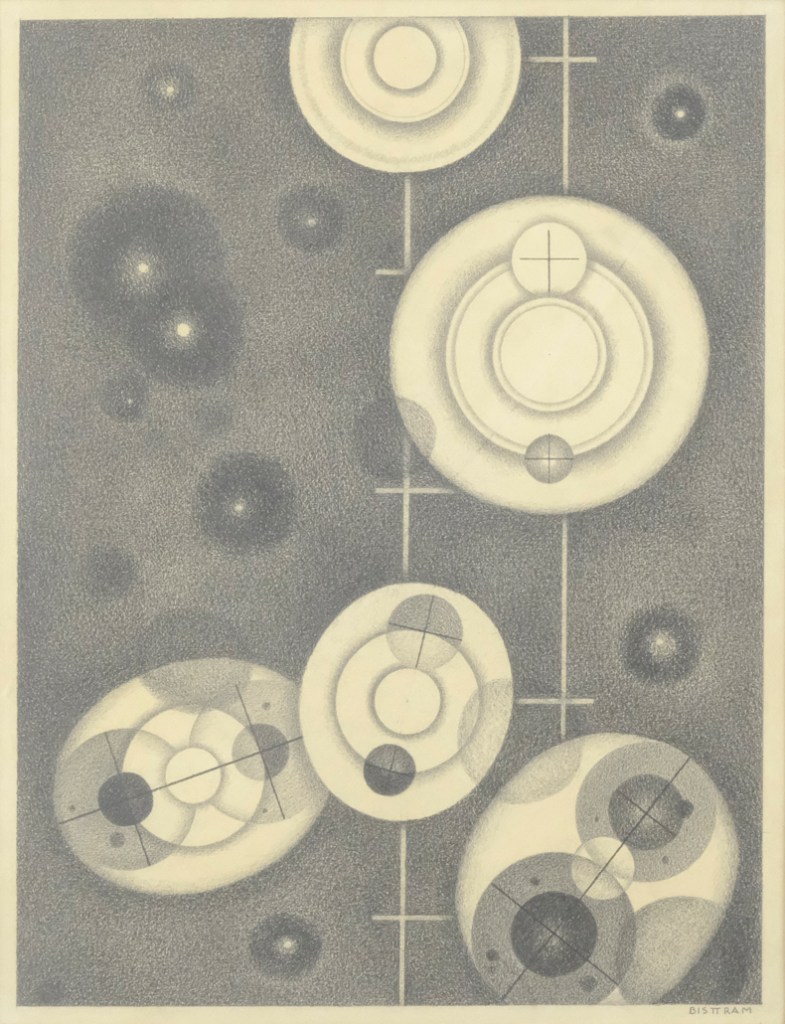
This edition of the fair will be as dedicated to new discoveries as ever. Addison Rowe Gallery is bringing a selection of works by Emil Bisttram (1895–1976), one of the founding members of the Transcendental Painting Group (TPG), a circle founded in 1938 in Taos, New Mexico, that rejected the social realism of the 1930s and embraced non-objective painting. In some ways, the TPG was an extension of the work that began at the Bauhaus. But there is another dimension to it: Taos is only an hour’s drive from Los Alamos and the TPG was working in the shadow of the Manhattan Project. Coincidentally, Bisttram became increasingly interested in processes of growth and energy. His works depict what could be read as a new cosmic pathway or an interpretation of the atom and were even exhibited in an exhibition titled ‘Art and the Atom’, organised by the Los Alamos Scientific Laboratory in 1951.
It remains to be seen whether encountering this work will be enought for visitors to recentre their view of 20th-century art history away from Paris and the big Abstract Expressionist men. But it could be enough. Just as the Manhattan Project discovered that the smallest collisions can have large ramifications, it turns out that paying attention to the undercurrents in art history can cause unexpectedly big shifts too.