From the October 2026 issue of Apollo.
No one needs to buy a work of art. The art market, for all its claims to being a regular market, is selling something that has less functional value than many products. People whose job it is to sell art frequently talk about expanding market reach, growing the number of participants and ensuring a firmer base. In this version, there are two ways for them to do this. One is to make the art world more accessible, to ‘widen the net’ of who looks at their art and bring in anyone who likes to think of themselves as creative (i.e. almost everyone). The other has grown up recently and was in evidence at this year’s Art Business Conference in London. This is to drive productivity through AI.
There is no doubt that the AI revolution has begun. Data centres are being built, AI agents are being unleashed and AI results are embedded within our old-fashioned search engines. In an informal poll during the conference, nearly every single member of the audience raised their hands when asked if they had used AI to assist them with some aspect of their work. Artists such as Avery Singer are using AI to make art in a way that already looks as though it is a different era from just a few years ago in 2022, when the Guardian gave established artists a brief to use AI in their work for a somewhat mocking feature. (Back then, it just looked like a memeification of what they normally did.)
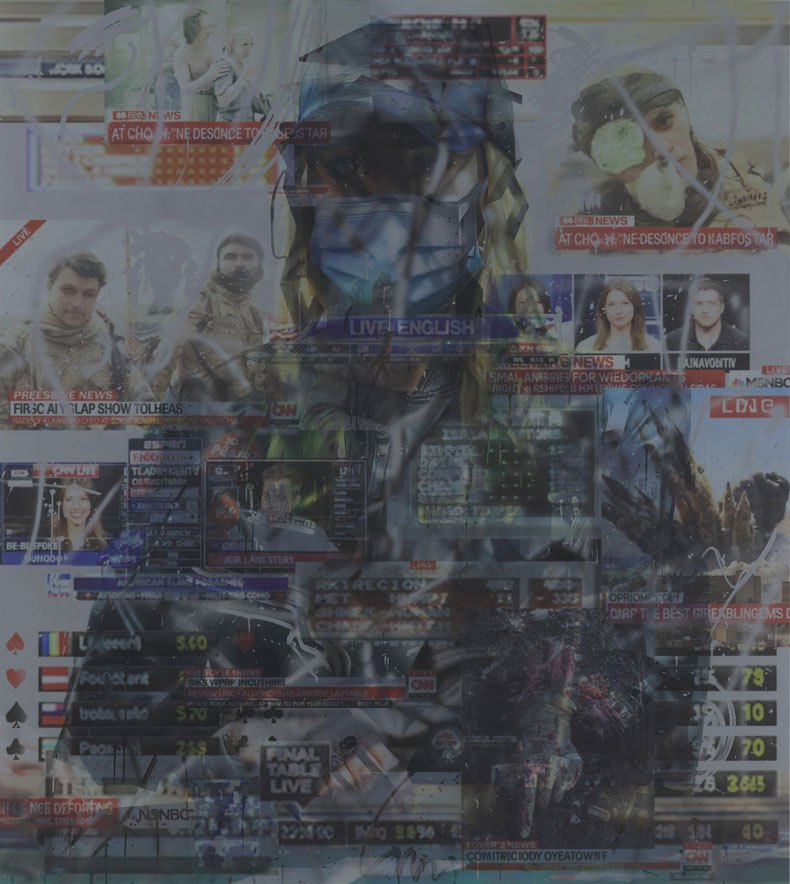
At the Art Business Conference, a panel very earnestly explained how AI would revolutionise shipping, client acquisition and deal-making. The one area of the art world that would remain immune to AI optimisation was art handling – no one wanted to entrust a work of art to a robot hand. (Give it time, I say.)
There are a couple of assumptions built into this. One is that the art market should be striving for endless growth. Even Jack Welch, the infamous CEO of General Electric in the 1980s, became sceptical about the unbridled pursuit of profit – so perhaps rather than using AI to ape the worst habits of vast corporations, people in the art world would be better off finding a new model.
But then there is what might be called – especially in London at the beginning of October – the Frieze factor. People buy art because they enjoy it. They like to be where art is seen; they like to meet people who are interested in similar things to them; they like to look at art. Removing people from this process might well make things more efficient but it might not make them more enjoyable. The art world has a tendency to be seduced by big shiny things (look at Jeff Koons) and, right now, nothing seems quite as dazzlingly shiny, or as big, as AI. If it really wants to derive value from AI then it might need to take another look to make sure it’s not removing the humane at the point where the human is most needed. In other words, to avoid throwing away the very thing that makes art a special – and therefore valuable – proposition.
From the October 2026 issue of Apollo.