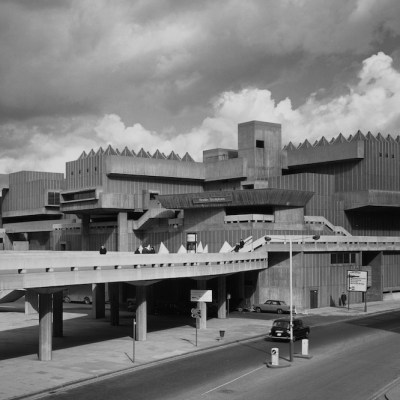
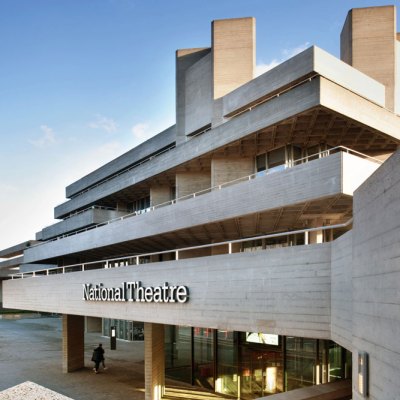
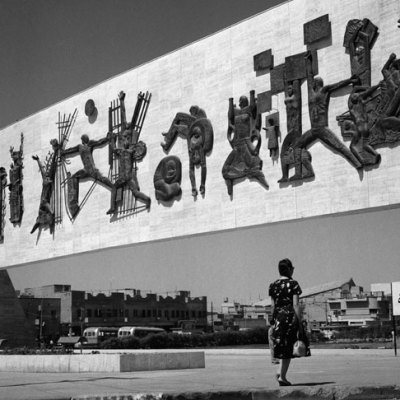
This review of Street, Palace, Square: The Architecture of Democratic Spaces by Jan-Werner Müller appears in the October 2026 issue of Apollo.
We think we know what an architecture of totalitarianism looks like. Hitler and Speer imagined it for Berlin, though they never actually built much. Stalin and Mao did better: vast squares, columnated classical buildings which dwarf the crowds gathered for the inevitable military parades. You see it in Pyongyang and you are beginning to see it in Washington, D.C., which already had overtones of fascism in its architecture in the 1930s.
And therein lies a problem. It can be difficult to point out exactly what makes architecture fascist, or communist. Some superb modernist architecture, still much admired, was built under Mussolini’s regime. But that is as nothing compared to what it is, exactly, that might make architecture and cities democratic. Jan-Werner Müller’s new book valiantly attempts to wrestle with this issue, namely: how can we build spaces for democracy? The German philosopher and historian of political ideas dives in where architects and urbanists have often floundered.
Müller begins, naturally, in Greece, from whence the word ‘democracy’ emerges some time in the fifth century BC, where demos is ‘the people’ or the common citizenry and kratos is ‘power’, or perhaps ‘rule’. Müller describes the exact physical forms of democracy in Athens, though that demos – male, not enslaved – was something very different to what we might understand as ‘the people’ today.
He explains how the agora was an open public space designed to facilitate assembly and debate (or at least gossip) while the Pnyx, the nearby hilltop, became a kind of theatre for debate, more structured and with a speaker’s platform yet apparently natural and unassuming. The setting avoided ascribing more power or influence than necessary to the lawmakers. And all of this always with the Acropolis – religion – in the background. For millennia, these fairly vague architectures defined our view of democratic space.
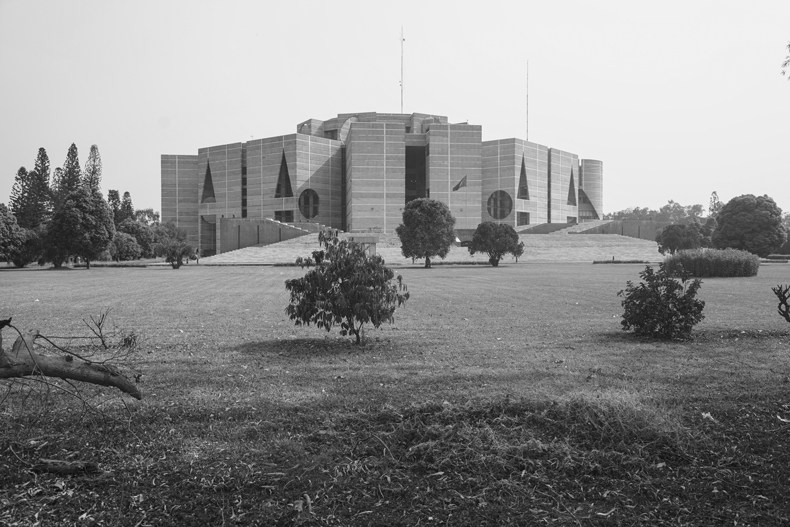
Müller takes a generous look at a few modern spaces built for democracy to see how they hold up. He goes to Dhaka where Louis Kahn built an astonishing, monumental national assembly building for East Pakistan, later Bangladesh. Its forms look like the ruins of some great civilisation, inside it is deeply shadowed and Müller compares it to an interior street of skyscrapers. He also dwells a little on Berlin and the banality conjured by architects attempting to re-establish this haunted capital without making it too grand, too dark, or too historical. He points out that after Norman Foster’s revived Reichstag gave spectators the ability to look down on Germany’s elected representatives as they deliberated, politicians’ real discussions began taking place over lunch.
Architects spout an inordinate amount of bullshit about an architecture of democracy, a discourse smothered in cliché, the greatest of which is that glass can somehow represent transparency and transparency can somehow represent democracy. Glass is rarely transparent and in fact it usually leads to a confusion between the corporate and the governmental. Most of Müller’s book, however, is concerned with the spaces in between; the ways in which public space can be made to encourage democracy. Or not. It’s a tricky terrain and Müller navigates it reasonably and comprehensibly. This is a discourse rich with pomposity and intellectual posturing. But it is also a territory covered fantastically well by Richard Sennett in his book The Fall of Public Man (1977) – oddly, not even referred to here.
Sennett suggested almost half a century ago that the public realm was being impoverished as people retreated into themselves and lost the sense of urban space as theatre, all of which was compounded by planning and architecture that failed to create spaces people might enjoy being in. He wrote of atomisation and self-absorption, anticipating the extreme de-urbanising acceleration of the age of social media. So what Müller is doing here is hardly new. But he does touch on some relatively recent developments in how cities are made that continue to undermine participation and exchange: from anti-social benches, which deter lying down, to POPS (privately owned public spaces), where the exact extent of freedom allowed is deliberately obfuscated.
It is a fascinating time to be writing about democracy in the city, as freedoms we once took for granted are being eroded. The right to protest is not what it was, as the multiply arrested old ladies and retired vicars holding up signs for Palestine Action can attest. Those spaces outside parliaments which should be the most open to protest have become the most defended and hostile. The usual excuse is ‘terrorism’, which has become a catch-all for precluding anything politically uncomfortable.
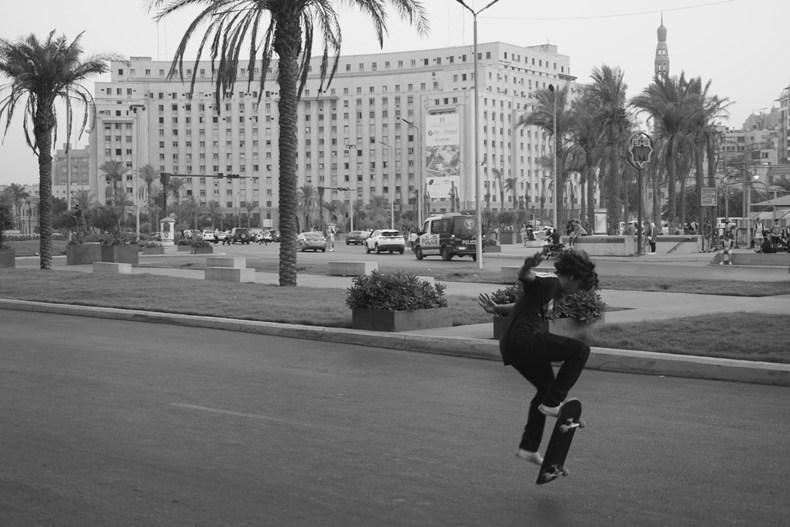
Müller touches on Tahrir Square in Cairo, which briefly seemed to be the centre of the Arab Spring. I was told by one protester that this became the first place in Egypt to have an effective lost-property office (i.e. one where everything was not stolen). Civil society was emerging here, just as it would also be in St Paul’s churchyard in London and Zuccotti Park in New York. It was all, of course, eventually crushed.
Whatever architects might suggest, there is no democratic architecture. There are CCTV cameras, drones, choppers and phones which track and trace our movements and communications. There are heavy regulations on what can be said, how and where. One suggestion is that urbanists need to design places to hide. (The Parisian authorities hated the arcades, for instance, for the secrecy they afforded.)
Müller ends with a few proposals and he begins with the most important observation: ‘Humans make their own history, but not in a built environment of their own choosing.’ As the Situationists suggested, it’s up to us to playfully subvert our cities, to find our own new ways to use them for the means of democracy. We need to renew this subversion for a digital era. We might not be able to build cities on our own but we can use our existing ones however we like. We need to put our phones away and pay attention, to the fabric and to each other. That is urban democracy.
Street, Palace, Square: The Architecture of Democratic Spaces by Jan-Werner Müller is published by Allen Lane.
From the October 2026 issue of Apollo.