From the November 2026 issue of Apollo.
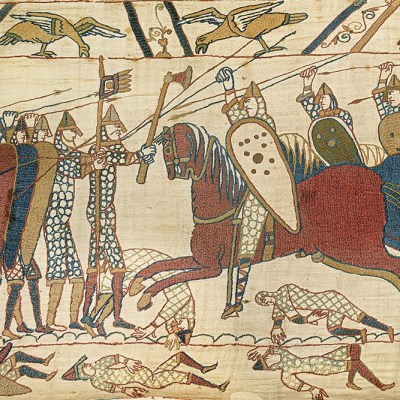
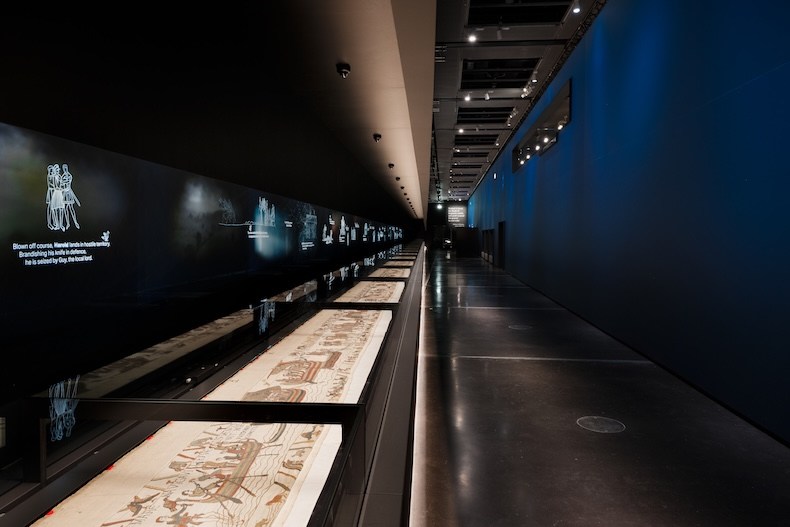
The British Museum’s Bayeux Tapestry exhibition is billed as a ‘once-in-a-lifetime’ chance to see the Tapestry outside its home country. Besides the artwork itself, the other star of the exhibition opened by King Charles III and President Macron is the Franco-British relationship. In an article for the Times, the French president called the loan ‘a gesture of trust, a tangible expression of a long-standing friendship and a sign of our shared desire to see France and the United Kingdom build their future together’. Beauty, history and diplomacy have combined to bring an irreplaceable work before the British public – and not for the first time.
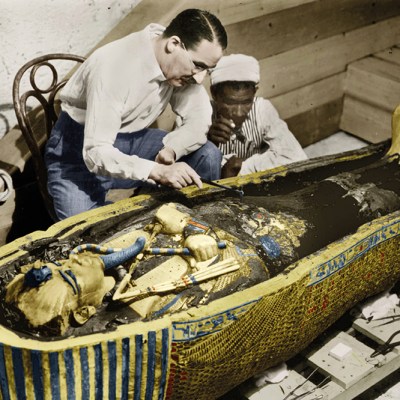
Most comparisons to the Bayeux Tapestry exhibition reach for ‘Treasures of Tutankhamun’ in 1972. Nearly 1.7 million visitors queued outside the British Museum to see the pharaoh’s golden death mask and 49 other objects from his tomb on loan from Egypt. If the loan of the Bayeux Tapestry marks the determination of the French and British governments to build closer relations, the Tutankhamun exhibition – also opened by the British head of state – demonstrated that Egypt and the UK were keen to put behind them the previous century of colonial dominion and nationalist backlash. The exhibition’s profits (considerably larger than those of the Tutankhamun exhibition in Paris in 1967) were allocated to the UNESCO-organised campaign to rescue monuments flooded by the Aswan High Dam.
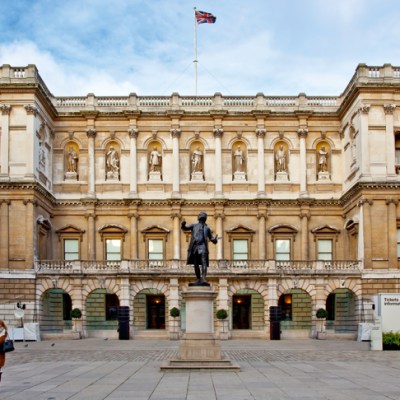
A generation before ‘Treasures of Tutankhamun’, an even more ambitious series of exhibitions in London had also sought to combine great art, soft power and hard cash. For a decade before the Second World War, the Royal Academy’s exhibition rooms at Burlington House devoted their winter slot to masterpieces from abroad. Perhaps the most famous was the Exhibition of Italian Art in 1930. Mussolini had been approached in 1928 by Lady Chamberlain, a member of the exhibition committee and wife of the Foreign Secretary; the opportunity to promote his new Italy in London was too good to miss. Six months before the exhibition was due to open, he sent an uncompromising edict to local governments in Italy:
The Exhibition of Italian Art due to open in London in January constitutes an exceptional manifestation of italianità […] You should ensure that the works of art requested should be conceded, without any exception whatsoever. You will explain to the artworks’ owners that the government attaches particular importance to the success of the exhibition and that I count on their co-operation.
The only two men in Italy who could stand up to Mussolini – King Vittorio Emmanuele III and the Pope – declined to lend their most coveted works, but other museums and collectors got the message. Among an astonishing haul of artworks from Italian collections, the Uffizi lent Botticelli’s Birth of Venus (although Punch’s sycophantic cartoon of John Bull thanking ‘Mussolini the Magnificent’ for the loan borrowed the figure of Botticelli’s Primavera instead) and Piero della Francesca’s Duke and Duchess of Urbino; the Brera lent Mantegna’s Dead Christ; and a Venetian collector lent Giorgione’s Tempest.
The shipping of the loans in December 1929 could not have been more dramatic. The Italian government had hired a liner aptly called Leonardo da Vinci to take the loans from Genoa to London, accompanied by an Italian Navy tugboat. The cargo was said to have been valued for insurance at £14 million (comparisons between gold sovereigns and sterling today are difficult, but this comfortably exceeds the UK government’s valuation of the Bayeux Tapestry at £800 million for indemnity purposes), and insurers were reluctant to cover so many objects in a single vessel. The Leonardo da Vinci ran into gales off Cape Finisterre and lost radio contact for two days, prompting the anxious headline ‘Italian Art Ship Silent’. The captain, accompanied by the exhibition’s commissar, Ettore Modigliani, spent three days and nights on duty guiding the Leonardo through the storm. On arrival in London, greeted by a deputation headed by Sir Austen and Lady Chamberlain and new Labour Foreign Secretary Arthur Henderson, Modigliani downplayed the journey as ‘boisterous, but never dangerous’.
The exhibition opened three weeks later: traffic jams for the private view stretched from Piccadilly to Harrods. Around 540,000 visitors paid 1s 6d (5s on Fridays) to see it in the two and a half months it was open. An unprecedented profit of nearly £40,000 was split between the Royal Academy, the Italian government and the National Art Collections Fund in Britain. Lenders and potential borrowers took notice of the windfall: the once-in-a-lifetime opportunity to see Italian masterpieces outside Italy was quickly repeated. Much of the Leonardo da Vinci’s cargo, including Botticelli’s Venus, was displayed in Paris in 1935 and New York in 1940.
Before the Italian exhibition closed, plans were underway to repeat its success. George V and Reza Pahlavi, Shah of Persia, were joint patrons of the International Exhibition of Persian Art in 1931. It displayed more than 2,000 objects borrowed from nearly a hundred lenders in more than 30 countries. The Shah, who had seized power in a coup in 1925, was anxious to modernise Persia and reduce British influence, particularly in the country’s oil industry. Loans from Persia – shipped by the Anglo-Persian Oil Company from its terminal at Abadan to London – included the Shah’s crown jewels, and were the stars of the exhibition. At the heart of the British Empire, they spectacularly asserted Persia’s stability, wealth and standing in the world.
The key figure of the Persian exhibition was the American curator Arthur Upham Pope, who used his contacts in Persia and overseas to secure loans. Many of these belonged to private collectors and art dealers: it was rumoured that Pope was displaying forgeries as authentic objects and accepting kickbacks. A curator from the Met made his suspicions public. A hastily formed commission exonerated Pope, but the fact that American museums quickly acquired objects that had been displayed in the exhibition makes its own point.
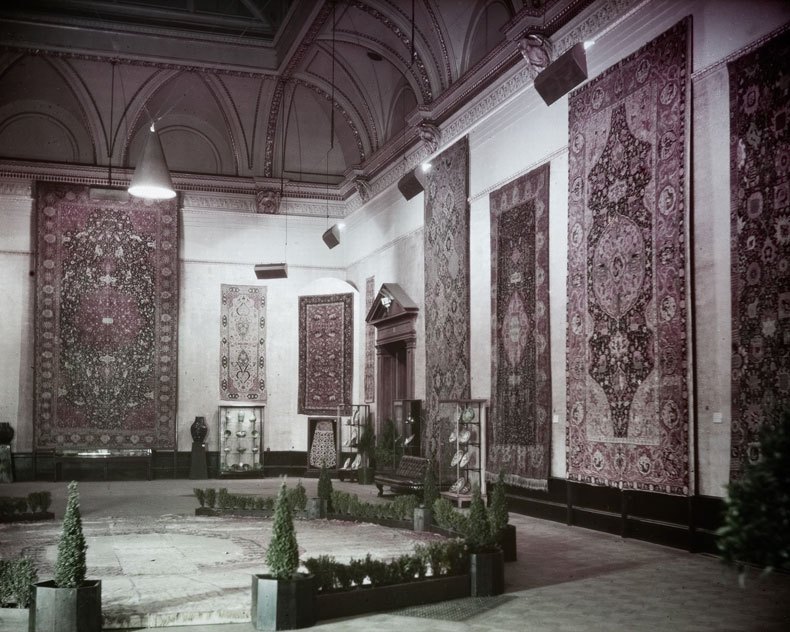
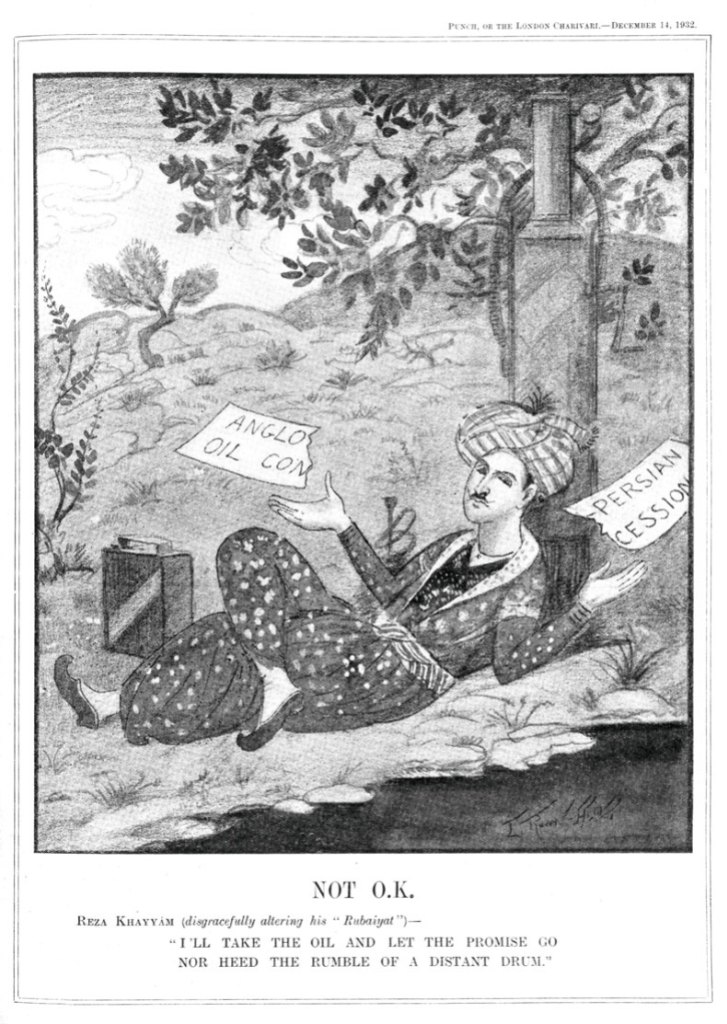
None of this dampened the enthusiasm of the exhibition’s 260,000 visitors or the fashion for all things Persian in London: ‘Persian hats worn with Persian necklaces will soon be adorning sleek feminine heads and elegant necks,’ a fashion correspondent noted. Any political goodwill the exhibition generated, however, did not last long. Reza Shah abrogated the Anglo-Persian oil agreement in 1932, citing excessive British profits – but at least Punch could now parody the Persian exhibition’s Safavid miniatures to pass comment on the crisis.
Four years later in autumn 1935, an International Exhibition of Chinese Art came to London, the hub of Chinese trade and scholarship in the West. Sir Percival David, head of a Bombay trading house and a scholar and collector of Chinese ceramics, had pushed for a Chinese exhibition to follow the Persian show. Although dealers, archaeologists and collectors had removed vast quantities of Chinese artworks to the West, the Nationalist government of Chiang Kai-shek still controlled the unsurpassed treasures of the Forbidden City, housed in the National Palace Museum. These had recently been evacuated from Beijing to Nanjing after the Japanese occupation of Manchuria. In a series of ironies, the emperor of the puppet state of Manchukuo was Pu Yi, the last Qing emperor of China, who had ruled the Forbidden City until 1924 and still laid claim to its contents; back in London, the exhibition’s chairman, Lord Lytton, had headed the League of Nations’ commission that condemned the Japanese invasion of Manchuria.
Like Italy and Persia, the Chinese government hoped the exhibition would demonstrate the country’s indivisible nature, proud past and future potential. This time, the British government formally supported the exhibition but did not wish to alienate Japanese ambitions: the Foreign Office was concerned that without Japanese loans the exhibition would make a tactless political point. The British Ambassador to Japan eventually managed to persuade the Imperial Household to lend and an apparently apolitical exhibition could be announced. The official Chinese proclamation of the exhibition stated ‘our sole aim […] is to make the West appreciate the beauty of Chinese Art’, but people could read between the lines. A British paper wrote:
In spite of some clever propaganda for Japan, there is growing sympathy for China, and it takes no special Eastern subtlety to recognise the use that can be made of a wonderful show such as this […] to win over the doubters. Art has her victories no less renowned than war.
When there were clashes on the Manchukuo–China border later in the year, Punch reached for the exhibition to illustrate the news.
As part of the deal with the Chinese government, the navy cruiser HMS Suffolk transported nearly 1,000 objects – uninsured – from Shanghai to Portsmouth in the summer of 1935; police and plain clothes detectives guarded the treasures en route to London. At Burlington House Chinese curators inspected the condition of the loans before the exhibition committee arranged them. A marble Buddha nearly six metres high greeted visitors in the entrance hallway.
At a lunch to celebrate the opening of the exhibition, the poet and British Museum curator Laurence Binyon expressed the hope that Chinese artworks would allow the public to appreciate ‘the place of man in an infinitely complex universe’. The public responded eagerly: more than 400,000 visitors braved winter weather and the death of George V to see the show before it closed in March 1936, including 750 school groups and 60,000 students. The organisers and the Royal Academy split the exhibition’s £20,000 profit. The Chinese government donated the giant Buddha to the British Museum to commemorate the exhibition; it was also probably easier to leave it in London than ship it elsewhere.
The exhibition ended in disappointment and broken promises for the Chinese lenders. The Foreign Office vetoed plans to send the loans back on HMS Cumberland, forcing the exhibition committee to hire cargo space on the P&O steamer Ranpura. It ran aground off Gibraltar. The ‘treasure ship’ and its uninsured contents spent three days at the mercy of high seas before she was refloated: the implication that Britain had washed her hands of China after the exhibition closed could not have been clearer. When the Sino-Japanese War broke out in 1937, the British public sent hefty sums in humanitarian aid, perhaps helped by memories of the exhibition, but the British government offered no political or military alliance with China until Japan declared war on Britain in 1941.
Within 20 years of the Italian exhibition, Britain had stayed out of the Sino-Japanese War, defeated Italy, invaded Iran and deposed Reza Shah in the Second World War, and watched Mao Zedong’s Communists force Chiang Kai-shek to retreat to Taiwan in 1949 (taking many treasures of the National Palace Museum with him). The Burlington House exhibitions had created opportunities for international cooperation and exchange, but these melted in the face of realpolitik. It is not surprising that well-meaning plans for a German exhibition in 1938 or 1939 never got off the ground.
There is an obvious gap in the sequence of Burlington House exhibitions. In 1931, fresh from the success of the Persian exhibition, an Egyptian one was proposed for 1934. The Egyptian ambassador to London liked the idea and a committee was formed in Cairo to investigate what Egypt could lend. Its chairman was Pierre Lacau, the director of the country’s French-run Antiquities Service. Lacau vetoed the proposed exhibition in a searing memorandum to his minister. He pointed out that the question of insurance was a red herring – one cannot put a price on the priceless, nor replace the irreplaceable – and that lending to Burlington House would just encourage other countries to demand loans for themselves. States should concern themselves with handing their patrimony down to future generations rather than chasing loan fees. He continued:
Never have institutions worked so hard to ensure their collections’ preservation, and yet, by a strange paradox, we are starting to move objects around. The easiest precaution to take, not to move them around, is the one that people neglect! […] If we participate, this will create a precedent: all the other capitals will demand the same favour. How can we refuse them? Thus our museums will become mobile.
Must we wait for a really serious accident before we come to our senses? If an irreversible catastrophe were to occur, public opinion, in Egypt and abroad, would be merciless in the face of an avoidable loss. The museum curator or the Minister to whom the loss of a masterpiece or even an important document would be indirectly attributed can count on worldwide, if unenviable, fame.
Besides delicately reminding his boss who would be to blame if something went wrong, Lacau knew that there is always one loser: the objects themselves. No one who works in museums can honestly deny that it is a risky business to pack and move an object, no matter how solid it seems, and Egyptian statues, Old Master paintings, Persian carpets and Anglo-Saxon embroideries are fragile things. Every jolt, vibration, and journey is another shot fired in an object’s losing battle against entropy. Lacau concluded:
Egypt can tell herself that she should not be afraid not to copy the rash decisions of others. She should simply say that she does not believe she has the right to incur such a responsibility before the civilised world. Egypt can be sure of being quickly copied if she sets this good example and is the first to regain her senses.
His high-minded optimism was misplaced. The exhibition-industrial complex has grown unchecked since the Second World War. Far from ‘regaining her senses’, the Egyptian government has now become one of the largest lenders of artworks overseas: until the end of the year visitors to Battersea Power Station can see 180 spectacular golden and mummified objects on loan from Egypt in the ‘Ramses and the Pharaoh’s Gold’ exhibition. Touring exhibitions may demonstrate soft power, but do nothing to sustain it: would it kill borrowers and lenders to level with their punters and acknowledge that the excitement of a special exhibition comes at actual, preventable cost to the objects they have come to see?
The pace of overseas travel in the 1930s meant that Mussolini, the Shah and Chiang Kai-shek never visited their exhibitions in London. After the bonhomie of the opening of the Bayeux Tapestry exhibition by two heads of state, the British Museum comms team must be anxiously planning for the possibility of a newly elected President Le Pen insisting on playing a prominent role in the closing ceremonies: an occasion for awkward optics that could make the exhibition’s current snafus – public viewings cancelled for a private event, ticket-holders being rushed through, Peter Thiel’s secret visit – look like a fête champêtre in comparison.
From the November 2026 issue of Apollo.