From the December 2026 issue of Apollo.
For a few idealistic years during the Great Depression, the American government threw unemployed artists a lifeline by hiring them to produce photographically realistic sketches and paintings of American handcrafted antiques. The project, known as the Index of American Design, was intended as a comprehensive pictorial resource for scholars and a wellspring for designers. By 1942, however, it was shut down amid wartime budget reallocations. It remained unfinished and it has largely fallen into obscurity. But its statistics are staggering.
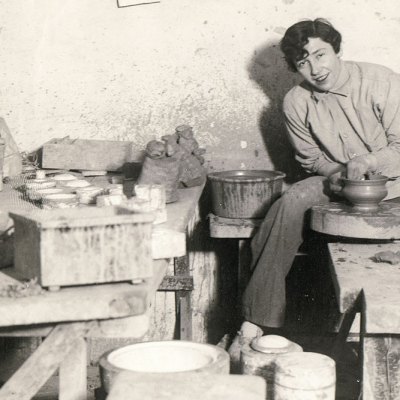
At dozens of offices and field stations set up from Boston to San Diego, some 1,000 artists, aided by countless researchers, photographers, administrators and volunteers, produced 18,257 images for the Index. The 1940 census takers, while enumerating its workers, listed their occupation as ‘IAD’ or ‘Index’. It recorded scores of objects made before 1900, including ceramics, metalwork, furniture, textiles, glassware, toys and buildings. The artists based some of their work on photographs, but they also travelled far and wide to handle antiques at museums, stores, churches and homes. The artworks are detailed down to specks of rust on weathervanes, loose threads dangling from beaded textiles and chipped paint on armless, grinning ninepins.
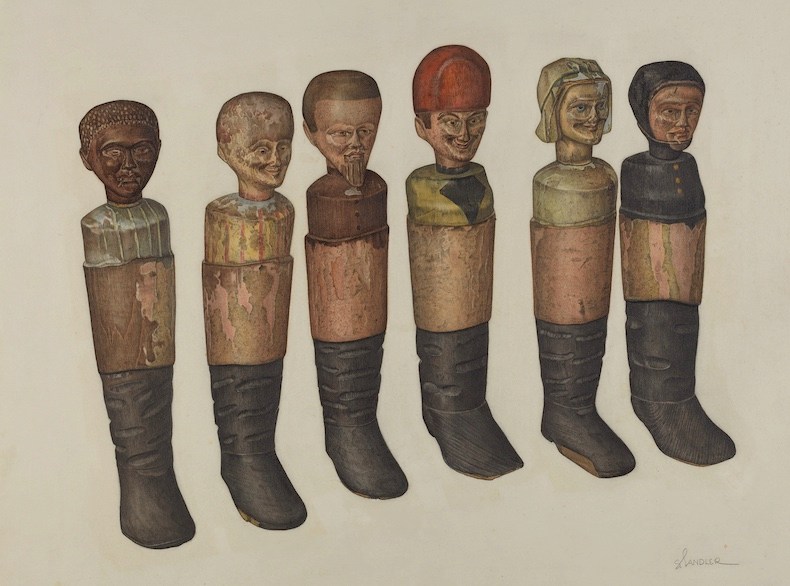
The National Gallery of Art (NGA) in Washington, D.C., now owns more than 800 boxfuls of the Index’s drawings and paintings, which are rarely brought out of storage. In January the museum will open ‘Women and the Index of American Design’, an exhibition of around 70 of these artworks. A third of the Index’s contributors were female, ‘which is a huge statistical outlier for museum collections, including ours,’ says Amy Johnston, the show’s curator. (As is typical for American museums, some nine per cent of the NGA’s 160,000 works of art were created by women.)
It was two women who, in 1935, helped persuade the government to launch the Index: Ruth Reeves, a painter and textile designer, and Romana Javitz, head of the New York Public Library’s picture collection. The founders meant for the visual database to foster accurate scholarship about American folk art and everyday objects, and to serve as aesthetic inspiration for designers, students, manufacturers and merchants. The Index would be ‘the basis for an organic development of American design’, its manual announced amid surging patriotic interest in Americana. In an interview in 1965, Javitz said that, until the 1930s, for anyone hoping to study, for instance, American weathervane traditions, ‘there was nothing, nothing, nothing’ to consult. The Index, she said, amounted to a ‘really revolutionary step forward in our record of America’.
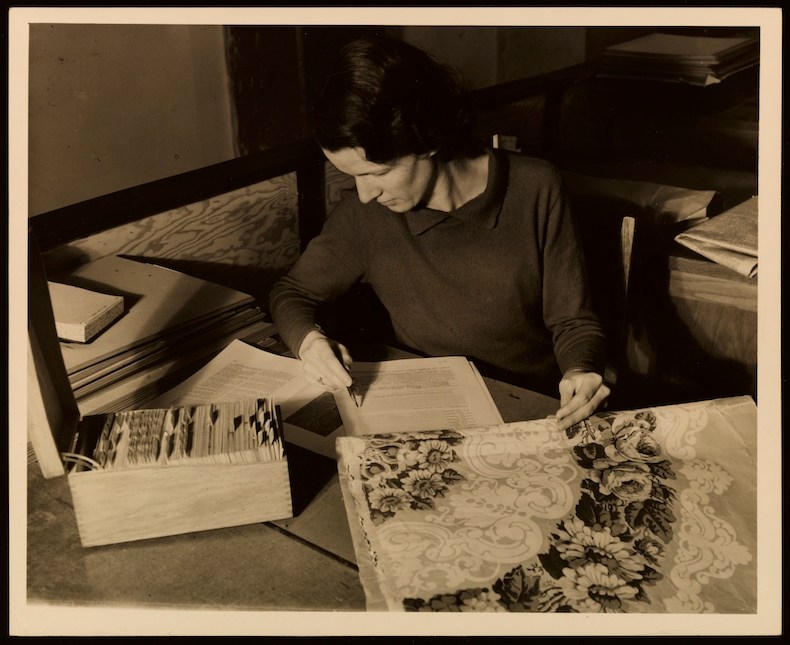
The Index’s employees conducted fieldwork across the country. They tracked down ornately carved circus wagons on the move; they took notes on beadwork moccasins from New Mexico pueblos, cast-iron gingerbread on New Orleans churches, and grey-brown stoneware made in South Carolina by the enslaved potter David Drake. The Index staff put out calls for pieces worth illustrating but slumbering in little-known collections. Newspapers published the government’s requests for the likes of ‘a genuine Colonial house, dress, kettle, spoon, chair, bottle, coach, hat, barn or other object’. Researchers filled out datasheets recording the antiques’ materials, measurements, provenance trails and current whereabouts, down to the private collectors’ street addresses. Gender stereotypes prevailed when supervisors handed out objects for sketching sessions: women were assigned to textiles, but not to metal or machines. Substandard artworks would be rejected and another artist would be drafted in.
Index administrators also had to ensure that artists behaved respectfully in museums. Some were prone to tossing aside their crumpled rough drafts in the exhibition galleries, or even ‘grinding their cigarettes on parquet floors’, as Phyllis Crawford, the head of research for the Index’s New York office, told an interviewer in 1964. Sylvia Loomis, who conducted oral histories with Crawford and other Index veterans, found that the artists had felt ‘grateful for this opportunity to go on with their work and not have to dig ditches’ to eke out a living. Morale was so high among Crawford’s colleagues, she recalled, that ‘people put in five days when they were only being paid for four because they were excited about what we were doing.’
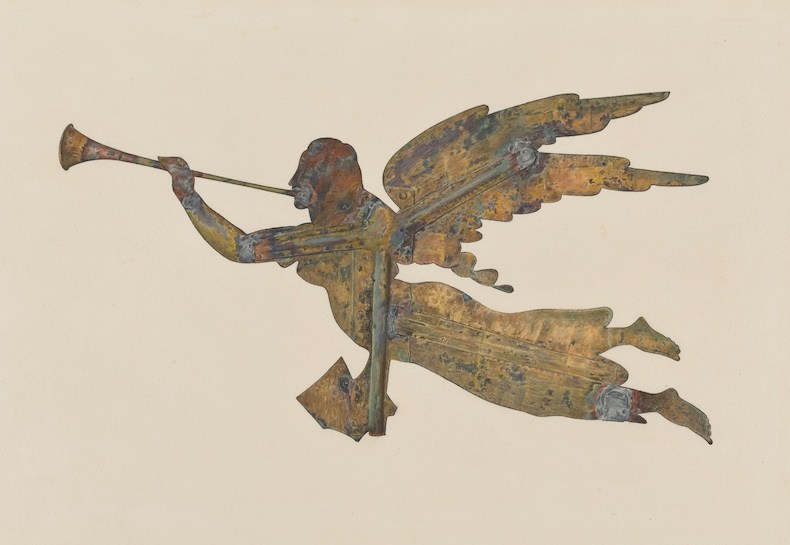
High-level officials stopped by the Index’s outposts to admire the works on the drafting tables. In 1940, Eleanor Roosevelt thought the drawings ‘among the most beautiful I have seen’. The Massachusetts-based artist Lucille Chabot, while depicting a weathered wooden bust of George Washington against a pale blue backdrop, was flummoxed by the First Lady’s visit. ‘It was quite traumatic,’ Chabot told an interviewer in 1986, but she nonetheless managed to keep a steady hand. (Chabot went on to an illustrious post-war career as a technical illustrator and her watercolours of a gilded angel on a weathervane, which were adapted for a postage stamp in the 1960s, are in the NGA exhibition.)
Fractions of the Index have been exhibited over the years, while the NGA’s website now has images of every work in the collection. Researchers have faced obstacles in fleshing out the stories of the Index’s contributors partly because some men and women signed artworks with their last names but only first initials: embarrassed to be accepting government relief, they wanted to mask their identities. Women painted under their maiden names, nicknames or husbands’ names. The signature ‘Hal Blakeley’, on Index drawings of subjects as varied as tin candleholders, porcelain dolls, an axe blade and a church pulpit, was used by the California artist Hazel Blakeley. The name Carmel Wilson, inscribed on Index images of quilted, embroidered and beaded textiles, refers to Marguerite Carmel Wilson. Her varied career included stints tending First World War soldiers in France, helping camouflage warships and illustrating Florida maps and guidebooks. Johnston says that ‘much more is to be discovered’ about the Index, as more archival materials, including its employment records, are digitised.
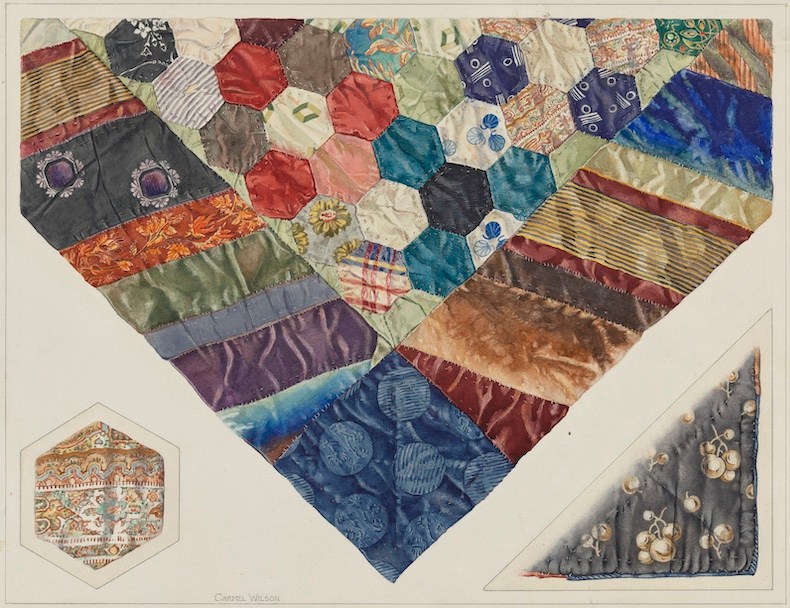
Poring through thousands of Index drawings in preparation for the exhibition, Johnston says, amounted to ‘a joyful exercise’. The show’s subject matter ranges from California missions’ doorways to wooden panthers carved for a carousel, a toy metal bank depicting Teddy Roosevelt gunning for a bear, and a butcher’s shop sign portraying the proprietor chasing a pig across a knife blade. ‘There’s a weirdness to the Index,’ she tells me, ‘that I delight in.’
She also succeeded in tracking down some of the actual antiques that the artists depicted. David Drake’s striated stoneware jar made in 1859, which was painted for the Index by Margaret Gordon of South Carolina, is now on display at the Charleston Museum. Gordon captured patches of light reflected on its glossy, curvaceous flanks. She transcribed Drake’s inscription, noting that the piece was made at Stoney Bluff Plantation (he was enslaved there and legally forbidden to read and write, but defiantly inscribed messages on his pots). The Museum of Fine Arts, Boston (MFA) owns a linen bed valance from New England, which was colourfully embroidered with flora in 1714. It was rendered in watercolour for the Index by Suzanne Chapman, who became renowned for her illustrations of ancient Egyptian excavation finds. On Chapman’s version of the valance, the cross-stitched date is clearly legible, with serif flourishes. But the greenish threads did not age well and the museum’s website now lists those numbers as ‘mostly missing’. The Index of American Design recorded them just in time.
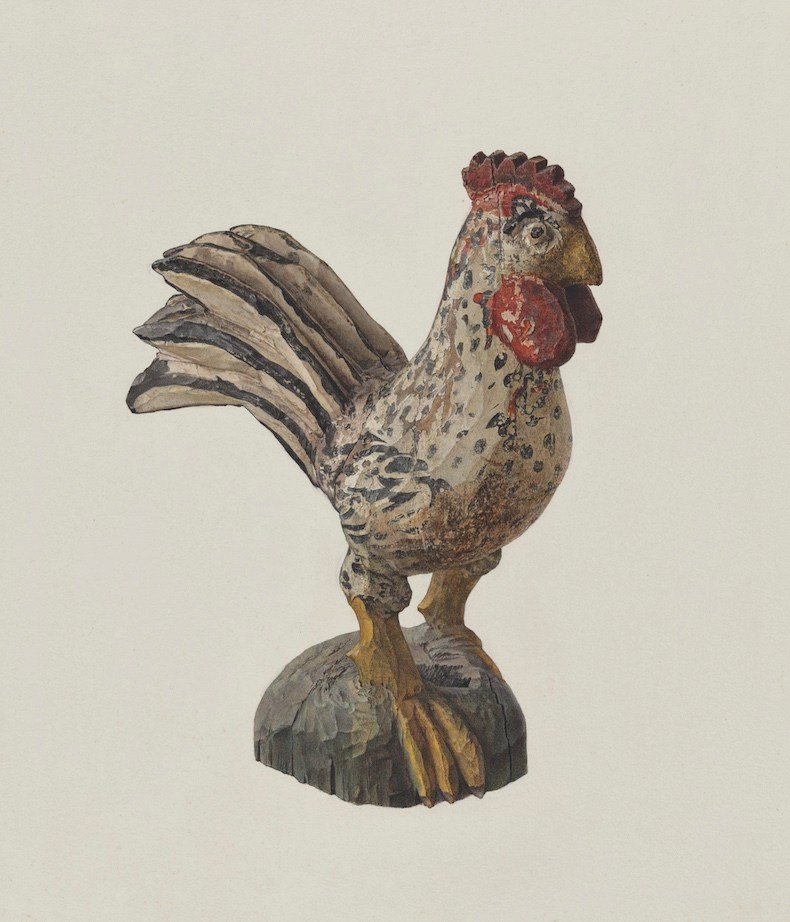
‘Women and the Index of American Design is at the National Gallery of Art, Washington, D.C., from 16 January–13 June.
From the December 2026 issue of Apollo.