From the October 2026 issue of Apollo.
‘Scandalous bimbo business’ is how one male critic derided the works by women employees of the Wiener Werkstätte, the Vienna-based design collective that exported its avant-garde wares widely from 1903 to 1932. This exhibition demonstrates how the workshop’s female staff and customers, though marginalised by misogyny, and the Jews among them doubly marginalised by racism, nonetheless thrived as chameleons.
Sprawling through one whitewashed gallery, the exhibition contains about 220 pieces, from necklaces to furniture and film clips. It reflects the women’s global influences, from African sculpture to neon signs. But be prepared for dark subcurrents and heartbreak upon reading the labels. The Second World War destroyed these women’s livelihoods, lives and legacies. Some of them have fallen into such obscurity that no one knows which death camp contains their grave, or where their works have been scattered – one sculptor preserved a few of her ceramic figures by hiding them in a pastry shop.
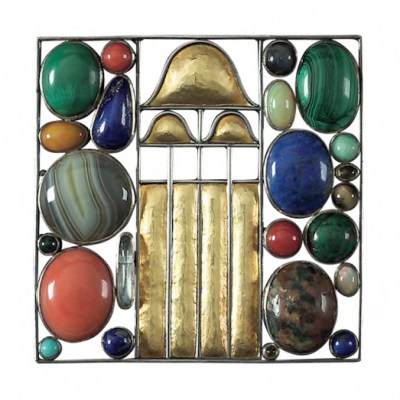
The Jewish Museum in New York has borrowed much material from Vienna’s Museum of Applied Arts (MAK), which acquired the Werkstätte’s archives in the 1930s when the company went bankrupt. MAK safeguarded its collections in wartime, which has enabled the Jewish Museum to reunite finished products with their original gouache sketches, Werkstätte tools, advertisements, and images of craftswomen, salesrooms and buyers. I zigzagged around the gallery, comparing photos, paintings, drawings and sculptures of women dressed in leafy, floral, gridded, chequerboard, striped, scalloped, squiggly, or spiderwebbed fabrics, alongside swatches and garments made from similar textiles. I saw other museum-goers especially drawn to a portrait from 1907 of the Polish-born painter Broncia Koller-Pinell, wearing a pendant set with amoeboid opalescent green stones, alongside the necklace itself.
The chronological thread begins with a row of Gustav Klimt’s signature portraits of languorous women engulfed in gold. For me, those images rather amusingly contrast with the surrounding evidence of female workaholics. About 200 women were employed at the Werkstätte, a quarter of them from Jewish families, who had streamed into Vienna from different corners of Habsburg lands. The clientele was intermarried with the workforce. The Jewish Museum has juxtaposed a silver necklace that Amalie Szeps beaded in black heart motifs around 1910 with a photo of Amalie’s daughter Berta Zuckerkandl, a writer who ran an intellectual salon and whose family’s Werkstätte commissions included entire buildings.
On view nearby are fabrics in ribbony and sawtooth patterns designed by Berta’s niece Nora, whose place of death in the Nazi camp system is unknown. What daredevils these women briefly were: publicly wearing trousers and billowing kimonos instead of corsets, bobbing their hair, smoking cigarettes, sending out Werkstätte greeting cards for Rosh Hashanah, posing for the likes of Klimt, drawing attention to themselves in the workplace, on the street, in galleries and in the press, even as Europe’s empires crumbled, and increasingly powerful antisemites blamed Jews for every ill.
The Jewish women in Werkstätte circles viewed themselves as anything but martyrs. Kristina Parsons, the show’s curator, lists the products of just one protean craftswoman, Felice Rix: ‘everything from toys, tableware, window displays, fashion accessories, and poster designs to wallpapers, pillows, and more than a hundred textile patterns’. Rix’s equally prolific colleague Vally Wieselthier wrote a memoir recalling that the sisterly teams were granted keys to a huge studio, skilled workmen assigned to realise their ideas, ‘and all the time and materials we desired. We simply did as we pleased.’ When anyone’s products sold well, she was expected to throw a party for her co-workers.
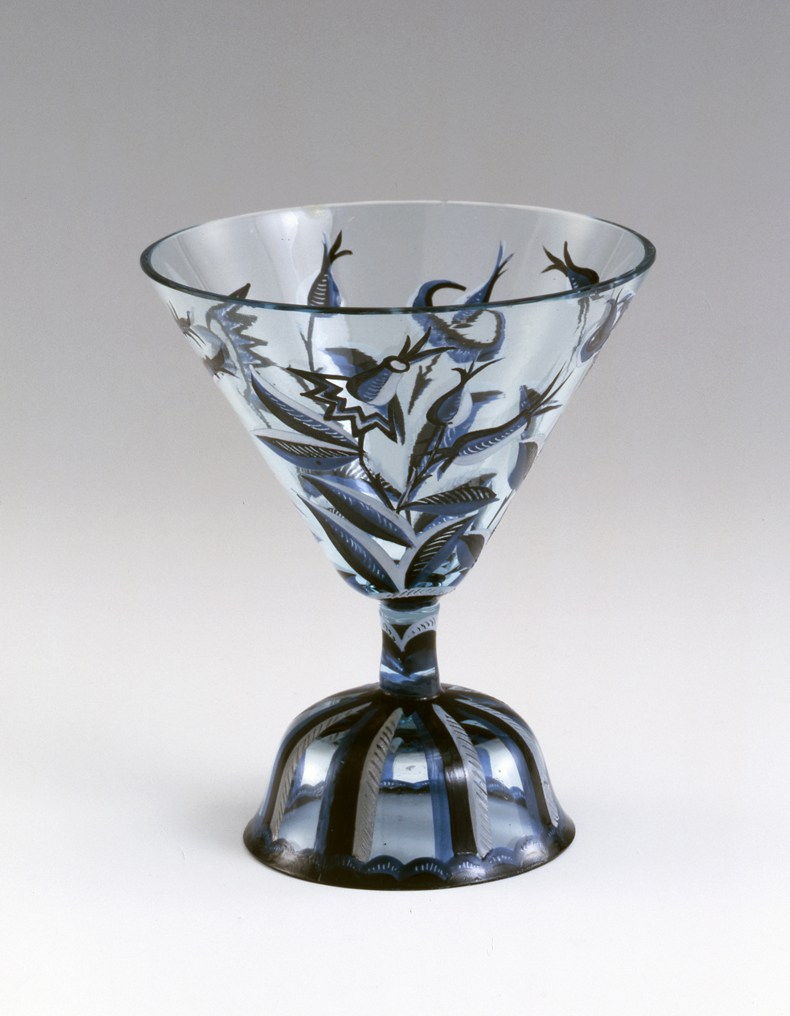
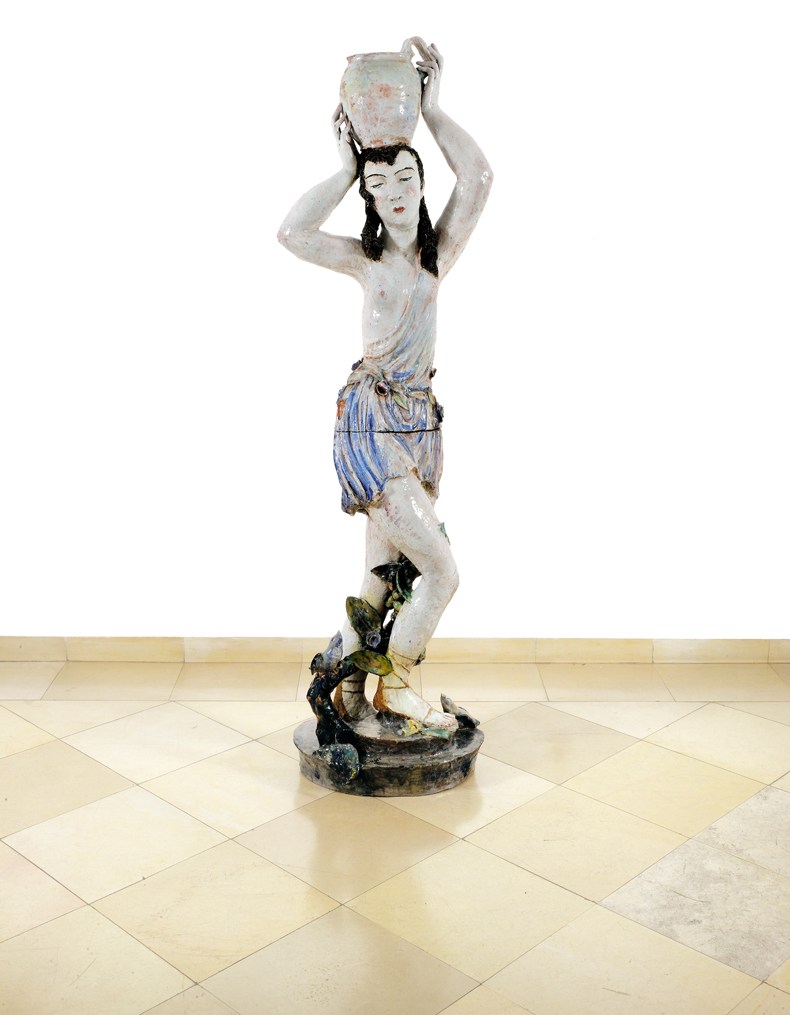
Wieselthier’s creations displayed at the Jewish Museum include a proposal for a polychrome fireplace sculpted with frolicking figures and an earthenware statue of a woman draped in a fiery orange scarf, kneeling on a turquoise pedestal. Incorporating the pedestal into the sculpture itself can be interpreted as a declaration that women’s work belonged at the art world’s pinnacles, rather than dismissed as the knick-knacks of dilettantish bimbos. Parsons told me that it was as if Wieselthier had declared: ‘I will make my own pedestal if you’re not going to give me one.’
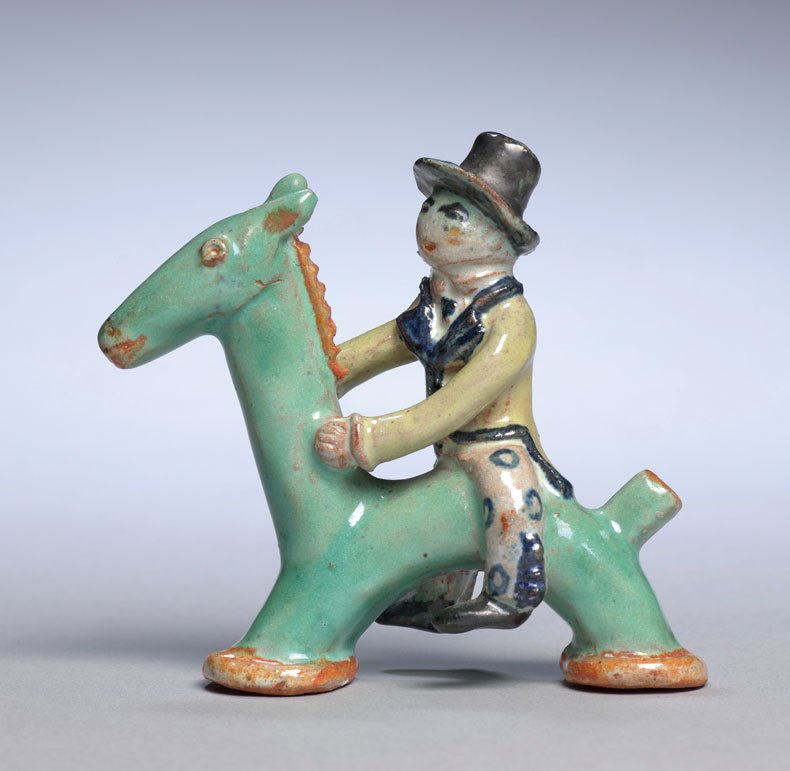
Discoveries kept surfacing even as Parsons finalised the checklist. She was able to include in the exhibition’s accompanying publication, but not in the show itself, newly uncovered information about Grete Neuwalder, who stashed some earthenware sculptures in a trunk at the pastry shop Demel before the Nazis murdered her. The cafe owners shipped the collection to her family after the war; a few young relatives had escaped Vienna by Kindertransport. Parsons says that she wants to delve into many other underexplored subjects. What happened to Klara Posnanski, a rabbi’s daughter who airbrushed fabrics with flags, bricks, birds, polka dots and chevrons? What happened to Felice Rix’s sister Kitty, whose whimsical ceramic figurines for the Werkstätte included a portrait of a female ceramicist in blue coveralls, pedalling her potter’s wheel, productively piling up clay vessels?
I created a mental map while roaming the show, noting where the Werkstätte’s surviving alumnae ended up in exile: London, Leiden, Rome, Sydney, Kyoto, Colombia, Manhattan, San Diego and North Carolina, to name a few. Yet we can still glimpse what they were thinking back before the war, when they were handed the studio keys and some carte blanche and the possibility of throwing an office party when a Zuckerkandl came by and bought something.
‘Modernity and Opulence: Women of the Wiener Werkstätte’ is at the Jewish Museum, New York, until 15 November.
From the October 2026 issue of Apollo.