The Bavarian cabinet has voted to establish an independent body to evaluate claims for the restitution of Nazi-looted art, the Art Newspaper reports. Under the new system, claims will no longer be handled by museums and will instead by reviewed by a team of eight provenance researchers. Last year the Süddeutsche Zeitung accused Bavaria’s state museums of concealing evidence of Nazi-looted art in their collections, an allegation that led to the resignation of Bernhard Maaz, the then director of the Bavarian State Paintings Collection. Bavarian culture minister Markus Blume denied that any works had been intentionally concealed but promised ‘more transparency, traceability and consistency’ in the museum’s provenance research – something this new system seeks to ensure. ‘With this change, we are treading new ground in Germany,’ Blume said. ‘We are setting an example and this could be a blueprint for others.’
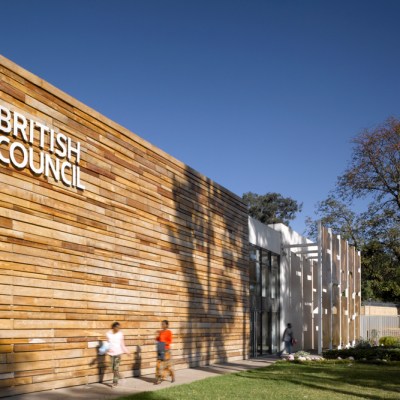
The British Council is closing offices in nine countries, including Chile, Tanzania and Mozambique, in response to ‘financial challenges’, a spokesperson told The Independent. The Council is attempting to repay the emergency loan the Foreign Commonwealth and Development Office granted it during the Covid-19 pandemic, which was originally £60m and is now £197m. Last month the National Audit Office published a report that stated that the Council was planning to cut staff numbers by 25 per cent. The agency already cut the equivalent of 2,110 full-time staffers between 2021 and 2026. Speaking to the Guardian last year, British Council CEO Scott McDonald said that without significant government invention, the council could be ‘in real danger of disappearing, probably over a period of a decade’.
Two of the four men suspected of carrying out the heist at the Louvre in October have claimed that they were hired by a mastermind. Le Monde reports that Abdoulaye N. and Ghelamallah A. said in a recent court hearing that they were recruited just days before the heist took place and were meant to take ‘as many jewels as [they] could’ from the Louvre’s Gallery of Apollo. Both men were offered between €15,000 and €25,000 for carrying out the heist and maintained that they did not know what happened to the stolen items – which are collectively valued at more than €88m – after they handed them to the ‘mastermind’ at a parking lot in Aubervilliers. Prosectors are reportedly unconvinced of the existence of such a mastermind. The jewels’ whereabouts remain unknown.
The European Commission has voted to strip the Venice Biennale of €2m in funding because of the organisers’ decision to allow Russia to participate in this year’s edition. The Commission first threatened to cancel its grant for the 2028 biennial in March, issuing a series of demands for the event organisers to justify Russia’s inclusion before the biennale opened in May. On 11 July Henna Virkkunen, executive vice-president of the Commission, posted on X to confirm that the body ‘officially recommends EACEA [the European Education and Culture Executive Agency, an arm of the commission] to terminate the €2 million grant’ – the result of ‘a thorough assessment’ of the Biennale’s justifications. ARTnews reports that the biennale organisers, who reportedly learned of the Commission’s decision via X, said the 2028 edition would continue as planned as it is ‘only marginally co-financed through the above-mentioned contribution’.
The Natural History Museum (NHM) has become the UK’s first national museum to be valued at £1 for business rates purposes. In 2017 the Valuation Office set the museum’s rateable value – the estimated rental value of a commercial property – at £12.9m, a sum it later reduced to £4.16m. The museum appealed this decision, claiming that as a loss-making organisation – and as the only viable tenants for the building – it should not be valued as a commercial property. The Valuation Tribunal of England ruled in favour of the museum in March, a decision that is now final as the Valuation Office has decided not to appeal the decision. Mills & Reeve, the law firm that represented the museum, said that the judgement was ‘not only a significant victory for the NHM but a potentially important route for other museums […] under financial pressure to reassess and challenge their own rating liabilities’.
Salvador Salort-Pons, the director of the Detroit Institute of Arts (DIA), claims to have discovered a previously unattributed portrait by Diego Velázquez in a private collection. The portrait, of the Spanish statesman Gaspar de Guzmán, Count-Duke of Olivares, was previously attributed to the workshop of Velázquez rather than to the artist himself. Salort-Pons was researching the relationship between Velázquez and Olivares when he was contacted about the work. He recommended technical analysis, which appears to confirm it to be a work Velázquez made when he was court painter to King Philip IV in the 1620s. The painting will go on show at ‘Velázquez & Olivares: Early Years at Court’ at DIA next year (24 January–27 July).
The Royal Institute of British Architects has announced the six shortlisted projects for the 2026 Stirling Prize. Among the nominees are Paddington Square in London by Renzo Piano Building Workshop and a new wing at Clare College at the University of Cambridge by Witherford Watson Mann – the recipient of last year’s award, for the Appleby Blue almshouse in south London. The winner of this year’s prize will be announced in October.