From the November 2026 issue of Apollo.
It is a curious thing to encounter, in the flesh, a face that you’ve seen represented in pigment in many different iterations. When the artist Celia Paul opens the door to a terraced house in north London, we are meeting for the first time, yet I feel a rather sheepish sense of familiarity. Since her forties particularly, Paul, now 66, has painted herself over and over, and that feeling of voyeurism on my part comes from the pronounced vulnerability of many of those works: her forehead, curtained by long brown hair, creased with anxiety, eyes downcast and watery, or blood-red, the corners of her mouth in descent. Far from having anything to do with Narcissus, these repetitions read like a Sisyphean effort to achieve an ever-elusive self-knowledge.
In person, Paul would appear to be as delicate as these self-portraits suggest. She is softly spoken in the extreme, and I find myself adjusting the volume and pitch of my own voice accordingly (still, when I listen back to our recorded conversation later, I boom in comparison, and even the setting down of my tea mug on the kitchen table obliterates a crucial word here and there). But appearances, as we know, can be deceptive. In her book Letters to Gwen John (2022), an artist with whom Paul identifies closely, she writes: ‘I was aware […] of how I would appear: timid and humble. These are two adjectives that were often applied to Gwen. They “disguised a lofty pride”, as her brother put it. She was a wolf in sheep’s clothing’.
Before Letters to Gwen John, there was Self-Portrait (2019). Both books offer strikingly honest accounts of Paul’s life and work, the two inextricable: her very early childhood in India, the fourth of five daughters to Christian missionaries; the move to a religious community in Devon and boarding school, where she started painting; another move to Yorkshire when her father was appointed Bishop of Bradford; the Slade as a 16-year-old, where she was promptly seduced by Lucian Freud, a visiting tutor at the time and nearly four decades her senior; her wrestles, thereafter, with the competing demands on her as lover, mother (her relationship with Freud resulted in a son, Frank) and artist.
In Self-Portrait, Paul describes herself as an autobiographer rather than a portrait painter. That she chose to pursue this in words as well as paint has been a gift to anyone interested in the creative act: it’s rare to be given such generous insights into an artist’s process, into her motivations and interpretations. And if that generosity seems at odds with someone who has described her paintings as ‘so private and personal that there’s almost a keep-out sign in front of them’, a need to be understood – to herself as much as to others – apparently wins out. The seed for Self-Portrait was planted, she has said, after Freud’s death in 2011, when so many of the obituaries faux-glorified Paul with the word ‘muse’, often with the dreaded adjunct ‘an artist in her own right’. Similarly, Letters to Gwen John was in part a response, Paul has said, to a piece by Rachel Cusk in the New York Times in 2019, which characterised her, as per Gwen John’s reputation, as having low self-esteem: ‘Rachel’s essay made me realise that I needed to write another book – to make clear the kind of painter I am. I felt that Rachel had misinterpreted me.’
Paul is about to publish her third work of memoir, Objects of Desire: An Artist in Venice, to coincide with an exhibition of the same title at Victoria Miro in Venice. The book records her experience of being in the city during a residency in 2023 and, as far as I can tell, was not conceived as any sort of corrective to misinterpretation. In fact it and the paintings relating to it feel like a departure for Paul in many ways. For one thing, her six and a half weeks in Venice was the longest she has ever been away from her studio: Paul suffers badly from homesickness, where ‘home’ is mostly represented by her London studio; but the sickness was exacerbated in this case by the fact that she was grieving for her husband, philosopher Steven Kupfer, who died in 2021. ‘I feared a disintegration of my whole being,’ she writes in Objects of Desire. ‘My life in my studio is structured around a strict diurnal rhythm […] Upon arrival in Venice, my awkwardly cumbersome luggage seemed to express my anxiety. I tried not to compare the water taxi to a hearse.’
Our meeting place today, in Kentish Town, is part of that palpable shift. Those familiar with the artist and her work are likely to be familiar, too, with the Bloomsbury flat that has been her home and studio since 1982, when Freud rented it, later buying it, in her name. It overlooks the forecourt of the British Museum, the facade of which, along with the BT Tower, appears through or from her windows in several of Paul’s paintings. These rooms, notably bare of any concession to comfort, have been written about, photo-raphed, peered at as if they were an exhibit themselves.
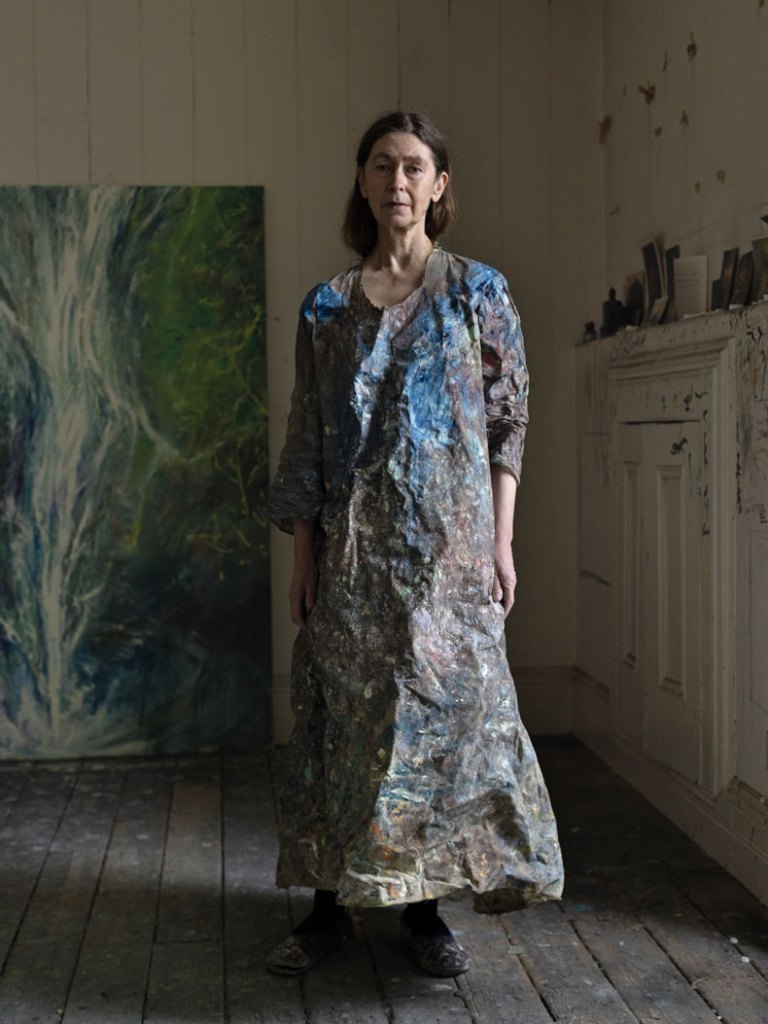
The address I have come to instead, it turns out, was Kupfer’s home. The couple lived separately – the only way Paul could work – but the house is, of course, ‘very familiar to me’, she says. Paul had it renovated two years ago, with the intention of working here sometimes – something she would not have contemplated before finding she could work in a temporary studio in Venice. ‘While I was there I thought, Well maybe I can make this house work – I didn’t want to let go of it because it’s so much him.’ She shows me the compact double reception room at the front of the house, all beautifully sanded woodwork and smooth, bare walls. ‘I thought this could be a night studio, because it’s quite Sickert-like. But even in summer the houses on the opposite side of the street block the light. I hadn’t realised how dark it would be.’ She has, she says, been using it ‘as a sort of retreat’ (later, when news comes of unprecedented queues outside the British Museum for the Bayeux Tapestry, with all the attendant noise that would bring, I suspect it has come into its own). Early tomorrow morning, however, Paul’s sister Kate – one of her main subjects – will come to sit for a first portrait in this new space. ‘I’ll start a small painting and just see how it works.’
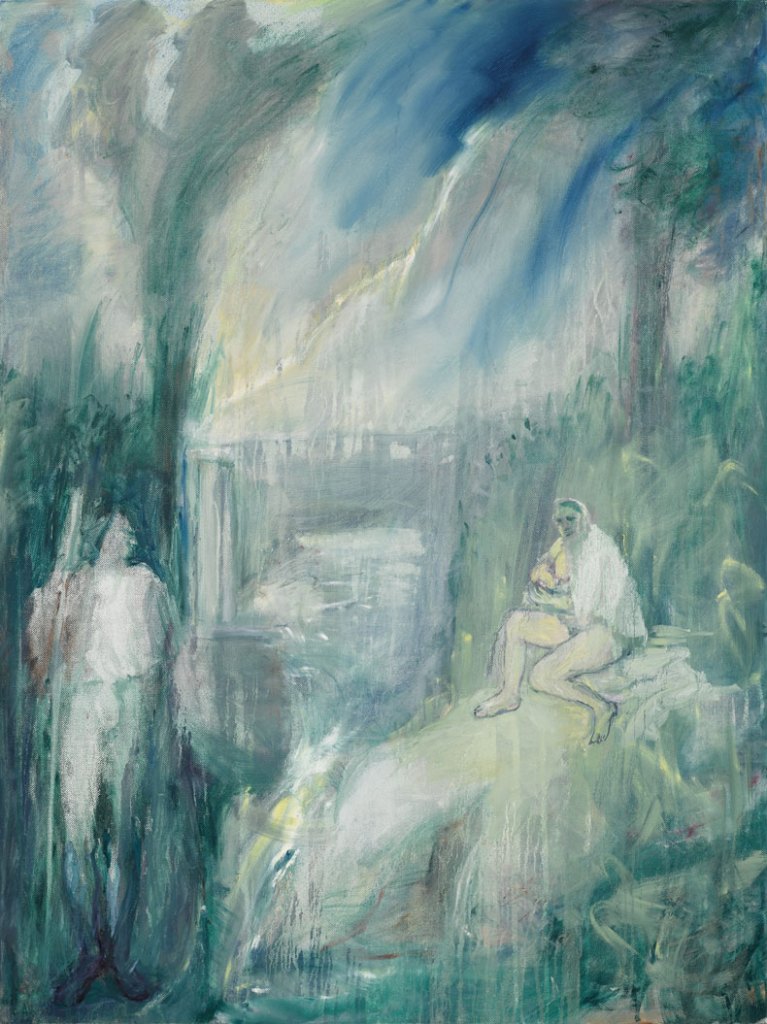
The kitchen at the back of the house, which Paul has enlarged, is flooded with light. Again, the walls are bare, other than a few postcards propped up on a ledge: Gwen John’s The Convalescent (c. 1923–24), a Van Gogh, Caravaggio’s Beheading of Saint John the Baptist (1608). But the painting that has been something of an obsession for Paul of late is Giorgione’s enigmatic Tempest (c. 1503–09), which hangs in the Accademia in Venice. She pulls out a reproduction for us to look at together at the kitchen table: the well-dressed man on the far left leaning casually on his staff – ‘so in control’ – while he observes a breastfeeding woman seated on the turf, naked apart from a white mantle over her shoulders, her legs awkwardly splayed ‘almost like a frog’. The first canvas Paul painted in her Venice studio in 2023 was a response to The Tempest. In the resulting work, Paul has zoomed in on mother and child, disappearing the man, and amped up the titular storm – as though the lightning has been generated by the contact between infant mouth and maternal breast. Paul called the work That Obscure Object of Desire after Luis Buñuel’s film of 1977 about sexual obsession.
This summer she painted another version, Objects of Desire, in which she has reinstated the male figure. The work is awash with blurring greens and blues, as if the whole scene were under water, or seen through a glass, rainily: the paint literally streams down towards the bottom of the canvas. ‘What I wanted to do was to try and unify [the composition], through the wateriness I suppose. And I made the water flow, in a sort of sexual way, because the phallic and vaginal symbols are so apparent, it’s so obviously about male/female isn’t it.’ She is still making work on the same theme, ‘because it’s something I need to puzzle out, really, about men and women’.
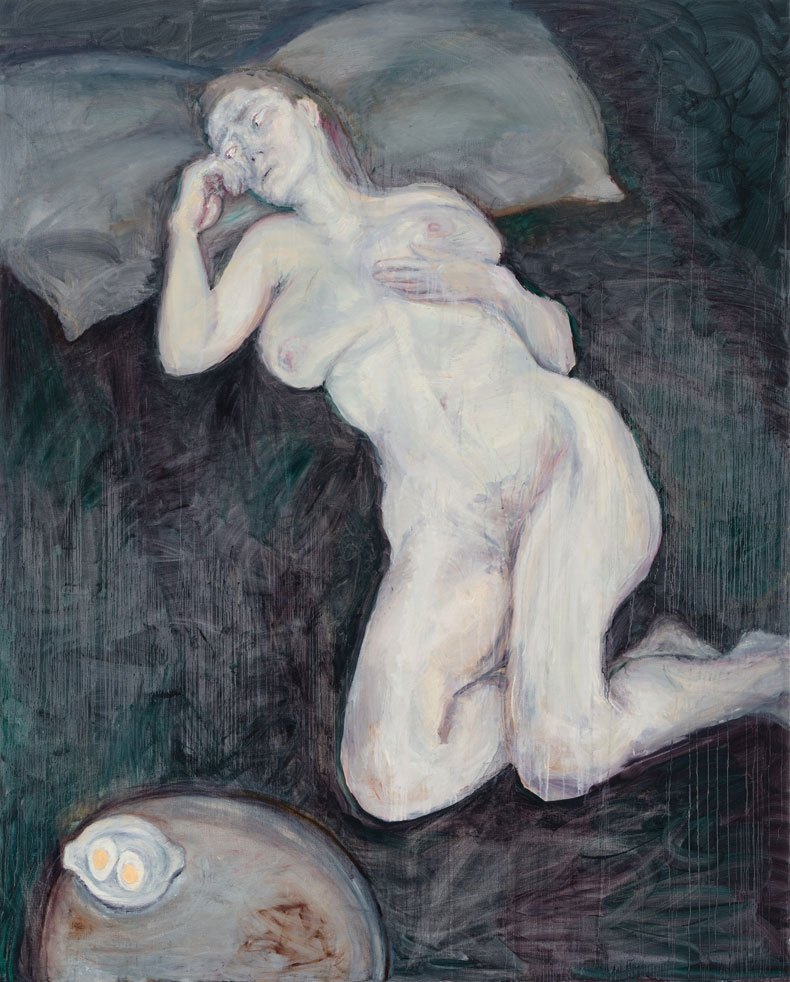
The Tempest’s resistance to firm interpretation makes it the perfect canvas for projected identities. Paul has seen herself in all three figures – the woman, the man, and the infant. As for the first, it’s almost impossible, when you look at Giorgione’s painting through Paul’s eyes, not to think of Freud’s hawk-like gaze on his female subjects; not to think of Paul’s discomfort and distress when she posed for Naked Girl with Egg (1980–81), or indeed of her own recent haunting of that painting, Ghost of a Girl with an Egg (2022). One thinks of details from her previous memoirs, such as Freud’s disgust at her milk-leaking breasts after she had given birth to their son. One of the departures in this new book is that Paul does not mention Freud by name. ‘It’s not that I am trying to pretend he didn’t happen,’ she says, when I refer to this, ‘and in fact it’s not that I’ve written him out of my life, because the paintings I’ve been working on quite recently are actually quite explicitly about him. But I wanted to shift the focus, because Venice is such a capsule in itself, in which Lucian really didn’t have a place except as maybe a character in my history.’
When Paul became pregnant with her son Frank (named after Auerbach) in 1984, it was agreed that her mother, Pamela, would bring him up where she lived in Cambridge, while Paul would continue living and – crucially – working in London. (In her memoirs she writes about conceiving a baby to alleviate her mother’s grief at the death of her husband, Paul’s father, who had died the previous year.) It’s for this reason that she can identify, too, with the male figure in Giorgione’s painting. ‘The mother and child are this unit, and the man is outside of that – which is something I experienced myself, because when Frank was a baby, he turned to my mother for comfort rather than me.’ It was, she says, ‘incredibly painful. But the thing is that to be a true artist you are always on the outside, you are always looking on.’
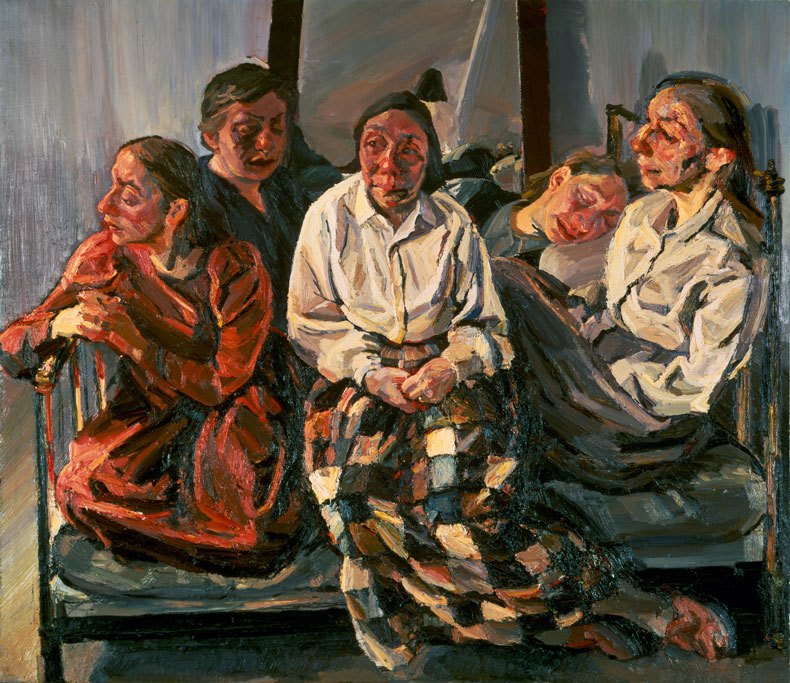
This position, of artist as outsider, is felt forcibly in the group paintings she has made of her family. Three weeks after giving birth to her son, Paul left him with her mother to continue work on what would become Family Group (1984–86): a monumental painting in which her mother and four sisters, mourning the death of husband and father, huddle together on a small brass bed, which is raft-like in the blue-grey sea of Paul’s flat. Paul herself is merely a blur in front of her canvas, reflected in a mirror positioned centrally against the wall beyond the bed. Even before the work was finished, she thought of the corresponding painting she would do after her mother’s death. That came more than 30 years later, with My Sisters in Mourning (2015–16). Though a pairing of sorts, it is one that shows how far Paul’s style has evolved. There is an otherworldliness to the later painting, an atmosphere of intense contemplation and spirituality that is shared by much of Paul’s work but is particularly strong here. Her sisters are all dressed in identical white gowns that recall both Paul’s painting smock as well as religious habits. A gold-rose light enters the scene from the left, making a halo around Paul’s sister Rosalind. The women’s upbringing in a clerical environment, you feel, must be at play here (Rosalind is a vicar, while Jane became an Anglican theologian and is married to Rowan Williams, former Archbishop of Canterbury). Is Paul herself religious? ‘I can’t say that I’m religious or that I believe in God,’ she responds – ‘but I’m sure I do. I do find prayer coming into a lot of my life and my painting.’
There is, of course, a double absence in this work – not only Paul’s, but also that of her mother, all the more noticeable because, in the preceding decades, her mother was her most dedicated sitter. So many of the titles within Paul’s oeuvre speak for themselves: My Mother with Shining Eyes, My Mother Reading to Frank, My Mother and God, My Mother and the Mountain, My Mother and the Sea, My Mother Turning, My Mother Looking in the Mirror…
Something about Paul’s co-parenting with her mother, and her own interchangeability with her mother in The Tempest’s female figure, makes me think of Céline Sciamma’s film Petite Maman (2021). Paul would like to see it, she says – she thought Sciamma’s previous film Portrait of a Lady on Fire ‘so beautiful’ – and points out that ‘one of my favourite paintings of my own is called My Little Mother. It took 14 years to paint, I started it in 2000 and finished the year before she died. It’s a very dark painting but very touching, she’s tiny on the bed, but looking at me with tenderness – she’s not a child but… because my paintings of my mother were getting more and more monumental, I wanted to bring in tenderness.’
‘I wish my mother was still alive,’ Paul writes in Objects of Desire, after getting lost in Venice’s labyrinthine streets. Her identification with the infant in The Tempest came, she tells me, ‘partly because the woman made me think so much of my mother; and because of being alone. It was that idea of being looked after without any feeling of responsibility – just that idea of safety is an incredibly compelling one.’
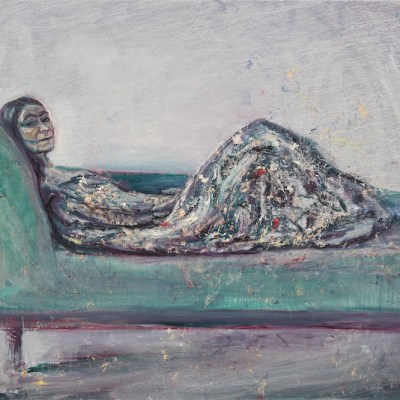
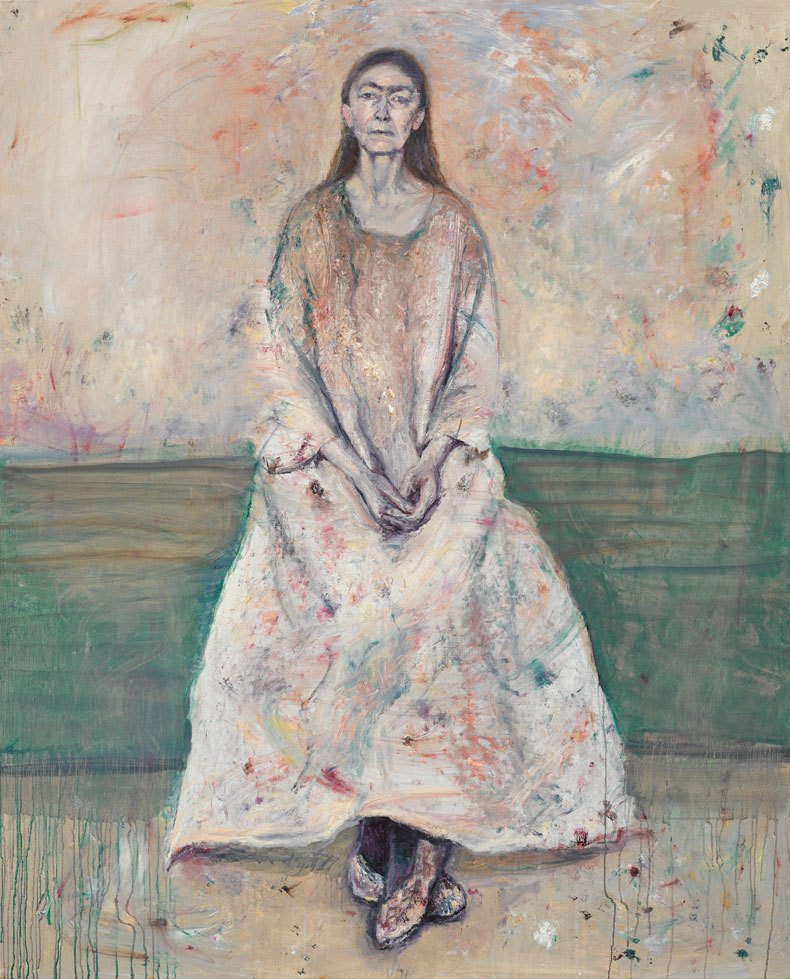
Having survived being alone in Venice for those weeks, away from her beloved Bloomsbury studio, Paul found herself painting ‘with renewed passion’. The self-portraits she produced after her return are noticeably different: a more direct gaze, a slight uptilt of the chin; in some of them, the paint marks that encrust her smock have migrated beyond the cloth to the whole room. In the exhibition ‘Colony of Ghosts’ at Victoria Miro in London last year, we could enjoy a large-scale self-portrait of her, horizontal on a chaise-longue, staring down Freud, Auerbach, Francis Bacon and Michael Andrews on the opposite wall, in her recreation of John Deakin’s photograph of the artists at Wheeler’s restaurant in Soho in 1963. In nearly all of these other self-portraits, however, Paul is simply seated centrally, her hands resting in her lap, exuding a quiet strength. ‘I wanted to convey the message,’ she writes, ‘that to make an impact in a self-portrait you don’t [contra Freud] need to stand naked wielding a palette knife, as if to challenge the viewer to a fight’.
In 2012, the year after Freud’s death, Paul made an early iteration of this seated self-portrait type. She called it Painter and Model, in response to Freud’s painting of the same name from 1986–87. In the latter, the older artist has Paul standing at the left edge of the frame, eyes downcast, a paintbrush held limply in her hands. At her feet is a jumble of paint tubes: the contents of one of them is oozing out under her foot. The tip of her brush is aimed towards the genitals – which are positioned as the main focus of the composition – of the naked male model (writer and artist Angus Cook) who is sprawled, cocksure and legs splayed, on a leather chesterfield. Paul is certain Freud was thinking of Giorgione’s painting when he did his – ‘the composition is almost identical’. In Paul’s more recent paintings, she has conflated the imagery from Freud’s painting with that of The Tempest, so that the male figure with his phallic staff has become Paul with her paintbrush – at first, looking stage right towards the seated female figure; in a later canvas, standing alone, centre-stage.
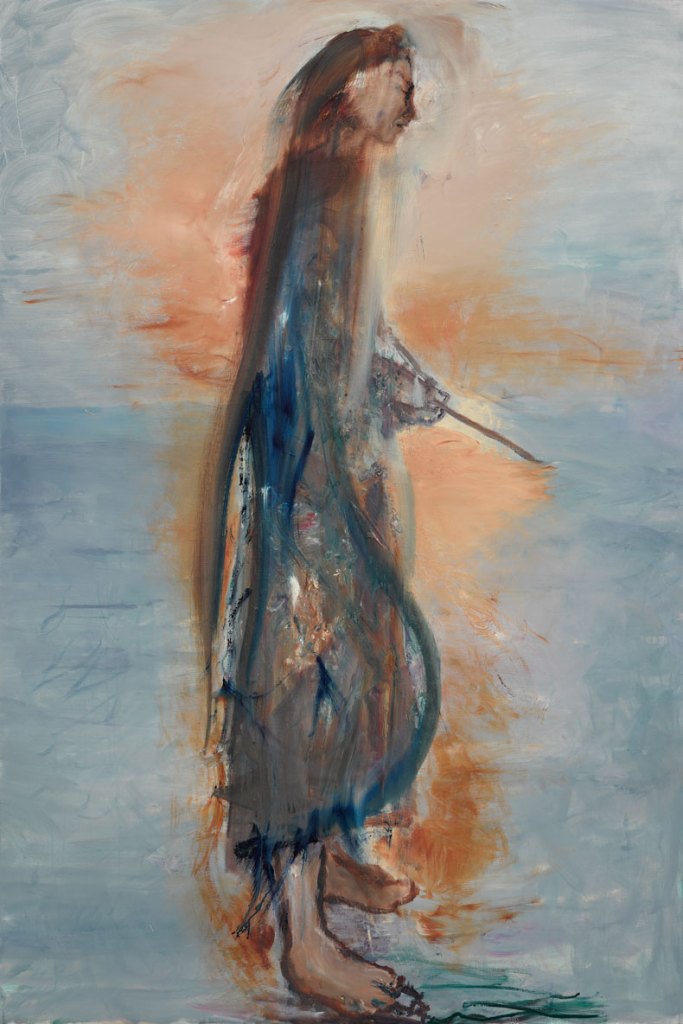
If this feels like a necessary re-positioning of Paul in her own story, it is still one that deals in masculine symbols of power. Perhaps she will always be reckoning with her past. Of another Venice-inspired self-portrait that will be among those on show at Victoria Miro this month, she says she had a nude self-portrait by a young Gwen John in mind: ‘I wanted to show the dilemma for a woman artist, especially as a young woman just starting out, and remembering myself at age 14, and really not realising what was in store. I was at an all-girls boarding school, with only sisters, and had a wonderful art teacher, and just felt, The world is mine. Then going to art school, where the male tutors have a completely different agenda, they see you as a sex object. And I’m sure it’s different now, but it was really a shock.’
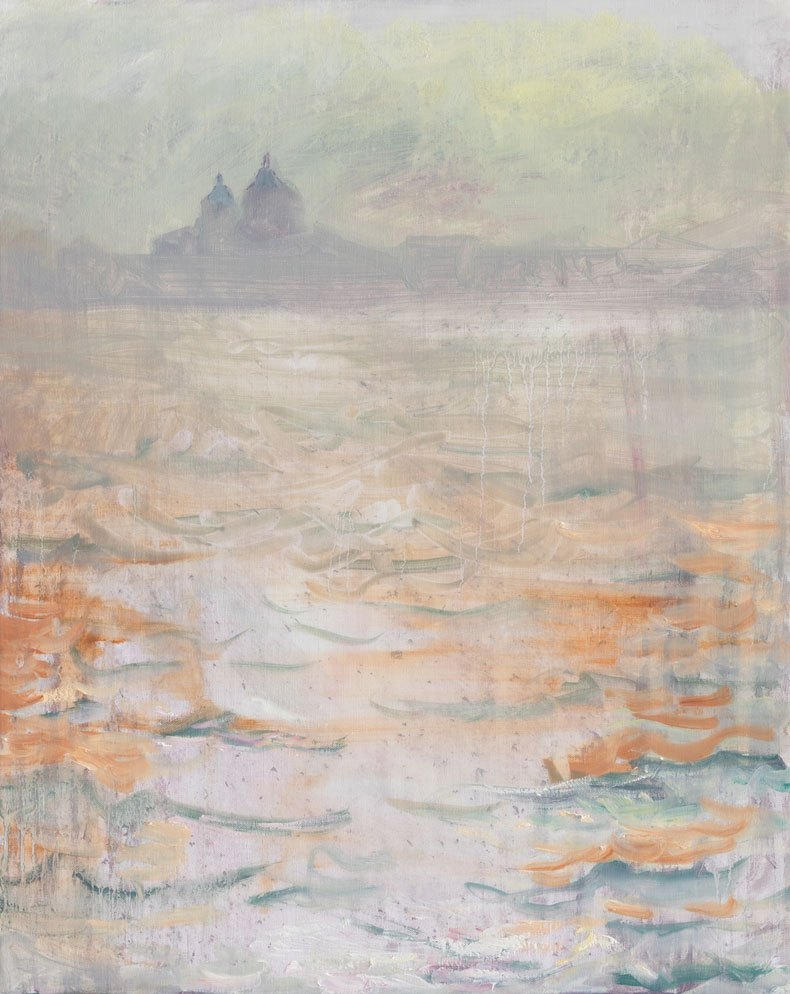
During her time in Venice, the artist was drawn to the view of a group of buildings on the Giudecca known as Le Zitelle, or ‘The Spinsters’. Built in the 16th century as shelters for poor, unmarried women – some, as Paul notes in Objects of Desire, as young as 12 – they were in reality often a place of abuse. Yet when Paul returns to Venice two years after her residency, the domes of Le Zitelle, which for her resemble breasts, ‘suggest to me a celebration of spinsterhood. More and more, I value my freedom and no longer desire attachment. I love being on my own, and doing what I want, when I want.’ In one of the paintings she makes of the view out across the lagoon, the waves are, she writes, ‘watery flags’ – ‘cheering on the breast-like domes of the church of the single women’.
Objects of Desire: An Artist in Venice by Celia Paul is published by Jonathan Cape in the UK and by New York Review Books in the United States. ‘Celia Paul: Objects of Desire’ is at Victoria Miro, Venice, from 7 November to 12 December.
From the November 2026 issue of Apollo.