Charis Tyndall is the director of Charles Ede. Founded in 1971, the gallery is a leading dealer of works of art – mostly sculpture – from before 1000 AD. Charles Ede stands out as a gallery that has diligently paid attention to the ever-changing laws of provenance; it has also flourished at a difficult time for the antiquities market and a difficult time in London overall. In 2024 James Richards joined as a director, expanding the gallery’s remit to include paintings and works on paper from the 19th and 20th centuries.
When did you join Charles Ede?
I started in 2010 and then when I left university in 2013 I became full-time, so for three years I was just working as an intern, helping out. Jamie [Ede] had been very ill on and off, and he was recovering, and I was helping more and more. It started as work experience and we just got on like a house on fire. They kept asking me back and I did my first [TEFAF] Maastricht, I think in maybe 2011.
You’ve already got to the point where you’re measuring life in Maastrichts?
It’s funny, because I remember the people from that first one. I was staying above a kebab shop with a shared bathroom – it’s just the glamorous life of an art dealer. Luckily we’ve moved on a bit from there, but that’s the way it was. You were just so grateful to have a foot in the door in any way.
Why have you expanded the categories of material that you offer?
It helps to contextualise, sort of domesticate, the works that we’re selling. We’re sculpture dealers and we also see wonderful material, and it’s frustrating not being able to get involved. It’s wonderful to bring that in. The majority of what we sell is still antiquities and we’re very much just doing this organically, but the whole business model needs to adapt, because you can’t just think ‘Let’s stick to it, don’t need to change anything’ – that’s a bad idea.
The May auctions in New York went through the roof. There are many markets in the art world and yours is very specific, but how are you feeling about it at the moment?
As ever with these things, that it’s very feast and famine. [The market] can move within a few months and what you’re doing can be very different to how your peers are doing, because all you need is for that one person [to come in]. A lot of it is luck. You can bring the same material to two fairs and at one of them you sell your three biggest pieces, and at the other you don’t. It’s often not anything you’ve done, it’s just the right person needing the right thing at the right time. Overall, I’m feeling pretty good about the market; this is material that nobody needs in their life, it is a luxury. All art at this level is a luxury product, and people who are buying luxury products aren’t affected by the small ups and downs of a market. Markets are going all over the place because of wars and tariffs and changes of government and oh, look, Britain’s got a new prime minister again. In between, people are making money. People are also so used to turbulence now, they’re not going… no, let’s just wait until things become more steady. Last year we had one of our best fairs we’ve ever had and one of our worst fairs we’ve ever had. So what does that mean about the market?
The antiquities market is interesting, because it’s much slower moving. It’s less affected by fashions and fads and people aren’t buying [works] to flip [them]. They know that if they buy from you and come back in five years time, they’re not going to make a profit on the piece. The amount of material that’s on the market is constantly being restricted because things are being bought into museums or, if provenance is lost on objects, which happens a lot, suddenly that stuff is no longer viable for a gallery like ours. That area of the market is being squeezed, but the demand is increasing again, because although you don’t have specific collectors; everybody wants a piece of antiquity.
Our diversifying is not because we were unable to sustain this area, it was because I wanted to get a business partner, and he had this wonderful expertise, and why waste it? I was looking to expand into other areas too, because I’ve noticed that people do very well when they mix [categories], and we’ve been doing a lot of joint shows with people over the years and they’d always done really well.
How do you get new collectors into your gallery?
One of the ways we get younger collectors is to be flexible in our pricing and have things that aren’t intimidating. Unless you’re incredibly wealthy, you’re not going to start with a six-figure piece. Even people who have that money, even older collectors, they’ll start by buying a present for someone, a little trinket for someone, and next thing you know, they’re buying a Corinthian helmet. People want to dabble in these new fields, first understand it, feel comfortable and then they’ll start buying those bigger pieces that are what we really need to sell to survive.
A lot of people can neglect the lower end of the market because it’s a lot of time and effort, and you’re not making much money from it, but we think it’s a really important way to encourage people to come in and learn about this area of the art world, and you can get fantastic antiquities for not that much. You can attract anyone with pieces for under £5,000 and we do sell a lot to younger people.
This might be a good moment to talk about fairs versus the gallery business. How do they balance out? Are they interdependent? Is one much more productive profitable for you?
We used to depend really heavily on art fairs. Probably two-thirds of our turnover was done at fairs. It’s now getting close to 50 [per cent].
Is that because you’re getting better at selling bigger things in the gallery, or is it because you’ve done fairs long enough to build a client base who knows where you are?
It’s very hard to know, and you don’t know if someone saw you at an art fair and then came and bought the big things, because fairs are your advertising: we’re not going to drop them. We’re also more active in the gallery now: we’re putting on more shows, we’re encouraging. I don’t think that the footfall has changed, it’s just that people are coming here to buy more. It’s also partly to do with what the consumer is up to. Everyone’s very busy and the duration of art fairs is getting shorter and shorter. Those four days that the fair is running might not suit you, but you saw pictures and you thought, ‘God, that was great, and I’ll go and have a look at those guys.’ We need to stop relying so heavily on art fairs: they’re too expensive and we’re too much at the whims of someone else. When, for example, Masterpiece drops out, you’re suddenly like, ‘Oh my god, where are we going to make that revenue now?’ – because we did really well at Masterpiece.
Have you found any niches that have done surprisingly well?
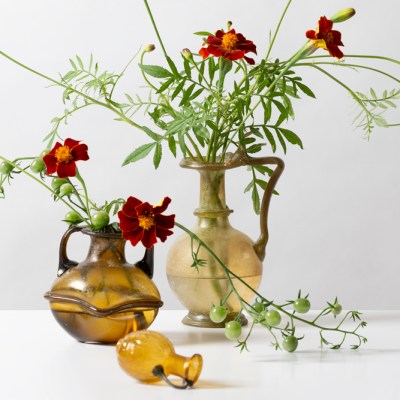
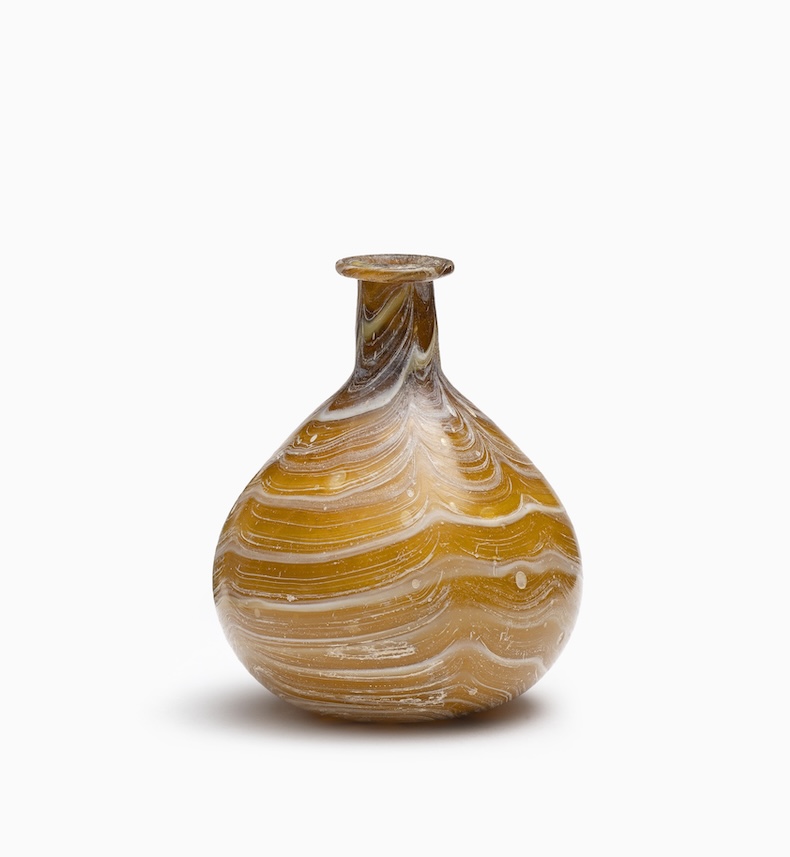
It is things at the lower end of the market, things that people used to think of as being highly academic and therefore not very expensive, such as terracottas. Everyone always says they’re completely out of fashion. We do very well with them. Roman glass, as well, has always been very inexpensive. Our Roman glass show sold out. We had 180 pieces.
Though you did an incredible job at marketing them with flowers in them.
They were beautiful, but that’s what’s interesting – people need to just look at them in a slightly different way. [The florist] Shane Connolly was a genius with what he did, but he only did that for the three little exhibitions – we’re still getting people buying more glass. Thank God we did really well, because I’ve been hoarding glass for five years to create [that moment].
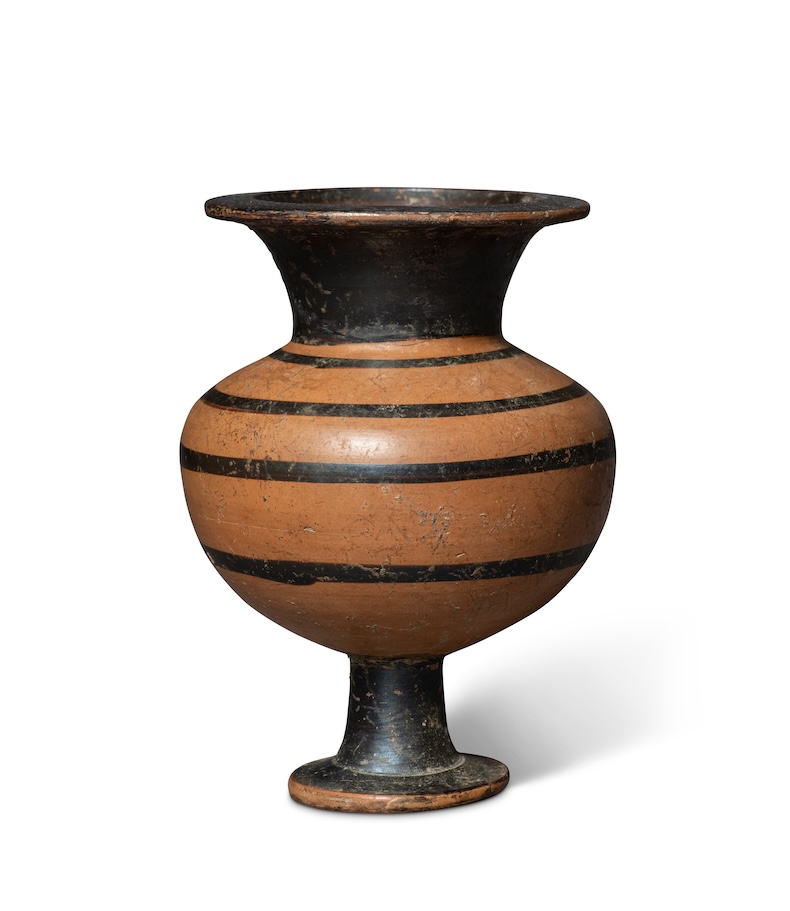
A few years ago, we did an exhibition on Greek black glaze. We still do really well with that, because people love the simple forms, the beauty of the potting, the fact that your eye is not too disturbed by all of the decoration. Those are the three main categories at the lower end of the price point that have done surprisingly well in the last five years or so. We’ve tried to elevate them without trying to sound too poncey. We’ve tried to get people not to see these as being cabinet-of-curiosity objects, which is what they often were.
Is there something that you still think is undervalued? Is there something that in five years’ time, with your encouragement, this is where collectors might be headed?
There is an area which I think people are starting to look at more: vase fragments. They’re just broken bits of pot – why would that be interesting? But they are fragments that tell a story: you are not looking at a vase, you are looking at a small piece of an ancient drawing. You can pick those up for not much at all and you can pick up work by known artists. It’s just a little piece of it, and, in many ways, that is much more appealing than that big thing. They’re very intimate objects, but you focus on how well drawn some of these vases were and then your eye can build up the rest of the story. I think that’s an area that people are going to start paying a lot more attention to.
How international is your client base?
It’s London. Well, the UK, to be fair; they come through here, so it’s not just London. The UK and the United States again. Although we do the art fairs in New York, [our clients] are not all based there, but those are our two biggest. Then western Europe; I have a few clients dotted around, but the UK and United States are pretty even. We sell more to the UK, but higher value to the United States.
If you could make any changes to the legislation in support of what you do here, what would you change?
Freedom of movement. Stop making it so difficult for people to move works of art around the world. It’s stupid. It makes our lives more difficult. The people at customs don’t know the laws, don’t know the rules, they don’t know how to handle these objects. They break them. They are disrespectful of them. It prohibits the dissemination of culture, which is meant to be a good thing, because we all need to understand more about art and history. I just do not understand why they’re adding more and more red tape. It feels wrong and it’s too expensive, as well. Now you’re only moving things if it’s worth it for the money. When did that become the deciding factor in if something was important? That’s not the way it should be. It just seems wrong when you have a home in one country and a home in another country that you can’t move between the two. Some legislation means you actually can’t even move [objects] between the two, and some legislation means that it’s just very expensive and difficult. I can’t go on a shopping trip to Paris any more and bring stuff back with me. I can’t even declare it legally at the border. They won’t let you do it. You have to get customs people to help you. It’s so pointless and frustrating. Let us move things around more.