
When Georgia O’Keeffe visited the deserts of New Mexico for the first time in 1929, she said: ‘As soon as I saw it, that was my country. I’d never seen anything like it before, but it fitted to me exactly.’ A sense of belonging is usually desired but not always attained when it comes to finding somewhere to live, as your peripatetic correspondent can attest. Artists and architects have often chosen different ways of feeling at one with the landscape they inhabit: Jackson Pollock and Lee Krasner taking shelter in their fisherman’s cottage in East Hampton, Frida Kahlo painting her house in Mexico in bright colours, or even Monet creating an earthly paradise at Giverny. The American artist Johnny DeFeo has taken this a step further by designing a new house in O’Keeffe’s beloved New Mexico in the form of a coyote head – now available to rent via Airbnb (or it was until 29 May).
O’Keeffe never painted a coyote, though her fascination with the scavenged bones the animals left behind made its way into her work. Not all artists have been as coy. In May 1974, Joseph Beuys locked himself in René Block Gallery in New York with a wild coyote. He and the coyote formed a close bond, though the coyote did bite the thumb off one of Beuys’s gloves. At the end of the decade, Beuys revisited the work in the installation News from the Coyote (1979), which contained hairs from both Beuys and the coyote but, alas, no actual coyote.
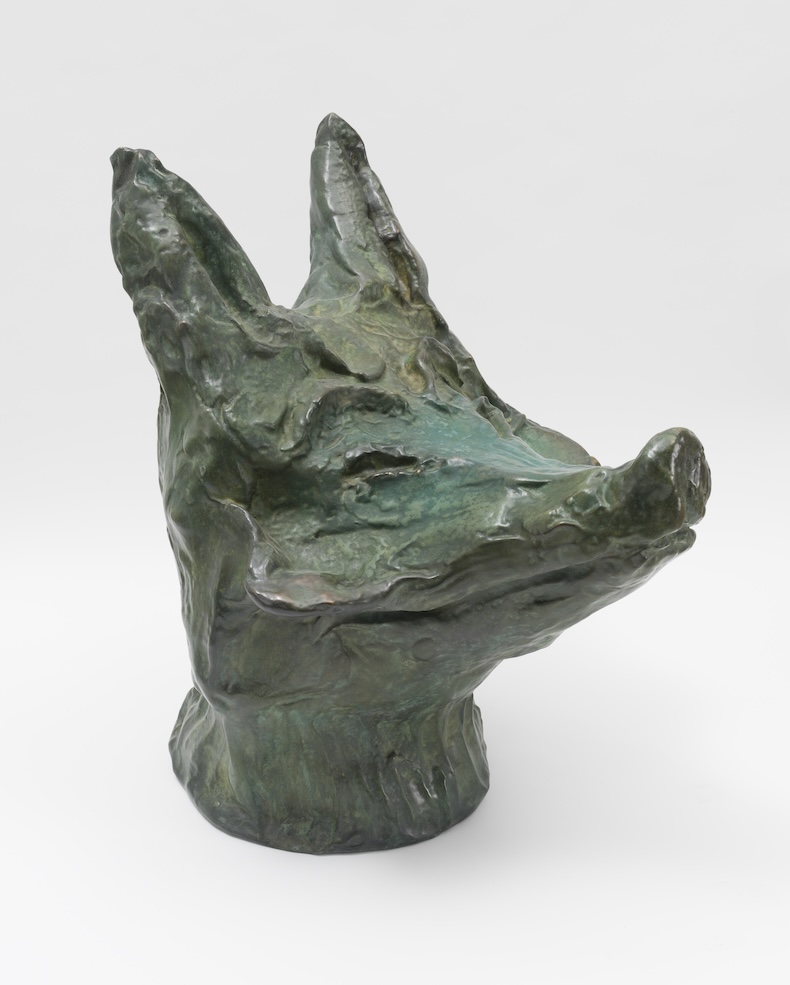
Jaune Quick-to-See Smith regularly depicted coyotes both in sculptures and paintings. One of the most charming is Urban Trickster (2021), a bronze sculpture of a coyote head. Is that a smile playing around the coyote’s lips, his nose pointing suggestively to the sky? Perhaps more famous is the coyote in the corner of her painting Coyote Made Me Do It! (1993), which seems to shadow the central human figure. Smith’s coyote is that of the Confederated Salish and Kootenai Nation, of which she was an enrolled citizen. This is a well-meaning but boastful creature who is largely benign but also something of a prankster.
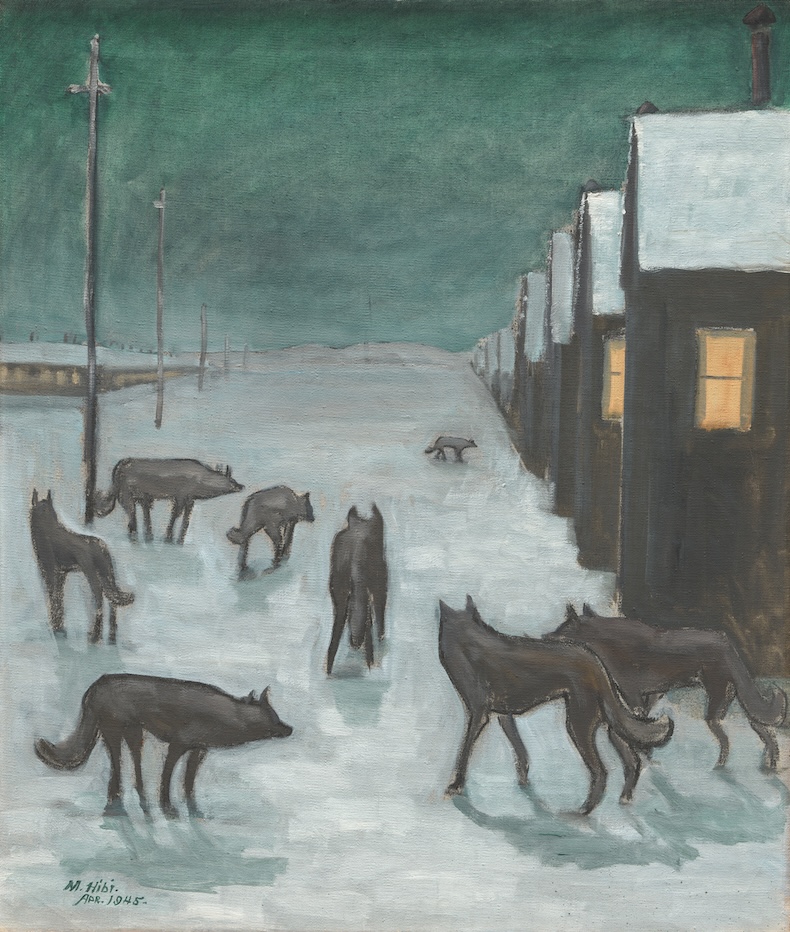
One of the saddest depictions of coyotes is by Matsusaburo George Hibi. In 1945 he painted a work titled Coyotes Came Out of the Desert. As a Japanese American, he was incarcerated in a detention camp after the attack on Pearl Harbour. While in the Central Utah Relocation Center, Hibi painted this scene of coyotes among the camp huts.
And yet, in sharp contrast to Hibi’s painting, perhaps the most famous of all coyotes can be found in a cartoon: Wile Ethelbert Coyote. Perpetually thwarted in his attempts to stop Road Runner and have him for dinner, Wile E. Coyote could be one of the first characters who taught children what it is to want the good guy (Road Runner, all innocence) to escape, but also want the bad guy (W.E. Coyote, all appetite) to survive. Coyote is full of charm and animated facial expressions while Road Runner, as so often with the morally unstained, is just beeping his way around the world. The Looney Tunes landscape, in its own way, is just as bleak and savage as anything that O’Keeffe painted. (And perhaps, with the conflicting desires that play out across it, more morally sophisticated.)
Johnny Defeo’s coyote head house is available to rent (or it was; the listing seems to have been taken down). Rakewell encourages anyone who wants to get to closer to the coyote spirit, whether that of Beuys or Looney Tunes, to spend a night there.