A Still-life with Fruit and Lobster (1650; detail), Jan Davidsz. de Heem. National Galleries of Scotland, Edinburgh. Photo: National Galleries of Scotland

‘Four things to see’ is sponsored by Bloomberg Connects, a free arts and culture platform that provides access to museums, galleries and cultural spaces around the world on demand. Explore now.
Each week we bring you four of the most interesting objects from the world’s museums, galleries and art institutions, hand-picked to mark significant moments in the calendar.
On 4 July 1954, 72 years ago this week, the last ration books in Britain were handed in. Meat was the final commodity to once again become readily available, nine years after the end of the Second World War, and long queues formed at butchers’ shops as Britons exulted in buying without restriction.
But a groaning table can represent far more than nutrition – as artists have long understood. The lavish Dutch still lifes of the 17th century, for instance, depicted abundance as both temptation and warning, and were laden with symbolism that invited viewers to consider the pleasures and the dangers of having too much – a tension that has found its way into all manner of paintings over the centuries. This week, to mark the anniversary of Britain’s return to unrestricted grocery shopping, we examine four works of art and design that capture our relationship with food.
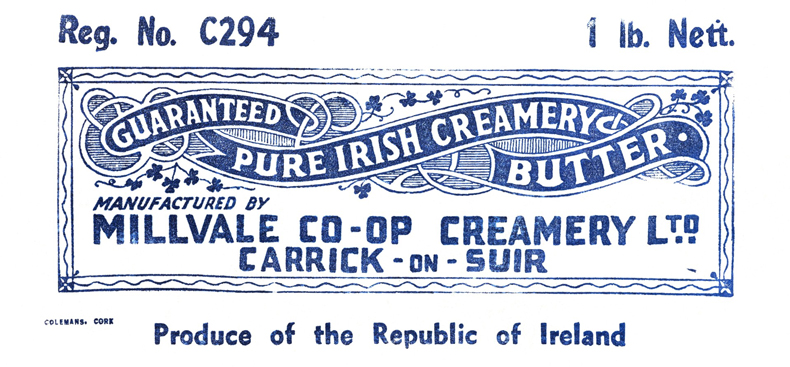
Millvale Co-op Creamery parchment butter wrapper (mid 20th century), designer unknown
Butter Museum, Cork
Printed in deep blue on white, this butter wrapper from the Millvale Co-op Creamery in County Tipperary announces its contents with a flourish of Celtic ornament and reverse-printed lettering. The Butter Museum in Cork holds a substantial collection of such wrappers. The old printing houses in Cork and Waterford that produced them are long gone, making these rare wrappers the last trace of a vernacular design tradition built around one of Ireland’s best-known food exports. Click here to find out more.

Still Life with Fruit and Lobster (1650), Jan Davidsz. de Heem
National Gallery of Scotland, Edinburgh
A crimson lobster anchors this painting, its glittering cooked shell as arresting as a gemstone. Around it, peaches revealing their stones, bunches of glistening grapes and polished plums are arranged on a pewter plate placed over a fold of blue silk. The Mediterranean fruits shown here would have been costly imports in 17th-century Amsterdam, making the painting a display of local purchasing power as well as technical skill. But these images were rarely straightforward celebrations of wealth. The lobster is cooked and the fruit is ripe – a reminder that abundance itself is transient. Click here to learn more.
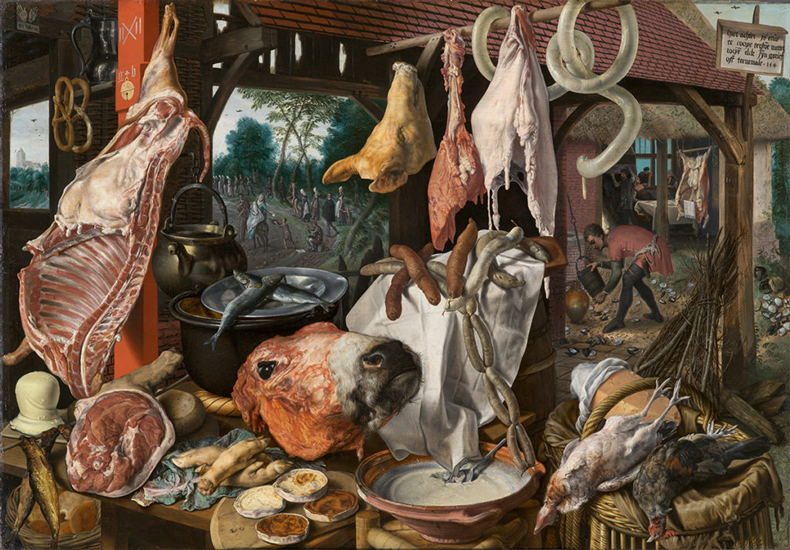
A Meat Stall with the Holy Family Giving Alms (1551), Pieter Aertsen
North Carolina Museum of Art, Raleigh
Slabs of beef, a split ox’s head, linked sausages and a butchered pig crowd the foreground of Aertsen’s panel, spread across a market stall. Easy to overlook is the small scene framed in the gap behind: the Holy Family pausing on the flight into Egypt, the Virgin giving alms to the poor. Aertsen was among the first to paint these ‘inverted still lifes’, pushing foodstuffs to the front and relegating the sacred narrative to the background, so that fleshly abundance and spiritual charity are set against each other. A signboard in the upper right-hand corner advertising land for sale ties the picture to a real Antwerp property scandal of 1551, in which the city of Antwerp forcibly acquired, for a pittance, property and land that belonged to a group of nuns who were using it to tend to the sick – sharpening the painting’s commentary on appetite and greed. Click here to learn more.
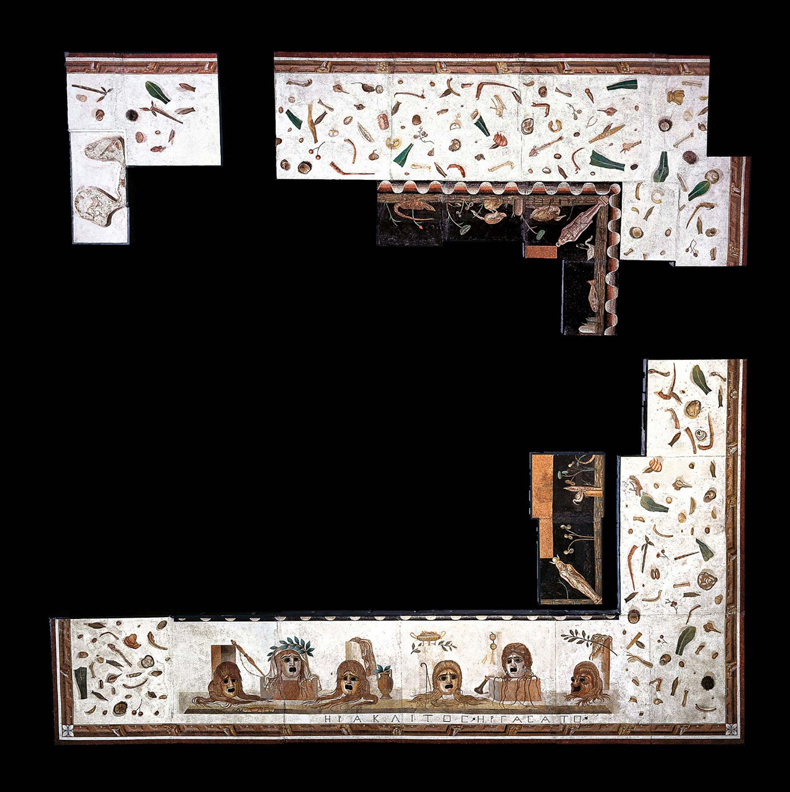
Asàrotos òikos (‘Unswept Floor’) mosaic (second century), Heraclitus
Gregoriano Profano Museum, Vatican City
Scattered across a pale floor are fruit, lobster claws, chicken bones, shellfish and a tiny mouse gnawing a walnut shell – the debris of a banquet, rendered tile by tile as though yet to be swept up. Signed by the mosaicist Heraclitus, the work once paved the dining room of a villa on Rome’s Aventine Hill in the reign of Emperor Hadrian. Each scrap is shadowed along one edge in darker tile, lifting it off the pale floor so the litter seems genuinely strewn – a trompe l’œil for reclining diners, who looked down on a feast that, set in stone, would never be cleared away. Click here to discover more.

‘Four things to see’ is sponsored by Bloomberg Connects, a free arts and culture platform that provides access to museums, galleries and cultural spaces around the world on demand. Explore now.