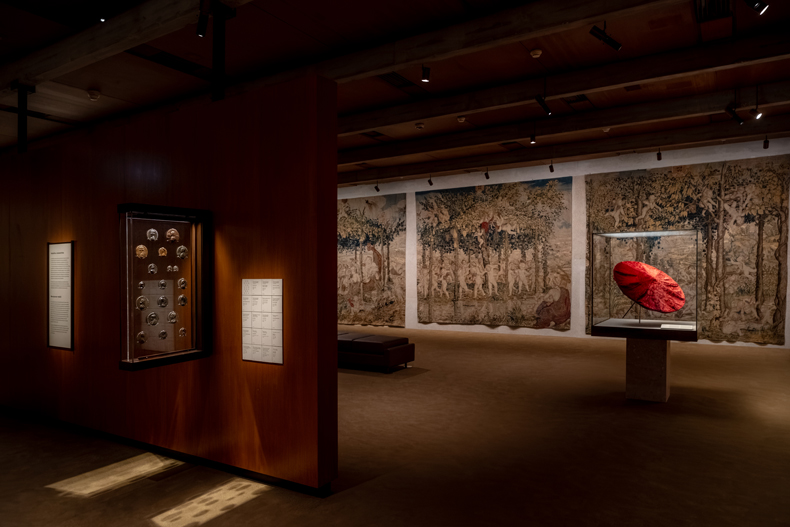
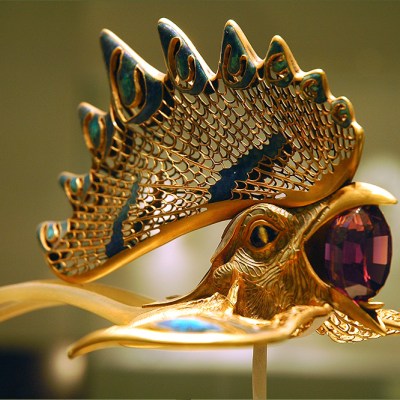
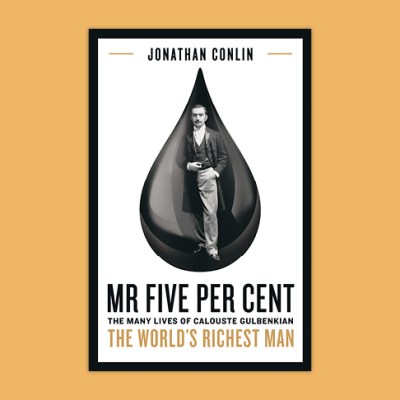
The Armenian businessman Calouste Gulbenkian (1869–1955), who was for a time the richest man in the world, assembled one of the most impressive private collections of the 20th century. Comprising such works as Manet’s Boy Blowing Bubbles (1867) and Renoir’s Portrait of Madame Claude Monet (1874) alongside Old Masters such as Rembrandt’s Pallas Athena (c. 1657) and a roomful of Guardis, its splendour is matched only by its breadth. It contains one of the largest groupings of works by René Lalique as well as Egyptian, Greek and Mesopotamian antiquities. The collection was preserved in the Calouste Gulbenkian Museum, which opened in Lisbon in 1969 in a brutalist building designed by Ruy Jervis d’Athouguia, Pedro Cid and Alberto Pessoa. The museum has reopened after a complete refurbishment over the past year and a half. Simultaneously, it has a new director; Xavier Salomon was appointed in July 2025 and took over as director earlier this year. Before that he was based in New York, where he was the deputy director of the Frick Collection. He talked to me about the refurbishment, taking the building back to 1969 and what the future holds for the museum.
Edward Behrens: Let’s begin at the beginning: how are you finding being director of the Gulbenkian?
Xavier Salomon: I love it. Loving the museum. Loving Lisbon. Loving being back in Europe.
What do you find to be the biggest differences between European and American life?
So many. There are the big issues of just living in the United States in this day and age with what is happening there. I’m personally very happy not to have to deal with getting on a subway and risking my life every time, or bumping into an ICE agent. New York has become a rather violent and very different city from when I moved there.
The American museum is so much about the donors, the trustees, the fundraising, all of that. And in recent times, frankly, all the discussions about ‘woke/non-woke’, which I feel have been a huge waste of time. They are discussions that have come out of very important and serious questions, but museum people have really not been able to tackle this most of the time. There have been some exceptions and some wonderful projects and programmes, but there’s also been a lot of noise and distraction.
Do you want to highlight any of the more positive differences?
The slavery show at the Rijksmuseum [in 2021] was a very good one, and a very clever project. I’m happy to take a pause from [the United States] and move to a country where, frankly, things are calmer.
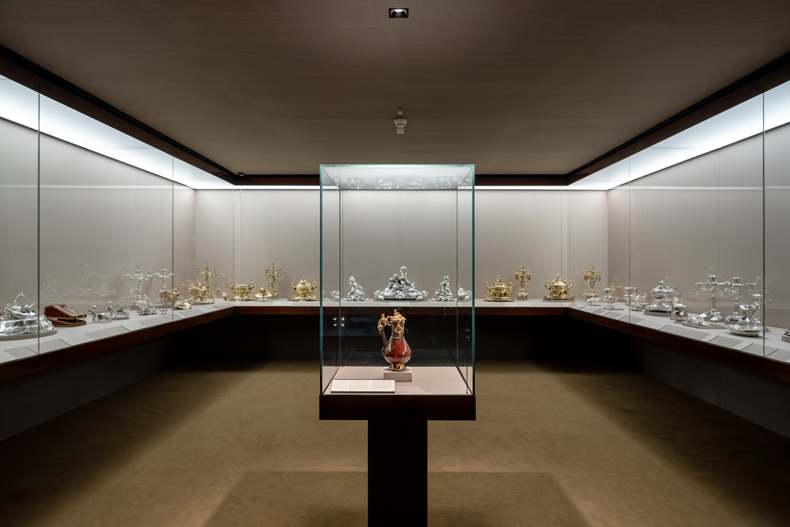
The position of the museum is interesting because it’s really the only encyclopaedic collection in the country, even though it’s not fully encyclopaedic – that’s not [the collection’s] intention. I keep telling people that the Gulbenkian is a sort of spaceship that landed in Lisbon and doesn’t really have anything to do with Lisbon or Portugal – we don’t have a single Portuguese object in the collection. But then we have everything from ancient Egypt to Impressionism.
Is our antiquities collection at the level of the British Museum’s? Or our Impressionist collection at the level of the Met’s or [the Art Institute of] Chicago’s? No. But there are absolute stars that are incredible in Portugal and all over the world. What is fascinating to me about this museum is the marriage between the architecture and the collection. Coming into it at a time of renovation has been very exciting.
Was it a bit strange starting your new role as director of a museum that wasn’t yet open to the public?
I’ve had good training in New York because I was dealing with a museum that was closed during my tenure. The Frick was effectively closed for two years. I keep joking that if there isn’t a building project, I’m not happy to work in a museum. Once we reopen this I’ll be very happy to have a museum that is running in a normal way, rather than dealing with all the issues of renovation.
At the same time, it has allowed me to settle in and get to know the collection and the building in a way that wouldn’t have happened otherwise. It’s been eight months and it flew by.
How involved were you before you officially began at the start of the year?
I arrived in November, and I had about a three-month period of overlap with my predecessor. He’s a fabulous person and we really worked things out together. He was handing things over, but we were both very deep in the renovation project. I think I arrived on a Sunday and was at work by Monday morning, and it was literally like ‘get going’. It means that my personal life in Lisbon is still somewhat on hold because the museum is now opening. My apartment is a total mess; I still live out of boxes. The minute the museum opens I need to focus on my apartment.
But the handover was a really good time. It was the most miserable winter in Lisbon, raining non-stop, but it was good for me to get to know the museum, the staff and the [Calouste Gulbenkian] Foundation as a whole.
Most people don’t understand how exceptional and strange it is compared to other institutions. We are two different museums that are part of the same foundation, together with a huge music programme and a huge philanthropic programme that involves sciences, social work and a number of other things. I had to get to know all the colleagues in those fields; and the director of the other museum, the Centro de Arte Moderna, and the director of music also were new. I arrived in the middle of the two of them. We’re really having a great time, planning things together, talking about things. Two of us being foreigners [Fredrik Andersson, director of Gulbenkian Music, is Swedish], we’re getting used to Lisbon and Portugal; [Sérgio Mah] is Portuguese. Even though we’re separate directors, we feel that we want to bring things in line in a way that probably never happened before.
Why was the renovation project begun, and what’s happened to the building?
The project started out of very practical needs: better lighting, security, climate control and visitor experience in general. When the museum was created in 1969, visitor experience was not on most people’s minds in terms of accessibility – everything was very minimal in terms of labelling. So that was the motor behind the whole thing.
Then there was the fact that the building looked tired after the last renovation in 2000 and needed some TLC. And out of that, there was the desire to enhance certain areas of the collection.
One example, which might sound boring to some people, is the numismatic collection – this incredible collection of ancient Greek and Roman coins that Gulbenkian assembled. Coins and medals are some of the most difficult objects to display. There isn’t a perfect way to do it because they’re objects that you really want to handle and turn around. The display is always a compromise, but now we have a specific room for it and a numismatic cabinet, which makes these objects look really beautiful.
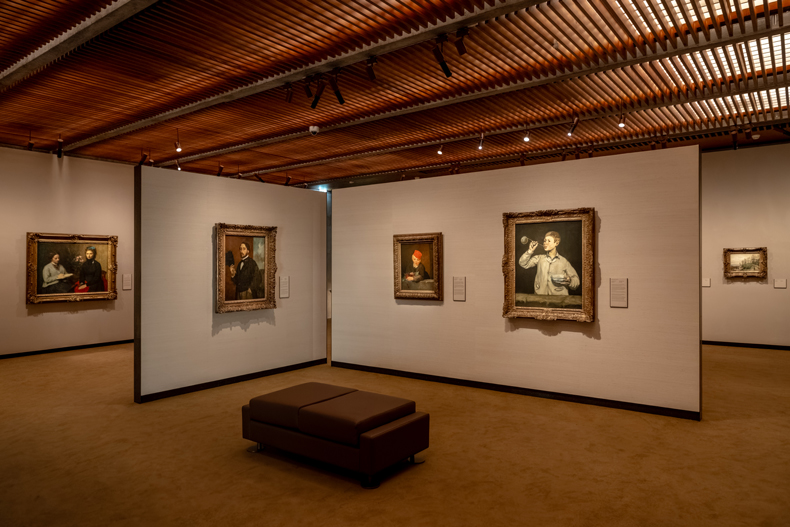
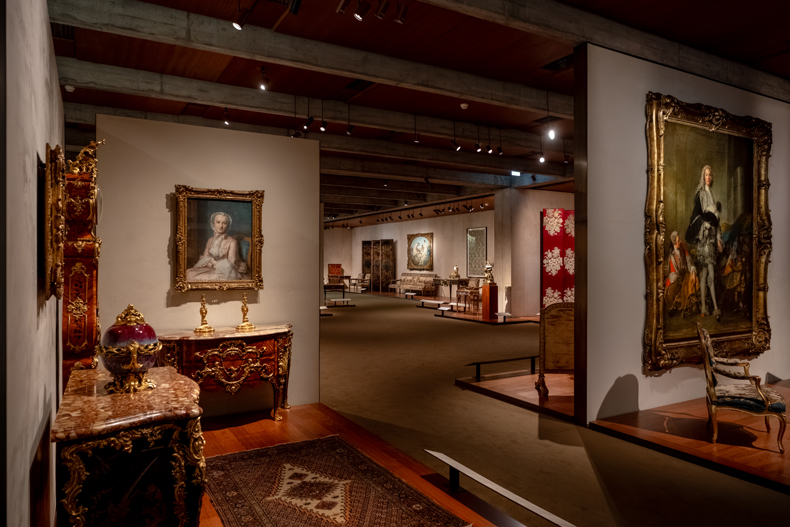
Then there was the tension between the building, which dates back to 1969, and more recent updates. When the museum first opened, the paintings hung on walls that were covered in neutral grey silk. That silk frayed over time. Instead of the silk being replaced, the walls were painted a similar colour. Another curator would come along and the walls would be painted a different colour. So you go from grey silk to a red painted wall, which means you just have a totally different effect.
When you’re dealing with a building from 1969, you have to give it the same attention as if you were dealing with a building by Wren or Hawksmoor or Brunelleschi. There was this idea from the beginning, not so much of going back exactly to how things were in ’69, but to bring some of that spirit back. The other example I give is that there was a very conscious decision in ’69 of having the floor of the antiquities and Asian galleries made of stone, and the floor of the European galleries made with fitted carpet.
Yes, I wanted to discuss the carpet.
By the late ’90s fitted carpet was evil, the worst thing you could imagine. So they replaced the floor with wood. There were all sorts of issues with that wood, but that’s a different story. It totally changed the space. When I arrived, I said, ‘Can we go back to carpet?’ For me, the carpet has been a game changer: it changes the way you walk in the galleries. It’s soft, luscious, a very different experience to a hard wood floor. It brings the space in in a very intimate way; even concrete and granite can be quite intimate with the carpet and the works of art.
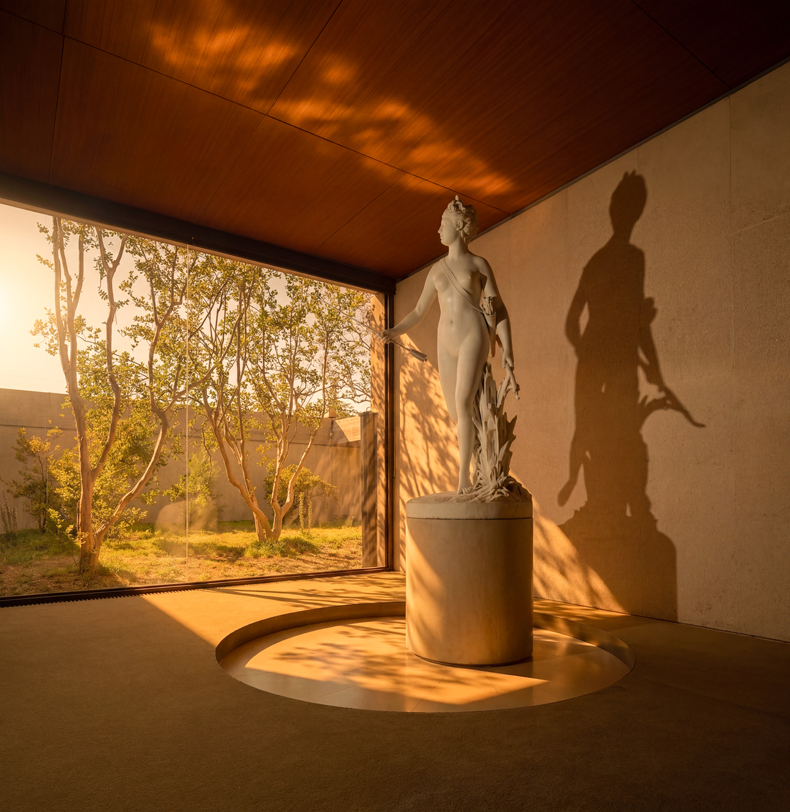
I didn’t realise this until the carpet was installed, but one of the great things about the museum is its relationship with the garden. I don’t think any other museum in the world has architecture and nature so present with the collection, and the carpet – which is its original colour, a weird beige green – brings the garden into the museum, so in many places it looks like a continuous space. You look out to the grass and it looks like you’re in and out of the space, and it’s totally different. It’s really beautiful.
When you clear out a museum to do a big job like this, you have the opportunity to rehang it. How have you been thinking about the collection? How are you shaping that story?
Our museum was built as a container around the collection so it came the other way around. They decided very early on to divide it in the traditional way, by chronology and geography. In museums in general I stand by that. When you create themes around what you have and then force things into it, it’s never that easy. When you’re putting objects [together] that come from the same period, the same area, it’s more straightforward.
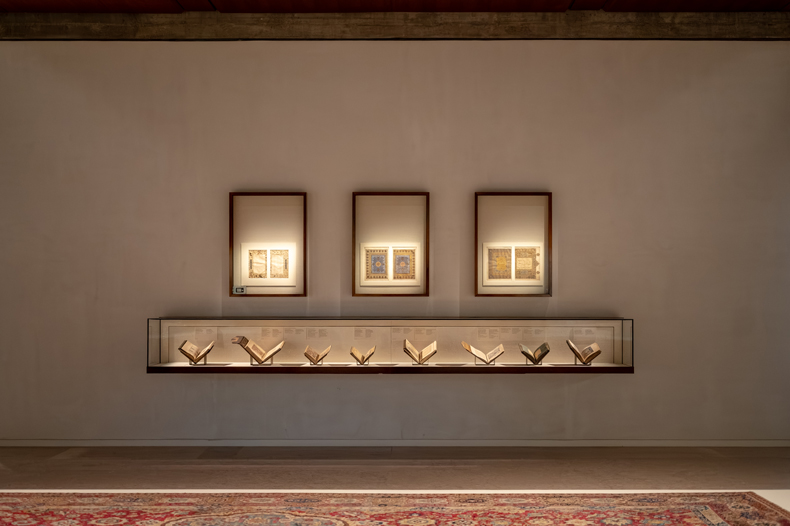
But mixing Mesopotamia, Greece and Rome made no sense. That gallery has been entirely redone and looks better than it ever has. Then there is the big iconic gallery of [art from] the Islamic world, which has gone back almost exactly to how it was [originally]. It’s funny because there were discussions about where certain vitrines and textiles should go, and after several discussions, I would say, ‘Well, I think it looks best on that wall.’ And the curator would say, ‘That’s where it was in ’69’. There have been many moments like that.
The Lalique room is the one that has always been in the same space but has changed the most often. This is the fifth design for the room. We didn’t go back to how it was in ’69 but, again, it looks spectacular. We brought in Burne-Jones and Sargent in dialogue with Lalique, which is how Gulbenkian had it in his house in Paris. There have been slight changes in how things are hung: the Guardi room is all the Guardis, but hung in a slightly different way. The Turners are in a slightly different place. But nothing is vastly different. The 19th-century room originally had walls in it to create different compartments, and in the early 2000s it was all knocked out and made into one big open space with sculpture. We’ve gone back to building walls, and so it’s divided into sections. I hope that people will find that line between ‘nothing has changed’ and ‘everything looks different’.
What are you hoping to do with the museum? What’s the direction of travel?
The collection needs to be central to anything we do. What is exciting about this collection is that it’s very diverse material and very varied in terms of stories we can tell. It’s divided by geography and chronology, but in fact we have objects [that transcend that], so in the Islamic gallery there is a pot for a water pipe, which was believed to be Chinese, but it turns out it’s Iranian in Chinese style, blue and white, that was then mounted in the 18th century in France as a teapot.
A lot of the programming is going to be about the strength of the collection – Lalique, Islamic, European – but it’s also about reaching out. There is an Islamic community in Lisbon and the mosque is not very far away from us. Jessica Hallett, our Islamic curator, has done incredible programming with that community. How we reach out to these communities is something that I’m very interested in.
I’m also very interested in partnerships with similar museums. We’ve been talking a lot about creating a network of collection museums in Europe – I’m thinking of the Musée Jacquemart-André, the Wallace Collection. How do we talk about different challenges, different ways of doing things, but also partner with other museums that have similar material? We have Chinese and Japanese and Egyptian [material, so] let’s partner with the Museo Egizio or other museums that have material that makes sense, where we can share experiences and knowledge.
And what about exhibitions?
I’m thinking about potentially one big show a year. But again, it’s going to be a delicate balance between working for a local audience and an international audience. The museum is visited mostly by tourists and I really want to shift that. Most people in Portugal feel like they’ve been to the Gulbenkian when they were at school and don’t need to go back. I want to make the museum part of everyday life as a Portuguese or a person living in Lisbon. How can the museum enter your life in a more interesting, more meaningful way?
I want to make sure that the exhibitions are not just visited by tourists who happen to be in Lisbon but that they attract people to Lisbon. So, trying to put Lisbon and the Gulbenkian more on the map internationally and locally. It’s something that I think my predecessors did, but it’s [about] pushing beyond that boundary and going even further.