From the November 2026 issue of Apollo.
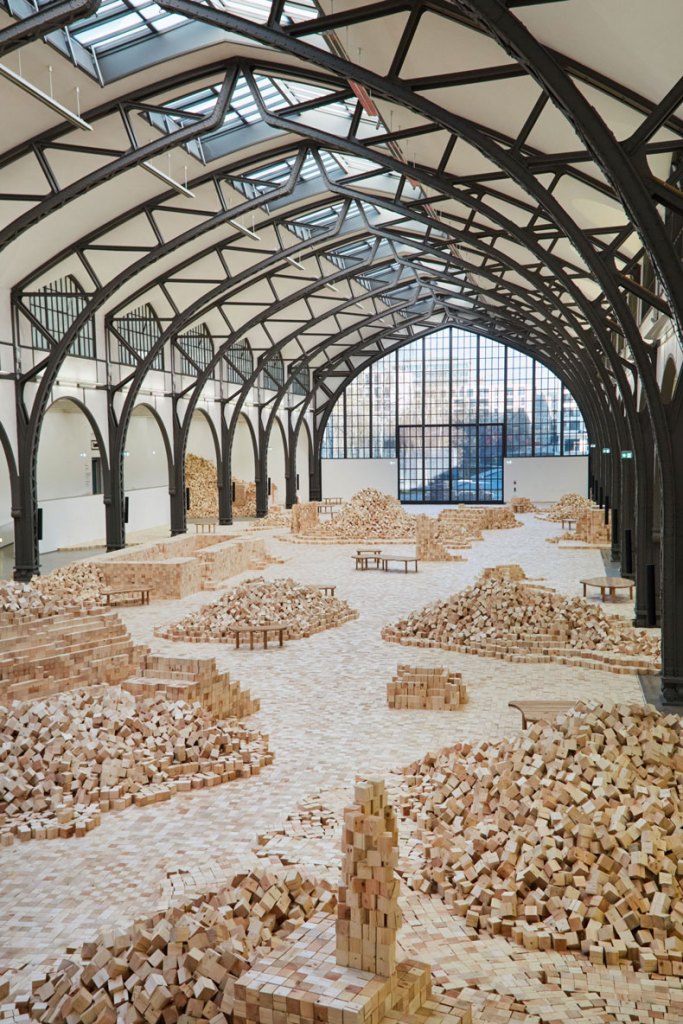
At the Hamburger Bahnhof in Berlin, there is a photograph of the cavernous former railway station, taken in 1984, that shows the space full of train carriages and other objects of locomotive history wrapped in clear plastic, ready to be carted off to storage. Much has changed since then, and yet there is a strange consonance with what the building, now home to Berlin’s pre-eminent museum of contemporary art, looks like when I step inside on a crisp afternoon in September. Instead of those mounds of plastic wrap, there are mounds of wooden blocks – 400,000 of them to be precise, each one a 10cm cube, and piled around the place, with gallery-goers walking among them, picking them up, building towers and knocking them down.
This is an installation by the Lithuanian artist Lina Lapelytė and it’s part of the museum’s birthday celebrations. It has been 30 years since the Hamburger Bahnhof opened as a gallery and since then it has become one of the most forward-thinking institutions of its kind: a spotter of emerging artistic talent; a leader in the exhibition and conservation of sound art and light-based work; and home to an exemplary – and growing – permanent collection.
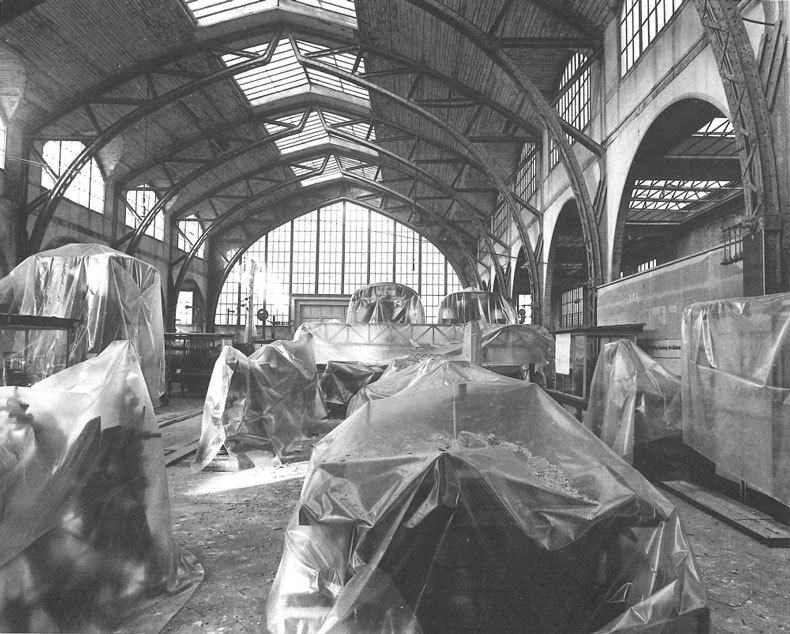
That photograph from 1984 was taken during a period when the museum, like Berlin as a whole, was in limbo. Having started life in 1846 as a grand neoclassical terminus connecting Berlin and Hamburg (hence the name), by 1884 the Hamburger Bahnhof had become defunct, unable to cope with the amount of traffic on the railways. The building reopened to the public in 1906, this time as a museum of transport and construction, but by the end of the Second World War the place was half-destroyed. With Berlin parcelled out among the Allies, the Hamburger Bahnhof found itself in the British sector, but of little use to the Brits. Once Germany was split into East and West, the Brits decided that the building should be part of the GDR, which controlled the majority of Berlin’s train stations. When the wall went up in 1961, however, the GDR owned it but could not access it – so it remained abandoned until the 1980s, when it was handed over to the West Berlin Senate.
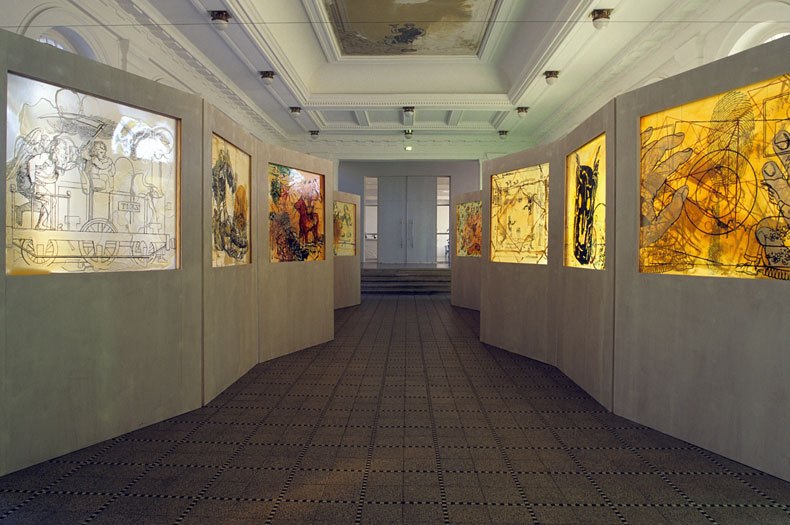
Two factors led to the building becoming an art museum. First was the 750th anniversary of Berlin in 1987, for which part of the building was restored. Second was the decision by Erich Marx, entrepreneur and art collector, to donate his expansive collection of post-war art, which in the main comprised works by Joseph Beuys, Robert Rauschenberg, Cy Twombly and Andy Warhol, to the city of Berlin. In November 1996 the Hamburger Bahnhof finally reopened in something like its current state and the following year held a major exhibition of work by Sigmar Polke and a recreation of Rebecca Horn’s installation Room of the Wounded Ape, which had first been shown in two exhibition spaces in East and West Berlin a few months after the wall fell. The building serves as Berlin State Museums’ official venue for work made after 1945.
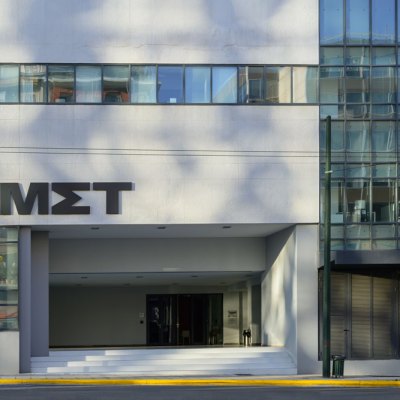
There are not many major museums of contemporary art that occupy a building constructed before the turn of the 20th century. For a museum dedicated to the present, an eventful past might seem like a diverting piece of context at best, but the previous lives of the Hamburger Bahnhof are etched into its very architecture – the stone plaque from the early 20th century advertising this as a Verkehrs- und Baumuseum is still there on the facade today, as are permanent artworks by Niele Toroni and Dan Flavin from 1988 and 1996 respectively – and are central to how the museum’s directors, Sam Bardaouil and Till Fellrath, think about the museum they run. ‘Whenever we do an exhibition we are always asking the permission of the building to allow us to enter with a new logic,’ Bardaouil says as we stand on the steps outside the entrance and he points up at the Flavin work, a series of vertical green and blue fluorescent light tubes placed across the front of the building. They were produced for the museum’s opening and turned out to be the artist’s final creation. When Bardaouil and Fellrath took over the museum, there had been some attempts to turn spaces in the museum into a ‘white cube’, with covered windows and dark spaces. ‘We said, OK, this is cheating. This building was not meant to be a white cube,’ Bardaouil tells me. ‘Everything is so clearly an intervention from us now, as passers-by.’
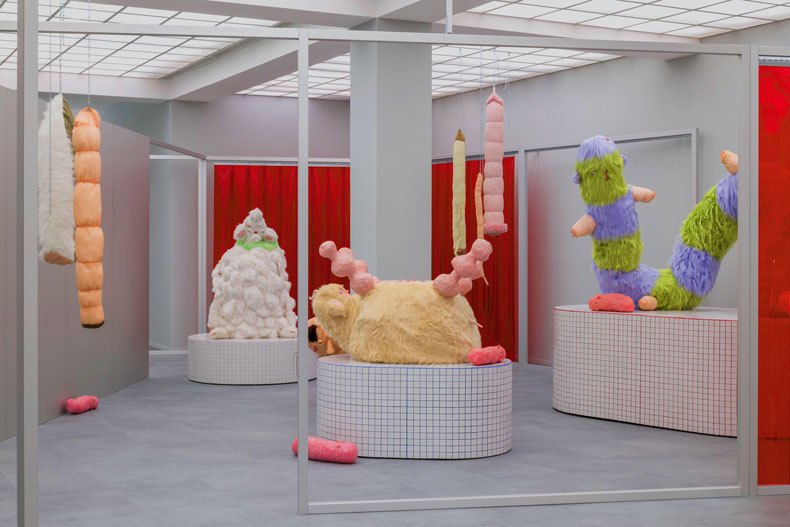
Over the past 30 years the museum has built a reputation for its eclectic programme of temporary exhibitions, which often take a fresh look at established names or feature exciting artists who may not have quite the recognition their work deserves. Lapelytė’s installation is the latest in a long list of ambitious works that have graced the main hall: masterpieces by the Berlin School of sculpture, displayed in ‘Ethos and Pathos’, a landmark exhibition of 1990 before the museum officially reopened; a sound piece by Susan Philipsz in 2014, which comprised 24 speakers mounted to the girders around the perimeter of the hall; a cacophonous show of 2023 by Eva Fàbregas, who filled the space with malleable pink, orange and purple sculptures that splayed out across the floor and wove themselves through the metal arches, resembling at once cuddly toys, human entrails and intergalactic matter.
While I am here, the museum is hosting shows of work by the Indian artist Shilpa Gupta and by the Leipzig-based artist group [ materialistin ]; a retrospective dedicated to the late musician Ryuichi Sakamoto; and ‘Sabotage’, a show by the young Italian artist Giulia Andreani, whose work responds to archival materials in the collections of Berlin’s museums and elsewhere, that is one of the most cogent and thought-provoking exhibitions I have seen for some time.
At the same time, the museum is a collecting institution, and as part of its anniversary celebrations is looking back through 30 years of its permanent collection in the exhibition ‘A Thousand Times Berlin’. It’s a tiny fraction of the collection, but one that gives a snapshot of the kind of institution the museum wants to be. ‘We are always interested in artists who we feel are pushing the boundaries of the media in which they work,’ says Bardaouil.
This echoes in my mind as I stand and stare at Joseph Beuys’s Unschlitt (1977) – 20 tonnes of beef tallow, mixed with stearin to harden it and cut into huge, stomach-turning blocks – or Cemîla Şahin’s BB – BORN TO BLOOM (2025), a thrillingly inventive two-channel video installation in which images of weaponry and Kurdish mountain landscapes combine a bubblegum-pop soundtrack and meme-y flashing text, a meditation on war and nationhood for the Instagram generation.
It is the well-judged blend of pieces by the likes of Beuys, Roy Lichtenstein, Rosemarie Trockel and others with those by younger artists that makes this display so seductive: those critically acclaimed works of the late 20th century give the newer, less tested pieces gravitas, while the contemporary art helps to breathe new life into the older work, such that I start to feel like I am looking at Rauschenberg’s German Stroll (1990) or Sarah Lucas’s provocative self-portraits for the very first time. It’s a mixture that captures what the directors think of as the most fundamental mission of the museum, which is to think about the past, the present and the future all at once.

two- or four-channel digital video. Courtesy the artist/Esther Schipper, Berlin/Paris/Seoul; © Cemîla Şahin
The Hamburger Bahnhof is also looking back in another way, by inviting artists who have long-running associations with the museum to come back for a group exhibition. Thomas Demand, Tacita Dean, Olafur Eliasson, Henrik Håkansson and Tomás Saraceno all rented studios in the Rieckhallen, the warehouse complex in the wings of the museum, in the early 2000s. ‘It’s a lovely opportunity to say hi [to the museum] again,’ Eliasson tells me when we speak in October, a few days before the group show, ‘Next Door’, opens in the space in which he once worked. He remembers the museum as a ‘soft’ and ‘inclusive’ space, with his studio available for ‘fantastic rent’ that is unthinkable nowadays.
Eliasson was there at the same time as Demand and Dean, and recalls a communal, fertile atmosphere. ‘We worked a lot, and we hung out a lot,’ he says, ‘and we would criticise each other’s work, in a healthy way.’ The piece he has made for his return is a sound and light-based work, one that was started back in the halls of the Hamburger Bahnhof all those years ago. But although Eliasson’s time at the museum was both formative and productive, he also felt something of a disconnect between this welcoming studio space and the institution right next door. Museums in the city ‘were not so interested in the young Berlin scene at the time, so we didn’t really have any contact with the museum’, he tells me; and even now, the Hamburger Bahnhof does not own a single work by him. This feeling is something that the directors of the museum have been trying to quell, by consciously embedding the institution in the cultural life of the city. Initiatives such as open house are one way of connecting a museum to the community, but it’s also about giving space to artists who are from Berlin or, crucially, who have ‘made Berlin their home’, Bardaouil says. This is a vision of German identity that very sensibly reflects the fact that Berlin is one of the most international cities in the world – or, in Bardaouil’s words, one that reflects a world ‘that is de facto post-migratory’.
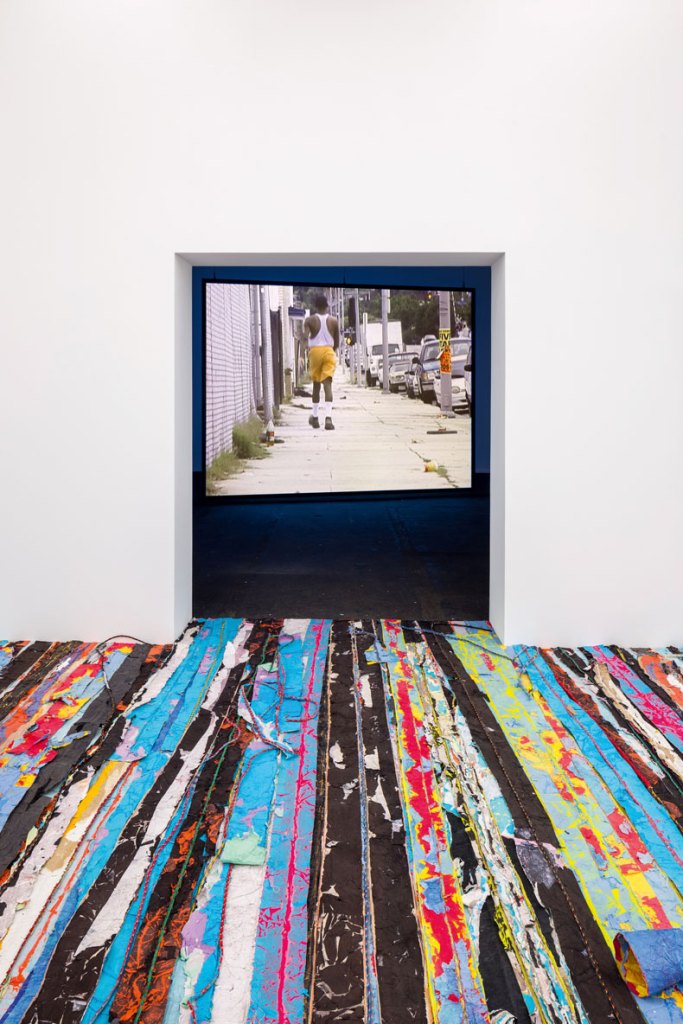
Bardaouil and Fellrath, who became directors in 2022, are an unusual proposition: a curatorial duo running a major art museum. They met in 2008 in New York, where Bardaouil, who was born in Lebanon, was teaching art history and performance studies at NYU, and Fellrath, who has masters degrees in economics and political science, was managing director of the Chelsea Art Museum. The pair set up a curatorial platform, Art Reoriented, and worked as freelancers, curating the Lyon Biennale in 2022 and several pavilions at the Venice Biennale. When they joined the Hamburger Bahnhof that same year, they found themselves facing its potential demise. The building, including the Rieckhallen, which are converted former depot sheds, was owned by a real-estate developer who was preparing to tear it down and build flats. ‘We were paying rent for our home, which was excruciating,’ Bardaouil says, ‘and we couldn’t even think about planning exhibitions, because we didn’t know if we’d have the space or not.’ It was thanks to lobbying efforts by the pair and others that the Berlin state and the federal government stepped in and brokered a deal to buy the Hamburger Bahnhof outright for the sum of €66m. In 2024 the Rieckhallen officially reopened with an ambitious exhibition by Mark Bradford.
The purchase of the building was a watershed moment both for Berlin and for the museum’s directors, whose vision for the Hamburger Bahnhof – a flexible, porous institution, deeply connected to the city – would simply not have been viable in that state of uncertainty. They have since introduced an ‘open house’ weekend once a year, in which everything, including the back offices, are flung open (more than 50,000 people visited this year over three days), and they have carved out atelier spaces in the Rieckhallen for schools to do subsidised painting workshops. They have also made a concerted effort to make their wall texts more approachable (‘if it says “the famous philosopher Kant”, and you have not heard of Kant, you feel inadequate immediately,’ Bardaouil says). The word that comes up most in our conversations is ‘agility’, a characteristic demonstrated not only by the museum’s active exhibition schedule but also by a forward-thinking approach to funding.
Part of this is what Bardaouil calls a ‘new model of patronage’, one designed to attract donors who want to ‘stand next to’ the museum as partners and help ‘build something together’, rather than those who just want to slap their name on a new wing. The other side relates to diversifying the museum’s sources of income. German state museums are generally reliant on government funding – the Hamburger Bahnhof gets more than half of its overall budget from the state, while the Tate, for example, gets 70 per cent of its income from private sources – but the directors have been keen to attract private sources of income too. Last year the yearly installation in the main hall became the Chanel Commission, while this summer a gala (relatively alien in Germany) brought Cate Blanchett, Wim Wenders and other starry names to a grand dinner in the main hall. It would be easy to see this as the good guys selling out; there was an air of defiance in what the directors said about it at the time, with Bardaouil assuring Frieze in March that it was not about ‘importing a US model’. But at a time when arts funding is in crisis it seems ungenerous to complain about a museum seeking income where it can. Berlin’s budget included a 12 per cent cut for culture in 2025, and one of the very few cultural events in Germany that had its funding increased rather than cut, Fellrath says pointedly, was the annual Wagner festival in Bayreuth.
Some may roll their eyes, too, at the talk of ‘openness’ and ‘accessibility’, but there is a passionate belief in the idea that everyone should be able to enjoy art. ‘Elitism doesn’t mean that you’re doing good or serious work; it’s about the attitude, and the attitude can be very open while you’re also doing very serious work,’ Bardaouil says. I think about this as I step back outside and see a visitor in the front garden of the museum trying to get money out of an ATM – a fool’s errand, for this is not a working machine but Statue of Liberty (2019), a sculpture by Elmgreen and Dragset that takes the form of a fake ATM screen wedged into a freestanding slice of the Berlin Wall. No doubt the directors would be pleased to see the interaction: an unwitting encounter with art, deeply silly and deeply serious at the same time.
From the November 2026 issue of Apollo.