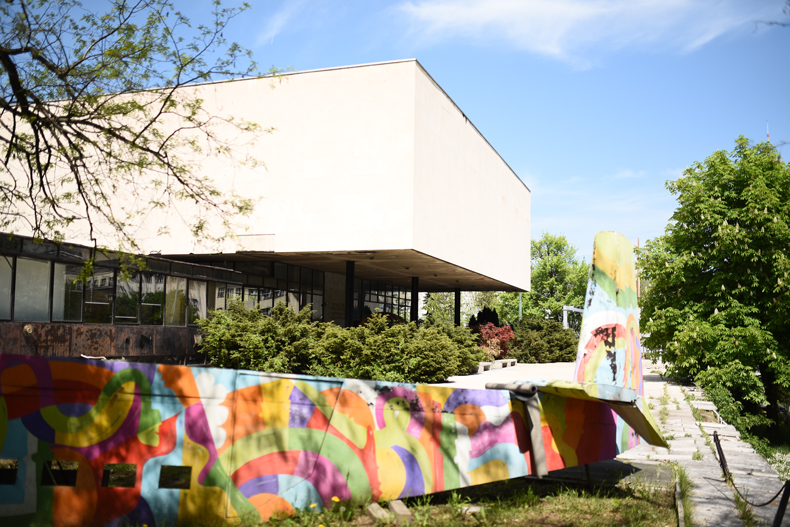
In the heart of Sarajevo’s commercial quarter, between several shopping malls, the US Embassy and a National Museum built in Renaissance Revival style, the Historical Museum of Bosnia and Herzegovina (BiH), a modern building with a cubic upper floor supported by metal columns and glass, stands out. On one side there is a mural, showing the destruction of Sarajevo during the four-year siege of the city by first Yugoslav, then Serb forces that began in April 1992 and ended in February 1996, three months after Dayton Agreement formally brought the Bosnian War to a close.
The museum, which began life as the Museum of the Liberation of Sarajevo in 1945 and was shelled during the civil war, was declared a National Monument in 2012. It has also become a rallying point for those who oppose the direction of Bosnian politics since the collapse of Yugoslavia, who often meet in the adjoining Café Tito. But despite the museum’s popularity and its collection of 400,000 artefacts relating to the Second World War, the Socialist period and the civil war, it operates on a shoestring and receives no state support.
The Dayton Agreement divided the country into two regions along ethnic lines, the Federation of BiH (predominantly Bosniak and Croat) and the Republika Srpska (Serb). They share power: the presidency is made up of one member from each of the three groups, with chairmanship of the presidency rotating between them every eight months. But as they all have power of veto within a weak legislature, the country has barely had a functioning state since 1995. What this means for the Historical Museum, says its director, Elma Hašimbegović, is that it has been left ‘without legal recognition for thirty years’ – a problem that affects six other major institutions, including the National Gallery, which has a shockingly small space and permanent collection compared to its counterparts in Belgrade, Zagreb and Ljubljana. ‘No political agency is interested in the shared history, heritage or legacy of this country,’ says Hašimbegović, ‘so we have no funding for people’s salaries, maintaining the building, or any other operating costs.’
Hašimbegović explains that the Historical Museum is constantly dealing with crises and trying to find funding from different sources, often international ones. For example, a partnership with King’s College London provided funds to commission works from local artists on the theme of post-war reconciliation. ‘We think art has a very important cultural role,’ Hašimbegović says, ‘so we often work with artists, sometimes intervening directly on the collections, sometimes having exhibitions related to history and memory, and giving space to students from the Academy of Fine Art to show their work.’ In this, the museum has to devise projects and find money for them rather than having a regular income that allows it the time to develop longer-term projects.
For all its problems, says Hašimbegović, the situation provides an unusual amount of freedom. ‘We can explore narratives that are not emphasising national divisions, further deepening the society,’ instead ‘promoting ourselves as a local museum, developing programmes for the community’. The curators have to be careful not to evade the realities of the tensions that tore the Socialist Federal Republic of Yugoslavia apart; emphasising how the horrors affected everyone feels vital in a country where the legacies of the war remain unavoidable. We speak at a time when, as Hašimbegović says, ‘divisions between people in Bosnia and Herzegovina are deepening and relations with our shared history are being cut’. Throughout the last decade, Republika Srpska’s president Milorad Dodik has proposed separatist laws as a means of testing the government’s resolve against a potential secession.
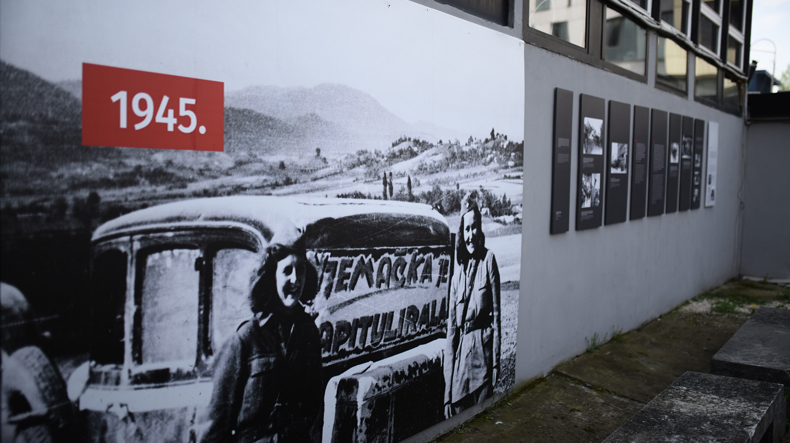
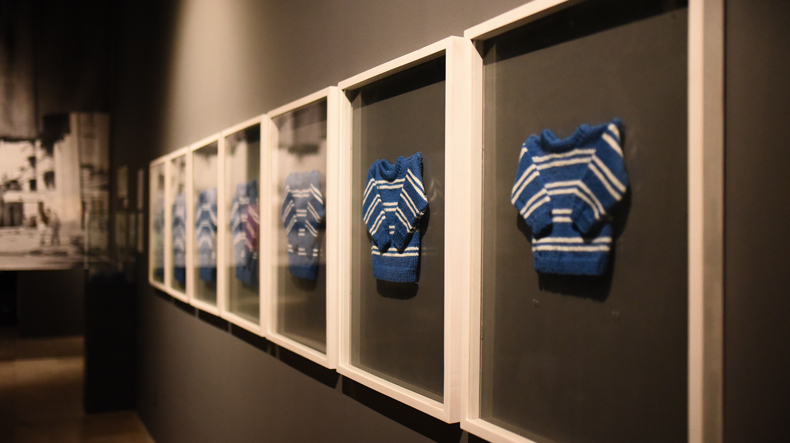
When I visited in May, the museum’s three temporary exhibitions all dealt with collective memories of the civil war and Second World War and of the Socialist Federal Republic. ‘Where is Valter’, on the theme of resistance, took its title from the nom de guerre of the legendary partisan commander Vladimir Perić, one of the last Yugoslavs killed by the Germans in occupied Sarajevo in 1945. ‘What was the platform offered to unite people to fight fascism?’ asks Hašimbegović. ‘That tells us a lot about our inclusive approach, rather than going into revisionism or ethno-nationalism. We are talking partly about crimes, massacres and their victims, but focusing on daily life.’ An exhibition about radio and television during the Socialist period explored how broadcast technology shaped the country’s popular culture – music, fashion and sport, including the 1984 Winter Olympics – and created a shared sense of history. The third exhibition, about the siege of the city in 1992–96, avoided the reasons for the attack, focusing instead on ‘civilian resistance, creativity and everyday life’.
‘There are no political protagonists who look likely to improve things, and no input from the international community, whoever that is, to heal society rather than constantly bringing us back to the war and victimhood narratives,’ Hašimbegović says. She tells me about an upcoming exhibition called ‘Our Woman’, which will explore the contributions of women – ‘no matter their ethnicity or background’ – to two post-war societies (after 1945 and 1995). The aim is to make it so inclusive that it will be shown even in Republika Srpska, ‘but it’s not easy,’ Hašimbegović explains, ‘to find decision-makers or stakeholders who share our vision of art and culture as a uniting force’. She remains undeterred: ‘We’ll work independently for as long as possible with our vision of dealing with history, memory, culture and the past.’