As Paris Fashion Week draws to a close, what sticks in the mind – beyond the clothes themselves, of course – is a group of large stuffed animals. A rearing killer whale in plush is one thing, but put it alongside a mournful-looking St Bernard’s dog (complete with squidgy barrel of brandy) and a pair of clams with human eyes, and it becomes quite the playful menagerie. The open invitation to enjoyment was apparent at the close of the Loewe Fall/Winter 2026 show, where these furry friends were on view, as influencers took to posing with them for feed-fodder.
Set upon seats designed to look like shoeboxes, the animals came courtesy of the imagination of Cosima von Bonin. The German artist’s first exhibition in the UK was held only last year at Raven Row, but this might say more about London than von Bonin. Visitors to the Venice Biennale in 2014 might remember her work on the top of the Central Pavilion: a collection of fish (possibly including a pair of trout) playing guitars and a shark head with a missile in its mouth. There were also some clams in the pavilion, much like the ones watching the Loewe show.
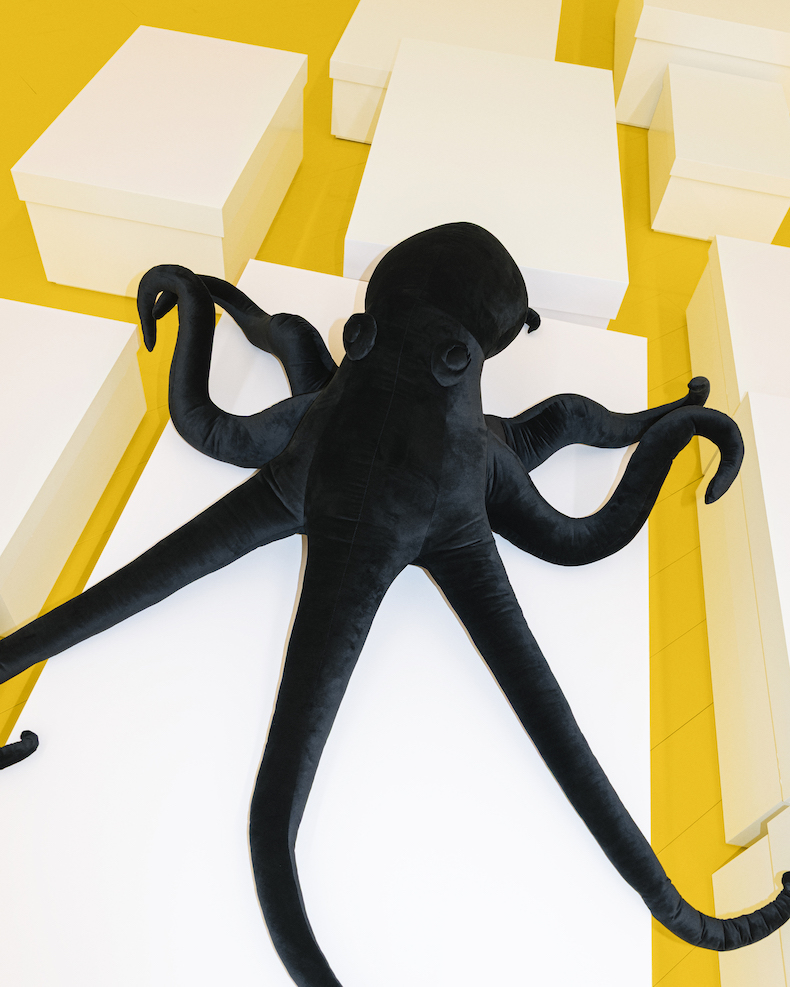
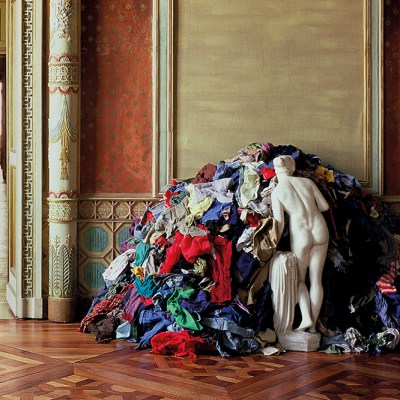
Von Bonin has played with ideas of fashion before, incorporating rags into her work in ways that simultaneously allude to the art of Michelangelo Pistoletto and ask questions about value. And while the cutesiness of these giant soft toys, or fabric sculptures, is undeniable, it’s a bold provocation to put this subtle satirist at the heart of a real fashion show. As the midnight-blue octopus in one row of seats suggested, the ideas and reach of both fashion and art stretch out all over the place in unpredictable ways.
In ‘Songs for Gay Dogs’, the exhibition that Von Bonin staged in Luxembourg in 2024, the plaid-clad cousins to the whales that appeared at the Loewe show were sat not on boxes or seats but swings. At first glance, the work is carefree but quite quickly ideas about adultness and childhood, and just what a swing can be used for, begin to make themselves felt.
In a way, it is a superlative piece of commissioning to ask Von Bonin to create art for a fashion show. The artist notoriously resists interpretation, allowing viewers to read her works as they choose; any claims of satire come from outside. Placing her works in a room where they might be read simply as overgrown soft toys is as valid a response as the art lover who sees them as undercutting the entire idea of authorship (Von Bonin makes a point of not doing her own sewing), value and beauty. Perhaps it’s no coincidence that she was tutored by the German painter Martin Kippenberger, a master of the art of sly commentary.
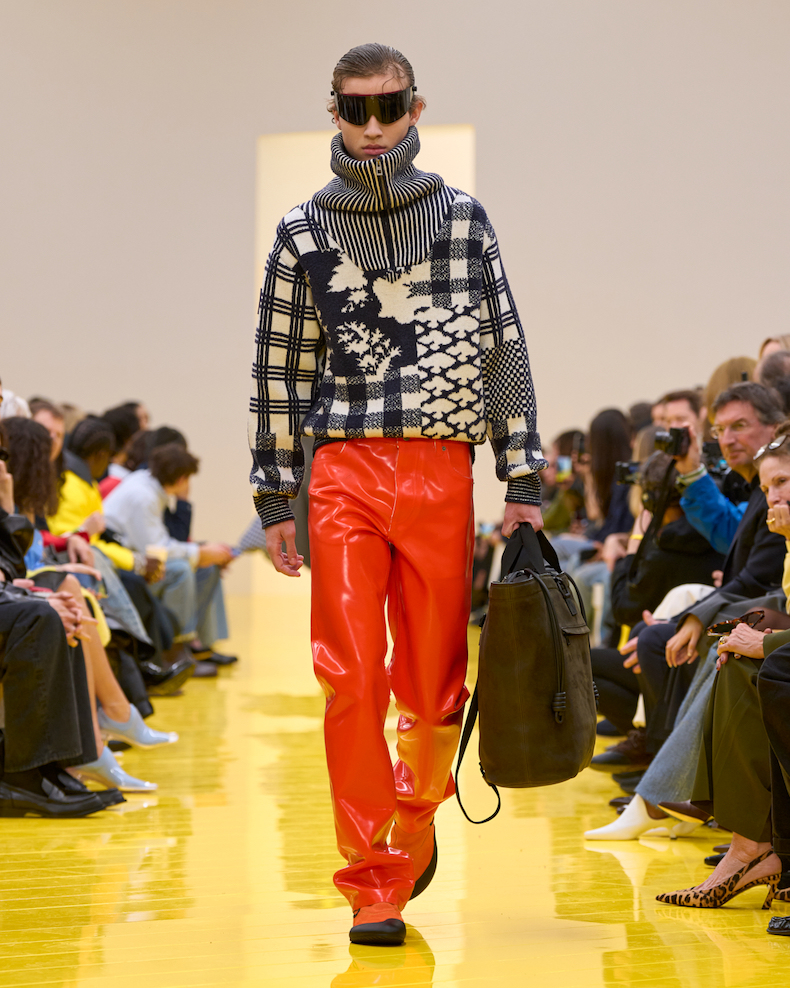
Yet it is a mistake to be seduced by the materials of the work into thinking she’s a soft touch. The collaboration extended beyond the installation and included some of the accessories that were sent down the runway, and even a label on the side of a man’s (highly covetable) blue-and-white multi-patterned knitted jumper. Most striking of all as an idea was the version of the Loewe Amazona 180 handbag in porcelain. Needless to say, functionality becomes a theme in such transformations, but so does the question of craft, ownership and security – an Amazonian allusion is transformed from metaphorical armour into a material that is superficially stronger and, in real life, more vulnerable. In some ways it sums up the whole question of what clothes and fashion are for. But perhaps the other point of making something usually crafted in leather in porcelain is to quite literally show that, while Von Bonin might often play softball, sometimes she’s interested in the hard things in life.