Lonnie G. Bunch III is retiring as secretary of the Smithsonian Institution after seven years in the role. He is the first historian – and the first Black person – to have been made head of the institution. He arrived from the Smithsonian’s National Museum of African American History and Culture, of which he was the founding director; in 2005 he secured $250m from Congress to help establish the museum. The Smithsonian has come under intense pressure from the White House during the current Trump administration. Last year the government launched a review into the institution, which remains ongoing, and threatened to withdraw the Smithsonian’s funding – which makes up 62 per cent of its budget – if the institution did not comply with the terms of the review. Bunch told the New York Times that the pressure from the Trump administration ‘has been stressful’, but that this was not the reason for his departure. ‘It was really just saying [that] now’s the time,’ he said.
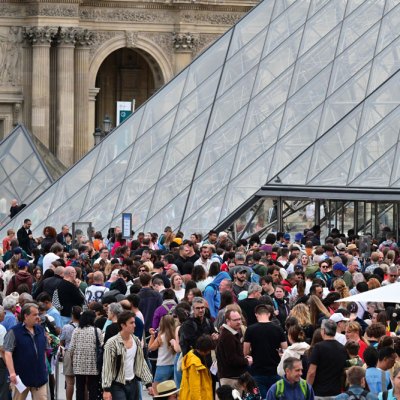
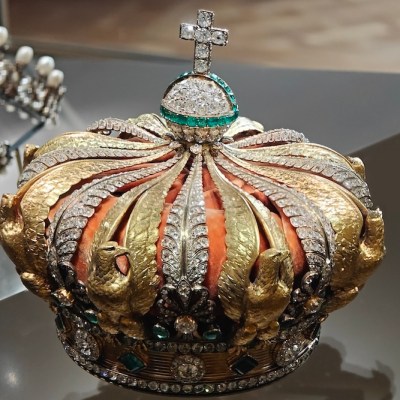
Two paintings by Pierre-Auguste Renoir have been stolen from the Renoir Museum in Cagnes-sur-Mer in the French Riviera, the BBC reports. Two thieves entered by cutting a hole in a fence and grabbed four works but abandoned two, Portrait de Madame Pichon (1895) and Coco lisant (1905), on their way out. Jeune femme au puits (1886) and Portrait de Madame Colonna Romano (1910), with an estimated joint value of €9m, are still missing. According to the Association for Research into Crimes Against Art, Jeune femme au puits was once owned by the Jewish art dealer Hedwig Zak before being sold under duress to another Parisian dealer and later seized by the Nazis; Zak and her son were killed at Birkenau. Le Monde reports that Zak’s heirs have demanded the painting’s return. French museums have been hit by a number of heists in the last year: crown jewels at the Louvre last October, a gold torc dating to c. 500 BC from the Musée du Pays Châtillonnais in Burgundy in July and €4.5m-worth of jewellery from the Musée Lalique in north-east France, also in July. The mayor’s office in Cagnes-sur-Mer has said that ‘every possible effort’ is being made to find those responsible for the latest theft.
Anti-migrant protestors in Dorset have caused the Poole Old Lifeboat Museum to temporarily close, the BBC reports. Protestors gathered in Poole after some 140 migrants arrived on a dinghy from France last week. According to a Facebook post by the museum, which is free and run by volunteers, the protestors were ‘verbally assaulting’ volunteers ‘in and around the museum’ making it impossible to open the museum. The museum, which documents the history of the Royal National Lifeboat Institution (RNLI) in Poole since 1865, also stated that it would remain shut until the protests ended.
The Hungarian government has scrapped plans for a new National Gallery building in Budapest, the Art Newspaper reports. In 2011 Géza Szőcs, the then culture secretary in Viktor Orbán’s government, announced plans to create a museum quarter in City Park, with a new building that would house Hungarian and international art made after 1800. In 2015 the Japanese firm SANAA was hired to design the €300m building but the project stalled in 2019 due to opposition from the mayor of Budapest and environmental groups. Now, under the new government led by Péter Magyar, the planned building site will revert to public parkland. Dávid Vitézy, minister of transport and public works, told the Art Newspaper that, though the City Park is no longer a viable option, the National Gallery’s current location – Buda castle, on the other side of the Danube – falls short of ‘the standards required for the long-term operation of a modern national art gallery’, and that the government ‘must develop a new plan for the future location of the Hungarian National Gallery’.
An Argentine court has ordered that a Nazi-looted painting by Giacomo Ceruti be returned to the heir of the Jewish art dealer Jacques Goudstikker, the Art Newspaper reports. Portrait of a Lady, which dates to the 18th century and was previously attributed to Giuseppe Ghislandi, was discovered in photographs from a property listing in the resort city of Mar del Plata. The home belonged to the descendants of a Nazi official who fled Europe after the Second World War. Goudstikker died in 1940 trying to flee the Netherlands after the Germans invaded; the Nazis looted his gallery of more than 1,100 works. His heir, Marei von Saher, told the Art Newspaper that he hopes the painting can be exhibited publicly in Argentina before its restitution.
The Pitt Rivers Museum in Oxford will repatriate the remains of 39 people to the Naga community in north-eastern India. The Naga community has been negotiating for the return of the remains, which mostly comprise skulls, for more than six years, since around the time that the museum took all its human remains off display. The remains were donated in the early 20th century by the colonial administrators John Henry Hutton and James Philip Mills. According to the museum, Mills, on a punitive exhibition in 1936, ‘recorded demanding heads from a village and waiting with an armed escort until they were produced’. The requested remains of one other person will remain at the museum because, in the museum’s words, it ‘does not have a clear provenance as Naga’. The Pitt Rivers retains 178 Naga objects that contain or may contain human hair.