In the last week, despite all the woes of the world, more than $2.5bn of art has been sold across the three major auction houses in New York. Christie’s total was $1.45bn; Sotheby’s finished its series at $908.6m, up an enormous 82.5 per cent on May 2025; and Phillips came in at $145.7m. (All prices and totals include fees.)
Those figures, at least at the very top end, have done much to quell industry anxiety after several difficult years. But the season’s success is really down to what was for sale – a glut of exceptional consignments, particularly of post-war American art, from the estates of wealthy boomer and ‘Silent Generation’ collectors.
‘The headline take-away is that the very top of the market is unquestionably alive,’ says the art advisor Megan Fox Kelly. ‘It was psychologically important, because it reintroduced a level of confidence that the market has been lacking in the last 18 months […] We’re seeing the great wealth transfer happening in real time. The question was would the market absorb it? The answer appears to be a resounding yes.’
Robert Gottlieb, the renowned literary editor, once described the late publisher S.I. Newhouse as the personification of the ‘inner-directed man. Certainly open to influence and education but always secure in his own impulses.’ Such instinct played out in Newhouse’s approach to collecting art, allowing him to accumulate, in the words of the entertainment mogul and art collector David Geffen, ‘the best collection of post-war paintings ever put together’. Newhouse, not sentimental about his collection, sold numerous works to his friend Geffen over the years. All part of the refinement process.
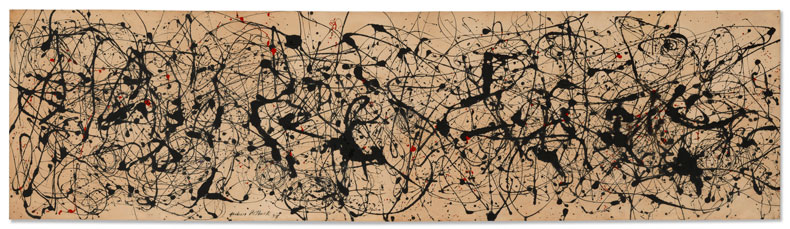
Newhouse died in 2017, and on Monday night 16 works from his distilled collection sold for nearly $631m at Christie’s in New York. Two headline works, Jackson Pollock’s three-metre-wide drip painting Number 7A (1948) and Constantin Brâncuși’s bronze Danaïde (1913), respectively accounted for $182m and $108m of that sum, the Brâncuși while recovering from a ripe-for-parody promotional video in which Nicole Kidman gyrates around it.
Pollock’s drip paintings are as rare as hen’s teeth, and Christie’s says that the one that belonged to Newhouse is the last in private hands. He bought it from Alfred Taubman in 2000, the same year Taubman resigned as Sotheby’s chairman as the price-fixing scandal was uncovered. The Pollock price is three times higher than the artist’s previous auction record of $61.2m, set at Sotheby’s in 2021. Where it heads now is a mystery. It sold to a client on the phone with Alex Rotter, Christie’s global president, though the dealer Iwan Wirth was personally bidding on it in the room until around $150m, according to the industry newsletter The Baer Faxt. The Pollock is now the fourth most expensive painting ever sold at auction, and Newhouse also owned the second most expensive (at the time of its sale): Andy Warhol’s Shot Sage Blue Marilyn (1964), which sold for $195m in 2022.

The Brâncuși went to a client bidding on the phone with Maria Los, Christie’s deputy chairman and head of client advisory for the Americas, who scooped up numerous works on behalf of various clients. The previous record for Brâncuși was $71.1m for La jeune fille sophistiquée (Portrait de Nancy Cunard), sold at Christie’s New York in 2018.
The enormous Newhouse result rather overshadowed that of eight works from the collection of the Wall Street trader-turned-art dealer Robert Mnuchin that were sold at Sotheby’s in a single-owner sale on 14 May. Mnuchin, who died in December at the age of 92, became an art dealer after retiring from Goldman Sachs, championing post-war American artists, particularly abstractionists such as Mark Rothko, Willem de Kooning and Franz Kline.
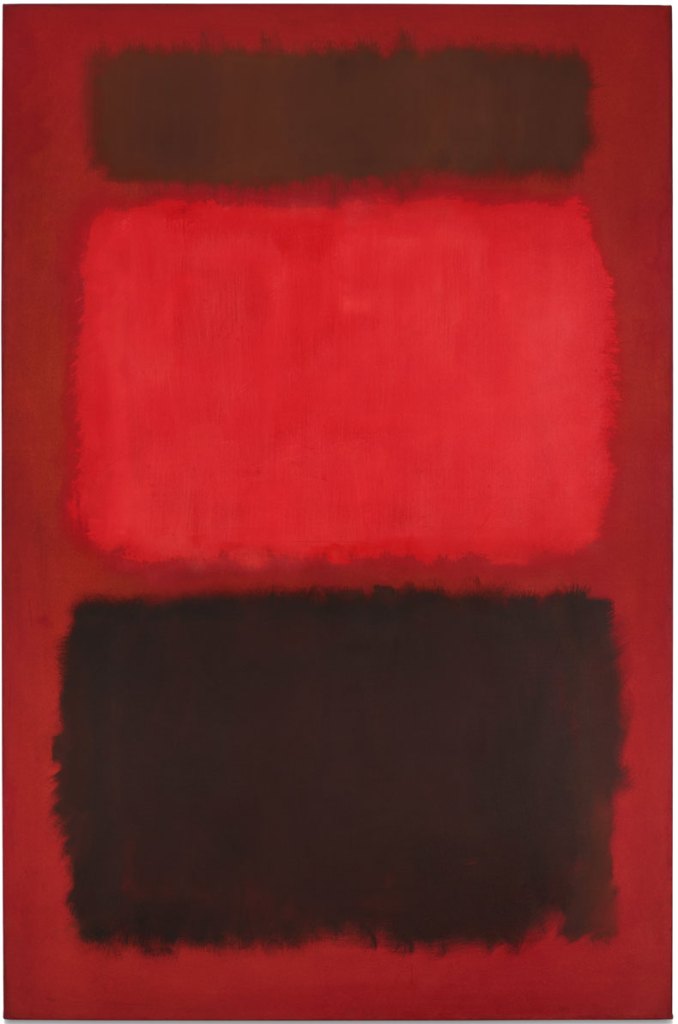
All three were represented in the 11 lots from the Mnuchin collection that sold at Sotheby’s last week for a combined $166.3m. All were guaranteed by either Sotheby’s or a third-party. Rothko’s Brown and Blacks in Red (1957) led the night, selling for $85.7m, within the $70m–$100m estimate. It was originally in the Seagram collection – housed at the time in the Seagram Building in New York, the intended home of the murals Rothko famously abandoned in 1960 – and was bought by Mnuchin for $6.7m at Christie’s in 2003. At Sotheby’s last week, Brown and Blacks in Red narrowly missed out on breaking Rothko’s auction record, held at the time by Orange, Red, Yellow (1961), which sold for $86.8m at Christie’s New York in May 2012. (The record was broken earlier this week at Christie’s, when Rothko’s No. 15 (Two Greens and Red Stripe) (1964), from the collection of longtime MoMA president Agnes Gund, sold for $98.4m.)
As with Waterhouse, access and proximity to the artists were all-important in building Mnuchin’s collection. ‘Robert Mnuchin spent decades at the centre of the art world as a dealer and as a collector, and his eye reflects that,’ says Madeline Lissner, executive vice president of global fine art and major collections at Sotheby’s. ‘The auction itself was competitive: 24 countries participated, the Miró drew 22 bids, the de Kooning went over 25. That kind of engagement from collectors around the world is a reflection of the collection’s integrity.’
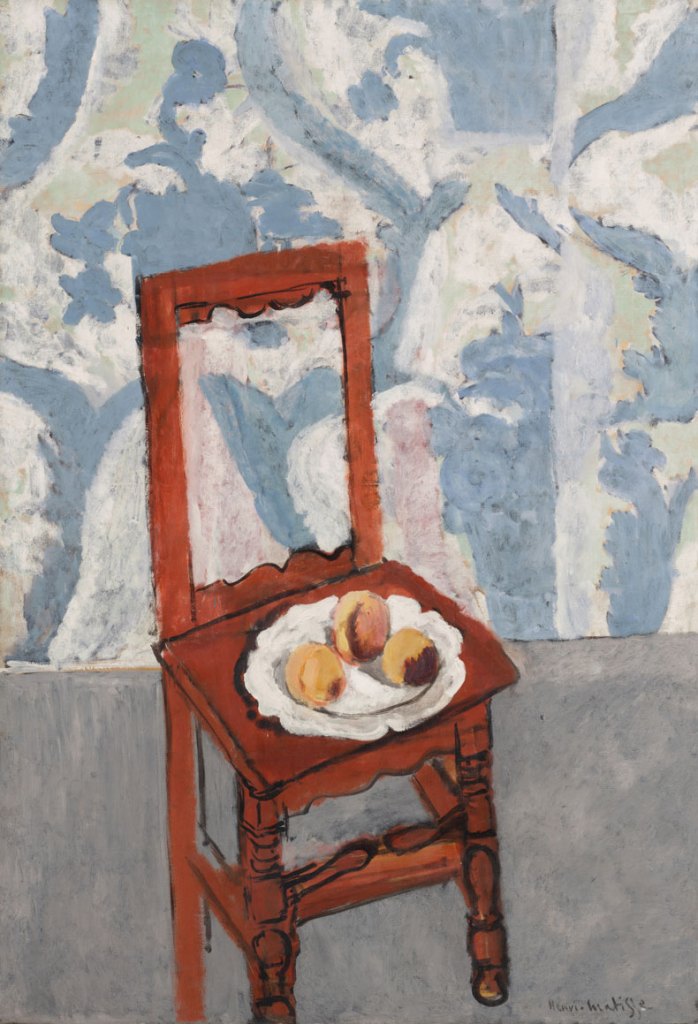
Asked whether this week’s results signal a market rebound or merely reflect a glut of collections, Lissner says: ‘I think it’s both. We’ve been seeing depth of buyer interest for some time. What was needed was material worthy of it, and lately that material has been surfacing – think [Pauline] Karpidas in London, [Jean and Terry] de Gunzburg last month and now, this season, the collections of Mnuchin, [Enrico and Adele] Donati, Barbier-Mueller, [David and Shoshanna] Wingate.’ Lissner picks out Matisse’s La Chaise lorraine from the Barbier-Mueller collection, which was sold on 19 May. Unseen on the market for nearly half a century, she says, ‘it drew four bidders over more than ten minutes before landing at $48.4m – well above its $25m estimate and the second highest price for a painting by the artist at auction.’ Elsewhere in the sale, however, energy was flagging, as it was on Wednesday night at Christie’s – the cross that the last evening sale of an auction marathon must bear.
That said, ‘Defined Space’, Christie’s single-owner evening sale of the collection of Henry ‘Hank’ S. McNeil Jr on 20 May, was a white-glove one. As the heir to Tylenol (a US brand name for paracetamol), McNeil, who died last July at the age of 81, had the funds to accumulate one of the best private collections of minimalist art at his Philadelphia home. Minimalism is a trickier area of the market, but collections always hold an appeal, and these 12 pieces, by the likes of Sol LeWitt, Dan Flavin and Carl Andre, each achieved higher prices than they would have done if sold individually. The auction totalled $25.9m, led by a copper and red fluorescent Plexiglas Donald Judd stack from 1969, which sold for $12.8m – a new record for a Judd stack.
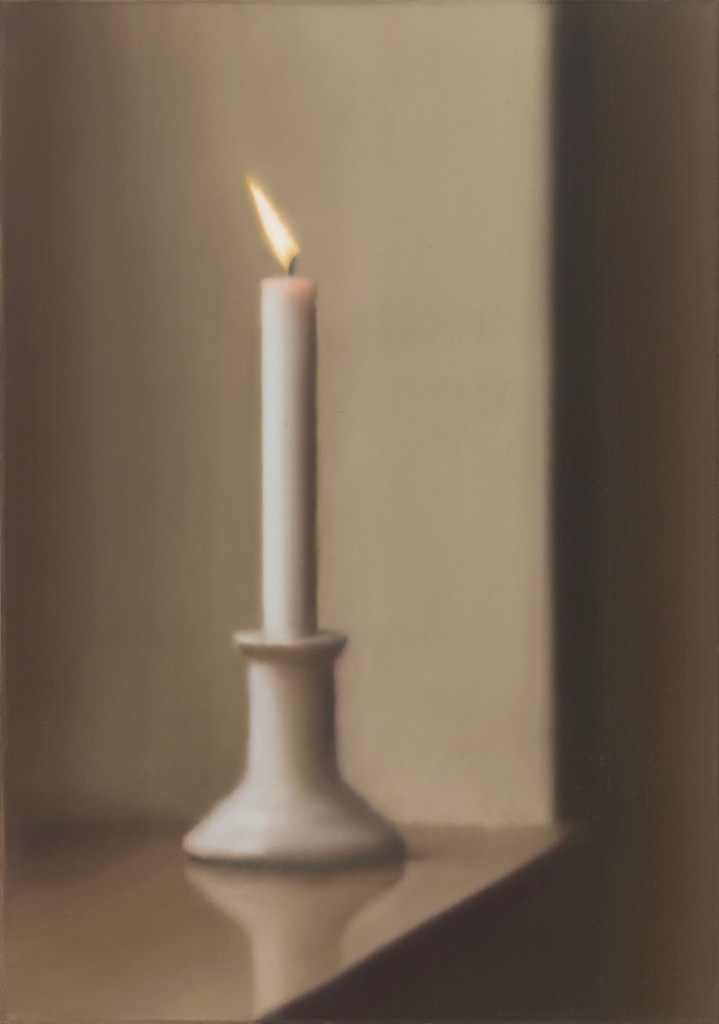
Sold on the same night were eight Gerhard Richter paintings from the collection of the late Marian Goodman, the dealer who truly established Richter’s market in the United States. All eight sold (all were guaranteed) for $78.8m in total, accounting for more than half of the $136.8m total for Christie’s 21st-century evening sale. The market for Richters has languished a little for the past few years but the much-lauded retrospective at the Fondation Louis Vuitton in Paris, which closed in March, has pepped things up. The top lot of the Goodman group was a 1982 candle painting, Kerze (Candle), which failed to meet its strong $35m estimate and was knocked down for $30m, which is $35.1m with fees. This was the first candle painting to come up at auction in 15 years and is among the top four prices for the artist, according to Christie’s. While the public auction record for a Richter is for one of his abstract paintings, Abstraktes Bild (599) from 1986, sold at Sotheby’s London in 2015 for £30.4m ($46.3m), a higher price has been paid privately for one of his photorealist works.
Many are hopeful that this is the start of an upturn after three or four years in the doldrums. ‘I would resist naming this as a broader based bull run, at least not yet,’ Fox Kelly says. ‘What we’re seeing is a really bifurcated market: extraordinary strength for masterpieces and continued selectivity and price sensitivity for everything else.’ For Fox Kelly, ‘the question is whether or not that confidence at the top that we’ve just seen starts to filter downward.’