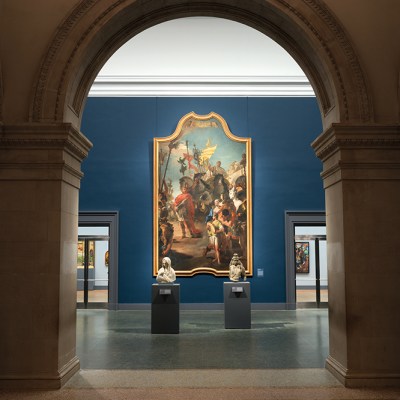
The Metropolitan Museum of Art and the Neue Galerie in New York will merge in 2028. Founded in 2001 by Ronald S. Lauder, who is heir to the Estée Lauder Companies fortune and is worth an estimated $4.9bn, the Neue Galerie holds one of the largest collections outside Europe of early 20th-century German and Austrian art, including works by Gustav Klimt, Max Beckmann and Otto Dix. Its Fifth Avenue building will be renamed the Met Ronald S. Lauder Neue Galerie, more informally known as the Met Neue Galerie. Lauder and his daughter, Aerin Lauder Zinterhofer, have established a $200m endowment to be spent on the building, the collection and operating costs; they have also donated 13 paintings from their personal collection to the joint institution. In a statement issued by the Met on 14 May, Lauder said that the merger would ‘preserve and strengthen the Neue Galerie’s legacy in perpetuity’.
A report ordered by a French parliamentary commission has raised serious concerns about ‘worrying conditions’ at the country’s cultural institutions. Formed after the theft of crown jewels from the Louvre in October, the commission heard more than 100 testimonies before producing the report, which includes a section dedicated to problems at the Louvre that details its ‘dilapidated state’ and characterises the time it spent under previous director Laurence des Cars as one of ‘dysfunctional drift’. The report’s 40 recommendations include raising museum budgets, reworking leadership structures and overhauling outdated security systems.
A Nazi-looted painting has been discovered in the home of a granddaughter of the Dutch SS commander Hendrik Seyffardt. Portrait of a Young Girl by the Dutch artist Toon Kelder (1894–1973) is one of some 1,100 paintings that the Nazis took from the Jewish art dealer Jacques Goudstikker during the Second World War and was passed down through Seyffardt’s family after his death in 1943. One of the granddaughter’s relatives reported the painting to the Dutch art detective Arthur Brand, telling the Telegraaf that he had been told to keep the painting’s provenance a secret. As the statute of limitations for the theft has passed and the Dutch Restitutions Commission doesn’t handle claims against private individuals, ‘The only way to get it back was to announce it,’ said Brand, who posted about the painting on X. The owner, who claims she did not know about the work’s origins, has since handed it over to Brand.
The Wellcome Collection in London will hand over 2,000 manuscripts acquired from a Jain temple in modern-day Pakistan to the UK Institute of Jainology, the Art Newspaper reports. Most of the manuscripts, which date from the 16th to the 19th centuries, were purchased in 1919 by agents of Henry Wellcome for a ‘low price […] against the best interests of their original owners’, the Collection said in a statement. Rather than being returned to their country of origin, the manuscripts will be moved to the Dharmanath Network in Jain Studies at the University of Birmingham. The Art Newspaper says that this is due to the fact that very few Jains remain in Pakistan and the country therefore has no appropriate institution to house the manuscripts.
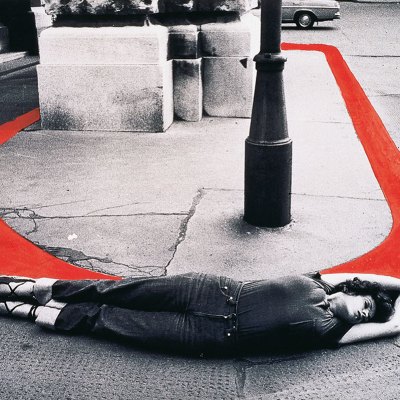
The performance artist and film-maker Valie Export has died at the age of 85. Born Waltraud Lehner in Linz in 1940, Export – the name she adopted in 1967 in rejection of the tradition of women taking their father’s or husband’s name – studied design, drawing and painting at the National School for Textile Industry in Vienna. One of very few women associated with the Vienna Actionists of the 1960s, she made her name with performance pieces such as Tap and Touch Cinema (1968), in which she invited the public to touch her breasts through a wooden box. Export, who throughout her career explored ways of representing the female body in film, installation, sculpture and photography, had solo shows at institutions including the Centre Pompidou and the Albertina. In 1980 she and Maria Lassnig became the first women to represent Austria at the Venice Biennale.
The Swiss gallerist Bruno Bischofberger has died at the age of 86. After studying art history and archaeology at the University of Zurich, Bischofberger established an eponymous gallery in Zurich in 1963. In 1965 he became one of the first people to bring Pop art to Switzerland, hosting an exhibition of works by Roy Lichtenstein and Andy Warhol, with whom he formed a close friendship. In the 1980s he was a key supporter of Neo-Expressionism, working especially closely with Jean-Michel Basquiat and promoting artists such as Julian Schnabel and George Condo. ‘Without him, the art history of the second half of the 20th century would have been written differently,’ his gallery said in a statement announcing his death.