From the September 2026 issue of Apollo.
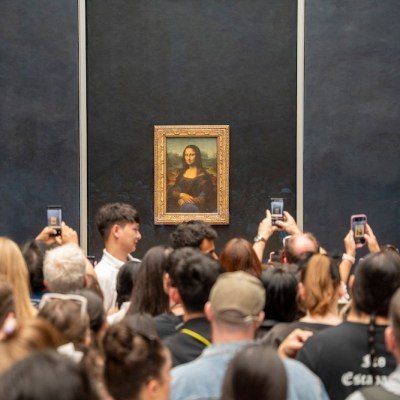
Providing access to artworks has always been a question of managing supply and demand (supply of one work; demand from lots of people). It is not a problem that many museums have solved. Among the many challenges faced by the Louvre is the perennial question of how to handle the enormous number of people who want their moment in front of the Mona Lisa. The solution on which Emmanuel Macron has pinned his presidential legacy is to put the painting in a room of its own. Whether this plan survives the billion-euro fundraising and France’s political headwinds remains to be seen. But at its heart is the question of how you balance the individual’s experience of looking at a work of art with the mass desire for that experience.
London is facing its own version of this problem – albeit temporarily – with the arrival of the Bayeux Tapestry. When tickets went on sale there were queues of 80,000 people on the British Museum’s website waiting for their chance to gain access to the embroidery. Even getting a ticket only gives you 40 minutes in front of it.
It is evident that some form of control needs to be introduced to ensure that visitors can actually see the Bayeux Tapestry rather than just a scrum of people in front of them. The difficulty is how to decide what is fair and – a topic that is particularly fraught for the otherwise free-to-access British museums – what to charge. In one sense, £33 is not an enormous amount to pay to look at a 950-year-old artefact – even the cheapest tickets to Taylor Swift’s Eras tour were about £60. But, at almost a pound a minute, it is hard to see this as a price open to everyone.
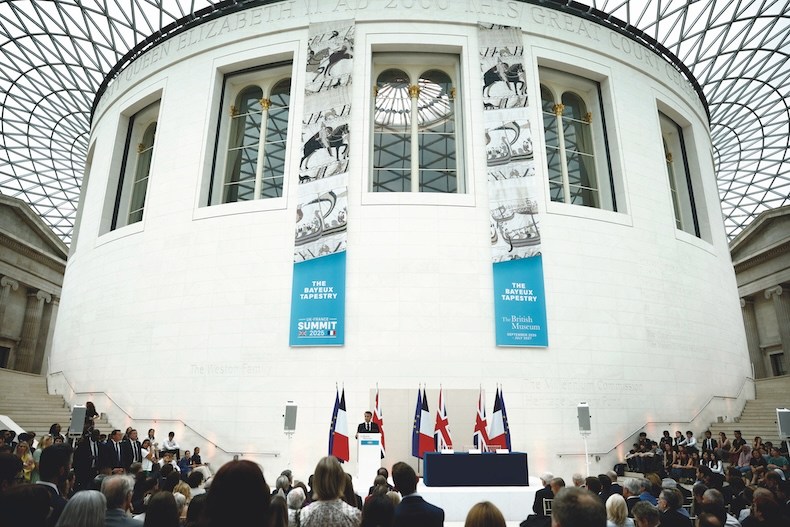
Museums in this country have had an obsession with visitor numbers since the introduction of free access in 2001. They were the only metric on which everyone could agree as a justification for the governmental grant to keep museums free. But they have in some senses distorted the argument about what makes a museum valuable. There are forms of success beyond these numbers – widening knowledge, artistic boldness and acts of conservation are all intrinsic to a successful museum – but they struggle to discuss them. An exhibition such as ‘The Bayeux Tapestry’, despite the cost, will undoubtedly boost the number of people that go to the museum, currently the second most-visited attraction in the UK with 6.4 million visitors last year. (Though this ranking depends on how visitor numbers to the Natural History Museum were counted; the BM might actually be the top attraction.)
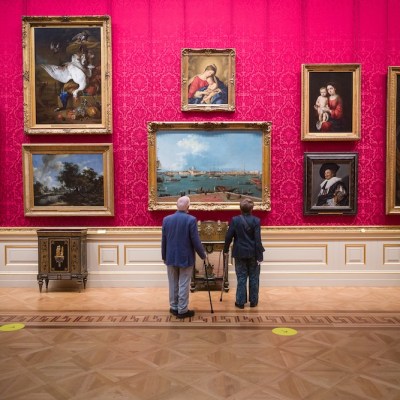
One of the unintended consequences of attaching so much significance to visitor numbers is that it subtly transforms how museums think about the objects in their care. Visitor experience becomes a dominant concern, which makes sense if you want more visitors. But in privileging the experience, museums paradoxically run the risk of making it worse. For example, Stonehenge allowed one person a day to get up close to the stones through August. Walking among the stones used to be a matter of course. But the need to open up the site to as many people as possible while avoiding damage – by banning them from getting up close – created an inferior experience.
I don’t envy museums having to manage the different demands of preservation, experience and growth, but perhaps they might make a case for a different sort of growth. In 2001 a well-known study of the Metropolitan Museum of Art in New York by Lisa F. Smith and Jeffrey K. Smith found that most visitors spent 27.2 seconds in front of a work of art. At some point, museums need to stop worrying about numbers and ask whether visits are meaningful. And if you want to spend more time in front of the Bayeux Tapestry, well, there’s always the Victorian replica in Reading.
From the September 2026 issue of Apollo.