From the January 2026 issue of Apollo. Preview and subscribe here.
It is no secret that King Charles III is interested in the arts. He has been more vocal in national debates on the subject than any modern monarch: everyone remembers his intervention over the Ahrends, Burton and Koralek design for the National Gallery’s Sainsbury Wing – which was jettisoned after the then-Prince of Wales described it as a ‘monstrous carbuncle’ – and he is well known as a watercolourist. He is also known for wanting to assist young people, as he has done through his charity the King’s (formerly Prince’s) Trust. So it’s no surprise that he combined these two interests in the establishment of the Royal Drawing School (RDS).
Founded in 2000 by the King and the artist Catherine Goodman, the RDS was set up to preserve and raise the standard of traditional drawing through a series of short and longer courses, bringing a sprinkle of royal approval to the normally more alternative streets of Shoreditch. At the heart of the school is their year-long postgraduate course. Known as the Drawing Year, this programme allows 30 students to hone their drawing skills with guidance from the school’s 100 or so teachers, as well as providing studio space. Offering a traditional foundation to an artist’s work may, indeed, be more alternative than some longer-established art schools in London admit.
Last year was not only Apollo’s centenary but also the 25th anniversary of the RDS. To mark these great events, we have established the Apollo Prize for Drawing and are also funding a scholarship, for one pupil annually, to take up the Drawing Year. The scholarship is fully funded, so that background does not determine entry, while the prize is a £1,000 award to enable an artist who completes the course to continue their practice.
The inaugural winner of the Apollo prize is Edward Quamina, a painter who signed up for the Drawing Year because he was looking for a place that taught anatomical drawing – ‘where they actually taught you what you’re doing’, as he puts it. At Quamina’s end of year show in December, alongside the fine finished works, were three sketches on pieces of paper not much bigger than A5. They show a figure in different poses: bending over, moving to standing up. There is nothing flashy or dramatic about them, just a confident line depicting something true.
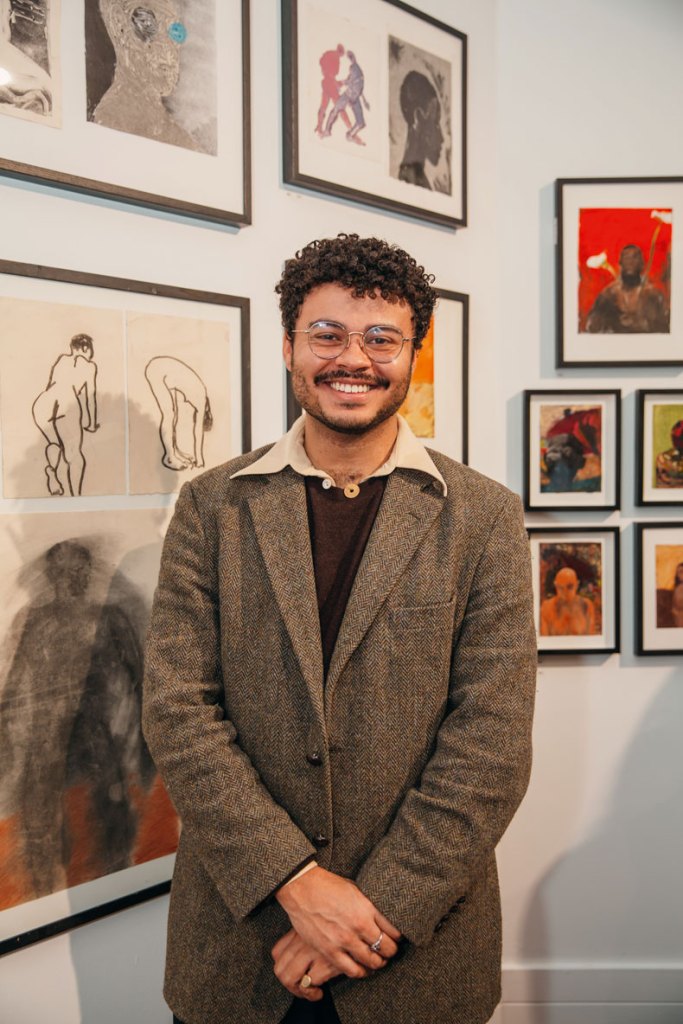
Quamina credits the RDS with helping him achieve such a line. What he wanted from the course, he says, was to go through the process of looking and drawing, and to learn ‘how to balance expression and making sure it looked real’. The sketches took him just a few minutes – a sign of the artistic confidence the Drawing Year is helping students develop.
Before Quamina started at the RDS, he was teaching children coding and robotics at Building Imagination, a youth club in Brixton that specialises in teaching children STEM subjects. Quamina says that school for him was ‘quite difficult’, so he finds working with young people in this context – ‘giving them alternative spaces to explore their interests’ – rewarding. One of the benefits of attending the RDS is that he has been able to teach younger students on other programmes. ‘I was teaching every Saturday. The school has given me so much and it gives me an opportunity to pay it forward.’
Now that Quamina has completed the Drawing Year, there is the question of what happens next. His outlook, as it so often must be for young artists, is pragmatic. He is looking for a job that he can do nine to five and then ‘really prioritise my five to twelve and go to a studio and just work. It’s quite boring, but just build a routine.’ Just as Quamina learned to keep his drawing real at the RDS, now he will be keeping it real in his career.
For more information, click here.
From the January 2026 issue of Apollo. Preview and subscribe here.