
As the art world heads to Venice for the preview days of the Biennale later this week, Rakewell feels nothing but relief. The avalanche of emails alerting your roving correspondent to openings will slow, we pray. But, more importantly, a year and more of misfortunes, mishaps and misjudgements will be over. At the very least, it will be a relief to leave the realm of the open letter for the realm of the real. The Venice Biennale has always reflected something of the state of the world; no event that presents art in ‘National Pavilions’ could do otherwise. The Biennale’s former prize jury (of which more later) recently alerted us to the difficulty in, of course, an open letter: ‘We acknowledge the complex relationship between artistic practice and nation-state representation that provides a central structure for the Venice Biennale, particularly the way this relation binds artists’ work with the actions of the state they represent.’
Rakewell is a big believer in knowing where matters stand. So here is a non-exhaustive timeline of some of the events – some tragic, others farcical – leading up to the 61st Venice Biennale, shared in the hope that dwelling on the recent past might set us free.
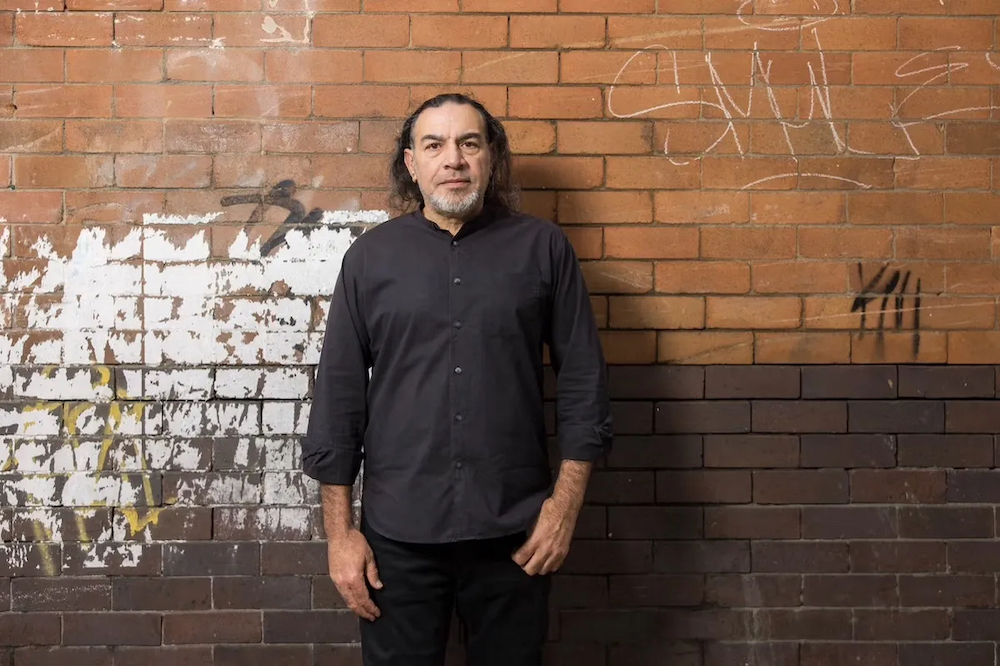
13 Feb 2025: The Sydney-based artist Khaled Sabsabi was dropped as Australia’s representative just a few days after Creative Australia announced that he had been selected. The move came after The Australian newspaper published an article criticising ‘questionable and ambiguous’ depictions of the assassinated Hezbollah leader Hassan Nasrallah and citing a work from 2007.
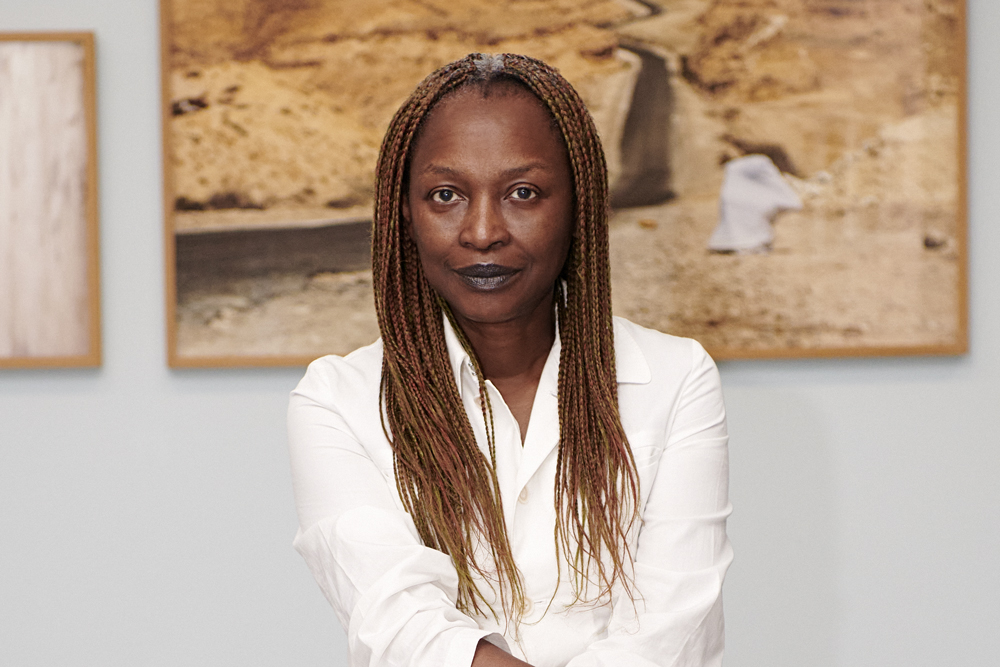
10 May: Koyo Kouoh, curator of the international exhibition at the Biennale and director of Zeitz MOCAA in Cape Town, died at the age of 57. She had been due to announce the theme of the exhibition on 20 May.
27 May: The Biennale announced the theme of the exhibition conceived by Koyo Kouoh: ‘In Minor Keys’.
2 July: Khaled Sabsabi was reinstated by Creative Australia as Australia’s representative together with the curator Michael Dagostino. An independent external review said that the decision to drop them stemmed from ‘a series of missteps, assumptions and missed opportunities’.
24 Nov: The State Department announced that Alma Allen would represent the United States. The sculptor was dropped by his galleries Olney Gleason and Mendes Wood DM. Many art world observers said they didn’t know his work. The critic Jonathan Griffin wrote a piece for Apollo about having followed Allen’s work for years.
2 Jan 2026: South Africa dropped the artist Gabrielle Goliath. The minister of culture had written to the organising committee complaining of a new section about Gaza in Goliath’s work Elegy (2015-ongoing). The selection committee wrote an open letter to the culture ministry in support of Goliath. The artist was let go by Goodman Gallery for financial reasons, not because of the cancellation, the gallery said.
14 Feb: Henrike Naumann, one of two artists representing Germany at the Biennale, died at the age of 41. The commissioners of the German pavilion said that Naumann’s work would ‘be realised in Venice according to her artistic vision’.
18 Feb: Gabrielle Goliath’s bid to be reinstated as the South African representative was dismissed by the country’s high court.
20 Feb: The South African pavilion would be empty, the culture ministry announced.
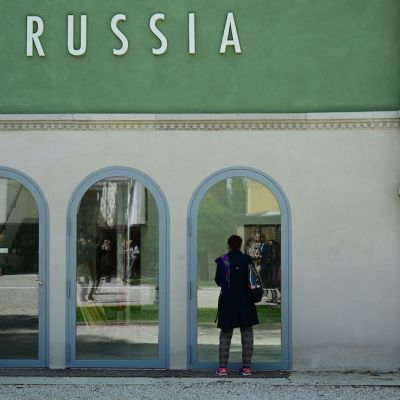
3 Mar: The Russian Pavilion would be open in May with a group exhibition, announced Mikhail Shvydkoy, Russia’s delegate for international cultural exchanges. (In February 2022, the Russian artists Kirill Savchenkov and Alexandra Sukhareva and Lithuanian curator Raimundas Malašauskas had cancelled their exhibition in protest at Russia’s invasion of Ukraine.)
10 Mar: The European Commission said it would cut its €2m grant to the event if Russia took part. Twenty-two European culture ministers wrote an open letter to the president and board of the Biennale saying that ‘granting Russia a prestigious international cultural platform sends a deeply troubling signal’.
17 Mar: Some 200 artists, curators and art workers signed an open letter (organised by the Art Not Genocide Alliance) protesting against Israel’s participation to the Biennale’s president and board.
26 Mar: Gabrielle Goliath announced that she would be showing Elegy at an independent space in Venice from 5 May–31 July.
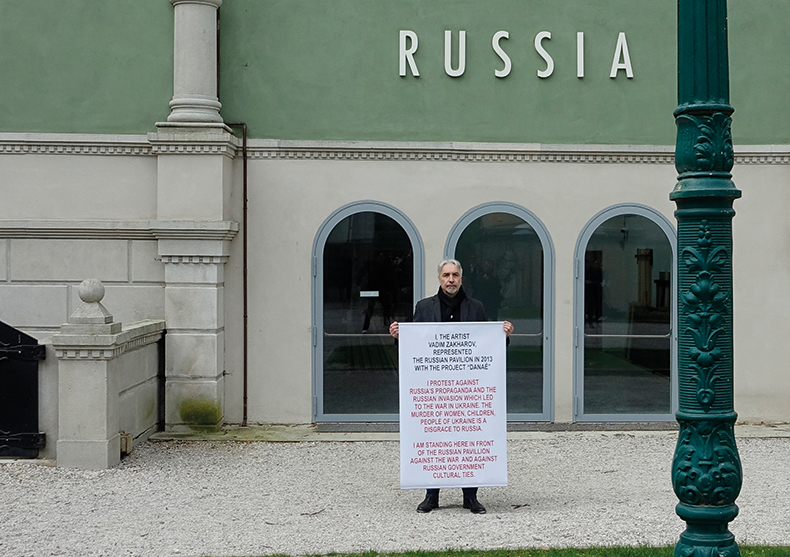
22 April: The vice-president of the European Commission, Kaja Kallas, confirmed that the EU was cutting its €2m grant because of Russia’s return to the event: ‘While Russia bombs museums, destroys churches and seeks to erase Ukrainian culture, it should not be allowed to exhibit its own.’
23 April: The Biennale’s prize jury, whose members had been chosen by Koyo Kouoh, released an open letter stating that it would not consider artists from countries whose leaders were under indictment from the International Criminal Court.
26 April: The Israeli foreign ministry called the jury’s statement a ‘boycott’ of Israel’s artist, Belu-Simion Fainaru, describing it as ‘a contamination of the art world’.
27 April: The Italian culture minister, Alessandro Giuli, announced that he would not attend the official opening of the Biennale on 9 May in protest at Russia’s inclusion.
1 May: All five members of the prize jury resigned.
If you have read down this far, you will be forgiven for feeling rather tired. But – regardless of the long and fraught run-up to the event – Rakewell looks forward to finding out what it has to offer in the way of art. Let the 61st Venice Biennale begin!