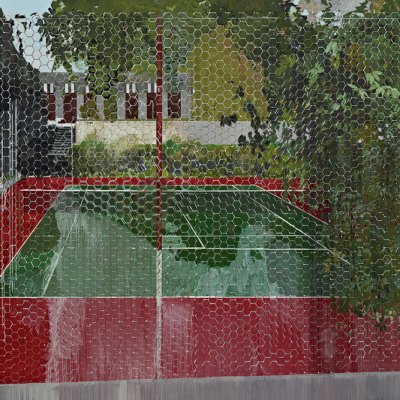
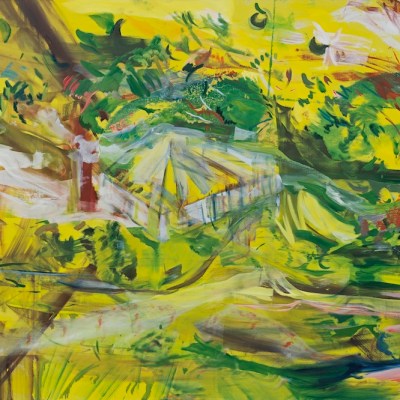
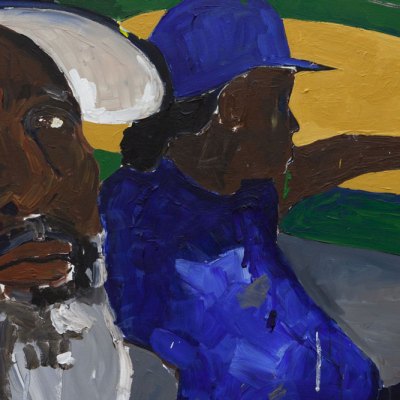
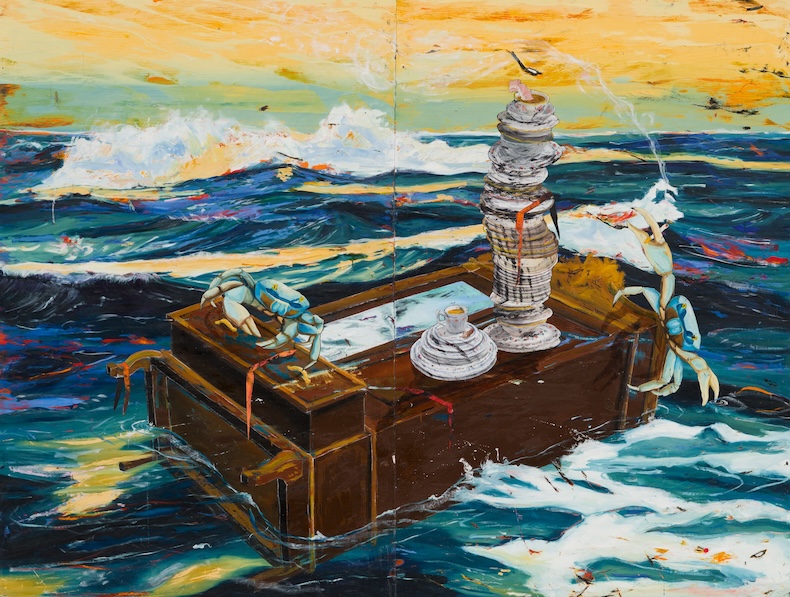
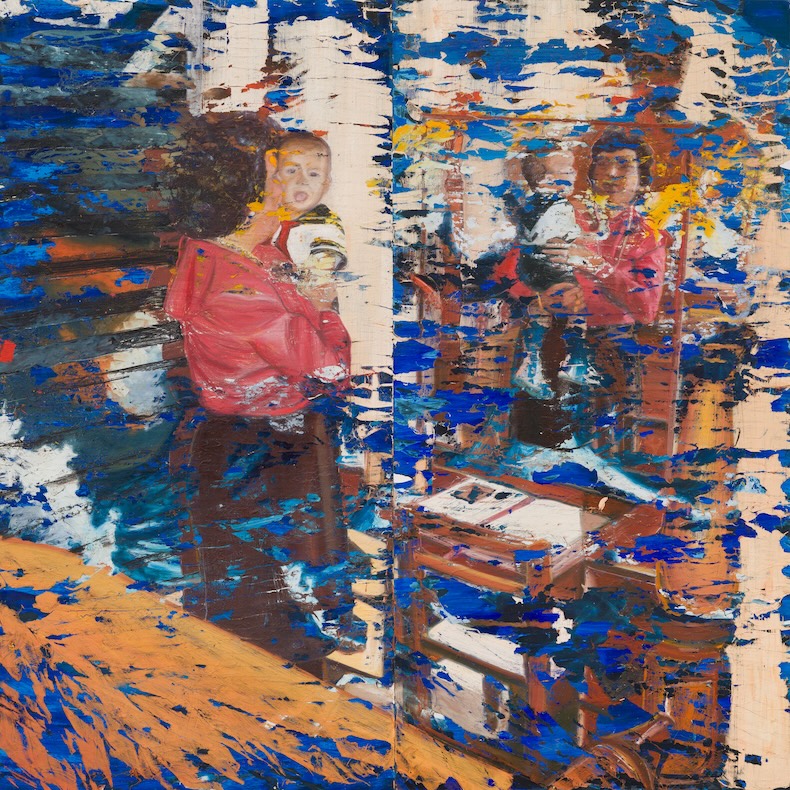
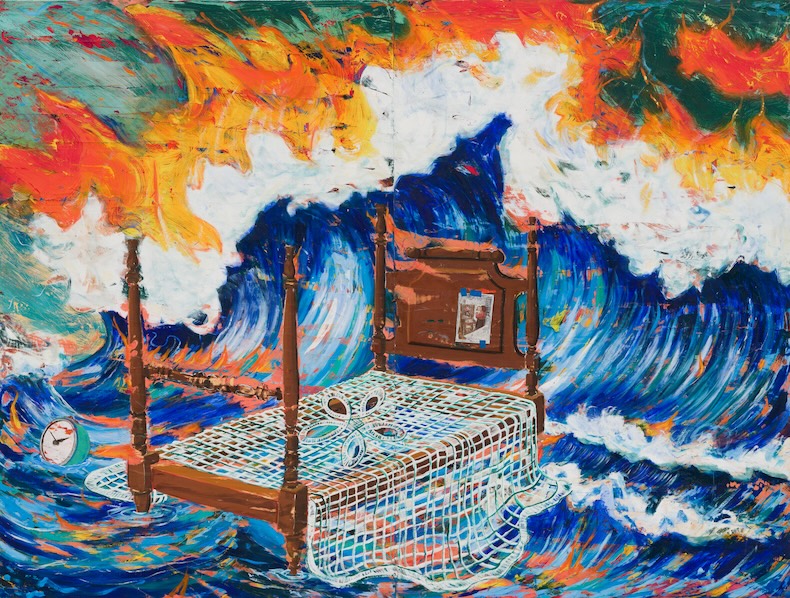
Angel Otero was born in 1981 in the seaside neighbourhood of Santurce in San Juan, Puerto Rico, and much of his work refers to a childhood by the ocean. In large paintings such as A Two Man Island (2026), objects recalled from memory – his grandmother’s furniture, stacks of plates from family meals – float amid crashing waves. These have a textural, collage-like quality because of Otero’s ‘oil skin’ technique, in which he applies oil paint to glass before peeling it away and transplanting these ‘skins’ on to canvas, and because of his use of scraps of fabric. Otero works in studios in Puerto Rico and New York and he has had solo exhibitions at institutions including the Bronx Museum of the Arts and Contemporary Arts Museum Houston. For his first solo exhibition in the UK the artist is presenting a new body of work at Hauser & Wirth Somerset, produced during a recent residency at the gallery. Titled ‘Agua Salada’ (‘Salt Water’), the exhibition is open until 18 October.
Where is your studio?
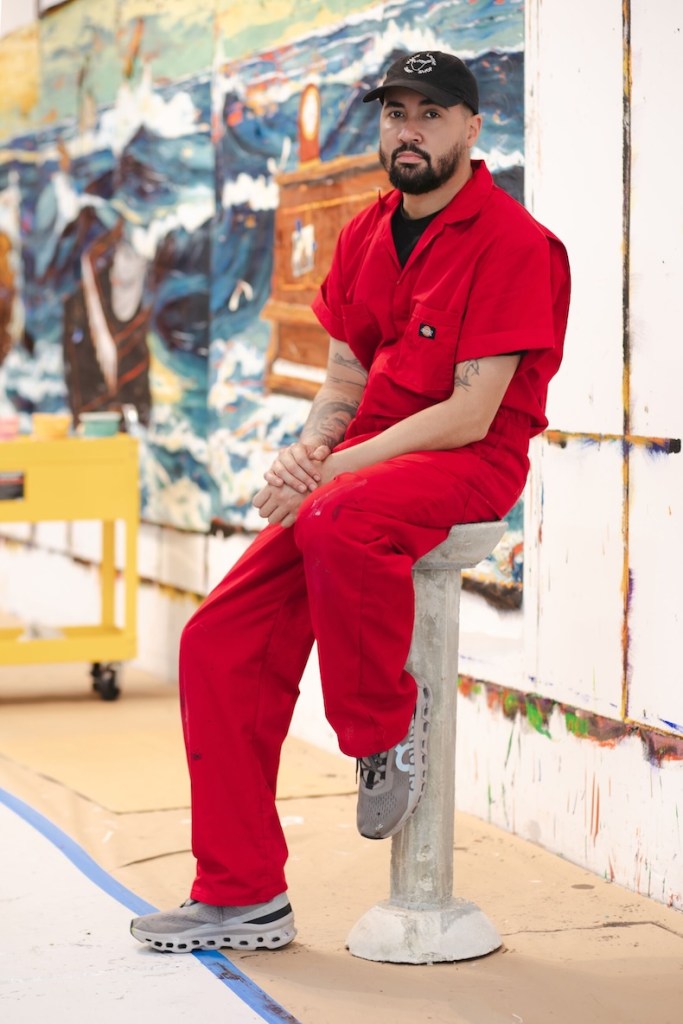
My main studio is in Carolina, Puerto Rico, but I also maintain one in New York, which I’ve had for about 20 years now.
How would you describe the atmosphere in your studio?
Pretty relaxed, honestly. There are a couple of people who help me navigate the work and manage things day to day, and it’s a beautiful dynamic. It’s friendly and productive, but also respectful and fun. It’s a close-knit crew.
Is there anything you don’t like about your studio?
I wish there were more natural light.
What does your studio routine look like?
I usually open the studio alone, after grabbing my coffee and saying hello to the neighbours. I like to ease into it. I’ll look at what was done in the days before, review the week and map out a plan for the day. Then at around 10am my team starts arriving and we get to work.
Do you have many visitors?
Not a huge number, but I’m very accessible and genuinely open to visits. I’m not strict about time or space. If someone wants to come by, I’m typically welcoming of that.
Who is the most interesting or unusual visitor you’ve had?
Some of the most interesting visits have been with younger people, including my daughter. There’s something that happens when you bring someone into the space who sees the work with completely fresh eyes, without any of the context or weight you carry as the maker. There’s a playfulness that lives in my work and practice, and these moments draw that out. It’s a reminder that the work can hold that lightness and that it’s worth protecting.
Do you listen to anything while you work?
There’s always music on – a lot of bossa nova, hip hop, Latin music playing in the background. It’s very much part of the atmosphere in the studio.
What is the most unusual object in your studio?
There are almost too many to choose from. The studio accumulates strange things over time. But one that comes to mind is a piece of wood from some construction happening in my neighbourhood. The leftover 2x4s were cut at an angle and ended up looking like little nativity houses. I used to paint them and sell them for $5. I kept one for myself as a keepsake. It still sits in the studio.
What is your most well-thumbed book?
I always keep a copy of J.M. Barrie’s Peter and Wendy (1911) close. The original version with the illustrations. Beyond that, I find myself returning again and again to books on Louise Bourgeois, Robert Rauschenberg, Willem de Kooning. Those are the ones with the worn spines.
‘Agua Salada’ is at Hauser & Wirth, Somerset, until 18 October.