From the June 2026 issue of Apollo.
The presiding mode of ‘In Minor Keys’ is elegiac. It can be felt in the mournful tones of jazz, which form a dissonant chorus permeating many of the galleries. Deeper notes undercut the music: the rumble of droning bass that has become the default soundtrack for contemporary artworks wishing to communicate gravity.
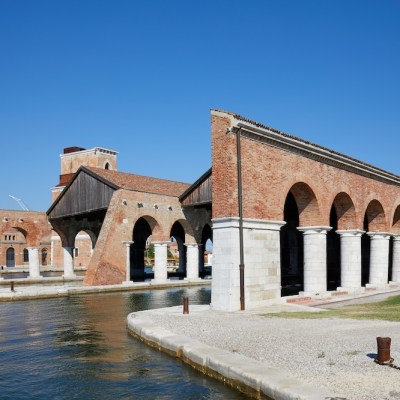
The grief infusing the exhibition is both collective and particular. We are not set apart from the horrors of the world. At the entrance to the Arsenale is a poem by Refaat Alareer, who was killed in Gaza in 2023, and whose words are a call to remembrance. ‘In Minor Keys’ has also become a memorial to its own curator, Koyo Kouoh, who died last May, midway through its planning. Realised by her team, it honours both Kouoh’s ideas for the Venice Biennale and the connections and enterprises she forged within her lifetime. There are a number of explicit tributes. A substantial eight-panel painting by María Magdalena Campos-Pons imagines the curator as an owl-footed woman perched in a magnolia tree beside the novelist Toni Morrison, honouring both for their wisdom and attention to less-heard stories and quieter voices.
In her curatorial statement, Kouoh described the minor keys of her title in sonic, social and geopolitical terms: this was to be a show of whispered poetry rather than shouty theatrics; of alternative pedagogies rather than grand academies; the archipelago rather than the domineering landmass; lives of quiet creative determination rather than flash-in-the-pan success. The Venice Biennale has long been marred by excess – an overload of clamorous works – so this call for thoughtful attention is welcome. Alas the concept is not borne out by its execution: never have the vast spaces of the Giardini and Arsenale felt so crammed.
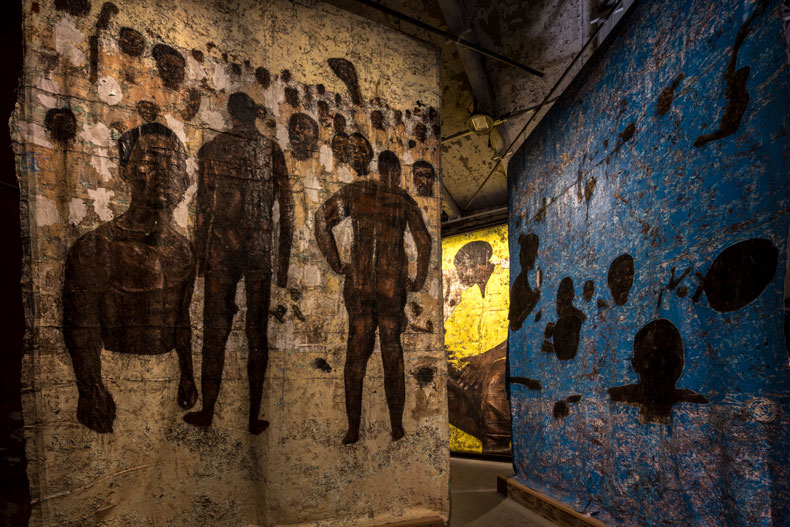
Works that under other circumstances might have performed as grand centrepieces here struggle for space. Suspended unstretched, Kaloki Nyamai’s magisterial stitched paintings of figures against plain coloured backgrounds occupy the full 12-metre ceiling height of the Arsenale yet seem to have been stuffed into a corner. Amid the clamour, how to find the time and space we are invited to give this work?
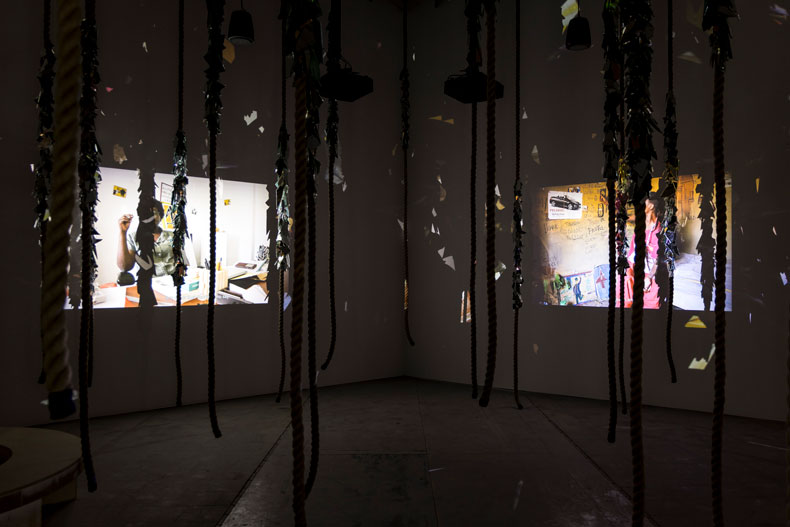
Without clear signage or sectioning, themes emerge haphazardly, if at all: ecology, geological deep time, spirituality. Some of the most effective works are those that forcibly demand their own space and, inevitably, the artists with the wherewithal to make that demand are more established. Thus, two of the standout displays in the Arsenale are by familiar names. Kader Attia’s Whispers of Traces is a multi-screen installation within which dangle thick ropes encrusted with shards of mirror, casting splinters of projected images around the space. Attia has documented shamanic (or related) practices of various cultures, including the Tai people of Vietnam, and his interviewees speak of turbulent spirits causing afflictions ranging from depression and maladies of the soul to computer viruses. This space is one of magical fracturing, imagining the body as host to a multitude of spirits. It pushes against the flattening of culture and positions care of the sick as a collective concern.
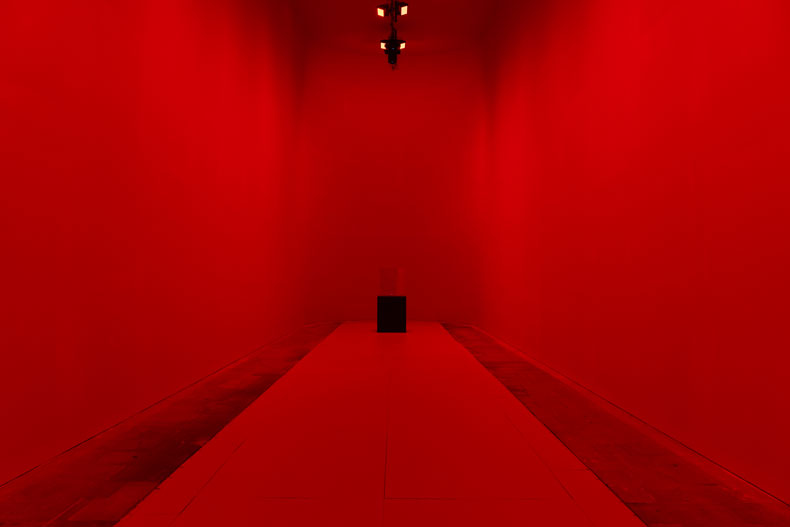
The jury appointed by Kouoh resigned for political reasons shortly before the Biennale’s opening so there will be no Lions awarded this year. My personal Golden Lion (for lifetime achievement) goes to Alfredo Jaar, whose End of the World (2023–24) is a vast lozenge of space flooded with disorienting red light, at the end of which sits a small metal cube illuminated in green within a Perspex case. This four-centimetre block is layered with sought-after minerals: rare earths, cobalt, copper, tin, nickel, lithium, manganese, coltan, germanium and platinum. These are the metals necessary for contemporary technologies including those used in the production of green energy, yet their extraction comes at a catastrophic human cost, whether as a result of conflict, environmental destruction or exposure to toxins. Jaar has constructed a temple to callous, extractive greed, as elegant as it is deadly.
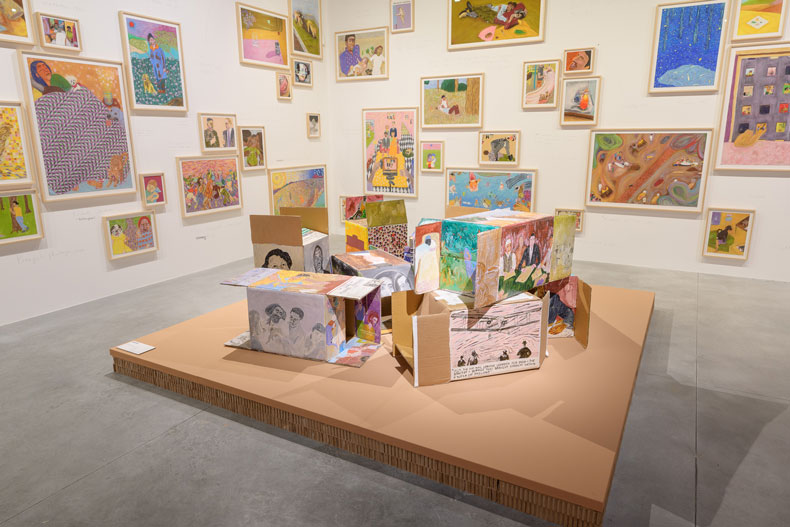
A few less familiar figures stand out amid the throng. Sohrab Hura’s mesmerising film The Coast (2020) unfolds in slow motion, as men in lavish beaded necklaces and women in saris throw themselves into foaming waves, pulling and protecting one another against the force of the sea, their faces flickering between fear and ecstasy. The black backdrop of a night sky makes these acts of immersion appear otherworldly. These bathers are pilgrims, adherents of Kali, in the Indian state of Tamil Nadu. Slow, dreamy camerawork – reminiscent of Chantal Akerman’s D’Est (1993) – gives their action a mysterious, ritualistic quality. Elsewhere there is a large display of Hura’s works in soft pastel – snapshots of daily life that include references to memes – painted on paper and cardboard boxes. They are compellingly goofy and of an entirely different tone to The Coast.
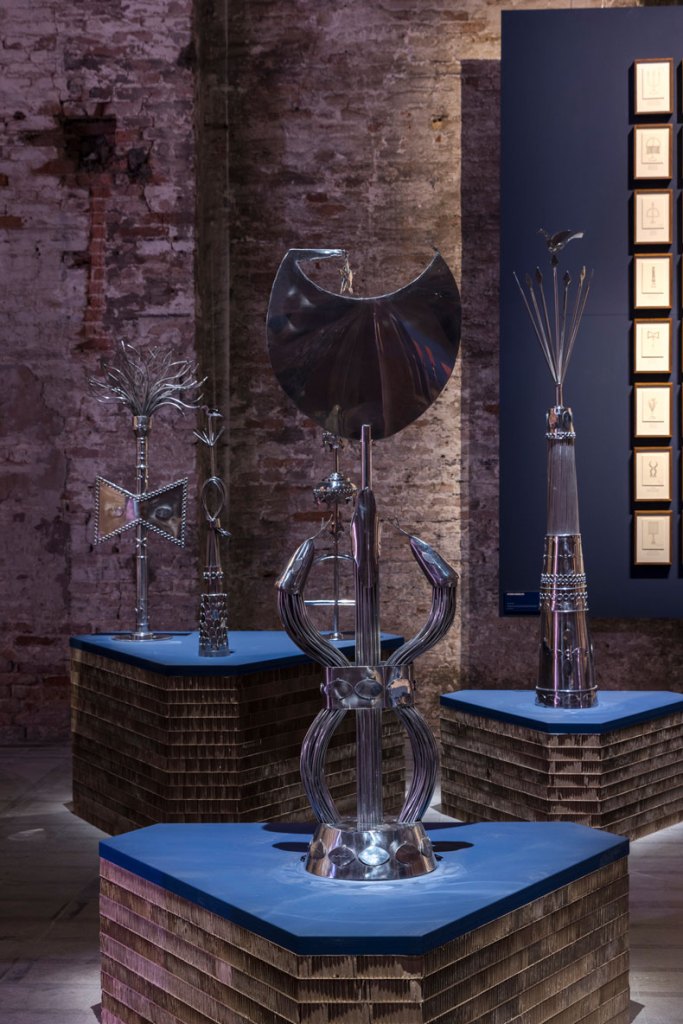
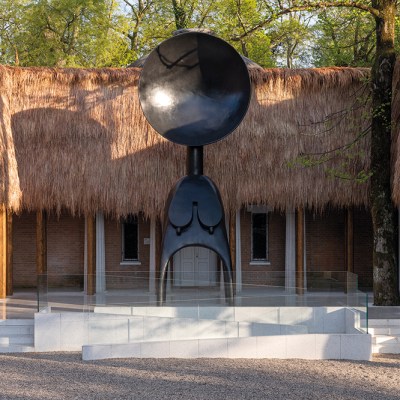
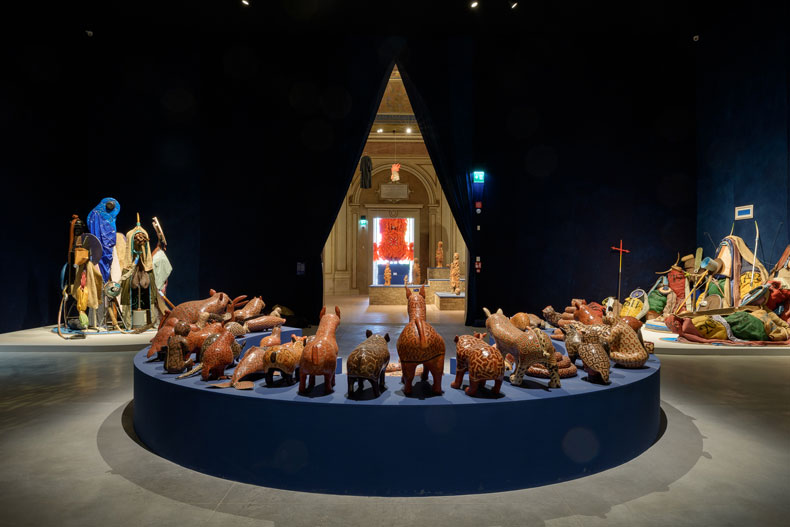
True to its title, this is an exhibition of minor encounters rather than of revelations. Tiona Nekkia McClodden’s two-screen film RUINOUS (2026) meditates on the thrill of pushing desire and destructive urges to the point of personal pain. Ayrson Heráclito’s spindly and characterful steel sculptures carry emblems related to the Candomblé religion and a whole pantheon of spirts. Celia Vásquez Yui’s ceramic animal sculptures cluster in a parliament, greeting human visitors with appraising stares. This is a vast and diverse show, but its generosity is its downfall: even as it invites us to attend to subtleties and quiet voices, it fails in the editorial rigour that might have made this possible.
This piece was originally published on 8 May.
The 61st edition of the Venice Biennale runs from 9 May–22 November.
From the June 2026 issue of Apollo.