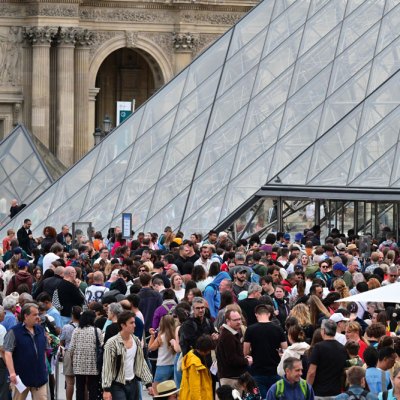
The French culture minister Catherine Pégard has announced a ‘national security plan’ to protect cultural institutions from theft and damage, Le Monde reports. The plan comes nine months after the theft of crown jewels from the Musée du Louvre and four days after thieves stole a gold torc dating to c. 500 BC from the Musée du Pays Châtillonnais in Burgundy. The 33-point plan includes security measures such as training staff in anti-vandalism and theft prevention, the continued mapping of vulnerable sites and removing high-risk items until a more secure display can be created. It also includes a security fund of €30m – created by the previous culture minister, Rachida Dati – to be spent over three years.
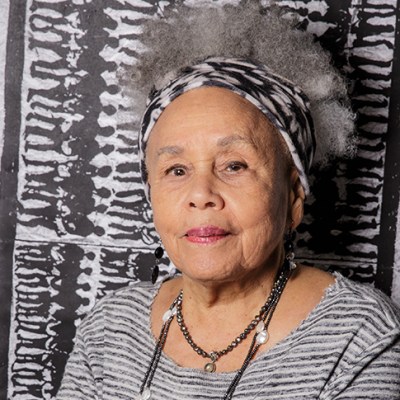
Betye Saar, best known for fiercely satirical assemblages and installations that draw on mysticism and African American history, has died at the age of 99, four days before her 100th birthday. Saar was born in Los Angeles in 1926 and studied design in the late ’50s, when she began printmaking. She worked in the medium throughout her seven-decade career but made her name with assemblages, which often incorporated items from her collection of ephemera from the Jim Crow era and were influenced by Joseph Cornell. Her most famous work, The Liberation of Aunt Jemima (1972), transformed the racist minstrel-show caricature – which Quaker Oats used to market pancake mix – into a figure of resistance. Saar was a leading figure in the Black Arts Movement, which found new and often radical ways of expressing African American experiences in art, literature and theatre. She had solo exhibitions at the Whitney Museum of American Art and SFMOMA in the 1970s and worked well into her nineties, when she was the subject of shows at the Los Angeles County Museum of Art and MoMA. Read Apollo’s interview with Saar in 2019 here.
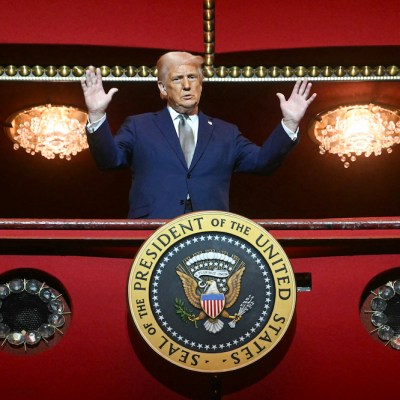
The Trump administration has ordered signs to be installed outside the Smithsonian’s National Museum of American History (NMAA) that correct allegedly ‘inaccurate information’ in the museum’s displays. After Congress grilled Anthea Hartig, director of the NMAA, on 22 July, the White House published ‘Restoring Trust in the Smithsonian Institution’, a report asserting that the museum ‘cannot be trusted to tell America’s story with honesty and gratitude’. The proposed signage, which will be installed on walkways near the museum, are intended to ‘[warn] visitors’ about the alleged ‘ideological capture’ at the museum and direct them to ‘locations and resources for accurate information regarding America’s history’.
Staff at Victoria and Albert Museum sites across London have voted to strike over pay and working conditions, the Art Newspaper reports. The trade union Prospect said in a statement that staff at V&A East Storehouse are not given adequate water and toilet breaks, and has called for workers to be given two 15-minute breaks per day. Prospect has also called for pay rises for workers across the V&A’s four London sites. The Public and Commercial Services Union has put out a separate ballot calling for more than 300 V&A workers to strike over ‘pay, conditions and dignity at work’. A spokesperson for the V&A said that the museum has ‘been in negotiations with the trade union side since February and those negotiations are ongoing’.
The postmodern choreographer Simone Forti has died at the age of 91. Forti was born in Florence in 1935; her family moved with her to the United States in 1939. She began experimenting with dance after moving to New York in 1959, where she developed pieces such as the Dance Constructions series – first performed at Reuben Gallery and later at Yoko Ono’s loft – in which performers used a prop and instructions to develop an improvised piece. Forti continued to teach dance into her eighties at institutions such as the University of California in Los Angeles. In 2014 she had her first major retrospective at the Museum der Moderne in Salzburg, a year before MoMA acquired Dance Constructions. In 2023 she won the Golden Lion for Lifetime Achievement in dance at the Venice Biennale.
The Musée Nissim de Camondo in Paris will remain closed until 2030 – four years later than planned, Le Monde reports. The house museum, built by the banker and collector Moïse de Camondo and now part of the Musée des Arts Decoratifs, closed in 2024 so that small safety upgrades could be carried out; however, an inspection in 2025 revealed severe damage between the shutters and the roof, which required complete replacement. The museum now intends to refurbish the interior and the garden and redesign the entrance during the closure. The renovation was initially budgeted at €4m but is now expected to cost €23m. Lionel Sauvage, the president of MAD, is hoping to secure funding from external donors including the World Monuments Fund.
UNESCO has added 19 cultural sites to the World Heritage List. These include Mount Olympus and the surrounding area, the modernist architecture of Tashkent, 13 buildings and complexes designed by the Finnish architect Alvar Aalto and his family studio, and the Jingdezhen porcelain manufacturing sites in eastern China. Two of the sites – the Mount Amel Castles in southern Lebanon and the ancient village of Sebastia in Palestine – have also been added to the World Heritage in Danger list.
Abu Dhabi’s department of culture and tourism has finally announced an opening date for the Guggenheim Abu Dhabi. The museum, which has been in development since 2006, is set to open on 11 December. Designed by Frank Gehry, it is located on Saadiyat Island near other museum outposts such as the Louvre Abu Dhabi. It will be the world’s largest Guggenheim museum, comprising 80,000 sqm of indoor and outdoor exhibition space.